Six foreign-designed armoured vehicle families account for most of the wheeled mine-protected vehicles bought by African armed forces since 2007. This gallery ranks them by the number of African countries with a documented order, delivery or in-service sighting as of early October 2026, drawing on manufacturer statements, Janes, Shephard Media, Army Recognition and this publication’s own country-by-country reporting.
DEFENCE AFRICA | Evergreen ranked list | Data as of October 2026
African armies rarely buy armoured personnel carriers and mine-resistant vehicles in the quantities that make headlines. Most orders run from a handful of vehicles to a few dozen, spread across peacekeeping deployments, counter-insurgency campaigns in the Sahel and Horn of Africa, and donor-funded security assistance programmes. What stands out is not fleet size but reach: a small number of vehicle families, mostly Turkish and South African, keep reappearing across unrelated conflicts and donor programmes on opposite sides of the continent.
This ranking counts countries, not vehicles. A single country entry can mean anywhere from a handful of hand-me-down vehicles to a production-line order of hundreds, so each entry below separates confirmed in-service operators from deliveries whose current status is unclear, following the same ordered-is-not-delivered, delivered-is-not-operational discipline this site applies to every operator database.
How we ranked
Each vehicle family is ranked by the total number of African countries with a sourced order, delivery or in-service appearance, as reported by manufacturers, Janes, Shephard Media, Army Recognition, defenceWeb and UN or government documentation, current to early October 2026. Reported-but-unconfirmed countries are excluded from the count and noted separately where relevant. This list includes six entries, not ten. Several widely cited armoured vehicle families in African service, including Soviet-era BTR and BRDM variants reported across more than a dozen countries combined, could not be matched to a current, country-by-country operator list verified against at least two sources in the time available for this piece; rather than estimate a number, they were left out. The six vehicles below are the ones whose African operator lists could be confirmed country by country.
Key facts
- Otokar’s Cobra and Cobra II have a sourced order, delivery or in-service record in 12 African countries, more than any other vehicle family tracked here (Army Recognition, defenceWeb, 2026).
- Paramount Group’s Mbombe and Marauder lines are the most widely distributed African-designed-and-built armoured vehicles, with 10 African country entries (defenceWeb, Janes, 2026).
- An EU-funded programme alone put France’s Arquus Bastion into Burkina Faso, Mali and Mauritania as part of the G5 Sahel Joint Force by January 2020 (Janes).
- South Africa’s Casspir, first built in 1979, remains in service or recently documented in eight African countries, from AMISOM contingents to the SANDF’s 2024 DRC deployment (defenceWeb).
- Türkiye’s BMC Kirpi, despite a decade of African service, is confirmed in only three countries: Tunisia, Libya and Somalia.
1. Otokar Cobra / Cobra II — 12 African countries, the widest footprint tracked

Manufacturer: Otokar (Türkiye). Specifications (manufacturer figures, via Army Recognition, 2024): gross vehicle weight up to 14,500 kg, crew of up to 11 including driver and commander, maximum speed 110 km/h, range 700 km, STANAG-rated protection scalable by variant.
Operational: Nigeria (about 193-204 vehicles, delivered 2007-2008), Rwanda, Ghana (at least 73 between 2019 and 2021), Mauritania, Burkina Faso (from 2018), Senegal and Côte d’Ivoire (about 20 Cobra II). Delivered, in-service status unclear: Tunisia, Gambia (19 donated), Chad and Algeria. Ordered: Morocco (200 Cobra II under a contract worth about US$136 million). This site’s own country-by-country investigation into the Cobra family in African service has the full operator table.
Why it matters: no other single vehicle family in this count has reached as many African militaries. The spread shows Otokar competing on price and licence flexibility across Francophone, Anglophone and North African markets simultaneously, well outside the headline Turkish drone and frigate deals that usually dominate coverage of Ankara’s defence exports to Africa.
2. Paramount Mbombe / Marauder — 10 African countries, the leading African-built export
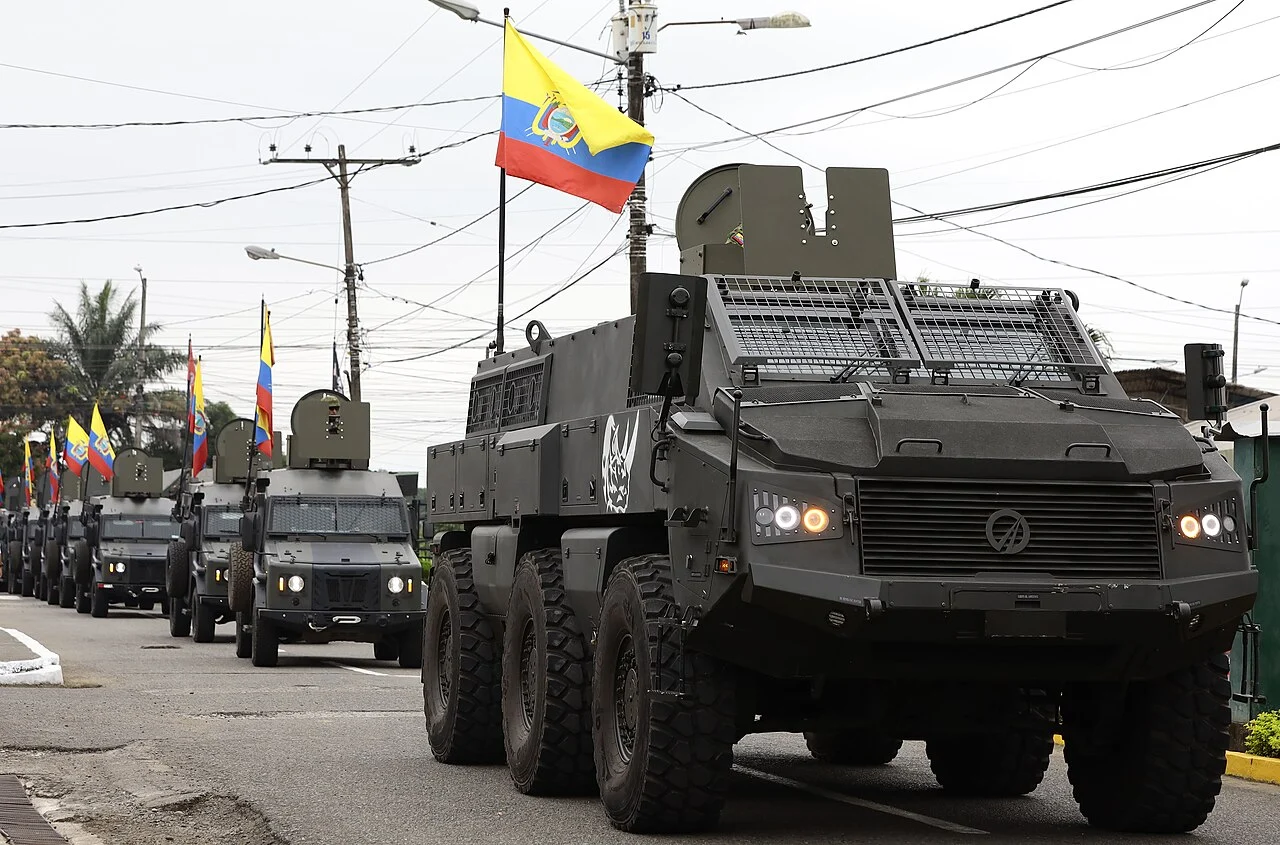
Manufacturer: Paramount Group (South Africa). Specifications (Mbombe 4, manufacturer figures): weight 16 tonnes, crew of seven, payload close to 3 tonnes, burst speed 140 km/h, range 800 km, STANAG 4569 Level 3 ballistic and Level 4A/4B blast protection.
Operational: Togo (about 20 Mbombe 4, ordered 2019), Nigeria (Marauder, in service with the Nigerian Air Force Regiment since March 2019, per Janes), Mali (Marauder, Togolese-owned vehicles deployed under its MINUSMA contingent), Mozambique and Libya’s eastern-based Libyan Arab Armed Forces (Mbombe 6, reaching Libya through Jordan). Delivered, in-service status unclear: DR Congo, Malawi, the Republic of the Congo and Algeria, plus Zambia’s police rather than its army. South Africa’s own armed forces have not adopted either vehicle; both are export-only programmes.
Why it matters: Mbombe and Marauder are the clearest case of an African-designed-and-built vehicle competing on its own terms against Turkish and European rivals, not just within Africa but as far as Ecuador. Our African-made armoured vehicles gallery and dedicated Mbombe and Marauder operator page cover the full order history.
3. Casspir / Mamba — 8 African countries, the oldest design still in service
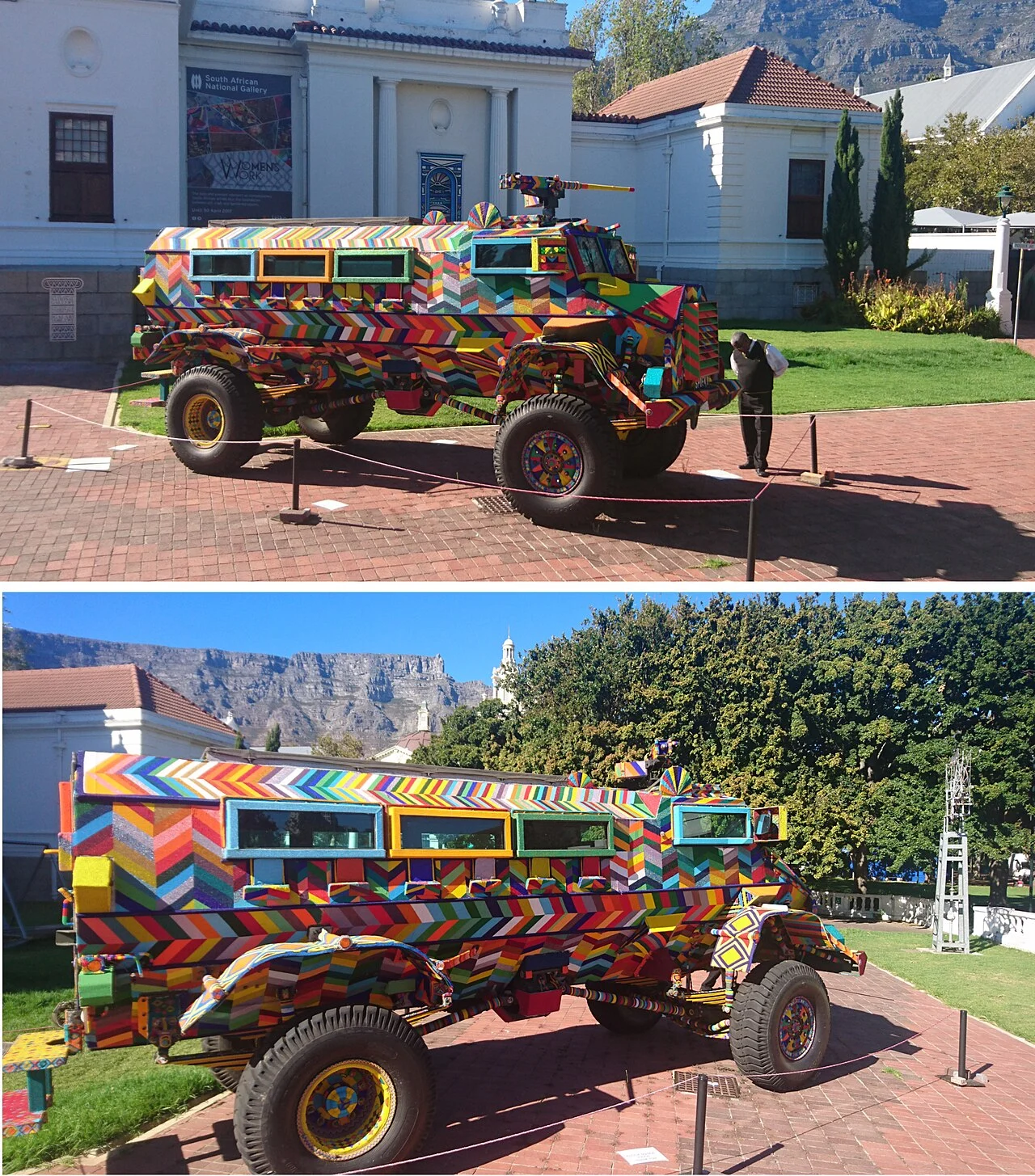
Manufacturer: originally built by TFM to a South African Police requirement, later produced by Denel Mechem (Casspir) and Osprea Logistics (Mamba Mk7). Specifications (NG2000-series, Shephard Media, defenceWeb): combat weight class around 11 tonnes for the baseline Casspir, crew of 2 plus up to 12, top road speed 100 km/h, range around 770 km, protection rated to STANAG 4569 L4a/L4b.
Operational or recently documented: South Africa (SANDF), Uganda and Burundi (AMISOM contingents in Somalia), Kenya (AMISOM), Mali (29 Casspirs donated by Germany in 2019), Angola (45 NG2000B ordered in 2013) and Niger and Togo (Mamba Mk7, built by Osprea Logistics). The SANDF used Casspirs and Mambas again in Mozambique’s SAMIM deployment and in the DRC’s SAMIDRC mission in 2024, where defenceWeb reported vehicle losses in combat with the M23 rebel group alongside continued use.
Why it matters: the Casspir’s V-hull layout became the direct ancestor of the US MRAP programme, and more than four decades after its first prototype the design and its Mamba successor remain in active peacekeeping and counter-insurgency use across three African sub-regions.
4. Arquus Bastion — 8 African countries, built on G5 Sahel donor funding
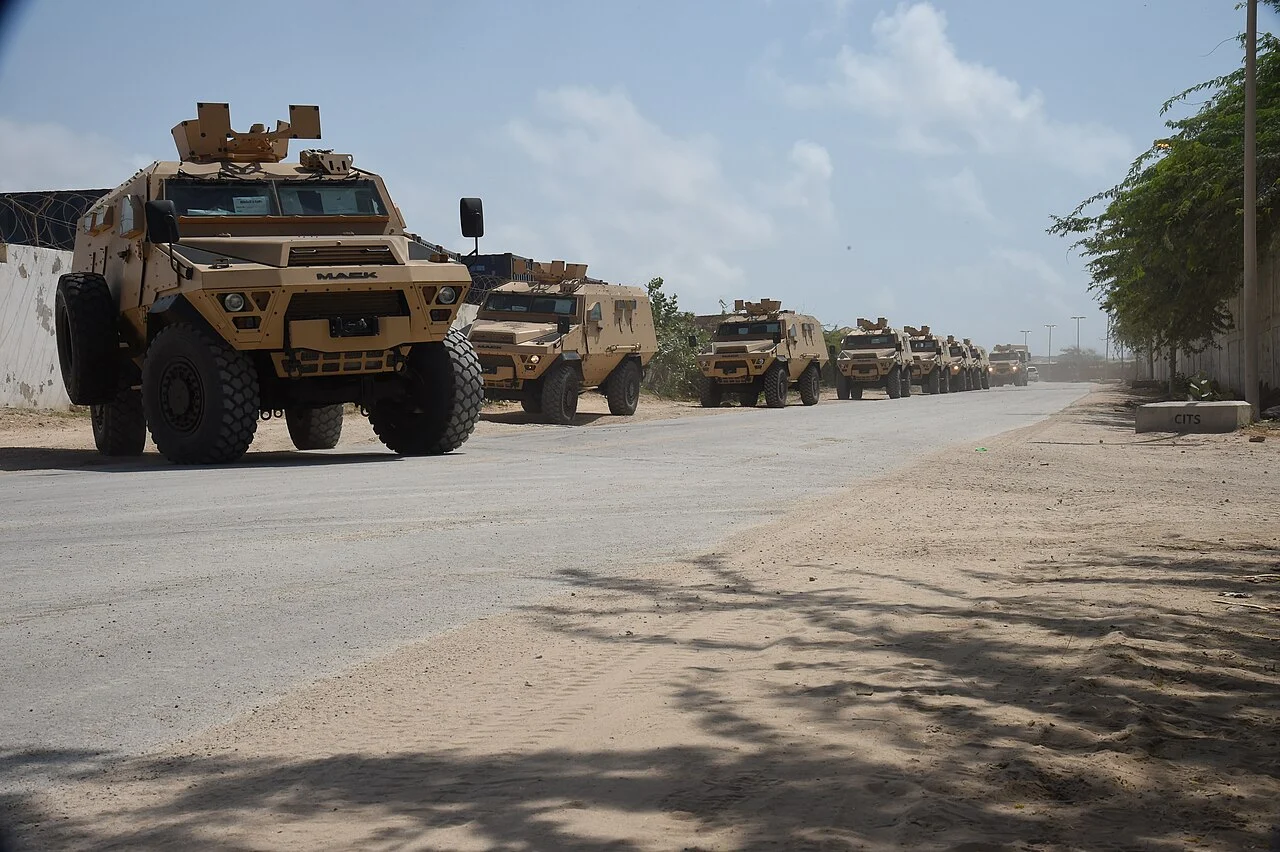
Manufacturer: Arquus, formerly ACMAT (France). Specifications (Army Recognition): weight around 12 tonnes, crew of 2 plus up to 10, maximum speed 110 km/h, range up to 1,400 km, protection rated STANAG 4569 Level 1 to 3 depending on configuration.
Operational or delivered: Cameroon, Ethiopia, Kenya, Mali and Senegal (Shephard Media’s production-milestone reporting lists country-specific vehicle counts for each), plus Somalia, where Bastions reached both the national army and AMISOM’s Ugandan contingent. A separate EU-funded tranche for the G5 Sahel Joint Force added Burkina Faso and Mauritania by January 2020, according to Janes, with Mali receiving 13 more vehicles from the same 46-vehicle batch.
Why it matters: Bastion’s African spread runs through two parallel funding channels, US security assistance contracts and EU G5 Sahel support, rather than direct commercial sales, making it a case study in how donor procurement shapes African vehicle fleets independently of what individual governments can afford to buy outright.
5. Ejder Yalçın — 6 African countries, Türkiye’s newest widely exported 4×4
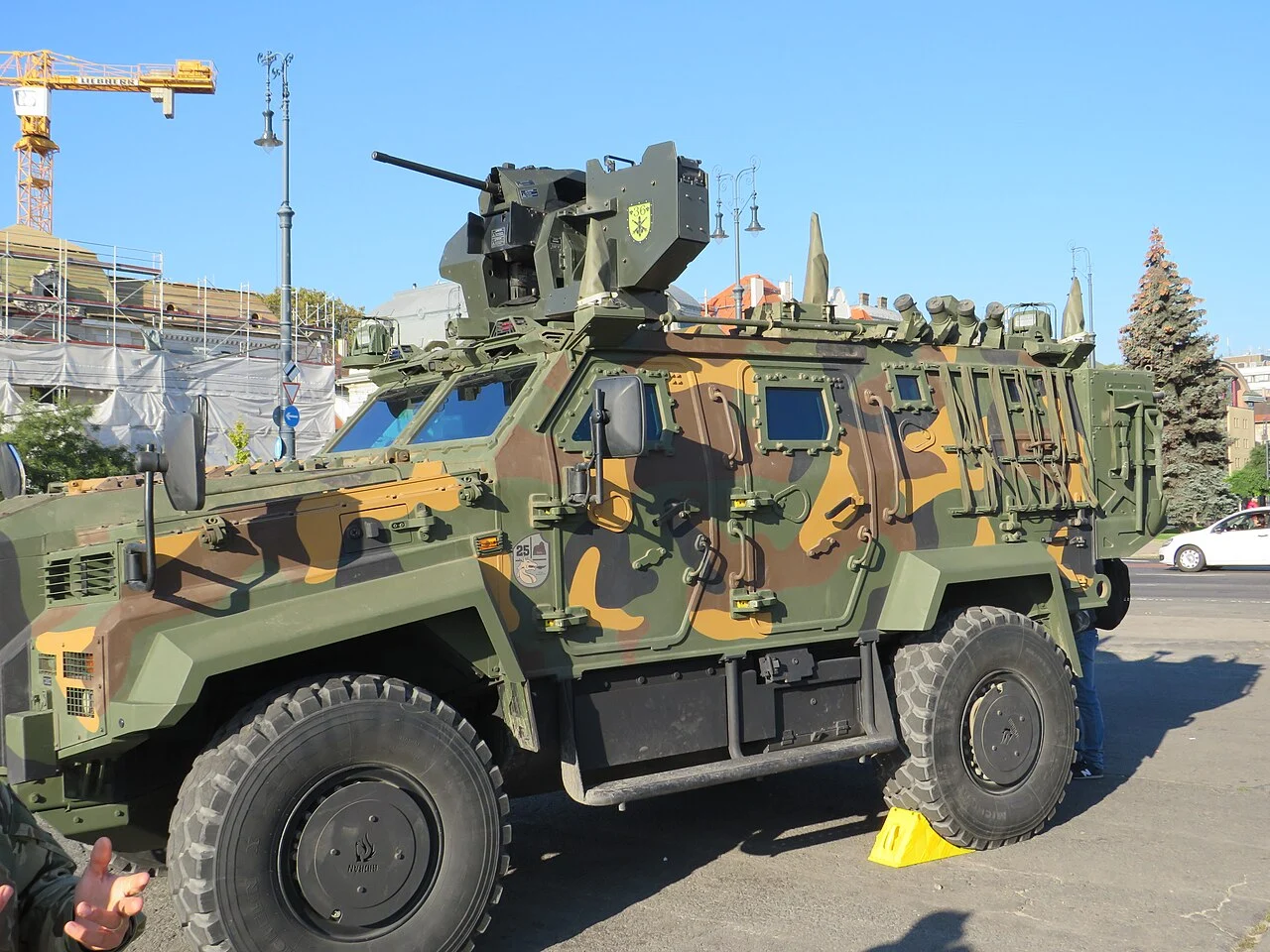
Manufacturer: Nurol Makina (Türkiye). Specifications (manufacturer figures): weight around 14 tonnes, crew of 2 plus 9, Cummins diesel engine rated at 375 hp, maximum speed 120 km/h, range 700 km, all-welded steel armour scalable up to STANAG 4569 Level 4.
Operational: Tunisia, Senegal, Chad, Burkina Faso and Morocco. Ordered but not confirmed delivered: Niger, which placed an order in 2022. Nurol Makina told European Security & Defence in September 2026 that the Ejder Yalçın family is in service in “10+ countries” worldwide, a figure consistent with this African count once Qatar, Hungary and Malaysia are added outside the continent. Our full Ejder Yalçın operator page tracks every country, including the ones still rumoured rather than confirmed.
Why it matters: the Ejder Yalçın is the youngest vehicle family in this ranking, launched in 2014, and has already reached six African militaries plus a licence-production line in Hungary, suggesting Nurol Makina is following Otokar’s earlier playbook of combining export sales with local assembly deals.
6. BMC Kirpi — 3 African countries, a decade of service with a thin paper trail
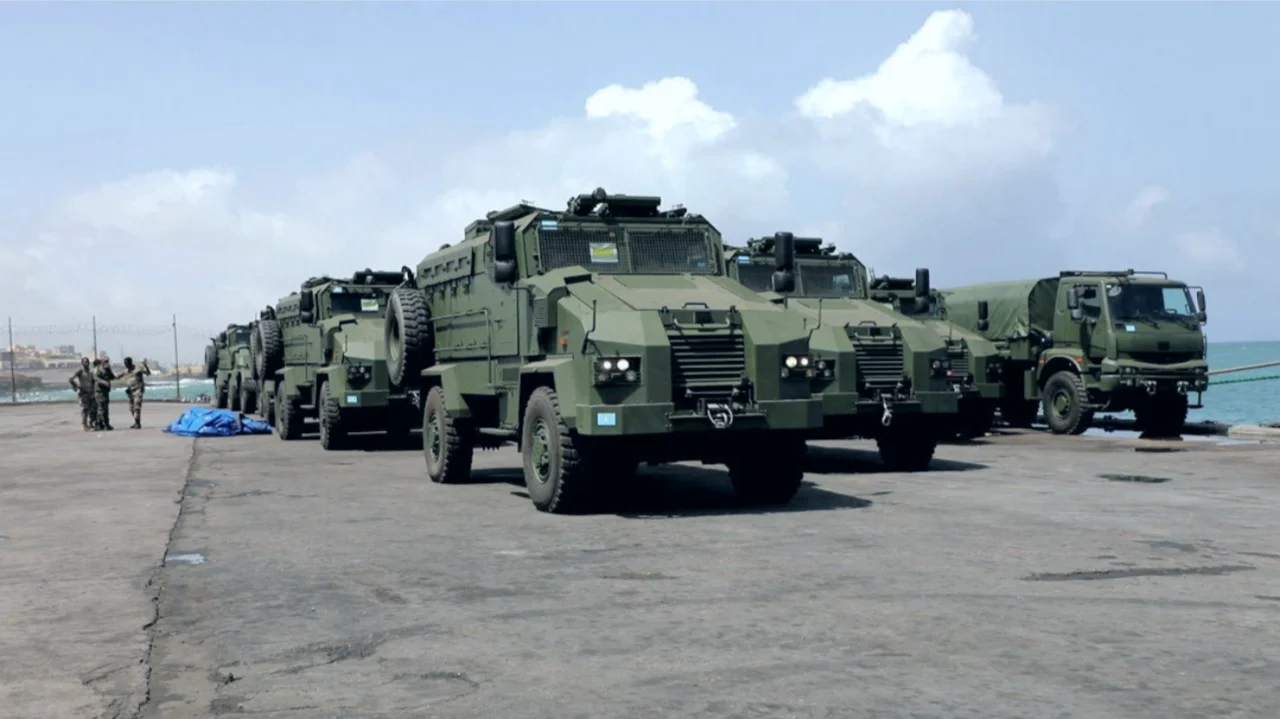
Manufacturer: BMC Otomotiv Sanayi ve Ticaret A.Ş. (Türkiye). Specifications (BMC official technical data): weight 20,000 kg, crew of up to 13, range 1,000 km at 60 km/h, protection rated to STANAG 4569 Level 3.
Operational or delivered: Tunisia (about 100 vehicles ordered 2014, delivered 2014-2016, used against jihadist groups along the Algerian border and in the 2016 Ben Guerdane battle); the Tripoli-based Government of National Accord’s forces in Libya (at least 27 vehicles identified from a shipment landed at Tripoli port in May 2019, which the UN Panel of Experts and the Atlantic Council’s DFRLab documented as a breach of the UN arms embargo); and Somalia (donated by Türkiye to the Gorgor special forces).
Why it matters: Kirpi shows the limit of counting countries rather than vehicles. Tunisia alone likely operates more Kirpis than the other two countries combined, and Libya’s fleet arrived through an embargo-breaching shipment rather than a government-to-government sale, underlining how Turkish MRAP exports to Africa mix ordinary procurement with far less transparent transfers.
| Rank | Vehicle family | Manufacturer / origin | African countries (order/delivery/service) | Source, year |
|---|---|---|---|---|
| 1 | Otokar Cobra / Cobra II | Otokar, Türkiye | 12 | Army Recognition, defenceWeb, 2026 |
| 2 | Paramount Mbombe / Marauder | Paramount Group, South Africa | 10 | defenceWeb, Janes, 2026 |
| 3 | Casspir / Mamba | TFM/Denel Mechem/Osprea Logistics, South Africa | 8 | defenceWeb, Shephard Media, 2026 |
| 4 | Arquus Bastion | Arquus (ex-ACMAT), France | 8 | Shephard Media, Janes, 2020-2026 |
| 5 | Ejder Yalçın | Nurol Makina, Türkiye | 6 | Nurol Makina, Army Recognition, 2026 |
| 6 | BMC Kirpi | BMC Otomotiv, Türkiye | 3 | DFRLab, Army Recognition, 2026 |
Why it matters for Africa
None of the six vehicle families ranked here were designed with an African customer in mind, yet together they now equip counter-insurgency, border-security and peacekeeping units from Senegal to Somalia. Price is the common thread: all six sit well below the cost of a Western first-tier MRAP, and several arrived through donor funding rather than national defence budgets, as the EU’s G5 Sahel Bastion deliveries and Germany’s Casspir donation to Mali both show. That financing pattern gives exporting governments and manufacturers real influence over which vehicle an African army ends up operating, independent of its own procurement choices.
The ranking also exposes uneven technology transfer. Paramount’s Mbombe and Marauder prove that African industry can compete on these terms when it controls design and production, while Otokar and Nurol Makina have begun pairing African and non-African export sales with licence-assembly deals elsewhere, a path South African, Nigerian and Egyptian manufacturers have only partly matched domestically. Sustainment remains the weak point across every entry: multiple sources cited here describe vehicles grounded for lack of spares rather than combat losses, a reminder that winning an order is only the first half of fielding a usable fleet in Africa’s operating environments.
For a side-by-side look at three light 4x4s in this market, see Otokar Cobra II vs Arquus Bastion vs NORINCO VN4.
Sources
- Army Recognition — Otokar debuts Cobra II tactical armoured vehicles (2024)
- Army Recognition — Otokar displays Cobra II latest-generation MRAP (2021)
- Janes — Nigerian Air Force receives Paramount Marauders
- Forecast International — Nigeria procures Marauder MRAPs (2019)
- Shephard Media — Denel introduces new-generation Casspir 2000 vehicles
- Shephard Media — Arquus finishes production of 500th Bastion
- Janes — Malian army receives new armour (G5 Sahel Bastion deliveries)
- Army Recognition — Ejder Yalçın production launches in Hungary (2023)
- BMC Otomotiv — Kirpi technical specifications
- Army Recognition — Chile receives first Arquus Bastion vehicles (specification reference)
- Atlantic Council DFRLab — Violating UN embargo, Turkish weapons appeared in Libya