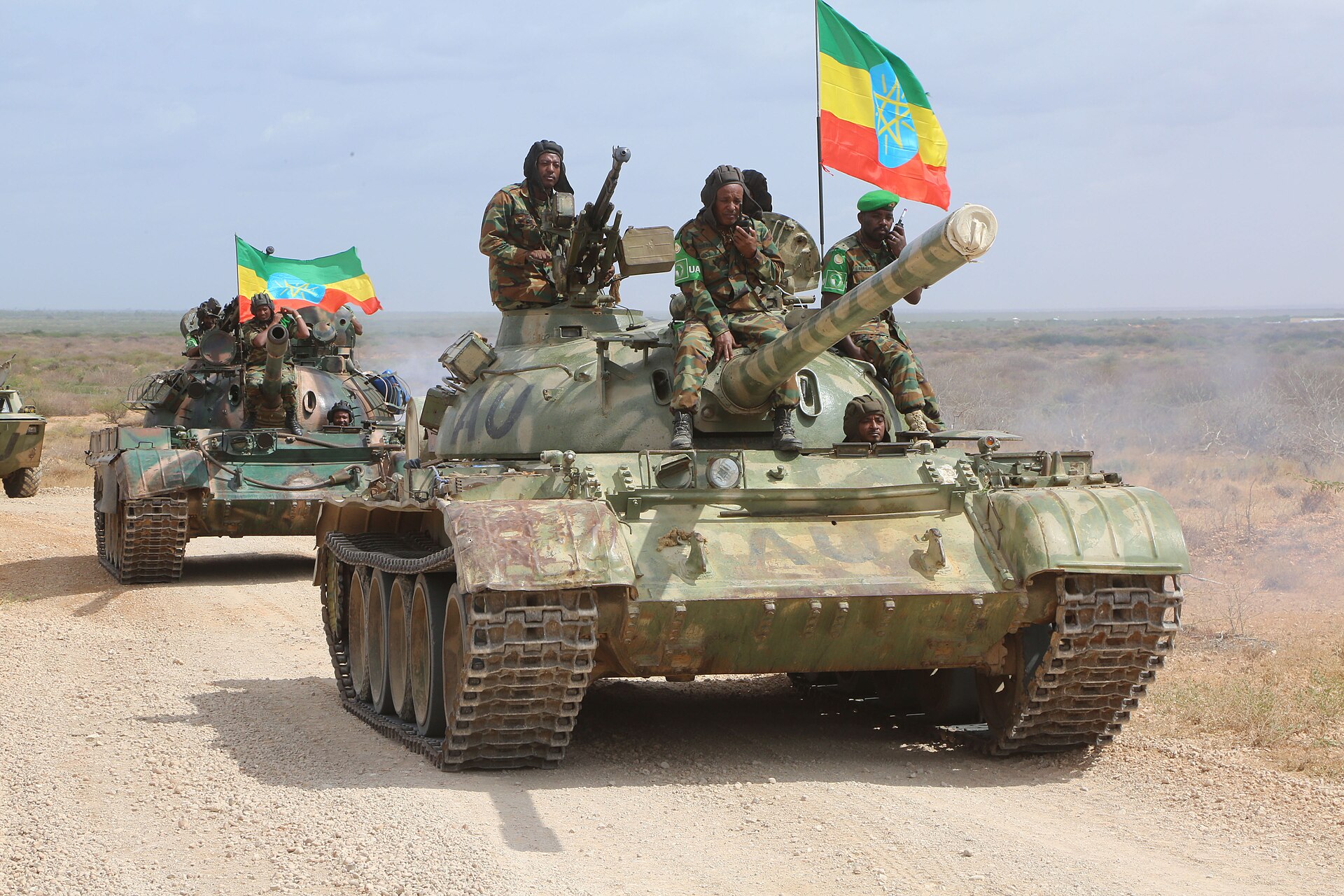
Ethiopian and Eritrean troops are now massed within striking distance of each other along their shared border, conflict monitors ACLED and International Crisis Group told Reuters on 18 November, and the contested town of Badme has again become the front line. ACLED says Eritrean forces retook Badme around 15 November and are fortifying nearby villages, while Ethiopian units are concentrated just across the line. Neither government has confirmed direct clashes, and Eritrea calls the reports Ethiopian “propaganda”.
The risk now is a direct war between the two states. Since late September the fighting in northern Ethiopia has been mainly between the Ethiopian National Defense Force (ENDF) and rebel forces in Tigray.
What ACLED says happened around Badme
In an expert comment published on 17 November, ACLED’s East Africa senior analyst Jalale Getachew Birru set out the sequence as the conflict monitor recorded it:
- 3 November: the ENDF entered Sheraro, after the Eritrean Defense Forces (EDF) and the Tigray Defense Forces (TDF) withdrew from the town on 12 October. During that October withdrawal the EDF also pulled back from Badme town to the outskirts, on the Eritrean side in Gash Barka region.
- 9 November: ENDF artillery fired from the Adiyabo area towards Hadish Mender (Hadish Adi), a village next to Badme. On the same day the ENDF fought TDF, Amhara Fano and Afar Uguugumo fighters at Gamhalo.
- 10–12 November: TDF–ENDF fighting along the Badme–Sheraro corridor, backed by ENDF drone strikes. The ENDF retook Adi-Kilte on 12 November.
- 12 November: ENDF drones hit what ACLED calls “likely EDF positions” around Badme, and the EDF answered with artillery.
- 13 November: ACLED recorded ENDF–EDF clashes at Adi Bokray and Adi Asmeru on the border.
- Around 15 November: the EDF re-entered Badme and sent “substantial troop reinforcements and heavy military hardware” to the Gual Gemhalo and Sembel border villages to build fortified defensive lines.
“The risk of a full-scale military confrontation along the Badme front is now high,” Jalale wrote. With ENDF units “simultaneously massed in and around Gemhalo on the Ethiopian side of the border,” he said, the two armies face each other across “a highly volatile front.”
The US-based Critical Threats Project (CTP) reached a similar reading in its 17 November Ethiopia War Security Review. It reported that Badme was contested on 13 and 14 November and that it had recorded no fighting there since 15 November. CTP also cited two conflict trackers who said Eritrea had begun a wide mobilisation. It said satellite imagery showed more activity at the Sawa military training base, about 130 miles (210 km) north-west of Badme, between 14 and 16 November. CTP could not tell whether that activity involved personnel or equipment.
Who confirms what
The reports conflict, and that matters for how far to trust any one account.
- ACLED and a person close to the Tigrayan rebels told Reuters that the two armies had clashed in recent days. That would be their first direct exchange in over a month.
- A person close to the pro-government Tigray Peace Force told Reuters that Ethiopian troops were pushing towards the border after the rebels but had not fought Eritrean forces.
- International Crisis Group analyst Magnus Taylor did not confirm any clashes. He warned that fighting near the border “could also draw Eritrea further into the war on the side of the Tigrayans,” a scenario that “could trigger a direct conflict between Ethiopia and Eritrea.”
- Reuters said it could not independently confirm the skirmishes.
Eritrea’s Information Minister Yemane Gebremeskel told Reuters there was “propaganda” from Ethiopia’s ruling party about the border. He did not address the build-up or clash reports directly. Ethiopian government spokespeople did not respond to Reuters. Asmara has consistently denied that its troops are inside Ethiopia.
Why Badme matters
Badme was the trigger for the 1998–2000 border war, which killed tens of thousands of people. The Eritrea-Ethiopia Boundary Commission, set up under the Algiers peace agreement, later ruled that the town lies in Eritrea. ACLED describes the town as carrying “deep historical and symbolic weight”. Rebel groups are also active nearby: TDF, Amhara Fano and Afar Uguugumo forces operate in the area under the Alliance for Survival coalition.
The northern sectors have been quieter. ACLED says tensions around Rama and Zalambessa “largely subsided” after the ENDF took back Zalambessa on 12 October and Rama on 7 November. Defence Mena covered the Ethiopian army’s arrival at Zalambessa at the time. CTP still reports federal–TDF fighting near Rama and Adigrat, and suspected ENDF drone strikes in Irob district between 14 and 16 November.
The accusations behind the build-up
The build-up follows a sharp exchange of accusations. Ethiopia’s army chief, Field Marshal Birhanu Jula, said on 14 November that Eritrea had led the latest rebel offensive and that Egypt had supplied it. He gave no evidence (our report). Earlier, on 9 October, Ethiopia’s foreign minister wrote to the UN Security Council accusing Eritrea of an “armed attack” and saying Ethiopia would exercise self-defence, according to CTP. Eritrea, Egypt and Sudan all deny backing the rebels.
The dispute also overlaps with Addis Ababa’s push for sea access. Asmara treats Prime Minister Abiy Ahmed’s statements on regaining a Red Sea outlet as an implicit threat. Abiy says Ethiopia will pursue access peacefully, and Ethiopian naval leaders have spoken of law, diplomacy or an “other alternative”.
Diplomatic contacts are continuing. CTP reports that the UN Secretary-General’s special envoy for the Horn of Africa, Guang Cong, has met Ethiopian and Eritrean officials separately since late October. A UN and diplomatic delegation, including the US ambassador to Ethiopia, met Tigray’s interim leaders in Mekele on 17 November.
What to watch
- Any official ENDF or Eritrean statement confirming or denying fighting around Badme, Gual Gemhalo or Sembel
- Whether the Eritrean mobilisation at Sawa is confirmed by more imagery or witnesses
- Drone use: ACLED and CTP attribute repeated border-area strikes to the ENDF, which has not commented on them
- Whether UN or African Union mediation produces any contact between the two militaries
Related: Sudan’s drone war and its strain on ties with Ethiopia.
Sources
- Reuters (Aaron Ross, Ammu Kannampilly, Giulia Paravicini), “Ethiopia and Eritrea amass forces along border, heightening war fears, sources say”, 18 November 2026, via Al-Monitor
- ACLED, Jalale Getachew Birru, “What is happening in and around Badme, at the border between Ethiopia and Eritrea?”, 17 November 2026: acleddata.com
- Critical Threats Project, “Ethiopia War Security Review, November 17, 2026”: criticalthreats.org
- Military Africa on X, Ethiopia army chief accusations, 17 November 2026: @militaryafrica