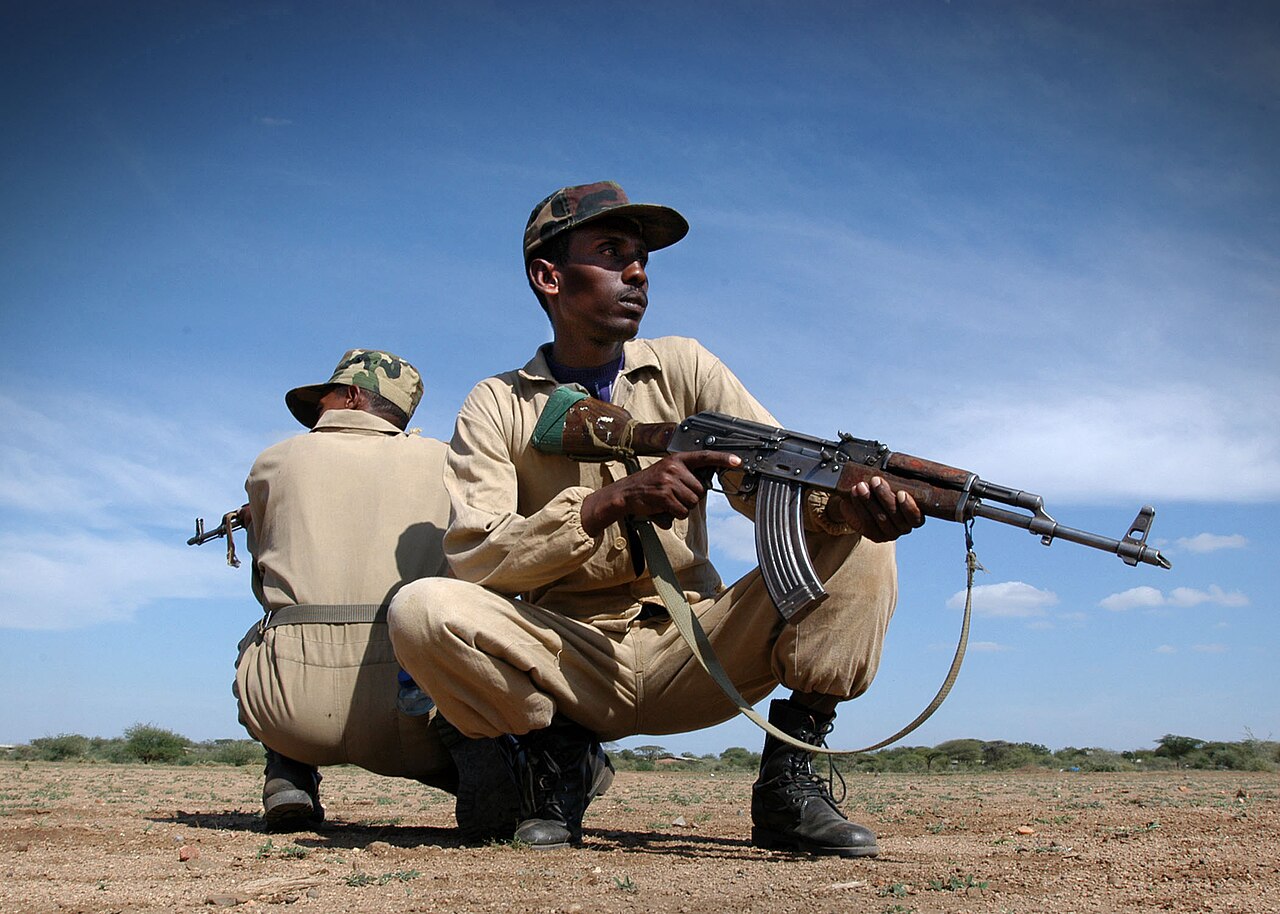
Ethiopian army salary figures are not published in any official rank-by-rank table that this review could find, and the monthly amounts that circulate online cannot be traced to a government document. This guide sets out what can be verified about pay in the Ethiopian National Defense Force (ENDF): the rank structure, the federal pay reform announced in August 2025, a documented pay dispute in the ranks, the UN peacekeeping rate and the rules for joining. It gives no monthly figure for any rank, because none was confirmed by the Ministry of National Defence or the Ministry of Finance in the sources reviewed.
Ethiopian Army Salary: What Is and Is Not Public
The ENDF is a unified force. In the December 2018 reform briefing, officials said a naval force would be reinstated as a single entity under the Defense Force, which already includes the army and the air force. Pay for all components is set by the federal government.
No ministry, parliament or state media item reviewed for this guide publishes the ENDF pay scale. Federal announcements cover civil service pay instead. Any website that lists a specific monthly amount for a private, sergeant or colonel without citing a decree or ministry notice is offering an estimate.
Scale matters for context. According to the same 2018 briefing, the Defense Force consumes less than 2 percent of the national budget, as Ethiopian News Agency reported. That figure dates from 2018 and may have changed.
How Pay Is Structured Across the ENDF Ranks
Reference listings say conventional ranks and units were adopted only in 1996, and that the rank system was revised in 2022 to add a field marshal rank at the top. State media style the Chief of General Staff, Birhanu Jula, as Field Marshal, for instance in Fana coverage of his visit to Uganda.
Below that sit general officers from brigadier general to general, with rear admiral as a naval rank, then colonels, lieutenant colonels, junior officers, non-commissioned officers and enlisted soldiers. How base pay, rank pay and allowances are combined has not been itemised in any public source reviewed.
The 2018 reform also cut the number of military commands from six to four: Northern, Southern, Eastern and Western. Professionalism and political neutrality were named as key goals, but the briefing gave no pay figures.
Pay has been politically sensitive. On 10 October 2018, hundreds of soldiers, some armed, went to the Prime Minister’s office asking for a salary increase. A military court penalised 66 officers who took part, and administrative measures were taken against the others, according to Ethiopian News Agency. The report gave no salary amounts.
Salary Table: What Can Be Verified
The nearest public benchmark is the federal pay overhaul announced in August 2025. The table separates what is confirmed from what is not.
| Pay element | Verified information | Status |
|---|---|---|
| ENDF pay scale by rank | No official table found | Not public in sources reviewed |
| Federal minimum monthly salary | 6,000 birr, up from 4,760 | Announced August 2025, effective September |
| Federal maximum monthly salary | 39,000 birr, up from 21,492 | Announced August 2025, effective September |
| Entry level, bachelor’s degree | 11,500 birr, up from 6,940 | Announced August 2025, effective September |
| ENDF covered by this scale | Not stated | Unconfirmed |
| UN peacekeeper reimbursement | US$1,428 per soldier per month, paid to the government | Standard UN rate since 1 July 2019 |
The figures come from a Fana report on the Federal Civil Service Commission announcement. It says the new scale needs an additional 160 billion birr and lifts the total annual salary bill to about 560 billion birr.
The announcement refers to federal government employees and to workers in sectors beyond the civil service. It does not mention defence or security personnel, so it cannot be used to state what a soldier earns.
Allowances, Peacekeeping Income and Other Benefits
No schedule of allowances for ENDF personnel was found. Housing, food, hardship or family allowances may exist, but amounts and eligibility have not been published in the sources reviewed.
Peacekeeping is the one area with a public figure. The UN pays contributing governments a standard rate of US$1,428 per soldier per month. The money goes to governments, not to individual soldiers: each soldier’s pay comes from their own government, based on their national rank and salary scale, as the UN Peacekeeping funding page explains.
Ethiopian officials have listed Rwanda, Burundi, Liberia, Côte d’Ivoire, Somalia, South Sudan, Abyei and Darfur among past and present missions. The UN publishes a monthly ranking of contributions by country, which shows the current size of the Ethiopian deployment.
How Ethiopian Army Salary Compares Regionally
A like-for-like comparison is not possible without an ENDF table. Neighbouring and peer armies differ in how much they disclose.
Egypt has a similar gap: the Egyptian army officer salary guide explains that no open rank-by-rank table exists there either. South Africa is documented rank by rank in the SANDF salary by rank guide, and the Nigerian Army salary guide covers a pay rise across Nigeria’s armed forces.
For ranks rather than money, the African military ranks comparison places Ethiopia’s structure alongside other armies. The only figure that is identical across contributors is the UN reimbursement rate, which says nothing about what Ethiopia pays its own troops.
Career Path and Promotion
Promotion criteria, time-in-rank rules and pay steps have not been published in the sources reviewed. What is visible is the shape of the service: a single chain of command under the Chief of General Staff, four regional commands after the 2018 reform, and a restored naval component.
The reform briefing described military professionalism as a central aim, with loyalty owed to the people and the constitution rather than a party. That framing points to a career structure built around merit and training, but the details are not in the public record reviewed here.
State media also report that defence institutions are being reorganised as research and innovation centres, a theme in Fana’s coverage of the Chief of General Staff’s remarks on reform. No link between that work and pay scales was stated.
Requirements and How to Join
Reference listings state that the military age is 18 and that the ENDF relies on voluntary service, with call-ups possible when necessary. The sources reviewed identified no routine conscription.
No current official recruitment notice was found, so education levels, age ceilings, medical standards and application steps cannot be listed here. Candidates should rely on announcements from the Ministry of National Defence and regional administrations, and treat unofficial job sites with caution, especially those asking for fees.
Anyone checking an offer should also compare it with the Ethiopian army salary information in this guide: a site that quotes exact ENDF monthly rates without a document is not working from public data.
Frequently Asked Questions About Ethiopian Military Pay
How much does an Ethiopian soldier earn?
No official ENDF pay table was found, so any specific monthly amount for a rank is unverified. The nearest confirmed benchmark is the federal civil service scale, from 6,000 to 39,000 birr a month, but that announcement does not say whether soldiers are covered.
Did Ethiopia raise military pay in 2025?
The August 2025 federal salary announcement covers government employees and workers beyond the civil service. It does not name defence or security personnel, so a military pay rise cannot be confirmed from it. Any ENDF-specific increase would need a ministry or cabinet notice.
Do Ethiopian peacekeepers earn the UN rate?
No. The UN pays US$1,428 per soldier per month to the contributing government, not to the individual. Each soldier is paid by their own government according to national rank and salary scale, and Ethiopia has not published that scale in the sources reviewed.
Is military service compulsory in Ethiopia?
Reference listings describe service as voluntary from age 18, with call-ups possible when necessary. The sources reviewed found no routine conscription. Current rules should be confirmed with the Ministry of National Defence, because wartime recruitment drives can change expectations quickly.
Sources
- Fana: Government implements record salary overhaul (19 August 2025)
- Fana: Government reaffirms commitment to easing financial burden on civil servants (19 August 2025)
- Ethiopian News Agency: Member of Army Marched to PM Office Penalized
- Ethiopian News Agency: Defense Force to Enhance Professionalism through Reform
- United Nations Peacekeeping: How we are funded
- United Nations Peacekeeping: Troop and police contributors
- Fana: Chief of General Staff of ENDF Field Marshal Birhanu Jula on a working visit in Uganda
- Fana: Reform implementation has made defense institutions research and innovation centers