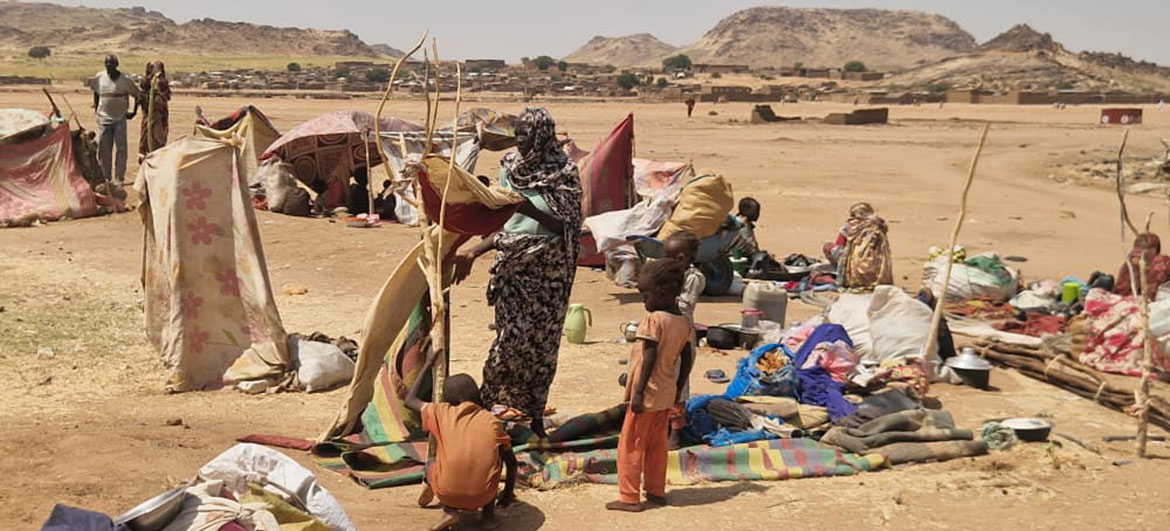
The UN Human Rights Office has confirmed that more than 2,230 civilians were killed in Sudan’s war between January and the end of October 2026. Drone strikes killed over 1,630 of them, close to three in four. The office released the figures on 17 November with a report on the first half of the year. It calls drones a “defining feature” of the conflict and says the real toll is likely higher.
These are minimum, UN-verified counts. They cover all parties: the Sudanese Armed Forces (SAF), the Rapid Support Forces (RSF) and allied armed movements.
The numbers
| Period | Civilians killed (confirmed) | Of which by drones |
|---|---|---|
| January–June 2026 | at least 1,390 | more than 80% |
| July–October 2026 | about 840 | close to 520 |
| January–October 2026 | over 2,230 | over 1,630 |
Source: UN Human Rights Office statement, 17 November 2026.
Kordofan accounted for more than two-thirds of documented civilian casualties, and Darfur for most of the rest. Drone strikes also reached eastern and central Sudan. In White Nile state, at least 41 civilians were killed during the reporting period.
What the drones hit
For January to June, the office documented at least:
- 39 drone strikes on markets
- 20 on civilian vehicles
- 17 on fuel tankers and depots
- 16 on health facilities
It also lists schools, water sources and displacement sites among the targets, some of them struck repeatedly. It says strikes on markets, combined with looting and movement restrictions, have cut access to food in areas the IPC food-security system warned in October were at rising risk of famine.
The office singles out one recent trend. Between 20 October and 4 November it counted 29 drone strikes on electricity facilities and fuel stations across 11 states. It attributes these to the RSF. The strikes caused widespread blackouts that disrupted dialysis, surgery, water supply and food production “far from the conflict frontlines”. Defence Mena reported on that campaign as it happened, including strikes on Sudan’s power grid and Egypt’s response.
The report does not give a full split of drone deaths by party in the published summary. Strikes by both sides have been reported this month. Rights monitors blamed an army airstrike for at least 13 deaths at Abu Qalb in West Kordofan on 16 November, which Defence Mena covered in its latest front-line update. The RSF has been accused of drone attacks on cities and infrastructure far behind the lines.
What UN officials said
“The facts speak for themselves,” High Commissioner Volker Türk said. He accused the warring parties of a “continued and brazen disregard for the laws of war” and said the documented violations “may amount to war crimes.” He added: “The parties to the conflict must protect civilians and uphold their international law obligations—the world is watching.”
Li Fung, the OHCHR representative in Sudan, told a Geneva briefing that drone strikes “have become the major cause of civilian deaths in 2026, and a driver of displacement and civilian harm.” She said the cumulative effect was “a progressive erosion of the infrastructure and essential services on which civilian survival depends.”
Neither the SAF nor the RSF had publicly responded to the report by the time of publication.
Why drones dominate Sudan’s war
Both sides now rely on drones to strike well beyond the lines they hold, a point the report makes directly. Their fleets range from modified commercial quadcopters to long-range attack drones. Both sides have been accused of getting drones from abroad, and the countries named in those reports deny it.
The drone war has also crossed borders. Sudan has accused Ethiopia of letting drones launch from its territory, which Addis Ababa denies (our report). Sudan’s army says it shot down a “strategic” drone over Blue Nile on 13 November. For an overview, see Sudan’s drone war widens.
The ground war is also intensifying. The army is pushing west through West Kordofan, the region where the UN says civilians have suffered most this year.
What to watch
- Whether the full report attributes specific drone incidents to the SAF or the RSF
- Responses from Port Sudan and the RSF leadership
- Further strikes on power and fuel infrastructure as the dry-season offensives continue
- Any follow-up at the UN Human Rights Council or the Security Council
Sources
- UN Human Rights Office / UN in Sudan, “UN report details deadly civilian impact of surge in drone strikes”, Geneva, 17 November 2026: sudan.un.org
- UN Geneva newsroom, press briefing by OHCHR spokesperson Marta Hurtado and Sudan representative Li Fung, 17 November 2026: unognewsroom.org
- Reuters, via Arab News, “Drones account for nearly three-quarters of Sudan war deaths this year, UN says”, 17 November 2026: arabnews.com
- Anadolu Agency, 17 November 2026: aa.com.tr