Fifteen African countries have received BMP-1 or BMP-2 tracked infantry fighting vehicles, according to SIPRI. Algeria (more than 1,100 delivered) and Libya (about 800 BMP-1s) were the largest recipients, followed by Angola (about 550) and Egypt (about 250 BMP-1s). Algeria is the clearest active operator today, having upgraded hundreds of BMP-2s to the BMP-2M standard with Russia’s Berezhok turret. Chad, Sudan, Uganda and Nigeria bought second-hand BMPs after 2008. No African army publishes a current BMP count.
Quick answer
Largest deliveries (SIPRI): Algeria ~1,143 (800 BMP-1, ~343 BMP-2); Libya ~800 BMP-1; Angola ~550; Egypt ~250 BMP-1; Chad ~122 BMP-1/BMP-1U; Uganda ~78 BMP-2/BVP-2; Ethiopia ~70; Sudan ~65. Smaller recipients: Togo, Equatorial Guinea, Nigeria, DR Congo, Côte d’Ivoire, Sierra Leone, Guinea. Main upgrade: Algeria’s BMP-2M (Berezhok turret with Kornet missiles).
Last updated: 8 November 2026. SIPRI delivery data run to 2025 and contain estimates. Algerian upgrade numbers come from press reports and are not official.
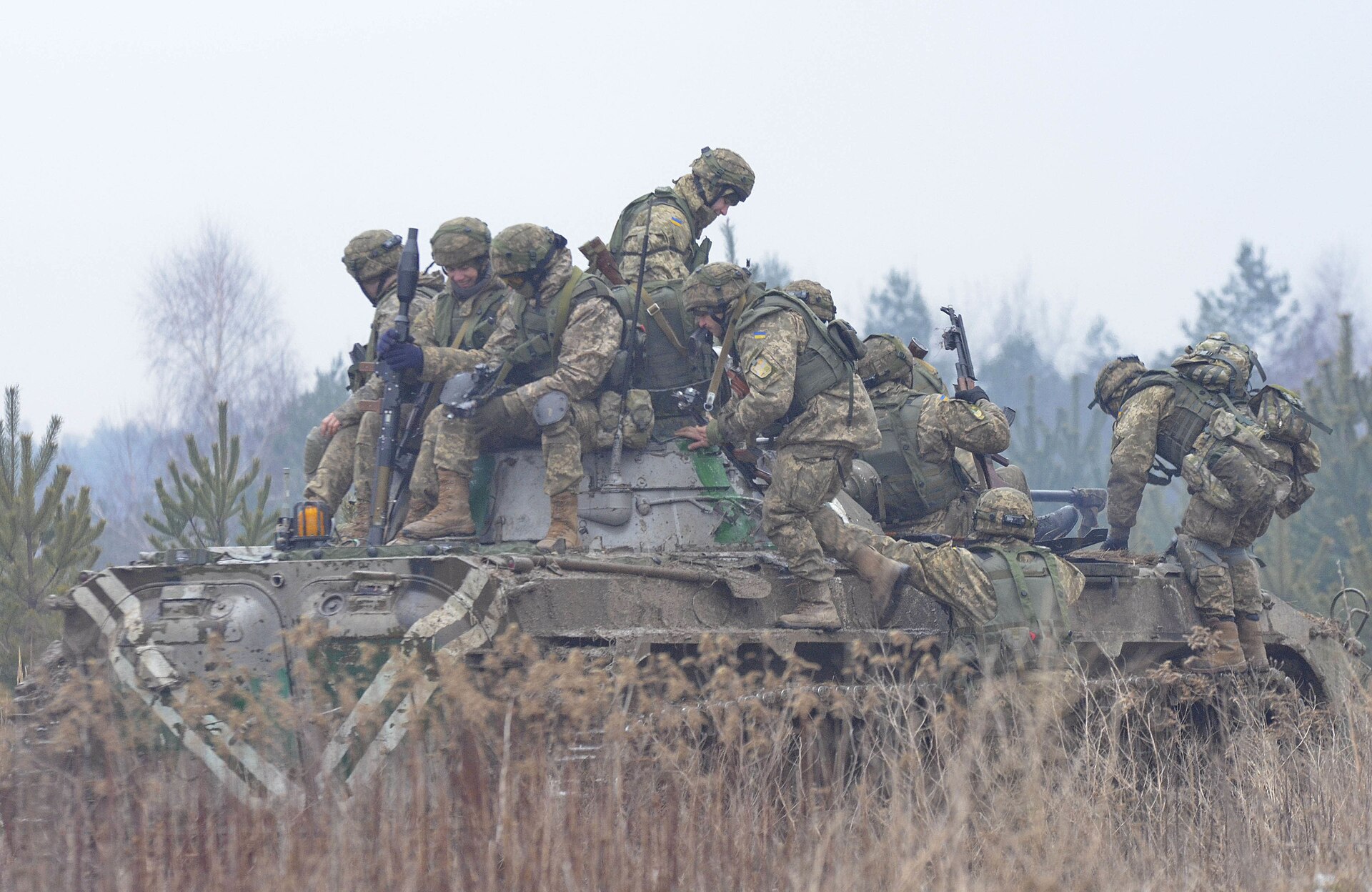
BMP-1 and BMP-2: what they are
The BMP (boyevaya mashina pekhoty, “infantry combat vehicle”) was the Soviet Union’s first mass-produced infantry fighting vehicle. Unlike a wheeled armoured personnel carrier, it is tracked, carries a squad that can fight from inside, and mounts a heavier weapon. The BMP-1 (1966) has a 73 mm low-pressure gun and an anti-tank missile launcher. The BMP-2 (1980) replaced that with a stabilised 30 mm cannon and a different missile. Both were exported in large numbers, and Czechoslovak and Polish licence-built versions (BVP-1, BVP-2) later reached Africa second-hand.
The distinction from wheeled BTRs matters. Tracked IFVs keep up with tanks off-road and carry more firepower, but are heavier, use more fuel and need more maintenance. That is why the largest BMP fleets in Africa belong to armies built for conventional, combined-arms warfare. Compare our guide to BTR wheeled APCs in Africa and our overview of how armoured vehicle fleets are structured.
BMP deliveries to African armies
| Country | BMP-1 | BMP-2 / BVP-2 | Main suppliers | Latest delivery |
|---|---|---|---|---|
| Algeria | ~800 | ~343 | Soviet Union, Slovakia, Ukraine | 1999 |
| Libya | ~800 | – | Soviet Union | 1982 |
| Angola | ~268 | ~282 | Soviet Union/Russia, Bulgaria, Belarus, Poland, Ukraine, Hungary | 1999 |
| Egypt | ~250 | 58 BMP-2 turrets for Fahd-240/30 | Soviet Union/Russia | 1997 |
| Chad | ~122 (incl. 42 BMP-1U) | – | Ukraine | 2010 |
| Uganda | – | ~78 | Ukraine, Belarus, Czech Republic | 2021 |
| Ethiopia | ~70 | – | Soviet Union | 1978 |
| Sudan | ~50 | ~15 | Ukraine, Belarus | 2013 |
| Togo | – | 20 | Poland | 1997 |
| Equatorial Guinea | 20 (BVP-1) | – | Czech Republic | 2007 |
| Nigeria | 20 (BVP-1) | – | Czech Republic | 2015 |
| DR Congo | 20 | – | Ukraine | 2006 |
| Côte d’Ivoire | 13 | ~3 | Belarus, Angola, Ukraine | 2003 |
| Sierra Leone; Guinea | Guinea ~2 | Sierra Leone ~4 | Russia; unknown | 1992; 2005 |
Source: DefenceMENA aggregation of SIPRI Arms Transfers Database rows (data to 2025). Totals are deliveries, not present fleets.
Algeria: the only large, modernised BMP fleet
Algeria received about 800 BMP-1s between 1979 and 1984 and roughly 340 BMP-2s from the Soviet Union, Slovakia and Ukraine in the 1990s. Rather than replace them, it has modernised. Defense News reported in May 2015 that BMP upgrades were a driver of Algerian army modernisation, and Military Africa reported in May 2021 that Algeria was fitting BMP-2s with Russia’s Berezhok combat module. The Berezhok keeps the 30 mm cannon but adds four Kornet anti-tank missiles, an automatic grenade launcher and a modern thermal sight, producing the BMP-2M. Press reports give several hundred upgraded vehicles, but those figures are not official and do not always match SIPRI’s delivery totals. Our Algeria military strength profile places the BMP fleet within Algeria’s wider army.
Libya and Egypt: large fleets of uncertain condition
Libya’s roughly 800 BMP-1s, delivered in 1979–1982, were degraded by decades of sanctions and then by fighting after 2011. Egypt’s 250 or so BMP-1s from 1973–1974 are among the oldest IFVs in African service; Egypt also bought 58 BMP-2 turrets for its locally assembled, German-designed Fahd-240/30 wheeled vehicles. Neither country’s current BMP count can be confirmed from public sources.
Angola, Chad, Sudan and Uganda: the second-hand market
After the Cold War, Eastern European surplus fed African demand. SIPRI records Angola buying BMP-1s and BMP-2s from Russia, Bulgaria, Belarus, Poland, Hungary and Ukraine in 1993–1999, during the final phase of its civil war. Chad received about 80 BMP-1s and 42 modernised BMP-1Us from Ukraine in 2008–2010. Sudan took about 50 BMP-1s from Ukraine in 2011–2013, alongside smaller BMP-2 batches. Uganda bought 31 BMP-2s from Ukraine in 2004–2005, six from Belarus in 2020 and 41 Czech BVP-2s delivered in 2020–2021. Czech media reported that the Ugandan vehicles were refurbished in Polička, and Oryx’s 2023 visual inventory of Ugandan armour documents BMP-2s in service.
BMP versus newer African IFVs
BMPs offer firepower but limited protection by modern standards, particularly against mines and roadside bombs. Several African armies now favour wheeled IFVs and mine-protected carriers for internal security. South Africa’s Ratel and Badger, Turkish and Chinese wheeled vehicles, and MRAPs fill those roles. See our guides to MRAPs in African service and Chinese VN-series armoured vehicles in Africa.
Frequently asked questions
Which African country has the most BMPs?
Algeria, by SIPRI deliveries: about 800 BMP-1s and roughly 340 BMP-2s. It is also the only African army known to have upgraded BMP-2s in large numbers, to the BMP-2M standard.
What is the BMP-2M?
It is a BMP-2 fitted with Russia’s Berezhok combat module, which keeps the 30 mm cannon and adds Kornet anti-tank missiles, an automatic grenade launcher and modern sights. Algeria has adopted it.
Is the BMP an APC or an IFV?
It is an infantry fighting vehicle: tracked, with a turret-mounted cannon or gun and an anti-tank missile, designed to fight alongside tanks rather than only transport troops.
Did Uganda buy BMP-2s recently?
Yes. SIPRI records six BMP-2s from Belarus in 2020 and 41 Czech-built BVP-2s delivered in 2020–2021, after 31 BMP-2s from Ukraine in 2004–2005.
Does Egypt use the BMP-1?
SIPRI records about 250 BMP-1s delivered in 1973–1974. Egypt has not published a current figure, and the fleet’s status is unconfirmed.
Sources
- Stockholm International Peace Research Institute (SIPRI), “SIPRI Arms Transfers Database, trade registers for African recipients (data to 2025)”, March 2026 release. https://armstransfers.sipri.org/ (accessed 6 November 2026 (local extract re-checked 8 November 2026)).
- Defense News, “BMP upgrades drive Algerian modernization”, 9 May 2015. https://www.defensenews.com/land/2015/05/09/bmp-upgrades-drive-algerian-modernization/ (accessed 8 November 2026).
- Military Africa, “Algeria upgrades BMP-2s with Berezhok turret”, May 2021. https://www.military.africa/2021/05/algeria-upgrades-bmp-2s-with-berezhok-turret/ (accessed 8 November 2026).
- Oryx, “Guardians of the Pearl: Uganda’s inventory of AFVs”, August 2023. https://www.oryxspioenkop.com/2023/08/guardians-of-pearl-ugandas-inventory-of.html (accessed 8 November 2026).
- Svitavský deník, “Bojová vozidla zamíří z Poličky do Ugandy”, 2020. https://svitavsky.denik.cz/zpravy-region/bojova-vozidla-zamiri-z-policky-do-ugandy/ (accessed 8 November 2026).
Method: counts from SIPRI are deliveries recorded by SIPRI, not current inventories. Status labels distinguish delivered, reported in service, ordered and retired; where open sources disagree, the range is shown rather than a single figure.