MRAPs in African Service: From the Casspir to Today’s Mine-Protected Fleets

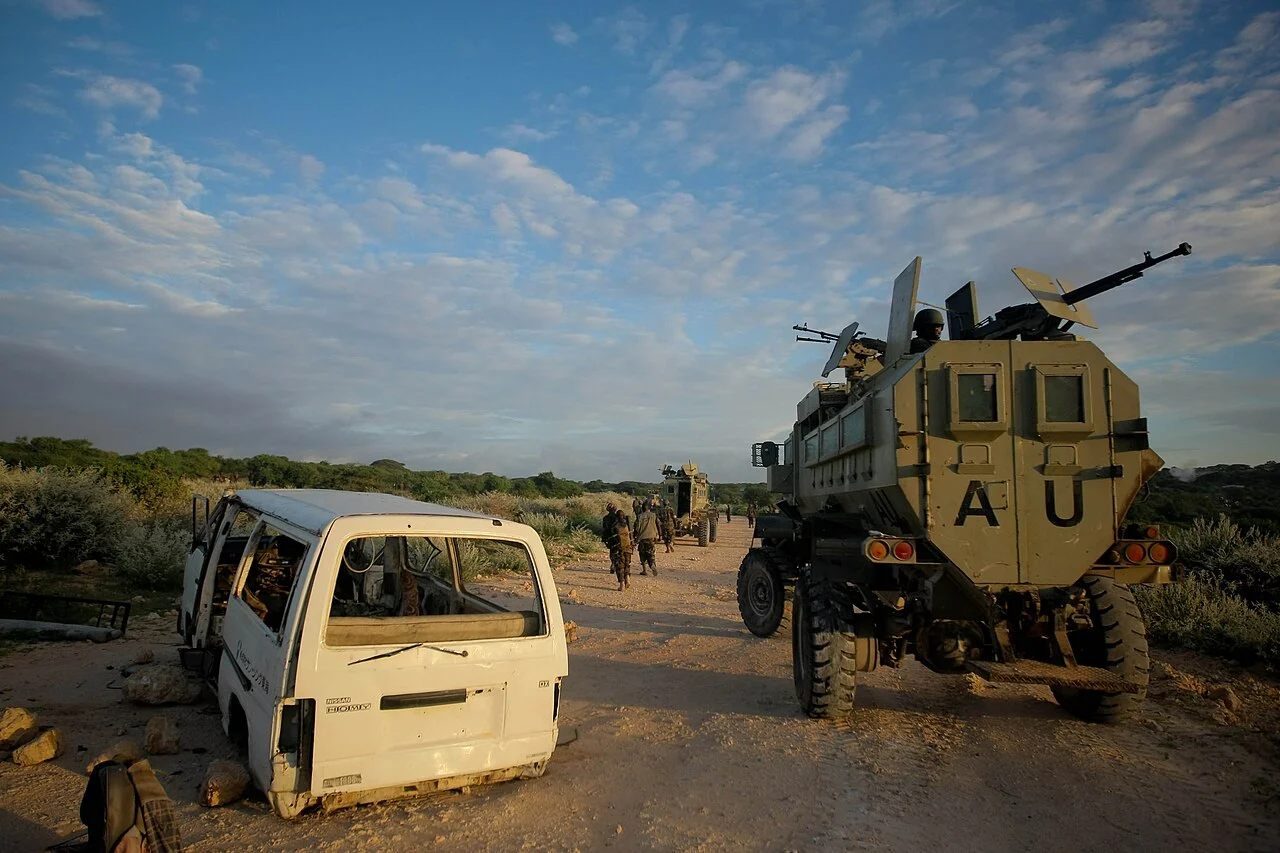


Mine-resistant ambush-protected (MRAP) vehicles have become a backbone of counter-insurgency and peace-support operations across Africa, from the Sahel to Somalia. This gallery traces the technology from its South African origins to the mixed fleets of today, with verified operators and sourced specifications as of November 2026.
DEFENCE AFRICA | Technology explainer gallery | Data as of November 2026
The V-hulled mine-protected vehicle was developed in South Africa in the late 1970s, a direct response to landmine warfare during the Border War in Namibia and Angola. The Council for Scientific and Industrial Research’s Defence Research Unit shaped a hull geometry that deflects blast energy outward and away from the crew compartment rather than absorbing it vertically, a principle that remains the basis of every MRAP built since. The Casspir and its predecessor, the Buffel, entered service with these characteristics and accumulated an extensive operational record against landmines and improvised explosive devices in southern Africa.
That South African design lineage, refined through the Mamba and the RG-31 Nyala, became the template the United States studied when it built the MRAP category for Iraq and Afghanistan in the mid-2000s. The result is a two-way flow of hardware into African service: locally designed vehicles still in production or reserve use across the continent, and surplus Western MRAPs such as the MaxxPro and Caiman returning to Africa as donated equipment for counter-insurgency campaigns in the Sahel and the Lake Chad Basin. Commercially built armoured personnel carriers marketed in the same MRAP category, such as the UAE’s Streit Group Typhoon and Spartan, have added a third supply channel into African armies over the past decade.
Key facts
- The Casspir entered South African service in 1979-1981 and is described by its manufacturer as able to withstand a blast equivalent to a triple TM-57 anti-tank mine detonation (Denel Mechem brochure).
- The RG-31 Nyala, built by BAE Systems Land Systems South Africa (formerly Land Systems OMC), is in service with more than 20 countries worldwide (BAE Systems product literature).
- The United States donated 24 MaxxPro and Caiman MRAPs to Nigeria in January 2016 under the Excess Defense Articles programme, valued at about $11 million, with eight more vehicles following (BusinessDay Nigeria, 2016; Fox News, 2016).
- Burkina Faso’s army operates 31 Puma M26-15 mine-protected vehicles built by South Africa’s OTT Technologies, according to open-source orders of battle.
1. Casspir — the vehicle that defined the category
The Casspir is a 4×4 mine-protected personnel carrier developed by the CSIR’s Defence Research Unit and produced in South Africa from 1979, originally for the South African Police counter-insurgency role and later for the South African Defence Force. Its V-shaped monocoque hull and high ground clearance became the reference design for the entire MRAP category: a US delegation studying the IED threat in Iraq reportedly observed a Casspir cross a live minefield before the US Marine Corps drew up its own MRAP requirements in the 2000s (multiple secondary accounts citing US Marine Corps program history; treat as widely reported but not independently documented by a primary US government source).
The type remains operational today in a support and legacy role: Denel Mechem-built wide-body variants were delivered to United Nations and African Union logistics support for the African Union Mission in Somalia in the mid-2010s (Denel Mechem press statement, 2014), and Casspirs remain in the inventories of several southern African security services. Its continued presence in peacekeeping and internal-security fleets, more than four decades after its introduction, is the clearest evidence of the design’s durability.
2. Buffel — the predecessor still visible in reserve fleets
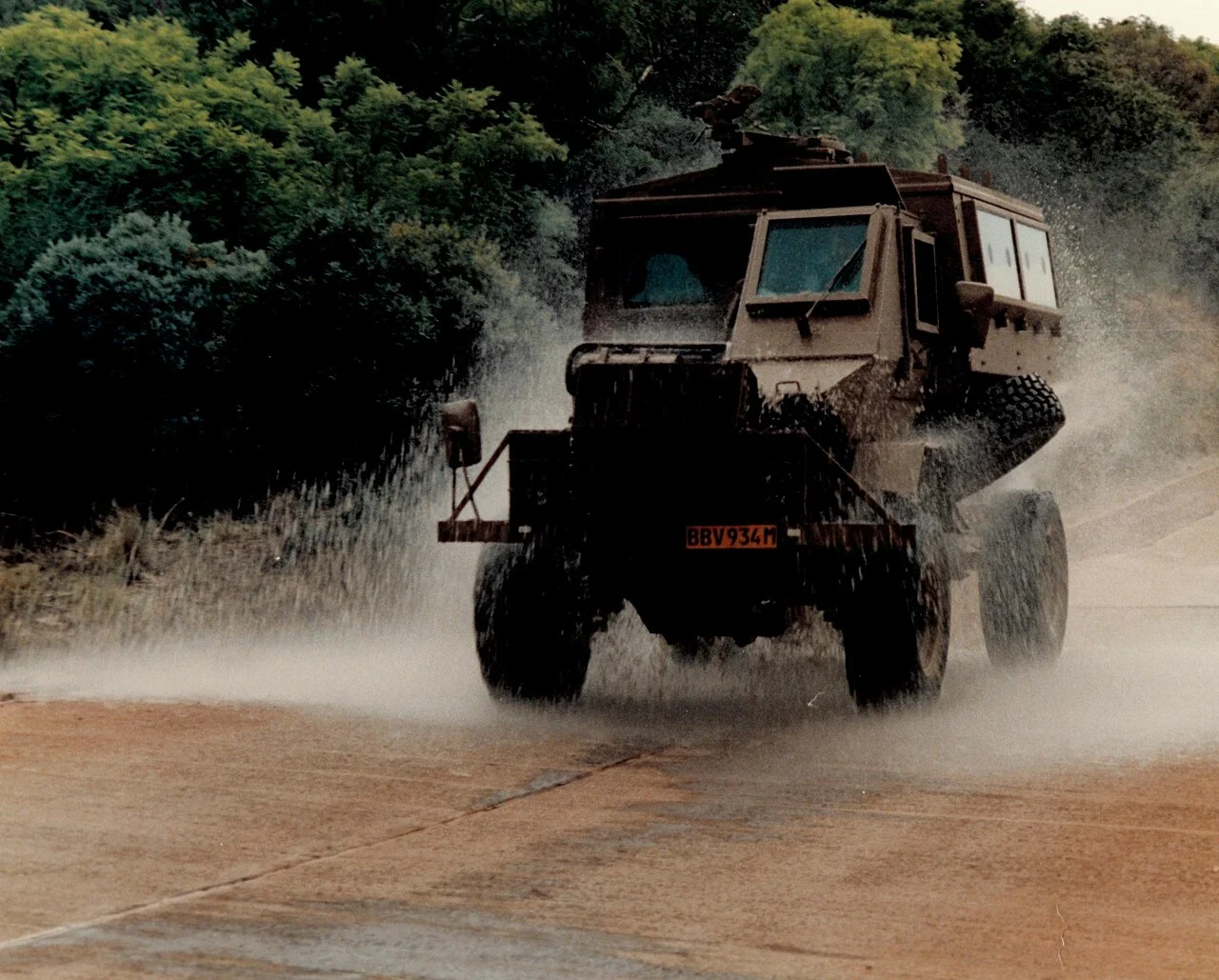
Built by ARMSCOR from 1978, the Buffel was South Africa’s first vehicle to use the V-hull mine-protection principle at scale, mounted on a Unimog-derived chassis with an open-top troop compartment. It saw extensive service during the Border War and was the direct design precursor to the Casspir. Production is long since ended and front-line South African National Defence Force units have replaced it with newer platforms, but Buffel-family vehicles persist in reserve, training and museum roles, and derivative hulls have appeared in the inventories of other southern African states as surplus transfers.
The Buffel’s relevance for Africa today is historical and industrial rather than operational: it is the starting point of a design lineage — Buffel to Casspir to Mamba to RG-31 — that still defines what buyers across the continent expect from a mine-protected vehicle, and it illustrates how far that lineage has travelled from an open-top troop carrier to today’s enclosed, air-conditioned MRAP hulls.
3. RG-31 Nyala — South Africa’s most widely exported MRAP
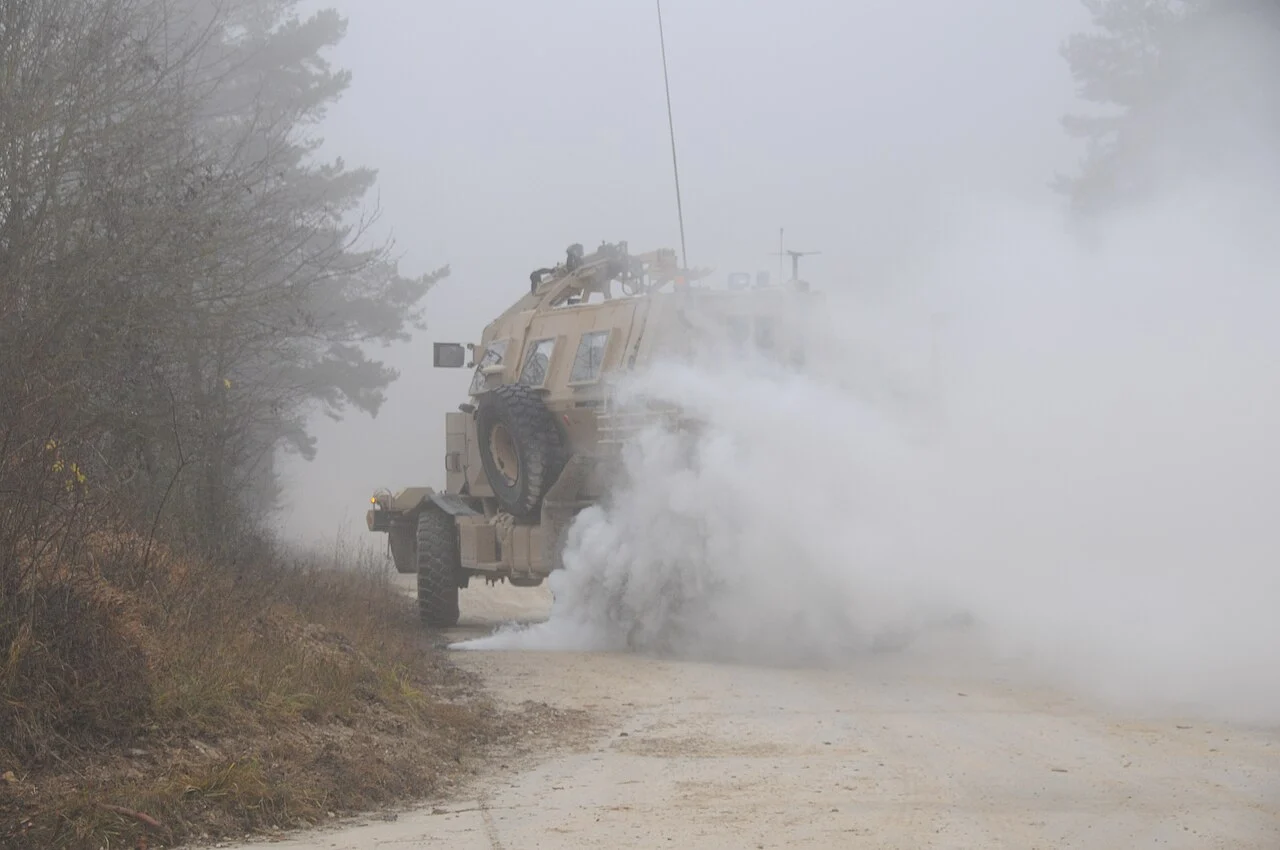
The RG-31 Nyala descends from the Mamba design developed by TFM Industries and was expanded into its current form by Land Systems OMC, now BAE Systems Land Systems South Africa. It uses an all-welded steel V-hull monocoque and a raised suspension to channel blast away from the crew, and the manufacturer states it is built to resist the equivalent of two TM-57 anti-tank mine blasts under the hull or wheels (BAE Systems Land Systems South Africa product literature).
South Africa remains an operator alongside export customers on several continents; within Africa, Nyala-family vehicles have been used in peacekeeping and border-security roles, and the type’s large worldwide user base means spare parts and maintenance support are comparatively easy to source — an important sustainment factor for African militaries weighing total cost of ownership rather than unit price alone. The vehicle’s continued production and support network make it one of the most sustainment-friendly MRAPs available to African buyers today.
4. RG-32 Scout — the lighter mine-protected option
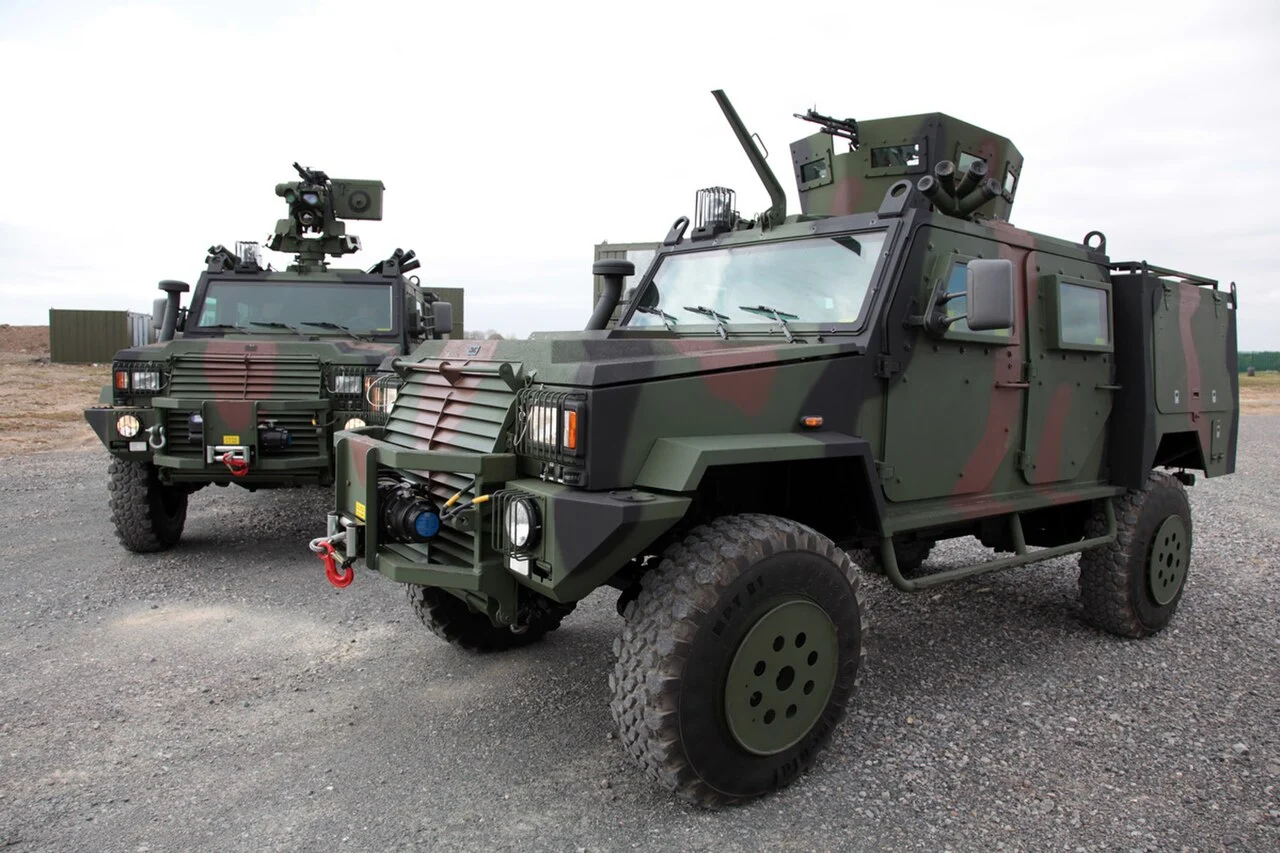
Built by BAE Systems Land Systems South Africa, the RG-32 Scout is a lighter 4×4 mine-protected vehicle intended for liaison, reconnaissance and utility roles rather than front-line troop transport, with reported protection against small-arms fire and blast from beneath. Specifications published by secondary sources vary (some cite a combat weight near 4.5 tonnes, others closer to 9.5 tonnes), which this article flags rather than resolves — manufacturer documentation should be consulted for a precise figure.
Egypt is the clearest African operator cited across open sources, though reported fleet sizes vary between roughly 112 and 180 vehicles depending on the source and year; published figures vary, and no single authoritative current total could be confirmed for this article. For African forces, the RG-32’s value lies in offering mine protection at a fraction of the weight, fuel burn and unit cost of a full MRAP, suited to the liaison and route-reconnaissance tasks that accompany larger counter-insurgency operations.
5. Puma M26-15 — the Sahel and Horn of Africa’s workhorse MRAP
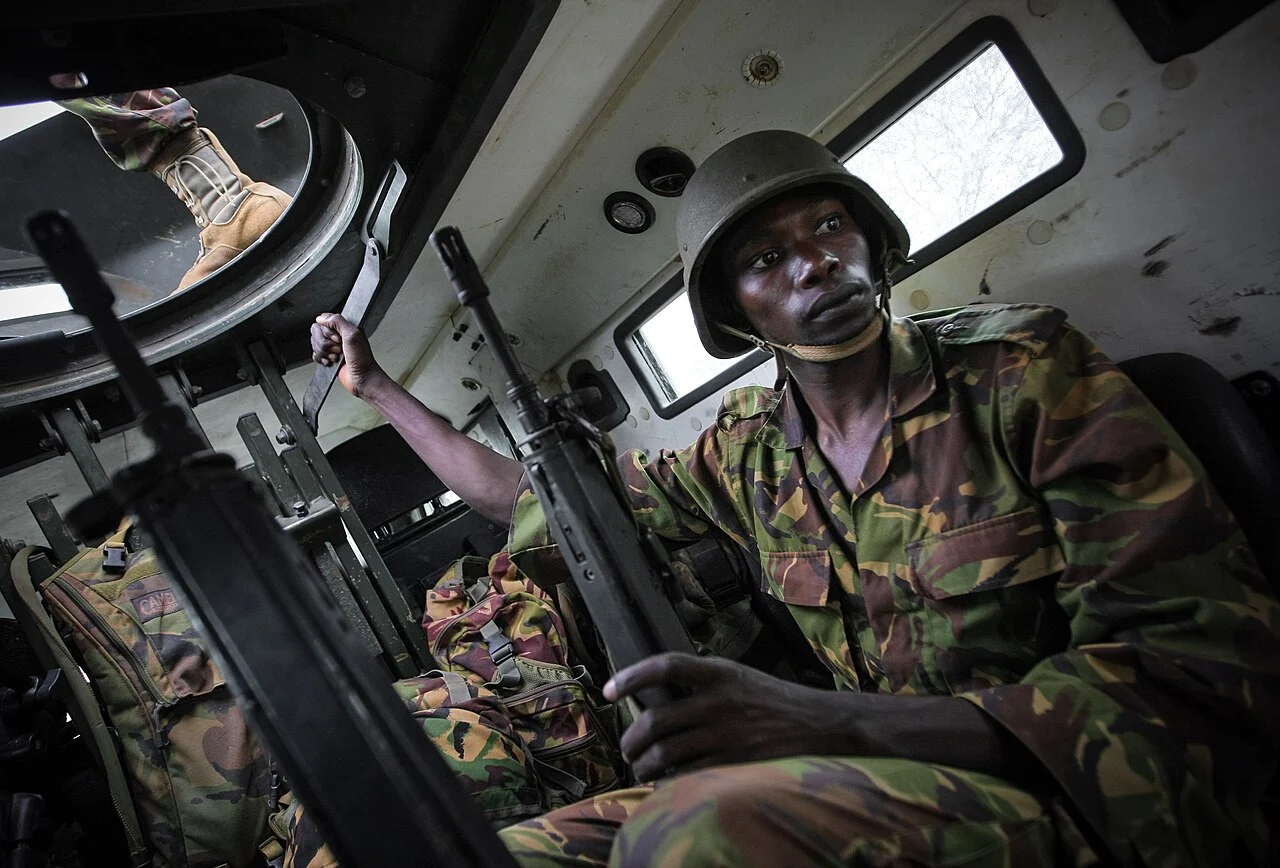
The Puma M26-15 is a cost-focused medium mine-protected vehicle developed by South Africa’s OTT Technologies, built on a driveline derived from the Tata 715 TC 4×4 truck chassis and configured to carry a driver and up to eight troops. It was conceived specifically as an affordable option for African and other developing-world buyers facing sustained counter-insurgency commitments rather than the specification-heavy, higher-cost MRAPs built for NATO deployments.
Open-source orders of battle record 31 Puma M26-15s with Burkina Faso’s army, while Kenya has fielded the type in significant numbers for operations including its contribution to the African Union Mission in Somalia, where the United States reportedly donated additional Puma M26-15 vehicles to reinforce the mission’s mine-protected fleet (Army Recognition, 2022). Fleet totals for Kenya vary between sources and are not independently confirmed here. The Puma’s affordability and simple maintenance profile are central to its appeal for African forces operating in austere, IED-threatened environments with limited sustainment budgets.
6. Mamba Mk5 — the design bridge between Buffel and RG-31
The Mamba was developed by TFM Industries as the direct successor to the Buffel, introducing the fully enclosed, armoured troop compartment that the open-top Buffel lacked while retaining the V-hull principle. Later Mamba Mk5 production, continued under successor companies including OMC and its descendants, extended the type’s service life and informed the subsequent RG-31 design.
Namibia and Somalia’s national forces are among the African operators whose inventories have been reported to include Mamba-family vehicles in open-source equipment surveys, though current serviceable numbers are not independently verified and should be treated with caution. The Mamba’s main regional relevance is as the missing link in the Buffel-to-RG-31 design chain: understanding it explains why so many of today’s MRAPs in African and international service share a recognisably South African hull geometry regardless of which company currently holds the production rights.
7. International MaxxPro and BAE Caiman — US surplus finding a second life in the Sahel
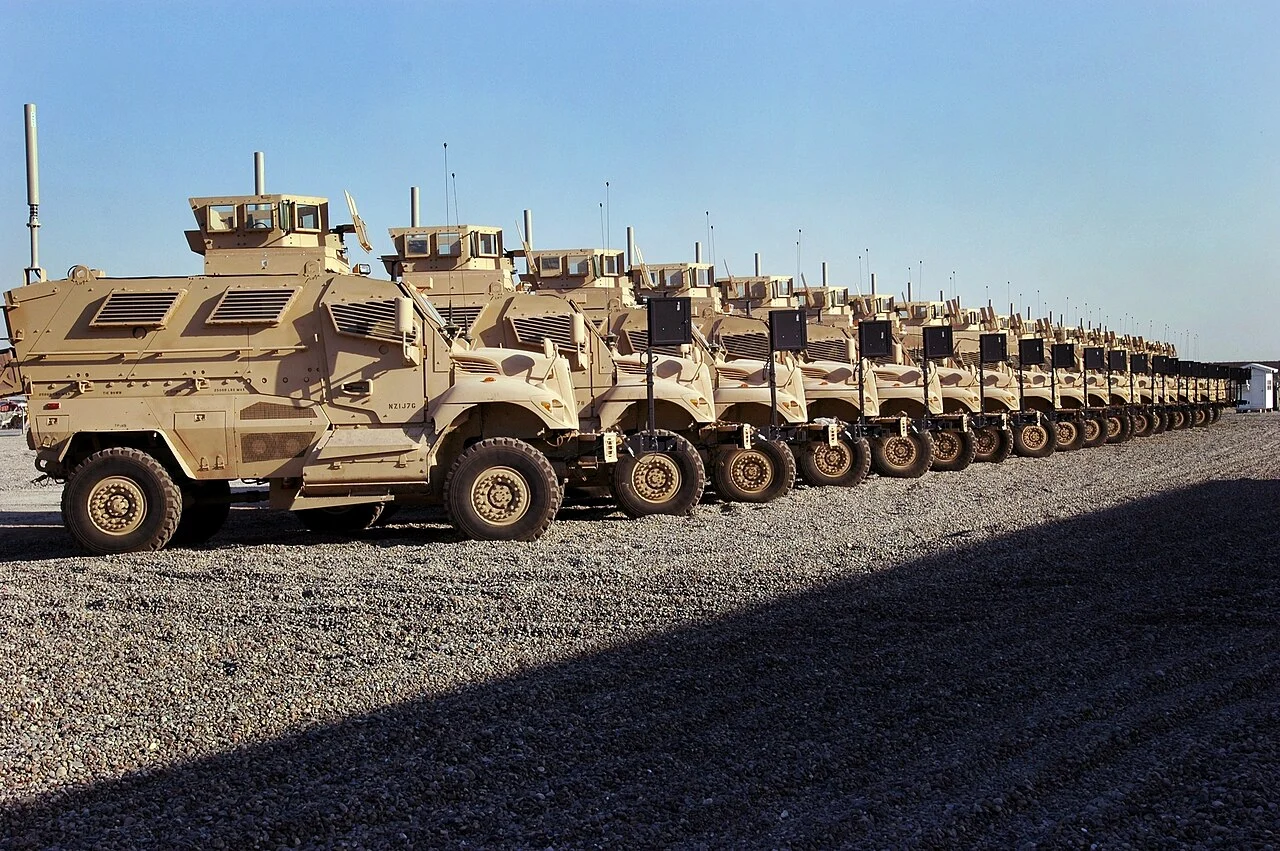
The International MaxxPro, built by Navistar Defense, and the Caiman, built by BAE Systems, were two of the highest-volume MRAP types produced for US forces in Iraq and Afghanistan from the mid-2000s. Both use a monocoque V-hull design broadly similar in principle to the earlier South African vehicles, scaled up with additional armour and electronic countermeasures for the IED threat the US military faced at the time.
In January 2016, the United States donated 24 of these MRAP-type vehicles to the Nigerian Army through the Excess Defense Articles programme, at a reported value of about $11 million, explicitly to support operations against Boko Haram; a further eight vehicles followed under the same programme (BusinessDay Nigeria, 2016; Fox News, 2016). Nigerian and US officials both stated the vehicles required servicing and spare parts on arrival, with reports differing on what proportion was immediately operational — a recurring sustainment issue with donated surplus MRAP fleets across the region. The transfer illustrates both the opportunity and the limits of donated MRAP equipment: it adds protected mobility quickly and cheaply, but sustainment depends on a secondary supply chain that donor programmes do not always fund alongside the hardware.
How we ranked
This gallery is not a ranked list; entries are ordered to trace the technology’s South African origin and its subsequent diversification into donated Western and commercially exported variants now in African service. Selection criteria were: a confirmed or credibly reported African operator, a verifiable manufacturer and design lineage, and at least one open-source reference beyond a single outlet. Vehicles for which no African operator could be confirmed from the sources available were excluded.
Why it matters for Africa
MRAPs sit at the centre of the affordability and sustainment trade-offs that shape African counter-insurgency capability. The continent’s dominant fleets trace to a South African design lineage developed specifically for low-intensity, mine-and-ambush warfare rather than adapted from a tank chassis, which keeps unit costs, fuel consumption and maintenance demands lower than for tracked armour performing the same role. That lineage also underpins a regional industrial base: OTT Technologies, Denel Mechem and BAE Systems Land Systems South Africa between them supply or support a large share of the mine-protected vehicles in African service, giving several African militaries access to maintenance, spares and technology transfer within the continent rather than solely through distant foreign suppliers.
At the same time, the Nigerian MaxxPro and Caiman transfer shows the limits of relying on donated surplus equipment: protected mobility arrives quickly, but without a funded parts and training pipeline, serviceability rates can fall well short of paper fleet strength. For forces across the Sahel, Lake Chad Basin and Horn of Africa conducting sustained counter-insurgency and peace-support operations against landmines and improvised explosive devices, the choice between South African-designed vehicles, donated Western surplus and commercially marketed alternatives from suppliers such as the UAE’s Streit Group remains as much a question of long-term sustainment capacity as of initial unit cost.
Sources
- Casspir — overview and development history
- RG-31 Nyala — design lineage and specifications
- Mine-resistant ambush protected vehicle — category background
- Buffel — ARMSCOR development and service history
- RG-32 Scout — specifications and operators
- Puma M26-15 — OTT Technologies design and operators
- BusinessDay Nigeria: Nigeria gets $11m armoured vehicles from US to fight Boko Haram (2016)
- Fox News: US donates 24 vehicles to Nigeria to help fight Boko Haram (2016)
- Army Recognition: US donates Puma M26-15 APCs to support allied troops in Somalia (2022)
Related reading: Fast Attack Craft and Missile Boats in African Naval Service | Proforce: Inside Nigeria’s Private Armoured Vehicle Maker | South Africa’s Defence Chief Tells Industry: Government Won’t Carry You, But Won’t Abandon You Either | Desks: Nigeria | South Africa