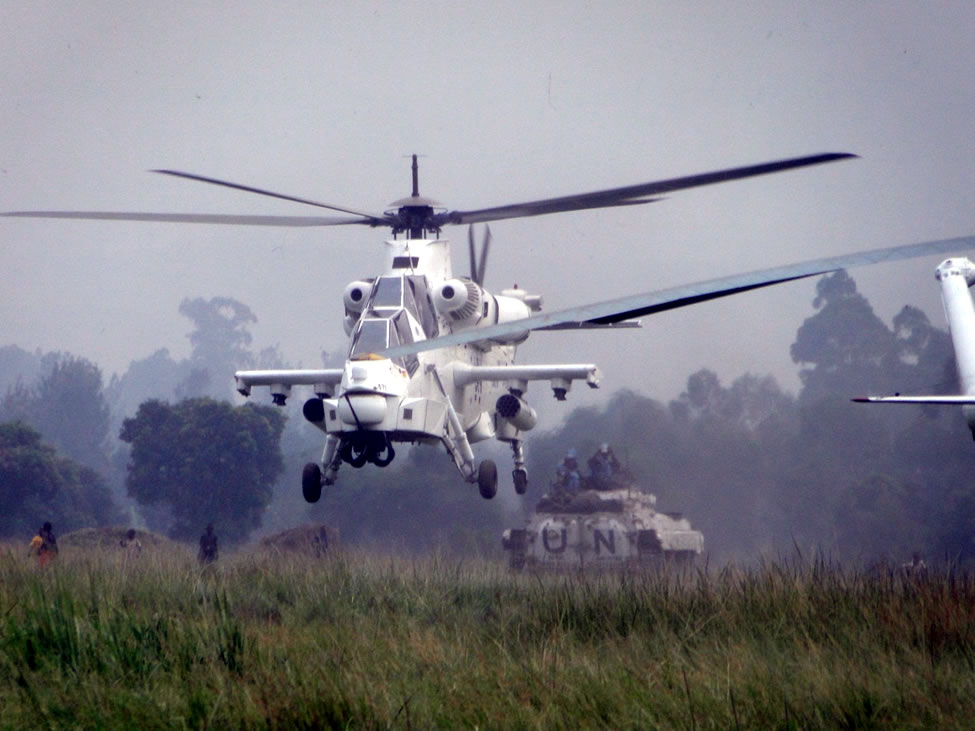
Attack helicopters in Africa are concentrated in a few air forces, led by Egypt and Algeria, while most other states operate small fleets of Russian-built Mi-35s. Morocco has recently joined the top group with US-built Apaches, Nigeria is diversifying towards Turkish and American types, and South Africa remains the only country to have built its own. This guide ranks the main operators by reported fleet size, explains the counting method, and flags where the figures are uncertain. Numbers come from open-source compilations and press reporting, not from official inventories, so they show scale rather than readiness.
Attack Helicopters in Africa: Method and Data Sources
An attack helicopter here means a dedicated, purpose-built gunship armed with guided anti-armour missiles, rockets and a cannon. That covers the Mil Mi-24, Mi-25 and Mi-35 family, the Mi-28, Kamov Ka-52, Boeing AH-64 Apache, Bell AH-1Z, Turkish T129 and South Africa’s Rooivalk. Armed utility helicopters such as the Mi-17, light armed types such as the Gazelle, and armed trainers or turboprops are excluded, because they are not designed for the same role.
Counts reflect aircraft reported as delivered, drawn from reference compilations, defenceWeb reporting and Boeing and Denel statements. They do not measure how many are airworthy. Where sources disagree, both figures are given and the difference is noted.
Overview Table: Who Flies What
| Country | Main types | Reported aircraft | Notes |
|---|---|---|---|
| Egypt | Ka-52, AH-64D, Mi-24V | About 102 (46 + 43 + 13) | Largest African fleet; AH-64E upgrades under way |
| Algeria | Mi-28NE, Mi-24 SuperHind | About 72 (42 + 30) | Russian types only |
| Sudan | Mi-35 | 35 | Compilation figure; current serviceability unknown |
| Nigeria | Mi-35M, T129 | About 21 (15 + 6 reported) | AH-1Z and more T129 expected |
| Morocco | AH-64E | 19 delivered of 24 ordered | Only African AH-64E operator |
| South Africa | Rooivalk Block 1F | 11 in service | Out of production; upgrade proposed |
| Uganda | Mi-35, Mi-28NE | About 10 (6 + 4) | Two more Mi-28NE listed as on order |
| DR Congo | Mi-35 | 8 | Compilation figure |
| Mali | Mi-35, Mi-24P | 6 to 7 | Sources differ on the count |
| Ethiopia | Mi-35 | 6 | Compilation figure |
Smaller fleets of one to six Mi-24 or Mi-35 helicopters appear in compilations for Zimbabwe, Eritrea, Rwanda, Chad, Senegal, Namibia, Burkina Faso and several other states. More than 20 African countries are listed as operators of the Mil family in total.
Which Air Forces Fly Attack Helicopters in Africa?
Egypt has the continent’s most diverse force. It ordered 46 Ka-52 helicopters in 2015, with deliveries from 2017 to 2019, and announced them in service in December 2018. They operate alongside 43 AH-64Ds, according to Boeing, and about 13 older Mi-24Vs. The first Apache orders go back to the mid-1990s. Russian and US supply routes are covered in our guide to arms suppliers to Africa.
Algeria relies on Russian designs. Its 42 Mi-28NE gunships were first shown on television in August 2016, and it also flies around 30 Mi-24 SuperHind Mk III helicopters. Reference compilations say it was negotiating for 12 Ka-52E aircraft, but no contract has been confirmed.
Nigeria has used its Mi-35M helicopters against Boko Haram since the first two were delivered in January 2017 out of 12 ordered in September 2015. It lost one in combat in January 2019. Open compilations list six T129 ATAK helicopters under a 2021 contract. The Nigerian Air Force said in October that it expects 12 AH-1Z and six further T129 aircraft, without giving contract status or dates. Our report on the Nigeria AH-1Z Viper deal separates the headline ceiling from the contract value.
Morocco had no dedicated attack helicopter before the Apache. It ordered 24 AH-64E in June 2020 in a deal reported at USD 1.3 billion. The first six arrived in March 2025 and a further six were handed over at a ceremony on 26 October at 1st BAFRA in Sale, bringing deliveries to 19. Our Royal Moroccan Air Force aircraft guide places this inside the wider fleet.
South Africa operates 11 Rooivalk Block 1F helicopters with 16 Squadron. Three deployed with the UN Force Intervention Brigade in the DR Congo in 2013, and on 4 November 2013 two fired rockets at M23 positions near Chanzu. Production stopped in 2007 and Denel has proposed a phased Mk1.1 upgrade to the SAAF. Background on the maker is in the Denel company profile.
Regional Patterns and Trends
North Africa holds the strongest fleets of attack helicopters in Africa, and each of the three leading powers buys from a different source. Algeria is Russian, Morocco is American, and Egypt buys from both Russia and the United States. South of the Sahara, the pattern is older and smaller: Mi-35 fleets built up over two decades through direct Russian sales, often with only a handful of airframes per country.
Uganda is a partial exception, because its Mi-28NE gunships are listed alongside Mi-35s. Mali took two Mi-24P helicopters from Russia on 30 March 2022 in addition to four Mi-35s delivered under a 2016 contract, based on SIPRI data cited by defenceWeb.
Turkey and the United States are the new suppliers. Nigeria is the clearest case, and Morocco shows that a US foreign military sales route can produce a modern fleet within a few years, although deliveries began later than first planned.
Recent Changes
Three developments stand out. First, Morocco’s latest batch of six Apaches means 19 of 24 are delivered, with the last five outstanding, and US and Moroccan crews are expected to train on the type during future African Lion exercises.
Second, Boeing received a USD 4.6 billion US Department of Defense contract on 25 November 2025 for new AH-64E helicopters and Longbow crew trainers for Poland, Egypt and Kuwait. The number of aircraft for Egypt has not been disclosed. A 2023 contract covers upgrading 25 Egyptian Apaches to AH-64E standard, and Boeing estimates the cost of converting all of Egypt’s D models at about USD 2.3 billion.
Third, Nigeria’s October statement signals a larger rotary-wing order of battle, but it does not say which items are contracted. Reporting on the statement does not mention the Mi-35, so the future of the Russian fleet is unclear.
What the Numbers Do Not Show
Fleet counts are not readiness. Egypt’s early Ka-52 batches reportedly had problems with power, night vision, navigation and avionics, and few air forces publish serviceability. A listed aircraft may be in storage, in overhaul or lost. Libya’s Mi-35 shot down in April 2020 and Nigeria’s January 2019 loss show how combat attrition quietly changes a number.
Sources also disagree. Mali is listed with seven Mi-35M helicopters in one compilation, while defenceWeb, citing SIPRI, reports four Mi-35 and two Mi-24P by 2022. Several entries in compilations carry a date of 2023 or earlier, and some operators receive donated or second-hand aircraft that never appear in a sale announcement.
The table also omits weapons. A gunship without guided missiles has far less value, and Africa-wide stock data for Hellfire, Ataka and Mokopa is not public. Denel says the Mokopa is integrated on the Rooivalk but the SAAF has not placed an order.
Frequently Asked Questions
Which African country has the most attack helicopters?
Egypt, with roughly 100 reported across Ka-52, AH-64D and Mi-24V helicopters. Algeria is second with about 72 Mi-28NE and Mi-24 aircraft. Both figures come from open compilations and Boeing statements, and neither country publishes a full inventory or serviceability rate.
Which African countries operate the Apache?
Only Egypt and Morocco. Egypt flies AH-64D helicopters and is upgrading some to AH-64E standard, while Morocco is the only African operator of the AH-64E and has received 19 of 24 ordered. Nigeria has chosen the Bell AH-1Z instead.
Does Africa build its own attack helicopters?
Only South Africa has, with the Rooivalk. Production stopped in 2007, 11 Block 1F aircraft are in SAAF service, and Denel has proposed an upgrade to Mk1.1 standard. No other African country builds attack helicopters, though Denel works with Airbus on support for military helicopters.
Which new attack helicopters are coming to Africa?
Morocco expects five more AH-64E. Nigeria says it expects 12 AH-1Z and six more T129 aircraft but has not given contract details. Egypt has new-build AH-64E orders within a USD 4.6 billion contract, though the number for Egypt has not been disclosed.
Sources
- defenceWeb: Morocco receives another six AH-64 Apaches
- defenceWeb: Morocco receives first AH-64 Apache helicopters
- defenceWeb: Egyptian AH-64E Apache production moving forward
- defenceWeb: new aircraft to bolster Nigerian Air Force combat capabilities
- defenceWeb: Mali receives Mi-24s and radars from Russia
- defenceWeb: Nigerian Air Force takes delivery of two Mi-35M
- defenceWeb: Nigerian Air Force loses Mi-35 helicopter in combat
- defenceWeb: Libyan Mi-35 apparently shot down
- defenceWeb: Denel Aeronautics gaining altitude
- defenceWeb: Denel Dynamics delivering solid support