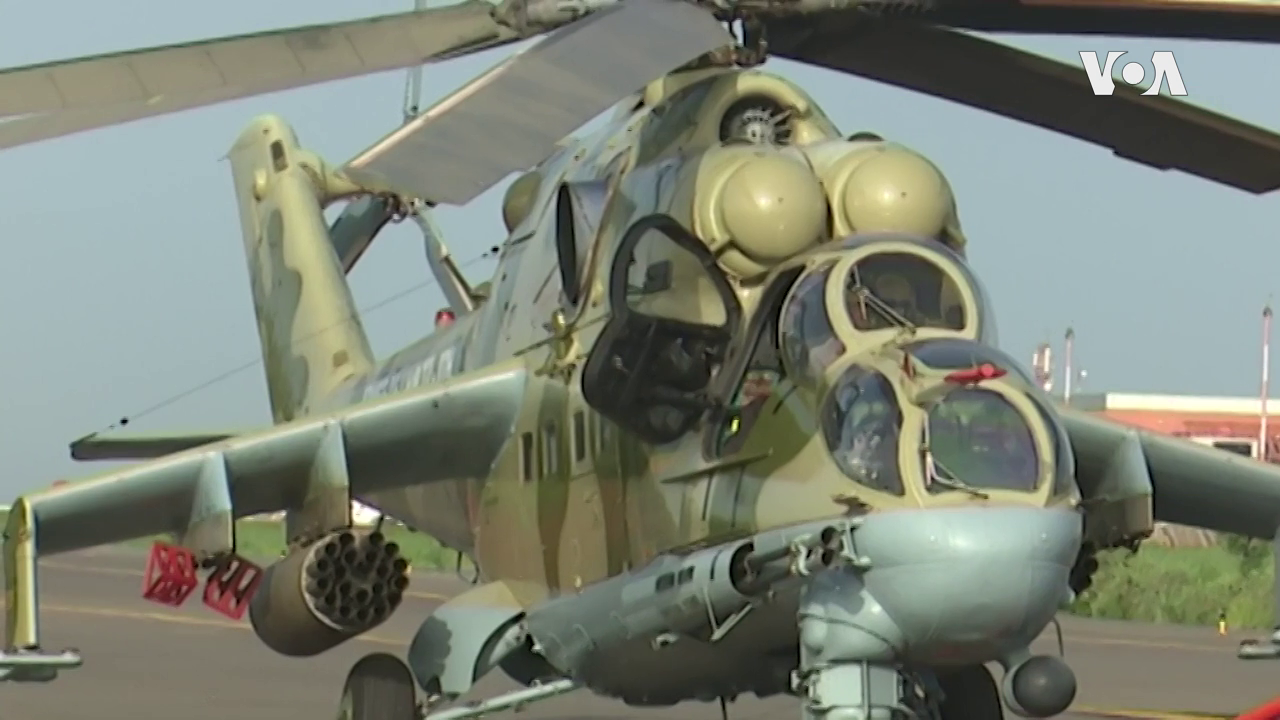
Mali military equipment comes mainly from two suppliers, Russia and Türkiye, and the aircraft and drones they sent since 2022 have been tested hard in recent months. Russian helicopters, jet trainers and ground-attack jets carried the air campaign after the French withdrawal, while Turkish Bayraktar drones added surveillance and precision strikes. A coordinated offensive by JNIM and the Azawad Liberation Front in April 2026 then exposed how fragile that fleet is. This article separates what is documented from what is only reported, and lists what has not been disclosed.
Mali Military Equipment: Key Facts at a Glance
- Main suppliers: Russia for combat aircraft and helicopters, Türkiye for armed drones. SIPRI data show Mali accounted for 54% of West Africa’s imports from Russia in the 2020-24 period.
- Largest documented handover: in March 2023 Mali’s air force chief said the country had received about 20 aircraft and a dozen drones.
- Turkish top-end drone: at least two Bayraktar Akinci-A aircraft appeared on Malian state television in November 2024.
- Losses: open-source tallies list at least 15 aircraft lost since 2021, and the real figure is probably higher.
- Latest pressure point: in July, JNIM shot down a Mi-24 at Kouakourou, the second Malian helicopter lost in about two weeks.
- Not disclosed: contract values, the number of aircraft that are serviceable, and the current Akinci count.
Why It Matters for the Sahel
Mali ended its military cooperation with France and the United States after the coups, and Moscow and Ankara filled the gap. Wagner Group personnel arrived in late 2021 and were later replaced by the Africa Corps. Türkiye, for its part, has stepped into the Sahel security gap through drone sales and training.
The supply pattern shows in the trade data. SIPRI’s fact sheet on arms transfers puts China first among suppliers to West Africa for the 2020-24 period at 26%, followed by France at 14%, with Russia and Türkiye each at 11%. Türkiye supplied nine West African states in that period and Russia four. SIPRI also records that Mali alone made up more than half of West Africa’s imports from Russia.
Air power matters here because Mali is a very large country with long, thinly held supply routes. ACLED’s West Africa analyst Héni Nsaibia notes that the army relies heavily on aircraft, including helicopters and armed drones, and that losses are becoming harder to absorb. For a wider view of who sells what to the continent, see the site’s guide to arms suppliers to Africa.
Who Is Involved: Governments, Forces and Companies
The Malian Armed Forces operate the equipment, and the transitional government under Assimi Goïta controls procurement. Russian forces fight alongside them: ACLED’s account of the July fighting around Anefis and Tabrichat describes joint convoys and shows how closely the army depends on Africa Corps support.
On the Turkish side the key company is Baykar, maker of the Bayraktar TB2 and Akinci. Thirty Turkish defence manufacturers took part in the Bamako International Defense and Security Exhibition in 2025, defenceWeb reports, without naming them. The insurgents also use drones: JNIM released drone footage of the Mi-24 it shot down in July.
Equipment, Numbers and What Is Confirmed
The table below uses status labels. “Delivered” means a handover or inventory listing appears in a source that was reviewed; it does not mean the item is serviceable today. Quantities come from public reporting, not from Malian government inventories, which are not published.
| Equipment | Origin | Status | Basis |
|---|---|---|---|
| Aero L-39 Albatros jet trainer and light attack | Czech design, Russian stocks | At least four delivered by 2023; three or more lost | Aerospace Global News |
| Mil Mi-24P attack helicopter | Russia | Two delivered in 2022; three or more lost or captured | Aerospace Global News, citing Militarnyi |
| Mil Mi-8T and Mi-8MT helicopters | Russia | One and two delivered by 2023; three or more lost | Aerospace Global News |
| Sukhoi Su-25 ground attack jet | Russia | Two delivered; lost in 2022 and 2023 | Aerospace Global News |
| Sukhoi Su-24M bomber | Russia | One crashed near Gao airport in June 2025 | Aerospace Global News |
| P-18 and 59N6-TE radars | Russia | Delivered in 2022 with the Mi-24P helicopters | Aerospace Global News, citing Militarnyi |
| Bayraktar TB2 | Türkiye | A dozen drones received by March 2023; one ground station captured in April | The Defense Post (AFP); Aerospace Global News |
| Bayraktar Akinci-A | Türkiye | At least two seen in service in November 2024 | TurDef |
| Airbus C-295 transport | Spain | One delivered by 2023 | Aerospace Global News |
Aerospace Global News notes that most of the Russian aircraft came from Russian stocks. The C-295 is a European aircraft and is not part of the Russian package.
Russian Deliveries and Turkish Drones in Detail
Russian deliveries began in 2022. The Defense Post, citing AFP, reports earlier handovers in January, March and August 2022, followed by a larger ceremony at Bamako airport in March 2023. Air force chief General Alou Boi Diarra said Mali had received about 20 aircraft and a dozen drones. AFP counted five aircraft and four drones on the tarmac that day.
Defence minister Colonel Sadio Camara said the Turkish drones’ observations could make artillery and air strikes more accurate. Details of the TB2 are in the guide to the Bayraktar TB2 in Africa.
The Akinci marks a step up. TurDef reported in November 2024 that at least two Akinci-A aircraft appeared on Malian television, carrying Roketsan MAM-T munitions and TEBER-81/82 guidance kits. The outlet counted Mali as the fourth African Akinci user after Burkina Faso, Ethiopia and Libya. TurDef says its report is generated automatically from broadcast images, so the figure of two is a minimum from video, not an official count. More on the type is in the Akinci Africa guide, and the maker is covered in the Baykar company profile and the Roketsan profile.
Losses Since the April Offensive
On 25 April, JNIM and the Azawad Liberation Front launched coordinated attacks on Bamako, Gao, Kidal and Sévaré. A suicide car bomb at his home in Kati killed Defence Minister General Sadio Camara, according to Al Jazeera. The Africa Corps later abandoned Kidal, according to the Hudson Institute.
Several equipment losses followed, and some are reported rather than confirmed:
- A Malian army helicopter was reportedly downed over the Niger River near Gao on 25 April.
- The FLA reportedly captured the remains of a Malian Mi-24P, registration TZ-07H, supplied by Russia in 2022.
- One Bayraktar TB2 ground station was captured after an Africa Corps defeat, according to Aerospace Global News.
- JNIM shot down a Mi-24 at Kouakourou on 19 July, killing its crew, in the second helicopter loss in about two weeks.
ACLED adds that the army and Africa Corps held the Anefis base after fighting from 4 to 9 July without controlling the surrounding terrain, and that dozens of Malian soldiers were left behind in an ambush near Tabrichat on 18 July.
Reactions and Regional Implications
The African Union, the secretary-general of the Organisation of Islamic Cooperation, the US Bureau of African Affairs and the European Union condemned the April attacks, Al Jazeera reports. None of these statements announced new equipment supplies.
Regional signals point in two directions. Training links with Türkiye continue: soldiers from Mali and Niger completed special forces training in Isparta in June, defenceWeb reports. At the same time, Russia’s ability to keep supplying aircraft is uncertain. Aerospace Global News writes that it is unclear how willing Moscow is to keep drawing on its stocks, and points to strain on Russian aviation industry and airlift capacity.
Neighbouring states face similar problems. The same outlet describes a January attack on Niamey airport that destroyed several Nigerien military aircraft, with the attribution disputed between JNIM-linked and Islamic State groups. For border dynamics, see the report on Algeria and Niger border security.
What to Watch Next
Four questions will decide how Mali military equipment evolves. The first is replacement: whether Russia ships further helicopters or jets, or whether Mali turns to other suppliers. The second is Turkish supply, since neither Ankara nor Bamako has published contract details for further drones or munitions.
The third is the Africa Corps posture. ACLED links the Tabrichat losses to the withdrawal of Russian support, so any change in Russian basing or escort practice affects the army and its air fleet. The fourth is reporting: the Malian government has not published an inventory of current aircraft, so independent tallies remain the main source.
At the time of writing, all counts in this article are minimums drawn from open sources.
Frequently Asked Questions
What military equipment does Mali use?
Mali military equipment includes Russian-supplied helicopters, L-39 jets and radars, plus Turkish Bayraktar TB2 and Akinci drones and one Airbus C-295. Inventory figures are not officially published, so counts come from open-source reporting and should be read as minimums.
Does Mali have Bayraktar drones?
Yes. A dozen TB2 drones were reported received by March 2023, and at least two Akinci-A aircraft appeared on Malian television in November 2024. One TB2 ground station was captured in April. The current serviceable number has not been publicly disclosed.
Which aircraft has Mali lost?
Open-source tallies list at least 15 aircraft lost since 2021, including two Su-25 jets, three or more L-39 aircraft, several Mi-24 and Mi-8 helicopters and an Su-24M bomber. Some entries are claims by insurgents. The real total is probably higher than any public count.
Who supplies Mali’s weapons?
Russia is the main supplier of aircraft and helicopters, and Mali accounted for 54% of West Africa’s imports from Russia in the 2020-24 period, according to SIPRI. Türkiye supplies armed drones and munitions. Spain supplied a C-295 transport aircraft, built by Airbus.
Sources
- defenceWeb / ACLED: Is the Malian military losing against JNIM
- defenceWeb / Africa Defense Forum: Türkiye builds ties through training
- The Defense Post: Mali gets warplanes from Russia, drones from Turkey
- TurDef: Mali acquires Akinci UCAVs
- Aerospace Global News: Mali attacks, JNIM, FLA and Russian aviation losses
- Al Jazeera: Mali’s defence minister Sadio Camara killed amid coordinated attacks
- SIPRI: Trends in international arms transfers
- Hudson Institute: commentary on Africa Corps in Mali