Nigus Hercules and India’s ADSL to Build Nigerian Defence MRO Centre of Excellence



Nigeria’s Nigus Hercules and India’s Airbornics Defence & Space (ADSL) have signed a cooperation agreement to build local maintenance, repair and overhaul capacity for the Nigerian Armed Forces’ armoured vehicles, engines and air defence equipment. The deal, unveiled on the sidelines of Lagos’s AFRIDEX 2026, centres on a planned Centre of Excellence for lifecycle support and local technology transfer.
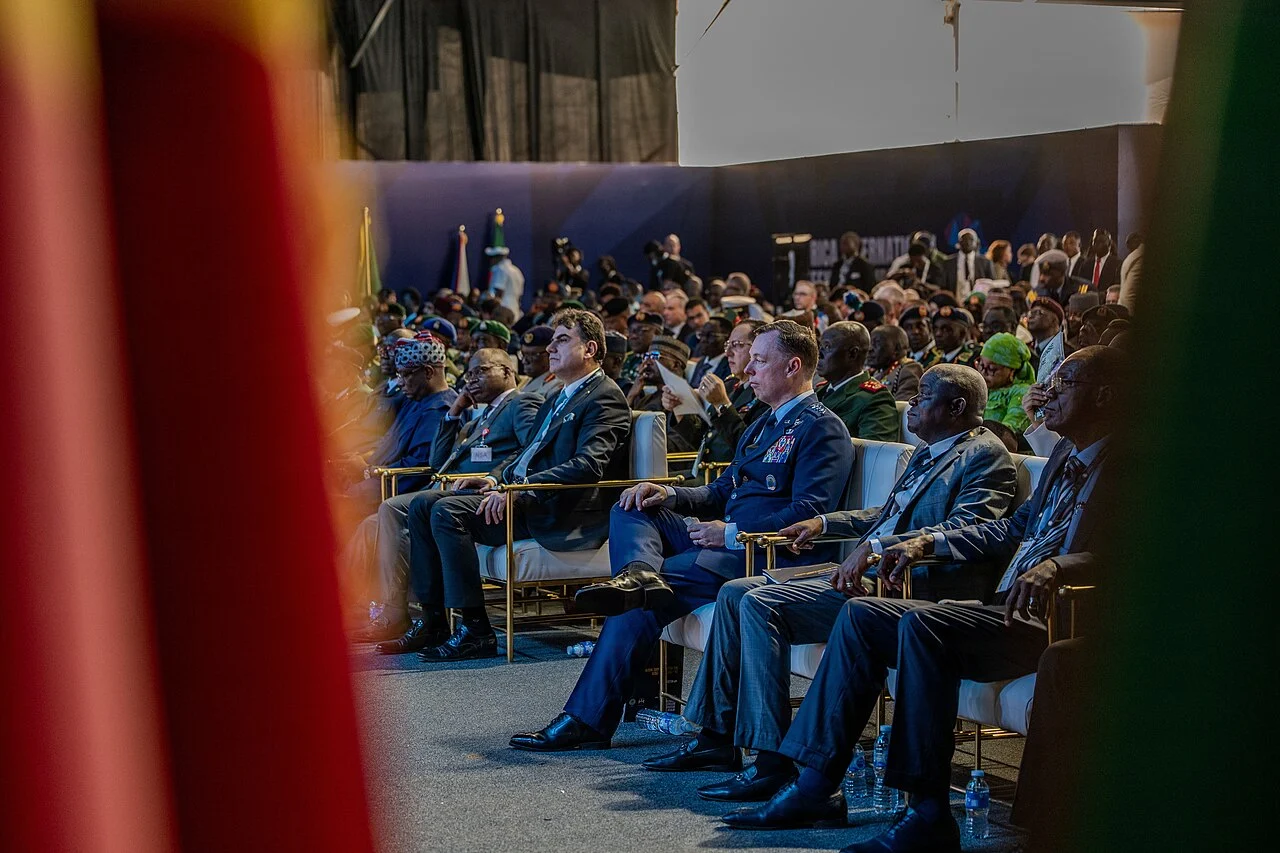
Photo: US Africa Command’s Gen. Dagvin Anderson and defence industry leaders at the AFRIDEX 2026 exhibition in Lagos, Nigeria. Credit: U.S. Army photo by Sgt. 1st Class Kenneth Tucceri, Public domain, via Wikimedia Commons
Nigus Hercules Limited and Airbornics Defence & Space Pvt Ltd, the defence and aerospace division of India’s JCBL Group, announced the partnership days after ADSL exhibited at the inaugural Africa International Defence Exhibition (AFRIDEX), hosted in Lagos by Nigeria’s Defence Industries Corporation (DICON), defenceWeb reported. At the show, ADSL displayed counter-UAS systems, protected-mobility platforms, remote weapon stations, active protection systems, radar and aerial delivery equipment.
What the agreement covers
The partnership targets armoured vehicles, engines and air defence equipment in Nigerian Armed Forces service. ADSL is to provide engineering expertise, overhaul processes, specialist training and spares support, with the stated goals of improving equipment availability, cutting repair turnaround times and building local engineering and technical skills.
The centrepiece is a planned Centre of Excellence in Nigeria for the lifecycle support, upgrade and life extension of armoured platforms, meant to anchor technology transfer, local jobs and specialised engineering training. The companies say the rollout will be phased, tied to service requirements, facility readiness and technical training rather than a single handover date. No contract value or implementation timeline has been disclosed.
Who the partners are
Nigus Hercules’ chief executive is Prince Malik Ado-Ibrahim, with Rohit Nandal as chief operating officer. A subsidiary, Nigus Tactical Systems, already builds local defence-industrial capacity through the DICON Nigus Tactical platform set up under Nigeria’s DICON Act.
ADSL has worked on the maintenance, refurbishment and modernisation of Soviet-design platforms including T-72 tanks and BMP infantry fighting vehicles still common across Africa, and it holds an agreement with the Indian Army’s Fire and Fury Corps for an armoured-vehicle repair hub in Leh, plus a Slovak partnership on turrets and active protection systems.
“Nigeria must build the capacity to maintain and sustain the equipment its Armed Forces depend on,” Nigus Hercules CEO Prince Malik Ado-Ibrahim said. ADSL’s Sandip Chakroborty framed the goal as “creating local jobs, local expertise and strategic autonomy,” and said the company wants the Nigerian hub to eventually serve the wider ECOWAS region.
Nigeria’s MRO problem
Nigeria has repeatedly run into the same bottleneck as it rearms: equipment arriving faster than the country can keep it running. DefenceMena has tracked how few African states can sustain weapons locally, and DICON’s own build-up — most recently through a software and technology deal with Türkiye’s HAVELSAN — has been explicitly pitched as a fix for that gap. Nigeria’s army chief made the same argument in October, when he toured Rwanda’s REMCO arms plant and urged African-built defence industries rather than continued reliance on imported sustainment. The ADSL deal fits that pattern: a private Nigerian firm using a foreign MRO specialist’s know-how to localise capability DICON cannot yet provide alone.
Why it matters for Africa
Armoured-vehicle fleets across West Africa, from Nigerian Army T-72s to the Soviet- and Chinese-origin vehicles in neighbouring forces, routinely sit idle for want of spares, trained technicians or overhaul facilities, forcing governments back to the original suppliers or to pricier contractor support. A functioning MRO hub in Lagos, if it clears the “phased” rollout the partners describe, would be one of the few facilities on the continent able to service that class of vehicle locally rather than shipping it abroad — with the added ambition of taking on repair work from other ECOWAS armies. It also deepens India’s defence-industrial footprint in West Africa at a moment when Ankara, Abu Dhabi and Beijing are all competing for the same local-production narrative in Nigeria.
Sources