Morocco Orders Two Dutch Unmanned Surface Vessels for Mine Countermeasures and Anti-Submarine Warfare



The Royal Moroccan Navy has ordered two Dutch-built unmanned surface vessels for mine countermeasures and anti-submarine warfare, under a €13 million ($14.7 million) export licence disclosed by the Dutch government. The deal adds an uncrewed layer to Morocco’s naval modernisation as Rabat watches Algeria’s submarine fleet grow.
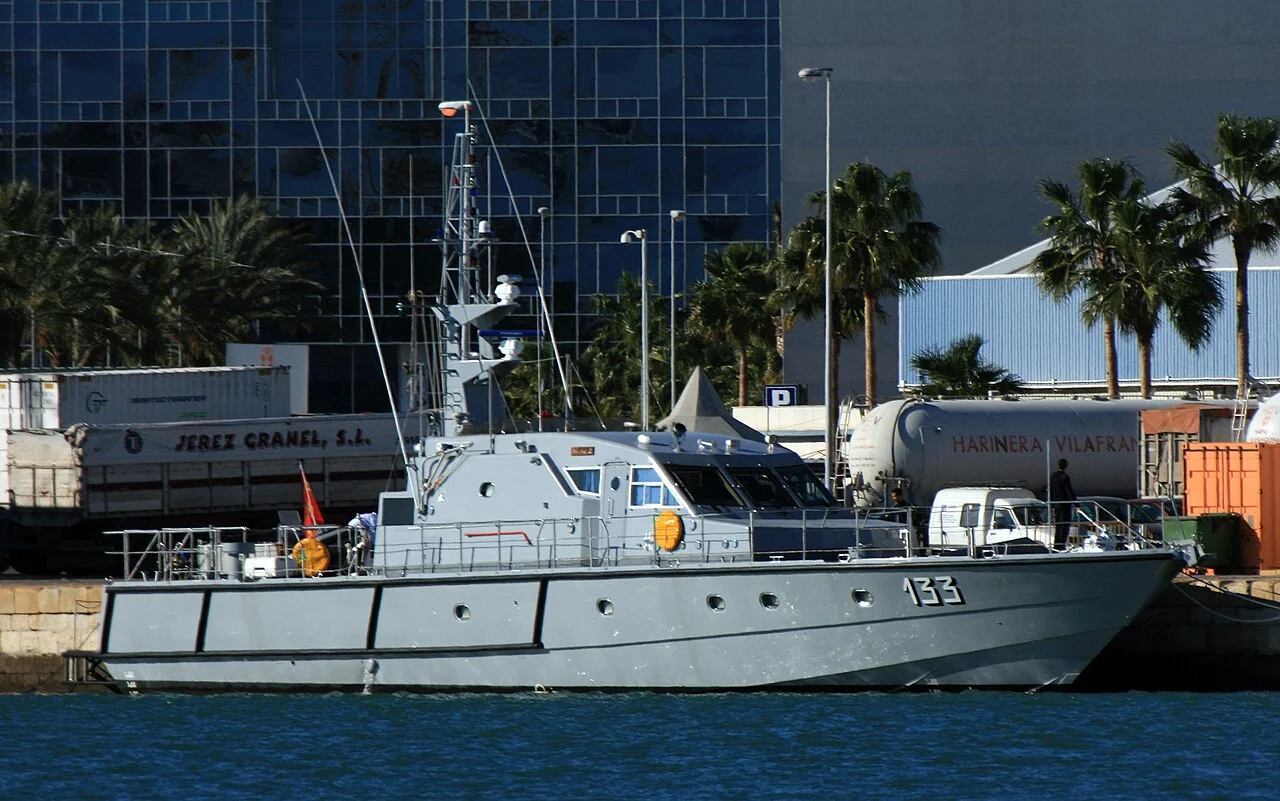
Photo: A Royal Moroccan Navy coastal patrol vessel. Credit: Manuel Luís Soto Sáenz, CC BY-SA 3.0, via Wikimedia Commons
The Netherlands approved the export in a July letter to the House of Representatives, and the order was first reported by Unmanned Africa before being picked up by Moroccan outlet Médias24. Neither document names the manufacturer or sets a delivery date, but both lay out what the two drone boats are for and how the Dutch government justified the sale.
Two boats, two missions
The package covers two uncrewed surface vessels plus sensors, a mission control station, spare parts, operational documentation, support equipment, training and technical services. According to Médias24, the systems will be integrated with Morocco’s existing anti-submarine and mine-countermeasures equipment before they enter service, rather than operating as a standalone capability.
The Dutch assessment describes vessels capable of multi-day missions with a high degree of autonomy. For mine countermeasures, that means surveying channels and harbour approaches while relaying contacts back to human operators, keeping crews out of minefields. For anti-submarine work, it means long-endurance sonar patrols of chokepoints and port approaches — exactly the kind of persistent, low-risk tasking that has driven navies worldwide toward uncrewed minehunting craft over the past decade.
The Dutch government was explicit that the vessels are not warships in miniature: it classified them as small-to-medium coastal craft intended for defensive missions only, telling parliament the platforms “cannot be deployed for other tasks without extensive modifications.” The Netherlands also called Morocco “a stable and strategic partner in an unstable region” and said the sale was weighed against the eight criteria of the EU Common Position on arms exports — the framework EU states use to screen exports for human-rights and regional-stability risk.
Why now
The order lands as Morocco continues a broad naval build-up anchored by its FREMM frigate Mohammed VI and a diversifying list of suppliers that already spans France, the United States and, increasingly, Türkiye. Underwater threats have become a bigger part of that calculus: Algeria operates a Kilo-class submarine fleet, and Morocco’s own interest in acquiring submarines has been reported for years without a confirmed contract. A mine-countermeasures and anti-submarine USV pair, however modest in scale, signals that Rabat wants to close part of that gap with persistent sensor coverage rather than wait on a submarine programme of its own.
The timing also tracks a wider Dutch push into unmanned maritime systems. Médias24 noted that the Netherlands’ own navy began designing a dedicated anti-submarine USV in 2024, meaning Morocco’s order may be an early export of a capability the Dutch are still building out for themselves — not unlike the pattern seen elsewhere in Moroccan procurement, where Rabat has taken early production slots on systems still maturing in their country of origin.
Why it matters for Africa
Mine countermeasures capability is thin across African navies, most of which rely on towed or diver-based clearance rather than dedicated drone boats. A Moroccan USV capability, even at two hulls, would make Morocco one of the first African navies to field purpose-built uncrewed minehunting and anti-submarine assets rather than adapted patrol craft. For the wider Maghreb, it adds a new, lower-cost axis to the Morocco-Algeria naval competition: Algiers has invested in crewed submarines and surface combatants, while Rabat is betting that uncrewed systems can extend its maritime surveillance reach for a fraction of the cost. The deal is small in euro terms, but it is a marker of how quickly unmanned systems are becoming a standard line item in African naval modernisation, alongside the aerial drones that have already reshaped the continent’s land conflicts.
Sources
- Military Africa — first aggregation of the Dutch government disclosure and Moroccan press reaction
- Médias24 — reporting on Dutch government USV development and integration plans
- Dutch Ministry of Foreign Affairs — July 2026 letter to the House of Representatives on the export licence