Angola Air Force Aircraft Inventory (2026): Su-30s, New Transports and Who Built the Fleet




Angola’s air force still flies fast jets bought for a civil war that ended in 2002, with one exception: twelve ex-Indian Su-30K fighters overhauled in Belarus and delivered in 2017–2019, its only confirmed modern combat aircraft. Everything added since 2020 — Chinese jet trainers, Spanish transports, a Czech Skyfox order and talk of Turkish drones — has gone into trainers, transports and helicopters, not fighters. This is the 2026 aircraft inventory, system by system, with who built each type and what is still only a sales pitch.
In short: the National Air Force of Angola (Força Aérea Nacional de Angola, FANA) operates roughly 150–200 aircraft of all types on paper, but open-source trackers and even Wikipedia’s own aggregated roster warn that most of the Soviet- and civil-war-era combat types are no longer flying. Russia remains the dominant single origin by aircraft count — the Su-30K fighters, the bulk of the Mi-17/Mi-24 helicopter fleet, and a fading stock of MiG-21, MiG-23, Su-22 and Su-25 jets all trace to Soviet-era or post-2013 Russian/Belarusian deals. China supplied the entire K-8W Karakorum jet-trainer fleet in 2020–2021. Brazil (Embraer) built the Tucano and Super Tucano trainer/light-attack types. The newest arrivals are Western: Spain’s Airbus delivered three C295 transport and maritime-surveillance aircraft in 2024–2026, and the Czech Republic’s Aero Vodochody signed Angola as the L-39NG Skyfox programme’s first African customer in June 2026.
| Origin | Main systems | Share of listed inventory | Era |
|---|---|---|---|
| Russia/USSR (Sukhoi, Mikoyan, Mil, Antonov, Ilyushin; some aircraft re-exported via Belarus or India) | Su-30K/SM fighters; legacy MiG-21, MiG-23, Su-22, Su-25 jets; Mi-17 and Mi-24/35 helicopters; An-12/26/32/72 and Il-76 transports | The largest share by aircraft count, but much of the legacy jet and transport fleet is reported non-operational | Civil-war-era (1975–2002) stock, plus a 2013 $1bn deal delivering the Su-30Ks in 2017–2019 |
| China (Hongdu/CATIC, with Pakistan Aeronautical Complex co-production) | K-8W/JL-8 Karakorum jet trainers | The entire basic jet-trainer fleet (12 aircraft) | Delivered in two batches, 2020 and 2021 |
| Brazil (Embraer) | EMB-312 Tucano basic trainers (ex-Peru); EMB-314 Super Tucano light-attack/trainer aircraft | Core of the propeller trainer and light-attack fleet | Tucanos acquired 2009-era; Super Tucano order placed 2009, first three delivered January 2013 |
| Spain/multinational (Airbus, legacy CASA) | C295 tactical transport; C295 MSA maritime-surveillance variant; older C-212 | The only confirmed modern Western transport and maritime-patrol type | Ordered 2018 ($188m); delivered 2024–2026 |
| Switzerland (Pilatus) and Italy (Leonardo) | PC-7/PC-9 basic trainers; AW109 and AW139 utility/SAR helicopters; AW119M/AW119Kx helicopters on order | Secondary trainer fleet and a growing share of utility helicopters | 1980s–2000s trainers; AW119 package financed via a 2026 Italian export-credit facility |
| Czech Republic/Czechoslovakia (Aero Vodochody) | L-39ZA/Albatros (legacy); L-39NG Skyfox (new order) | Entire jet-trainer-replacement programme | Albatros from the 1980s; Skyfox contract signed 18 June 2026, Angola the first African customer |
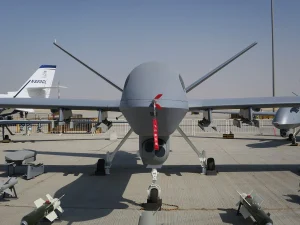
| Türkiye (TAI) | Aksungur UCAV (reported interest, not delivered) | None confirmed in service | Requested since October 2021; status unchanged as of 2026 |
Angola’s fighter jets
Asked directly: yes, Angola has fighter jets, but only one type counts as genuinely modern. The Sukhoi Su-30K/SM is the National Air Force of Angola’s sole confirmed current-generation fast jet; the rest of the combat fleet is Soviet- or civil-war-era stock that multiple open sources, including Wikipedia’s own aggregated Angolan order of battle, describe as largely grounded.
| System | Origin (country + manufacturer) | Quantity | Status | Source |
|---|---|---|---|---|
| Su-30K/SM (upgraded in Belarus) | Russia/India (ex-Indian Air Force airframes, re-exported); overhaul by Russia’s 558th Aviation Repair Plant, Belarus | 12, ordered October 2013, delivered in batches September 2017, October 2018 and April 2019 | Operational; Angola’s only confirmed modern fast jet, based with the 25th Fighter Aviation Regiment at Kuito Air Base | defenceWeb; Military Africa; DefenceMENA Angola profile |
| Su-27/Su-27UB (conversion trainer) | Russia/USSR, Sukhoi | Open-source counts conflict: one aggregated roster lists a single Su-27UB trainer, while separate fleet compilations claim up to roughly 6 Su-27s in a fighter role | Reported (unconfirmed); treated here as a small, largely non-operational residual fleet | Open-source fleet aggregation (unconfirmed); migflug.com |
| MiG-21bis | Russia/USSR, Mikoyan | Reported 23 | Reported (unconfirmed); assessed as mostly non-flying legacy stock | Open-source fleet aggregation (unconfirmed) |
| MiG-23ML/UB | Russia/USSR, Mikoyan; some airframes supplied via Belarus | Reported 22 | Reported (unconfirmed); assessed as mostly non-flying legacy stock | Open-source fleet aggregation (unconfirmed) |
| Su-22M-4K/UM-3K | Russia/USSR, Sukhoi; some airframes supplied via Belarus | Reported 10 fighter-bombers plus 1 conversion trainer | Reported (unconfirmed); status disputed across sources | Open-source fleet aggregation (unconfirmed) |
| Su-25K/UBK | Russia/USSR, Sukhoi | Not independently quantified; assigned in open-source orders of battle to the 16th Fighter Squadron, 26th Fighter Aviation Regiment, Moçâmedes Air Base | Reported (unconfirmed) | Open-source order-of-battle aggregation (unconfirmed) |
| EMB-314 Super Tucano (light attack/advanced trainer) | Brazil, Embraer | 6 ordered 2009; first 3 delivered at Embraer’s Gavião Peixoto facility, January 2013; delivery of the remaining 3 never confirmed in subsequent reporting | Delivered (partial)/Reported; DefenceMENA found no source confirming the second batch | FlightGlobal; Aviation Week; Embraer Defense and Security |
The gap is stark: Angola’s neighbours and regional comparators have moved faster. Ethiopia flies a larger, more active Su-27/Su-30 Flanker fleet, and Angola’s own Su-22, MiG-21 and MiG-23 jets are civil-war survivors that several independent fleet trackers now describe as display pieces rather than combat assets. No public reporting found by DefenceMENA points to a fighter-replacement programme beyond the Su-30K fleet itself.
Maritime patrol aircraft
Angola’s 1,600km Atlantic coastline and offshore oil fields are the reason the newest aircraft in FANA service are maritime-surveillance variants, not fighters.
| System | Origin (country + manufacturer) | Quantity | Status | Source |
|---|---|---|---|---|
| C295 MSA (maritime surveillance variant) | Spain/multinational, Airbus (legacy CASA design) | 2 of a 3-aircraft, $188m order placed in 2018; fitted with search radar, electro-optical sensors and anomaly detectors, reportedly able to carry torpedoes, missiles, mines and depth charges | Delivered; full 3-aircraft order confirmed complete by September 2026 | ADF Magazine (23 Sep 2026); Military Africa; DefenceMENA Angola profile |
| CASA C-212 (maritime patrol configuration) | Spain, CASA (legacy, pre-Airbus) | Reported 1 | Reported (unconfirmed) | Open-source fleet aggregation (unconfirmed) |
| Cessna Citation I (ISR/maritime surveillance fit, Seaspray radar) | United States, Cessna; sensor package reportedly UK-origin (Seaspray AESA radar) | Reported 1 | Reported (unconfirmed) | Open-source fleet aggregation (unconfirmed) |
Transport aircraft
The transport fleet spans six decades of acquisition, from Soviet-era Antonovs still nominally on the books to the C295 that is now FANA’s newest Western airframe.
| System | Origin (country + manufacturer) | Quantity | Status | Source |
|---|---|---|---|---|
| C295 (tactical transport configuration) | Spain/multinational, Airbus | 1 of the 3-aircraft order; delivered 30 July 2024, Angola’s first new Western-origin tactical transport | Operational | Military Africa; defenceWeb; Army Recognition |
| Ilyushin Il-76 | Russia/USSR, Ilyushin | Reported roughly 7 | Reported; strategic airlift, legacy | Open-source fleet aggregation (unconfirmed) |
| Antonov An-12 | Russia/USSR, Antonov | Reported 8 | Reported (unconfirmed); legacy heavy transport | Open-source fleet aggregation (unconfirmed) |
| Antonov An-72 | Russia/USSR, Antonov | Reported 5 | Reported (unconfirmed); legacy | Open-source fleet aggregation (unconfirmed) |
| Antonov An-26/An-32 | Russia/USSR, Antonov | Reported small residual numbers (An-26: 1; An-32: 4) | Reported (unconfirmed); legacy | Open-source fleet aggregation (unconfirmed) |
| Xi’an MA60 | China, Xi’an Aircraft | Reported 2 | Reported (unconfirmed) | Open-source fleet aggregation (unconfirmed) |
| Daher Kodiak 100 | United States, Daher (formerly Quest Aircraft) | Reported 3 | Reported; light utility transport | Open-source fleet aggregation (unconfirmed) |
| CASA C-212 (utility configuration) | Spain, CASA | Reported 1 | Reported (unconfirmed) | Open-source fleet aggregation (unconfirmed) |
Helicopters
Helicopters make up the largest single category of FANA’s aircraft, dominated by a large but imprecisely counted Russian-built utility and attack fleet, with Italian types now the main source of newer additions.
| System | Origin (country + manufacturer) | Quantity | Status | Source |
|---|---|---|---|---|
| Mi-8/Mi-17 family (including Mi-171Sh) | Russia, Russian Helicopters/Mil | Estimated 39–65 across sources; part of a 2013 Russian arms package alongside the Su-30Ks | Operational; the largest helicopter type by count, though exact strength disputed | Open-source fleet aggregation (unconfirmed); airrecognition.com (2013 deal) |
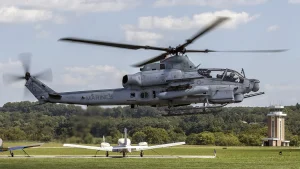
| Mi-24/Mi-35 | Russia, Russian Helicopters/Mil | Reported 14–15 | Operational, attack role | Open-source fleet aggregation (unconfirmed) |
| AW139 | Italy, Leonardo | Reported 4 | Operational, SAR/utility | Open-source fleet aggregation (unconfirmed) |
| AW109 | Italy, Leonardo | Reported 2 in service, with up to 4 more reported on order | Operational (part)/On order (part) | Open-source fleet aggregation (unconfirmed) |
| AW119M / AW119Kx | Italy, Leonardo | 12 + 2, tied to a €132.8m Italian export-credit facility authorised by presidential decree, April 2026 | On contract (financing authorised); deliveries not yet reported | DefenceMENA Angola profile; Ver Angola; defensa.com; TXF News |
| Alouette III | France, Aérospatiale/Airbus Helicopters (legacy) | Reported 21 | Reported (unconfirmed); legacy liaison/utility fleet | Open-source fleet aggregation (unconfirmed) |
| Bell 212 | United States, Bell | Reported 9 | Reported; utility | Open-source fleet aggregation (unconfirmed) |
Trainer aircraft
Angola’s trainer fleet is the clearest illustration of its supplier diversification: a Soviet-era Albatros fleet is being supplemented by a new Czech order, flanked by Chinese jet trainers and Brazilian and Swiss propeller types.
| System | Origin (country + manufacturer) | Quantity | Status | Source |
|---|---|---|---|---|
| K-8W/JL-8 Karakorum (jet trainer/light attack) | China, Hongdu Aviation Industry Corporation, co-developed with Pakistan Aeronautical Complex; sold via Simportex/CATIC | 12, delivered in two batches of 6 (first batch reported arriving late 2019/early 2020; second batch confirmed February 2021) | Operational; replaced part of the ageing L-29/L-39 jet-trainer fleet | Military Africa; defensemirror.com |
| L-39NG Skyfox (new-build jet trainer) | Czech Republic, Aero Vodochody | Up to 4, contract signed 18 June 2026 | On contract; Angola is the Skyfox programme’s first African customer, chosen over an overhaul of its existing Albatros fleet | Aero Vodochody press release; The Defense Post; aviationnews.eu |
| L-39ZA/Albatros (legacy jet trainer) | Czechoslovakia, Aero Vodochody | Reported small residual fleet (roughly 4) | Operational (part), ageing; the type the new Skyfox order supplements rather than directly replaces | Open-source fleet aggregation (unconfirmed) |
| EMB-312 Tucano | Brazil, Embraer (ex-Peruvian Air Force airframes) | Reported 12 | Operational, basic/advanced propeller training | Open-source fleet aggregation (unconfirmed) |
| Pilatus PC-7 | Switzerland, Pilatus Aircraft | Reported 22 | Operational, basic training | Open-source fleet aggregation (unconfirmed) |
| Pilatus PC-9 | Switzerland, Pilatus Aircraft | Reported 4 | Operational, advanced training | Open-source fleet aggregation (unconfirmed) |
How the arsenal was built
FANA’s inventory is a layered record of Angola’s 1975–2002 civil war and its aftermath. The Soviet Union and, after independence, Russia supplied the bulk of the fighter, attack and transport fleet that remains nominally on the books today — MiG-21s, MiG-23s, Su-22s, Su-25s and a large Mi-8/Mi-17 and Mi-24 helicopter force — most of it now decades old and, per multiple open-source assessments, only partly airworthy. Brazil became a supplier of propeller trainers and light-attack aircraft from the late 2000s, delivering EMB-312 Tucanos and the first three of six ordered EMB-314 Super Tucanos in January 2013; DefenceMENA found no confirmation that the remaining three Super Tucanos were ever delivered. The single largest post-war combat purchase came via an October 2013 Russian arms package worth roughly $1bn, which combined the Su-30K fighter order with Mi-17 helicopters; the fighters, second-hand ex-Indian Air Force airframes upgraded toward Su-30SM standard at Belarus’s 558th Aviation Repair Plant, arrived in three batches between September 2017 and April 2019. China then displaced some of that Cold War-era trainer fleet, delivering 12 K-8W Karakorum jet trainers in 2020–2021 through CATIC and Simportex. Since roughly 2022, Angola has visibly diversified toward Western and non-aligned suppliers: Spain’s Airbus delivered the first of a $188m, three-aircraft C295 order (one transport, two maritime-surveillance) between July 2024 and 2026, Italy’s Leonardo is supplying AW139 and AW109 helicopters with a further 12+2 AW119 package financed through a 2026 Italian export-credit facility, and the Czech Republic’s Aero Vodochody signed Angola in June 2026 as the first African customer for its new-build L-39NG Skyfox, chosen over simply overhauling the existing Albatros fleet. Türkiye remains the one supplier relationship that has not converted into hardware: Angola asked Ankara for unmanned combat aerial vehicles during President João Lourenço’s October 2021 visit, Turkish Aerospace Industries’ Aksungur has been the type cited in reporting since 2023, and as of 2026 no contract value, quantity or delivery has been confirmed by either government.
What arrived in the last 12 months
| Date | Event | Value | Status |
|---|---|---|---|
| By September 2026 (exact date not disclosed) | Airbus completes delivery of the second and third C295 aircraft (both in maritime-surveillance configuration), finishing a 3-aircraft order placed in 2018 | $188m (full 3-aircraft order) | Delivered |
| April 2026 | Italy authorises a €132.8m export-credit facility by presidential decree for 12 AW119M and 2 AW119Kx Leonardo helicopters | €132.8m | On contract (financing authorised); deliveries not yet reported |
| 18 June 2026 | Aero Vodochody signs a contract for up to 4 L-39NG Skyfox jet trainers, making Angola the programme’s first African customer | Not disclosed | On contract |
| Ongoing, FY2026 | No confirmed new fast-jet delivery recorded in this window; the Su-30K/SM fleet delivered 2017–2019 remains Angola’s only modern fighter | N/A | Assessed from available reporting |
The year to October 2026 continued Angola’s pattern since 2022: new money has gone into transports, maritime patrol and training aircraft rather than combat jets, financed almost entirely through export credit or barter tied to oil revenue rather than a domestic capital-procurement budget. The Turkish drone request first raised in 2021 remains open but undelivered.
How many aircraft does Angola have?
How many fighter jets does Angola have?
Angola’s only confirmed modern fighter type is the Sukhoi Su-30K/SM, with 12 delivered between 2017 and 2019. Open sources also list Soviet-era MiG-21, MiG-23, Su-22 and Su-25 jets still nominally in the inventory, but multiple independent trackers, including Wikipedia’s own aggregated roster, describe most of that legacy fleet as no longer airworthy.
Does Angola have fighter jets?
Yes. The Su-30K/SM is Angola’s sole confirmed modern fast jet; everything else in the fighter/attack category is civil-war-era Soviet stock of disputed operational status, and no confirmed fighter-replacement or expansion programme has been reported beyond the Su-30K fleet itself.
Does Angola have military drones?
Not yet in confirmed service. Angola has sought Turkish unmanned combat aerial vehicles since October 2021, with Turkish Aerospace Industries’ Aksungur cited since 2023 as the likely type, but no contract value, quantity or delivery has been confirmed as of 2026.
How many helicopters does the Angola Air Force have?
The largest type by count is the Mi-8/Mi-17 family, estimated at 39–65 aircraft across open sources, alongside roughly 14–15 Mi-24/Mi-35 attack helicopters. Italy’s Leonardo supplies the newer additions: 4 AW139s and 2 AW109s already delivered, plus a further 12 AW119M and 2 AW119Kx helicopters on contract since April 2026.
What is Angola’s newest military aircraft?
By contract date, the Czech L-39NG Skyfox jet trainer, signed 18 June 2026. By delivery, the Airbus C295 maritime-surveillance variant, with the full three-aircraft order confirmed complete by September 2026.
How Angola compares
DefenceMENA’s Angola military strength profile sets this air fleet in the context of the wider Angolan Armed Forces, including the Navy’s parallel modernisation covered in Why Did Angola Buy Corvettes from the UAE?. Angola’s Mi-24/Mi-35 attack-helicopter fleet, one of the largest in Southern Africa, is set alongside South Africa’s rival design in DefenceMENA’s Denel Rooivalk vs Mi-24/Mi-35 comparison, and the continent-wide ranking of Africa’s largest air forces by combat-capable aircraft places Angola’s fleet size against its neighbours. Ethiopia’s much larger and more active Su-27/Su-30 Flanker force, covered in DefenceMENA’s Ethiopian Air Force aircraft inventory, is the clearest regional comparison for Angola’s own single modern fighter type.
A note on the numbers
Angola’s Ministry of Defence does not publish an official air force order of battle, and SIPRI’s public fact sheets do not break out an Angola-specific figure. This page draws a firm distinction between independently confirmed acquisitions — the Su-30K/SM fleet, the K-8W Karakorum trainers, the C295 transport/MSA order, the AW119 helicopter package and the L-39NG Skyfox contract, each reported by multiple outlets with dates and (where disclosed) values — and the large residual Soviet- and civil-war-era fleet (MiG-21, MiG-23, Su-22, Su-25, most of the Mi-8/Mi-17 and Mi-24 helicopters, the Antonov and Ilyushin transports), where quantities rest on open-source fleet-compilation aggregation that multiple trackers, including Wikipedia’s own article, flag as unconfirmed and likely overstated relative to what actually flies. Two items are tracked but not resolved: the fate of the second batch of three EMB-314 Super Tucanos ordered in 2009 (DefenceMENA found no delivery confirmation after the first three in January 2013), and Angola’s 2021 request for Turkish Aksungur drones, still without a confirmed contract as of October 2026. This page will be updated as new deliveries, contracts or official disclosures are confirmed.
Sources
- defenceWeb, Angola receives final Su-30K fighters
- Military Africa, Angolan Air Force receives final K-8W Karakorum aircraft from China
- Military Africa, Angola receives first C-295 aircraft from Airbus
- ADF Magazine, Angola adds surveillance aircraft
- Aero Vodochody, New orders for Aero Skyfox heads to Africa and America
- The Defense Post, Aero Skyfox heads to Angola and North America
- Daily Sabah, Angola sought Turkish drones, new talks include armored carriers
- FlightGlobal, Embraer delivers first three Super Tucanos to Angola
- migflug.com, National Air Force of Angola fleet compilation
- DefenceMENA, Is Angola’s Military as Strong as Its Oil Wealth Suggests?