Evolution of Military Drones in Africa

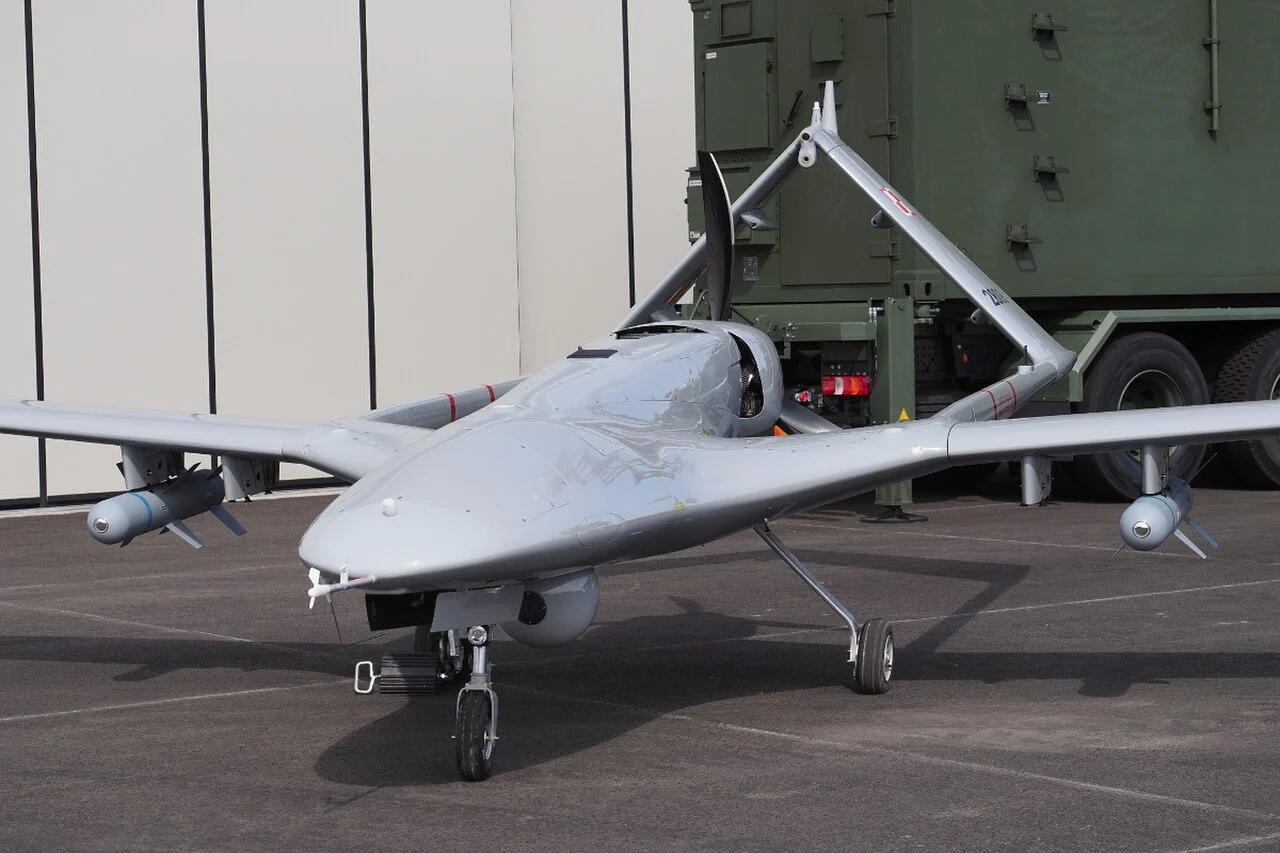


From a handful of South African reconnaissance aircraft in the late 1990s to Chinese strike drones over Boko Haram territory, Turkish UAVs deployed by half a dozen Sahelian air forces, and the first African-designed combat drone entering export service, Africa’s unmanned fleets have grown faster than almost any other category of military hardware on the continent. This is how that capability evolved, stage by stage, through October 2026.
DEFENCE AFRICA | Evolution gallery | Data as of October 2026
Twenty-five years ago, an African air force operating an armed drone barely existed. Reconnaissance UAVs were rare, confined to a handful of well-funded militaries, and strike missions over insurgent territory were flown by manned jets or helicopters at real risk to their crews. Today, armed and unarmed drones fly over the Sahel, the Horn of Africa, the Sahara and Lake Chad basin on a near-daily basis, supplied first by South Africa, then China, then Türkiye, and now increasingly built in Africa itself.
The shift moved through distinct stages, each driven by a specific counter-insurgency problem and a supplier willing to sell without the conditions Western governments typically attach to combat aircraft exports. This piece traces seven of those stages, from early reconnaissance-only UAVs to the local production pledges and counter-drone programmes now emerging as the next frontier.
Key facts
- Algeria has operated Denel Seeker reconnaissance UAVs since the late 1990s, among the earliest UAV purchases by any African air force (StrategyPage, 2019).
- Nigeria’s Chinese-built CH-3 was documented in combat-configured wreckage near Dumge, Borno State, in January 2015 (PopSci, Shephard Media).
- Niger, Burkina Faso, Togo, Mali, Nigeria and Ethiopia had all fielded Bayraktar TB2s by the end of 2022 (The Defense Post, Military Africa).
- Burkina Faso commissioned the first confirmed Bayraktar Akıncı UCAVs in Sahelian Africa on 8 April 2024 (Overt Defense).
- South Africa’s Milkor 380 flew for the first time on 19 September 2023 and had reportedly entered export service with an undisclosed Middle Eastern customer by 2026 (ITWeb).
- Nigeria’s defence minister pledged large-scale local drone, tank and armoured-vehicle production “within the next year” at AFRIDEX 2026 (Voice of Nigeria, 26 October 2026).
Stage 1 (late 1990s-2000s): No indigenous capability → South African reconnaissance UAVs
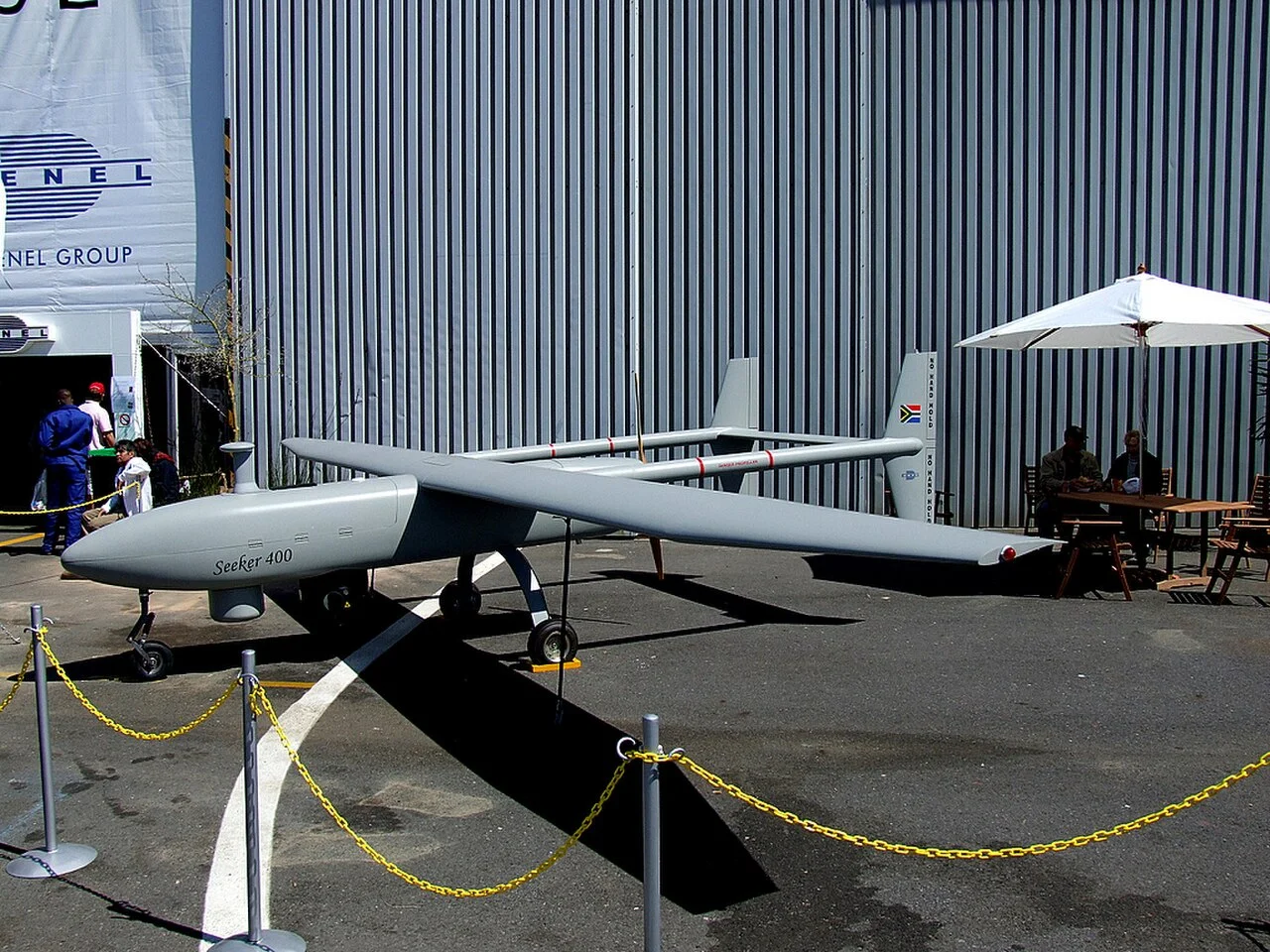
Year/period: Late 1990s to early 2010s. Previous system: None — African air forces relied on manned reconnaissance aircraft for border and counter-insurgency surveillance. New system/capability: Algeria acquired South African Denel Seeker II tactical UAVs beginning in the late 1990s, one of the earliest UAV purchases by any African military, according to open-source tracking of Algeria’s drone programme (StrategyPage). The aircraft were unarmed and used for surveillance, not strike. Key improvement: Persistent aerial surveillance over vast desert and border areas without the cost or risk of a manned sortie. Why the transition happened: Algeria’s long internal counter-terrorism campaign and porous Saharan borders created demand for cheap, repeatable ISR coverage that manned aircraft could not sustain. Current status: Operational (retired/upgraded) — Algeria’s Seeker fleet was reportedly updated to the Seeker 400 variant, and the country has since diversified into armed Chinese and Turkish types.
Stage 2 (2014-2015): Surveillance-only → Nigeria’s first strike-capable drone
Year/period: 2014-2015. Previous system: Manned Alpha Jets and F-7NI fighters flying all strike sorties against Boko Haram. New system/capability: Nigeria acquired Chinese CASC CH-3 medium UAVs; wreckage apparently showing a CH-3 fitted with AR-1 anti-tank missiles was photographed near Dumge village, Borno State, in January 2015 — the first widely documented case of an African air force fielding an armed drone (PopSci, Shephard Media). The purchase date and exact numbers were never officially confirmed, and published figures vary. Key improvement: Persistent strike and ISR coverage over Sambisa Forest without risking a manned cockpit. Why the transition happened: Boko Haram’s insurgency demanded sustained aerial pressure Nigeria’s small manned fleet could not provide, and China offered combat UAVs without the political conditions Western suppliers typically attached. Current status: Operational — later reporting describes a CH-3A tracking Boko Haram fighters moving heavy weapons toward Sambisa Forest in 2018 (Shephard Media).
Stage 3 (October 2018): Isolated cases → a declared Chinese strike fleet
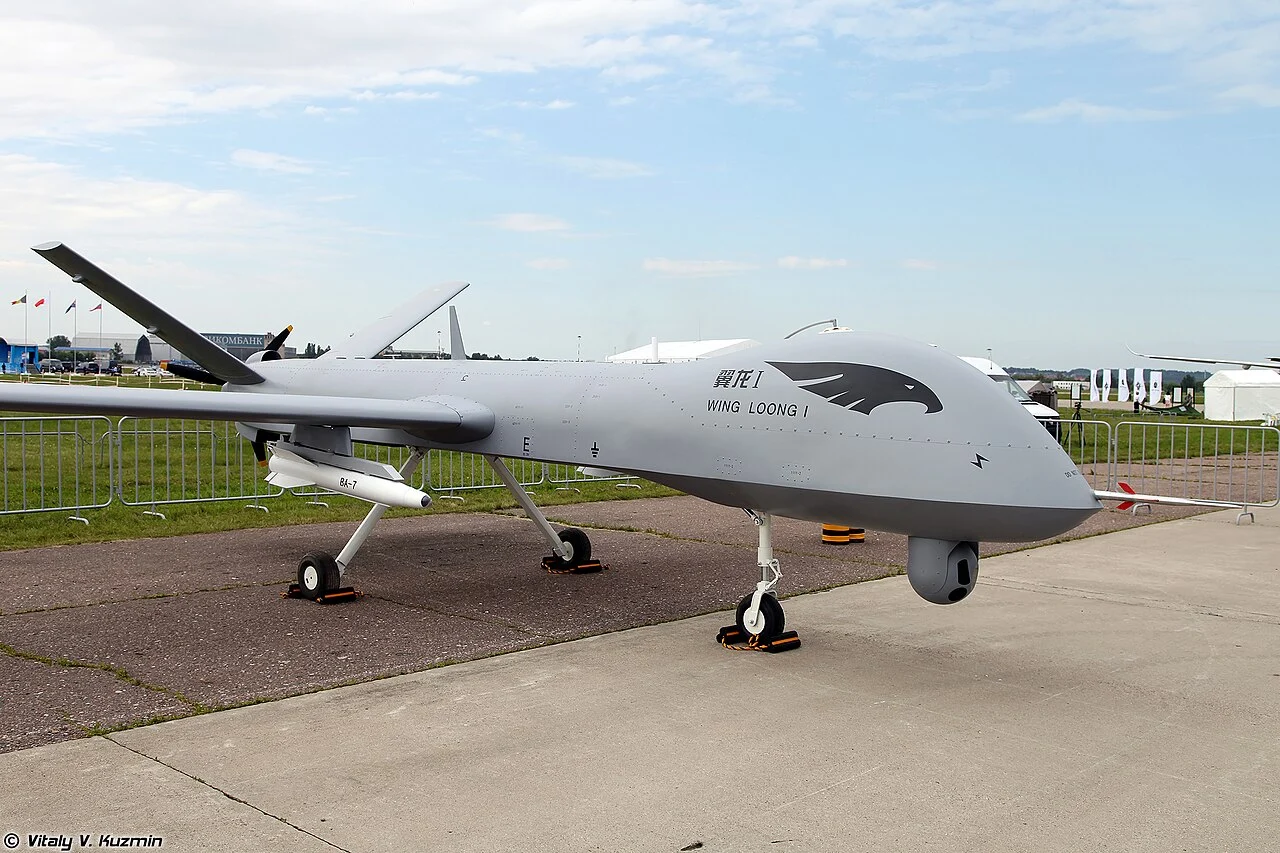
Year/period: October 2018. Previous system: Algeria’s unarmed Seeker reconnaissance fleet. New system/capability: Algerian state television broadcast footage of CASC CH-3 and CH-4B strike UAVs at Aïn Oussera air base, with the aircraft shown in hangars and in flight. Open-source analysts at Oryx estimated a delivery of roughly five CH-3A and five CH-4B aircraft that year — an estimate, not an official figure (Oryx; sldinfo/defenceWeb). Key improvement: A declared, strike-capable fleet (the CH-4B is reportedly compatible with the AR-1 missile) rather than surveillance-only aircraft. Why the transition happened: Counter-terrorism operations along Algeria’s southern borders required precision strike without manned risk, and public disclosure signalled the capability to both domestic and regional audiences. Current status: Operational — Algeria has since added the Wing Loong II and reportedly ordered Turkish Aksungur UAVs, broadening its unmanned fleet beyond Chinese suppliers.
Stage 4 (2021-2023): National programmes → Turkish mass proliferation
Year/period: 2021-2023. Previous system: Chinese CH-3/CH-4 strike drones in a small number of countries (Nigeria, Algeria). New system/capability: Ethiopia fielded Bayraktar TB2s against Tigrayan forces from late 2021; the Dutch NGO PAX identified TB2 munitions and documented aircraft via satellite imagery near Addis Ababa and Bahir Dar in January 2022 (PAX for Peace). Niger’s purchase was disclosed in November 2021, with a first batch arriving in May 2022 (The Defense Post); Burkina Faso received five TB2s in April-May 2022, commissioning them in March 2023 (Military Africa); Togo took delivery in August 2022 (Military Africa). Key improvement: Lower unit cost and simpler logistics than Chinese or Western MALE platforms made the TB2 the first strike UAV several African militaries could field within the same two-year window. Why the transition happened: Sahelian governments, several under military rule, turned to Türkiye for fast-fielded strike capability as Western security partnerships came under strain. Current status: Operational in at least six African air forces; Ethiopia’s use of the type against Tigrayan-held areas drew scrutiny, with aid workers and press investigations attributing hundreds of civilian deaths to drone strikes — claims Ethiopia’s government has disputed and that have not been independently adjudicated (Stockholm Center for Freedom, citing Politico and The Washington Post).
Stage 5 (April 2024): Medium-altitude drones → heavier, longer-range UCAVs
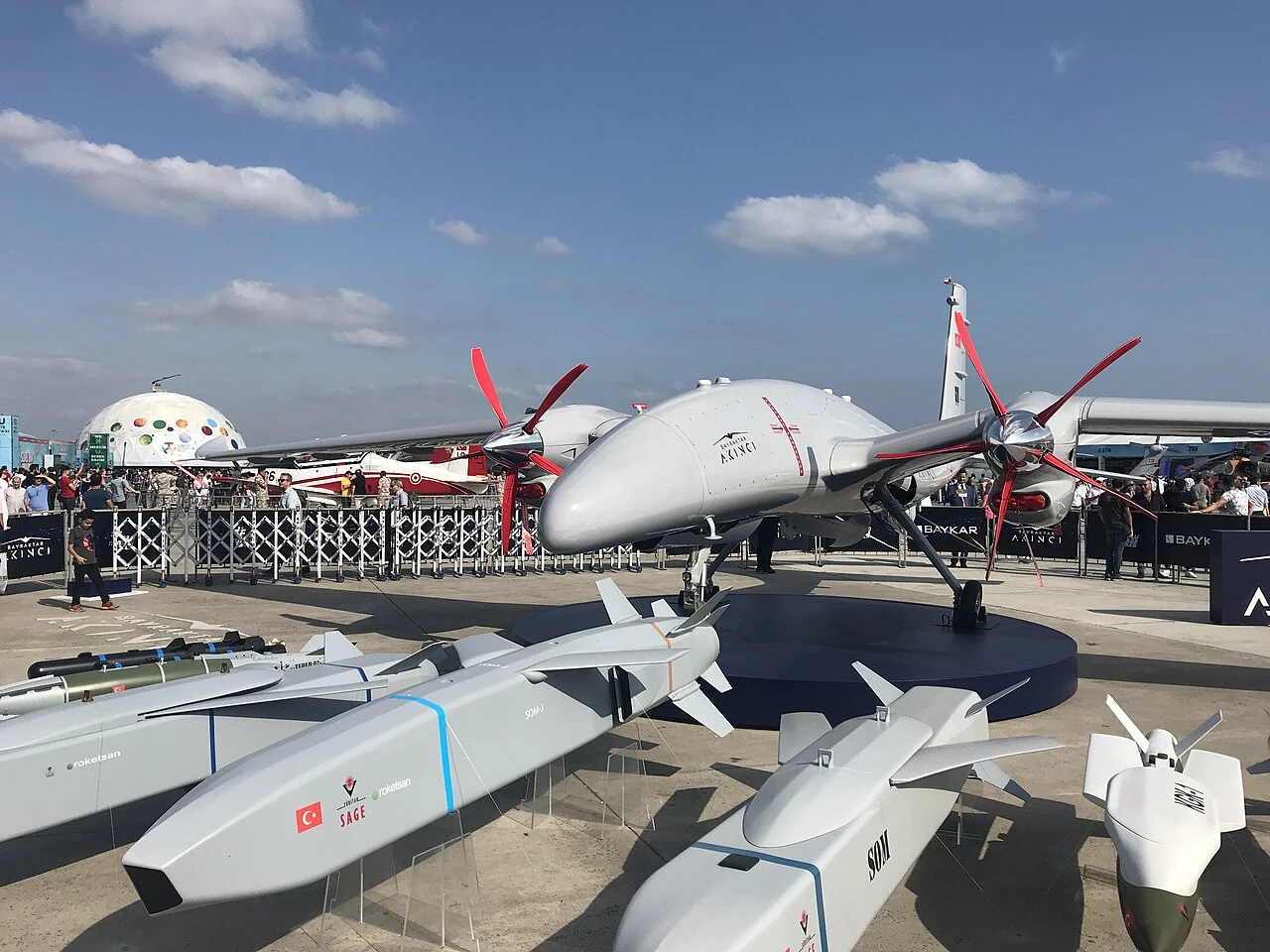
Year/period: April 2024. Previous system: Burkina Faso’s medium-altitude Bayraktar TB2 fleet, delivered in 2022. New system/capability: Burkina Faso formally commissioned two Bayraktar Akıncı UCAVs alongside its existing TB2s at a ceremony at Sapone air base on 8 April 2024, attended by interim president Ibrahim Traoré — the first confirmed Akıncı deployment in Sahelian Africa (Overt Defense). Turkish guided munitions were displayed alongside the aircraft, suggesting a broader weapons upgrade. Key improvement: The twin-engine Akıncı’s larger payload and greater endurance allow heavier guided munitions and longer-range strike than the single-engine TB2. Why the transition happened: Burkina Faso’s junta sought to extend strike range and payload against insurgents operating deeper in contested territory than TB2 missions could easily reach. Current status: Operational — reporting on exact aircraft numbers varies between sources, with some describing a dozen combined TB2 and Akıncı airframes handed over at the ceremony.
Stage 6 (September 2023-2025): Imported platforms → an African-built MALE UCAV
Year/period: September 2023 to 2025. Previous system: Exclusively imported Chinese and Turkish strike drones. New system/capability: South Africa’s Milkor flew its Milkor 380 medium-altitude, long-endurance UCAV for the first time on 19 September 2023 at Air Force Base Overberg. Saudi Arabia approved local assembly in February 2024, pending a firm order (Breaking Defense, Al-Monitor); by 2025 Milkor reported export orders, and a 2026 report said the aircraft had entered service with an undisclosed Middle Eastern customer, with Milkor declining to name the end-user (ITWeb). Key improvement: The first Western-aligned MALE UCAV designed and built in Africa, offered to customers wary of the conditions Chinese or Turkish suppliers attach. Why the transition happened: Milkor identified demand for a non-Chinese, non-Turkish MALE platform among militaries seeking diversified suppliers. Current status: Ordered/selected for export; not yet confirmed in South African Air Force service, with Milkor reportedly still seeking a domestic SANDF order as of October 2026.
Stage 7 (2026, NEXT): Importing drones → local production and counter-drone defence
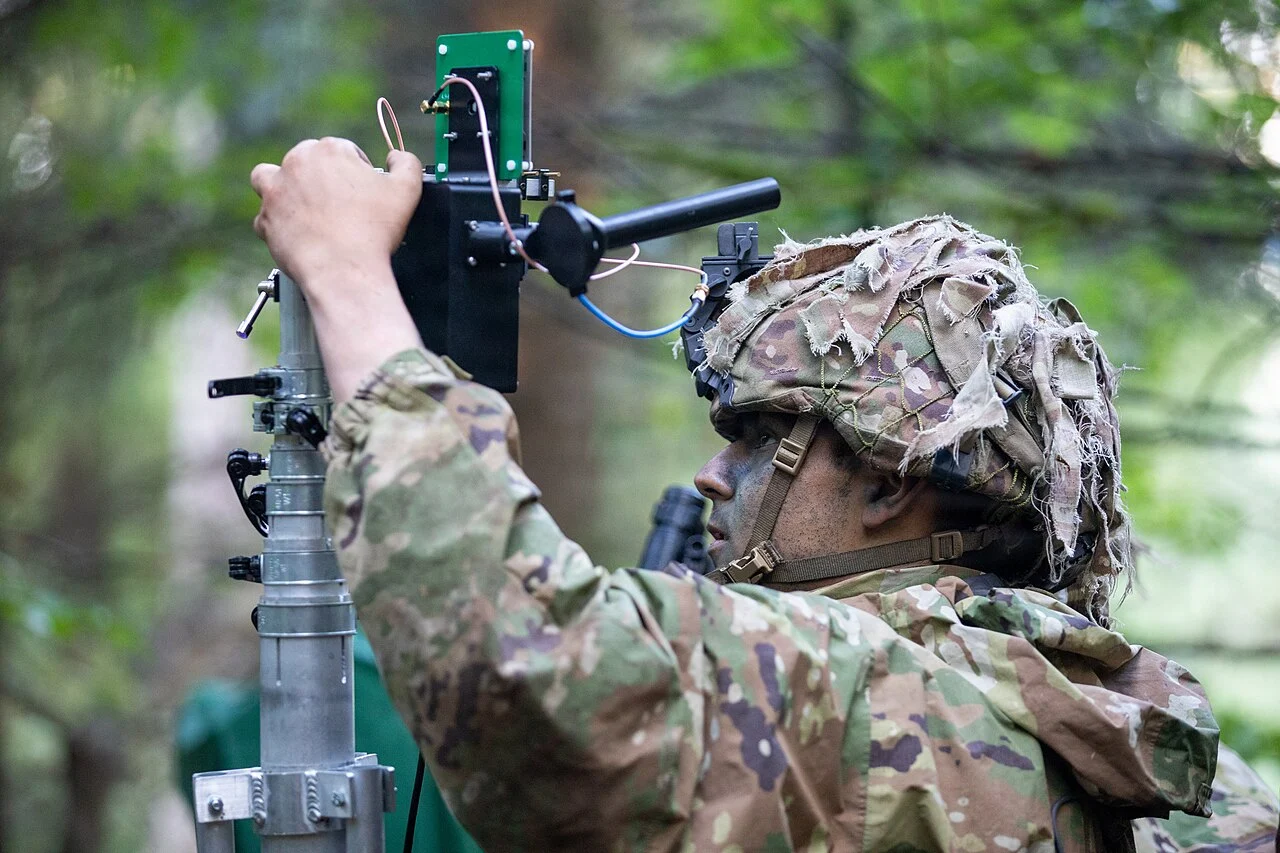
Year/period: 2026 onward. Previous system: A decade of African strike-drone capability built almost entirely on imported Chinese, Turkish and, for export, South African airframes. New system/capability: At the opening of AFRIDEX 2026 in Lagos on 26 October 2026, Nigeria’s defence minister, Gen. Christopher Gwabin Musa (rtd), pledged large-scale local production of defence equipment “within the next year,” naming drones alongside tanks and armoured vehicles — following an August 2026 report that Nigeria was already moving to build armoured vehicles and counter-drone systems domestically (The Defense Post). Separately, the US Army confirmed plans to trial up to 15 counter-UAV systems at Tan-Tan, Morocco, in spring 2027 ahead of exercise African Lion 2027 (The Defense Post). Key improvement: A shift from acquiring strike drones to producing them and defending against the same technology now used by insurgent and militia groups. Why the transition happened: A decade of drone proliferation on both sides of African conflicts has made sovereign production and counter-UAV defence the next bottleneck, not the drones themselves. Current status: Reportedly under negotiation — Nigeria’s pledge is not yet a signed programme, and Morocco’s trials remain a planned evaluation, not a confirmed acquisition.
| Period | From | To | Key improvement | Status |
|---|---|---|---|---|
| Late 1990s-2000s | No UAV capability | Denel Seeker reconnaissance UAVs (Algeria) | Persistent unarmed ISR | Operational (upgraded) |
| 2014-2015 | Manned strike only | CASC CH-3 armed UAV (Nigeria) | Persistent strike/ISR over Boko Haram territory | Operational |
| October 2018 | Unarmed reconnaissance | CH-3A/CH-4B declared strike fleet (Algeria) | Declared, missile-capable UAV force | Operational |
| 2021-2023 | Isolated Chinese programmes | Bayraktar TB2 (Ethiopia, Niger, Burkina Faso, Togo, Mali, Nigeria) | Low-cost strike UAV accessible to multiple states at once | Operational |
| April 2024 | Medium-altitude TB2 | Bayraktar Akıncı UCAV (Burkina Faso) | Heavier payload, longer range | Operational |
| 2023-2025 | Imported platforms only | Milkor 380 MALE UCAV (South Africa) | First African-built MALE UCAV, export-oriented | Ordered/selected for export |
| 2026-onward | Import-dependent drone forces | Local production pledges and counter-UAV trials (Nigeria, Morocco) | Sovereign production and defence against the same technology | Reportedly under negotiation |
Why it matters for Africa
Drones let African air forces project surveillance and strike power over areas — the central Sahel, Lake Chad basin, Ogaden and the Sahara’s southern fringe — that manned aircraft could never cover affordably. Chinese and Turkish suppliers offered that capability without the end-use conditions Western governments typically attach to armed aircraft, which is why CH-3/CH-4 and Bayraktar types, not American or European drones, became the continent’s default strike platforms. That affordability has a cost: sustainment depends on foreign spare parts, software updates and munitions pipelines African air forces do not control, and combat experience in Nigeria, Ethiopia and Burkina Faso has shown both the operational value of armed drones against irregular forces and the civilian-harm risks when strikes are not tightly constrained. Milkor’s 380 and Nigeria’s local-production pledge point toward the next phase: African-controlled design and assembly rather than permanent dependence on Beijing or Ankara, if financing and trained engineers can match the combat record Chinese and Turkish types have already built up.
Sources
- StrategyPage — Warplanes: Algeria Has History With UAVs
- Popular Science — Watch Nigeria’s First Confirmed Drone Strike
- Shephard Media — Nigeria Suspected of Using Chinese-Built CH-3s Against Boko Haram
- Oryx — Algiers Calling: Assessing Algeria’s Combat Drone Fleet
- defenceWeb (via SLD Info) — Algeria’s Chinese UAV Fleet
- PAX for Peace — Turkish Drones Join Ethiopia’s War, Satellite Imagery Confirms
- Stockholm Center for Freedom — Turkish Drone Used by Ethiopia Killed 59 Civilians Sheltering in a School in Tigray: Report
- The Defense Post — Türkiye’s Bayraktar Drones Head to Niger
- Military Africa — Burkina Faso Buys 5 Bayraktar TB2 Drones From Türkiye
- Military Africa — Togo Acquires Bayraktar TB2 Drone
- Overt Defense — Burkina Faso Puts Bayraktar Akıncı UAVs Into Service
- Breaking Defense — South Africa’s Milkor Ready to Locally Produce 380 UCAV for Saudi Arabia Pending Procurement Talks
- Al-Monitor — South Africa’s Milkor Gets Go-Ahead to Produce Drones in Saudi Arabia
- ITWeb — SA-Made Milkor Combat Drone Deployed in Middle East
- The Defense Post — Nigeria to Build Armored Vehicles, Counter-Drone Systems Locally
- The Defense Post — US Army to Trial Counter-Drone Systems in Morocco Ahead of African Lion 2027
Related on DefenceMENA: Military Drones in the Sahel: Who Operates What, and Who Is Actually Supplying Them, Why Mali Expanded Its Drone Fleet: Timeline, Suppliers and Results, Milkor: Inside South Africa’s Grenade Launcher and Drone Maker, and Nigeria Pledges Local Tanks, APCs and Drones Within a Year as It Opens AFRIDEX 2026.