Algeria’s Niamey Deployment: Why Analysts Call It a Sahel Policy Shift



In the last week of August 2026, Algeria sent fighter jets, a tanker and a transport aircraft to Niger — its first military deployment beyond its own borders since independence. Two months on, analysts say the move marks a genuine shift in Algiers’ traditionally non-interventionist Sahel policy, one with implications for Mali, the Alliance of Sahel States and the crowded airspace over Niamey.
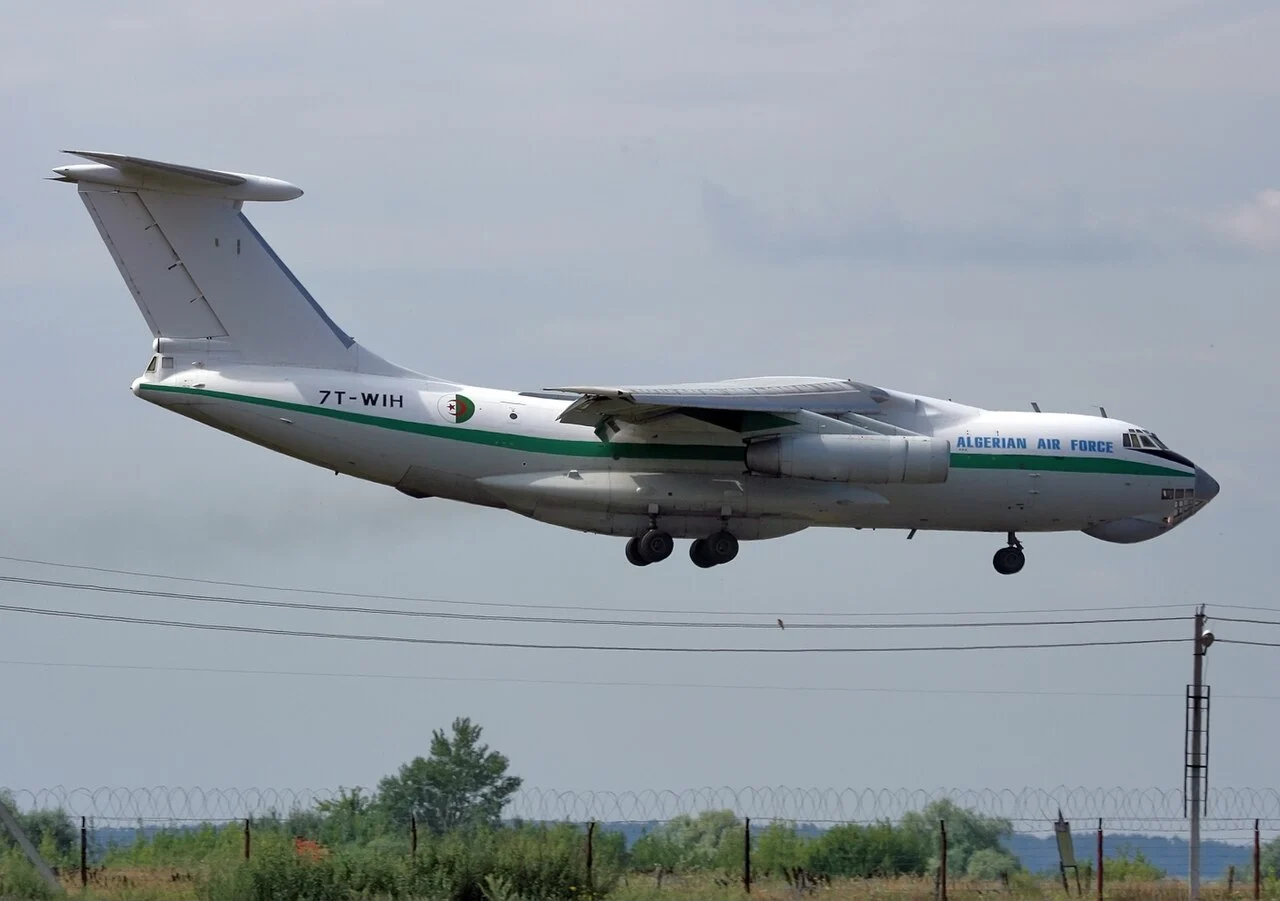
Photo: An Algerian Air Force Ilyushin Il-78 aerial tanker, of the type deployed to Niamey, Niger, in August 2026. Credit: Sergey Lysenko, CC BY-SA 3.0, via Wikimedia Commons
Algeria’s Ministry of National Defence confirmed in late August that it had flown four Sukhoi Su-30 fighters, an Il-76 transport and an Il-78 aerial refuelling tanker into Air Base 101, next to Diori Hamani International Airport in Niamey. The ministry said the aircraft arrived “at the request of the Nigerien authorities” to support Niger’s armed forces against an “attempt to destabilise” the state, according to the Catholic missionary news agency Fides, which described it as Algeria’s first overseas military deployment.
What happened in Niamey
The deployment followed a mutiny by Nigerien special forces units on the night of 28–29 August. The units, which had been fighting jihadist groups in the Tillabéri and Dosso regions, rose up in the capital; gunfire and explosions were reported near the presidency, the state broadcaster’s headquarters and Air Base 101 itself. Niger’s ruling junta said it had regained control and restored calm by 29 August, a day before the Algerian aircraft touched down. An official ceremony at Air Base 101 on 30 August marked their arrival, Fides reported.
Fides said Algeria’s aircraft do not appear to have taken part in suppressing the revolt itself, arriving instead as the situation was already stabilising. Several days before the jets arrived, Algeria had already donated four helicopters to Niger’s armed forces along with ammunition, spare parts, maintenance equipment and logistical support — a sign the deployment capped off a broader, fast-moving package of military assistance rather than a single improvised gesture.
A base already crowded with foreign forces
Air Base 101 was, by August 2026, one of the most contested pieces of real estate in the Sahel. An Italian military mission is based there — the last Western contingent left in Niger after French, American and German forces were made to withdraw over the preceding two years. Russia’s Africa Corps, which Fides said helped thwart the August uprising, also operates from the base, which additionally hosts the joint headquarters of the Alliance of Sahel States, the confederation linking Niger, Mali and Burkina Faso. The base and the adjoining civilian airport had already been attacked three times in 2026 before the mutiny: on 29 January, in a strike claimed by the Islamic State’s Sahel branch, and on 18 June, attributed to Jama’at Nusrat al-Islam wal-Muslimin (JNIM), the al-Qaeda-linked coalition active across the region.
Algeria’s jets now sit on the same ramp as an Italian mission, a Russian paramilitary contingent and the Alliance of Sahel States command — a crowded arrangement that reflects how many outside actors now compete for influence over Niger’s security posture.
Why analysts call it unprecedented
Algeria has long avoided stationing its own forces on foreign soil, a posture rooted in the constitutional principle that the National People’s Army does not intervene outside national territory except under UN mandate. Riccardo Fabiani of the International Crisis Group, quoted by Middle East Eye, described the Niamey deployment as part of a “new, more pragmatic foreign policy” in which Algiers is taking on a direct security and military role in the Sahel rather than confining itself to diplomacy and mediation. Akram Kharief, an Algiers-based defence analyst who writes as MenaDefense, went further, writing that “a taboo seems to have lost its force” — distinguishing a standing foreign deployment from the more familiar pattern of a border state intervening at a neighbour’s request during a crisis.
Algeria shares a 951km border with Niger and a 1,359km border with Mali, and has repeatedly cited the spread of Jama’at Nusrat al-Islam wal-Muslimin and the Islamic State’s Sahel Province near those frontiers as a direct threat to its own security. Kharief suggested Algeria could eventually use its new foothold at Air Base 101 for drone operations and intelligence-gathering across the wider Sahel and Lake Chad Basin, though he noted Algeria has shown no sign of moving in that direction yet. Analysts also link the deployment to Algeria’s commercial interest in the long-planned Trans-Saharan Gas Pipeline, a project intended to cross Niger en route to Nigeria and onward to European markets, which depends on a secure transit corridor.
Algeria’s aircraft and Mali’s thaw
The Su-30 is the mainstay of the Algerian Air Force’s combat fleet — DefenceMENA has previously examined why Algeria continues to rely on the Su-30MKA as its primary strike and air-superiority type, and how the fleet compares with the largest air forces on the continent. Sending four of them, together with the tanker and transport needed to project and sustain them 2,000km south of Algiers, required logistics capacity Algeria had not previously used outside its own airspace. The country’s Il-76 and Il-78 fleets, more usually associated with domestic training and the occasional repatriation flight, were instead put to a genuine expeditionary task.
Fides noted a further wrinkle: Algeria’s move into Niger comes as relations with Mali, long strained after Bamako withdrew from the 2015 Algiers Agreement that Algeria had brokered to end an earlier Tuareg rebellion, appear to be thawing. Mali has accused Algiers of sheltering or supporting armed groups operating across their shared border; a deeper Algerian military presence in neighbouring Niger, flying the same aircraft under the same command structure, could make that relationship easier to manage or, depending on how Bamako’s junta reads Algiers’ intentions, harder.
Why it matters for Africa
The deployment is a rare case of an African state going directly from counter-terrorism cooperation on its own soil to combat-aircraft presence on a neighbour’s, outside any UN or African Union mandate. For the Alliance of Sahel States — Niger, Mali and Burkina Faso, which jointly expelled Western forces in favour of closer ties with Russia — Algeria’s arrival adds a fourth, non-Russian external military actor at the alliance’s own command hub, at a base it does not itself control. That matters for any country weighing security partnerships in the central Sahel: Niamey in 2026 hosts, on one runway, an Italian NATO-aligned mission, Russia’s Africa Corps and now the Algerian air force, with the Islamic State and JNIM continuing to strike the same airport from outside the fence. Algeria’s shift away from pure non-interventionism, if sustained, would give Algiers — Africa’s largest country by area and the holder of one of its biggest air forces — a direct military foothold in a conflict it has so far managed mainly through border security and diplomacy. Other states along the Sahel’s northern edge, including Tunisia, Libya and Mauritania, will be watching whether Algeria’s new posture becomes a template or stays a one-off response to a single crisis.
Sources
- Fides: “Algeria sends fighter jets to Niger after a failed military coup”
- allAfrica: “Algeria Sends Fighter Jets to Niger After a Failed Military Coup”
- Africa Defense Forum: “Algeria Deploys Military to Bolster Sahel Security” (20 October 2026)