Inaugural African Maritime Security Forum Opens in Ghana



A new African Maritime Security Forum opened this week at the Kofi Annan International Peacekeeping Training Centre (KAIPTC) in Ghana, bringing together naval and security officials from West, East and Southern Africa to discuss piracy, illegal fishing and the continent’s expanding maritime risk map.
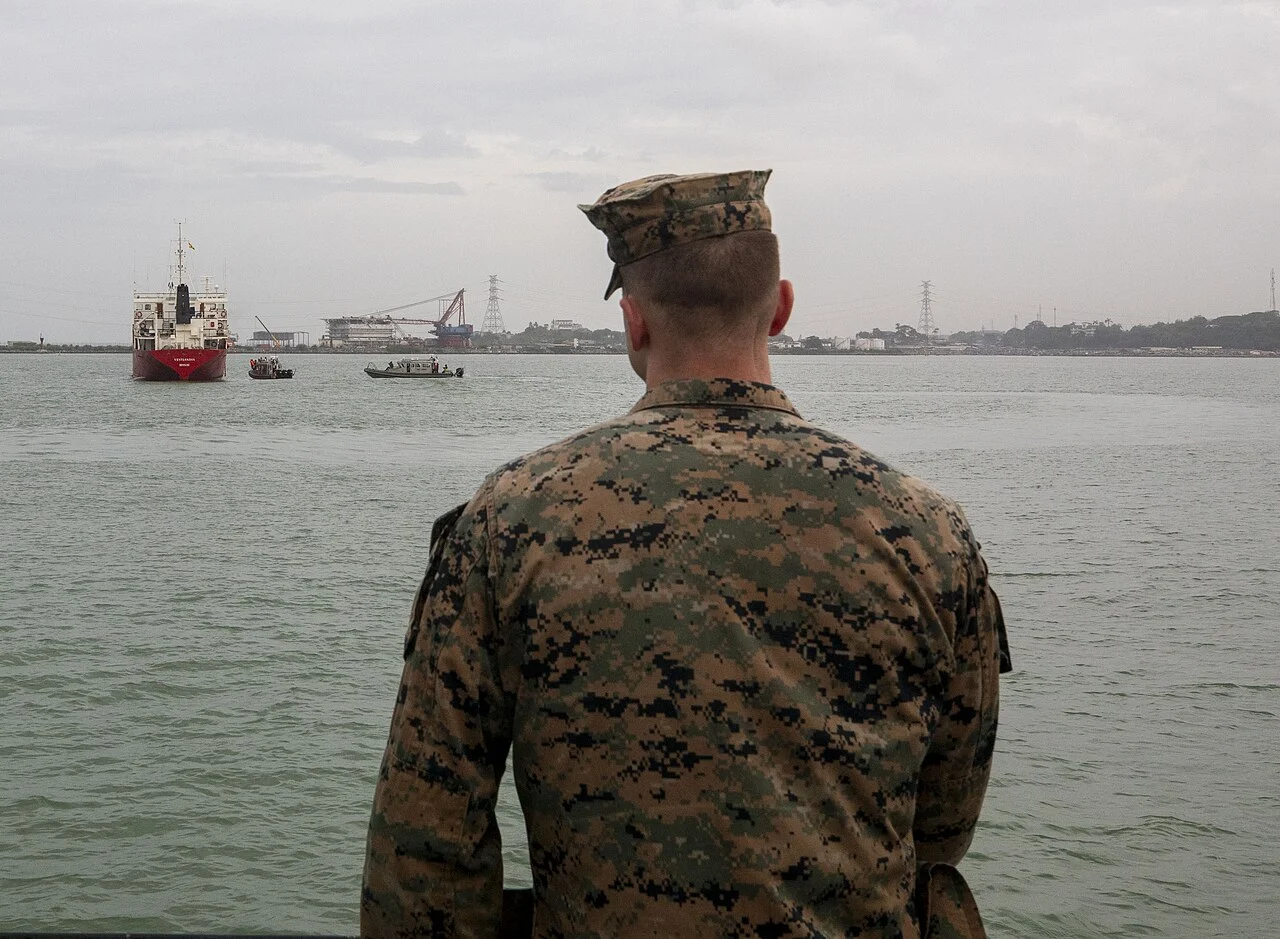
Photo: Ghana Navy and Ghana Police Service personnel train in maritime interdiction with US and Dutch forces during Exercise Obangame Express. Credit: Lt.j.g. Daniel Ehrlich/U.S. Navy, Public domain, via Wikimedia Commons
The forum is organised jointly by the Royal Danish Defence College, KAIPTC and the Security Institute for Governance and Leadership in Africa (SIGLA) at South Africa’s Stellenbosch University, defenceWeb reported. The three institutions have run an annual Gulf of Guinea maritime security conference together since 2022; last year’s edition was hosted in Stellenbosch, South Africa. This year’s gathering in Accra marks the series’ formal rebrand into a continent-wide forum, reflecting organisers’ view that threats once treated as a West African problem now stretch across African waters.
From Gulf of Guinea to a continental agenda
The programme covers maritime security threats across Africa amid what organisers describe as rising geopolitical uncertainty, along with the now-familiar Gulf of Guinea triad of piracy, trafficking and illegal, unreported and unregulated (IUU) fishing. Sessions are also examining coastal risk in eastern and southern Africa, including spillover from instability in the Western Indian Ocean and the Somali basin, and discussing global chokepoints such as Bab el-Mandeb, the Red Sea and the Strait of Hormuz and their knock-on effects for African shipping.
One recurring theme is the Cape sea route around southern Africa, which shipping lines have increasingly used as an alternative to the Suez Canal and the Red Sea since Houthi attacks on merchant vessels began disrupting that corridor. Forum sessions are discussing how to turn the Cape route into a routine trading lane with adequate port, surveillance and response infrastructure, rather than a fallback used only during a crisis elsewhere.
Delegates are also covering the San Remo Manual on international law applicable to armed conflict at sea, and the growing use of unmanned systems — autonomous surface and aerial vehicles — for maritime domain awareness, alongside the risk that the same cheap drone technology gets turned to criminal use by pirate and smuggling networks.
Why it matters for Africa
The Gulf of Guinea has spent much of the past decade as one of the world’s worst piracy hotspots, and Nigeria, Ghana, Togo, Benin, Côte d’Ivoire and Cameroon have all invested in new patrol vessels, surveillance systems and the regional Yaoundé Code of Conduct architecture to push the numbers down. East Africa has pursued a parallel track, with states there planning a combined anti-piracy task force under the Djibouti Code of Conduct. Folding that experience into a continental forum — one that explicitly brings in East African states grappling with Somali-basin instability and southern African states newly relevant to a diverted Cape trade route — reflects how maritime insecurity is no longer confined to a single coastline. For African navies and coast guards still short of blue-water patrol capacity, forums like this one shape the policy briefs and donor priorities — chiefly from Denmark, the US and the EU — that often determine which countries get new patrol boats, radar coverage or training funding next. No procurement decisions were announced at the opening, but the communiqué and policy briefs the organisers plan to issue afterward are likely to feed directly into how African governments and their partners prioritise future maritime security spending.
Sources