Ethiopian Army Reaches Zalambessa on the Eritrean Border: What Is Confirmed



Ethiopian federal troops have pushed north from Adigrat to Zalambessa, the Tigray border town that faces Eritrea across one of the main crossings between the two countries. Six sources told Reuters on 13 October 2026 that the army had reached the town. A resident speaking to AFP on 14 October put Ethiopian forces about five kilometres south of Zalambessa, with Eritrean troops on its northern outskirts. Both governments deny crossing into the other’s territory. The UN Security Council met behind closed doors on 13 October and issued no statement. Here is what is confirmed, what conflicts between reports, and why Zalambessa matters.
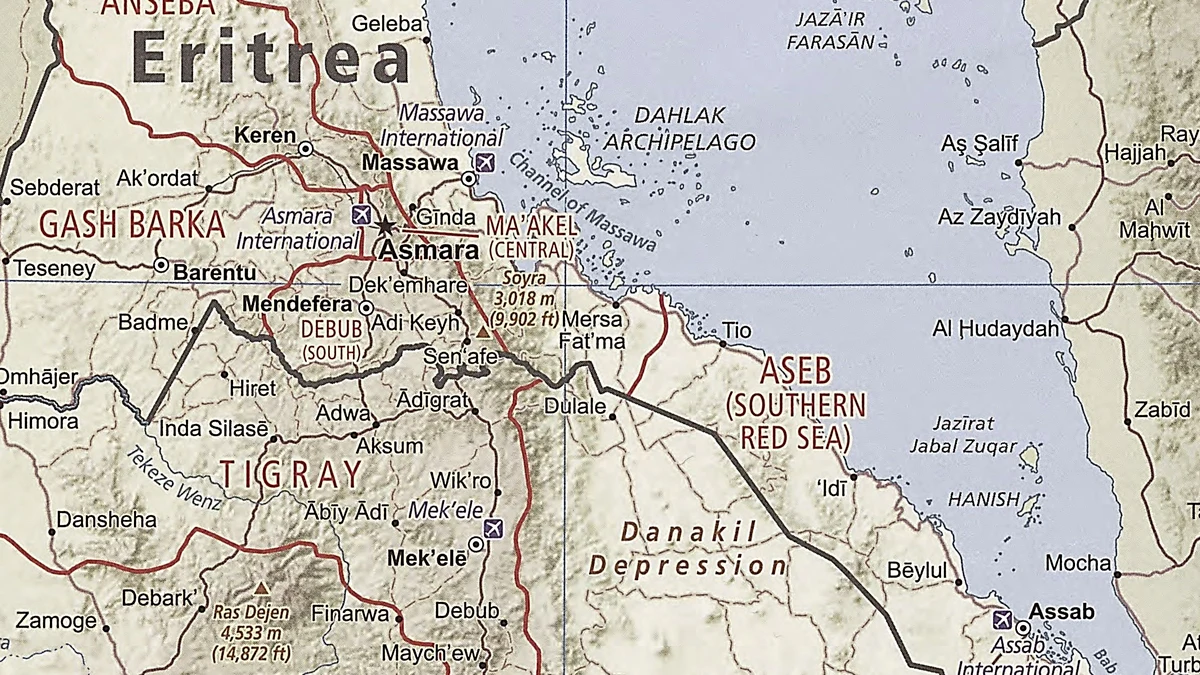
Map: Eritrea and northern Ethiopia, showing the Tigray–Eritrea border between Adigrat and Senafe, where Zalambessa sits (US Central Intelligence Agency, 2009; public domain, via Wikimedia Commons). Boundary representation is not necessarily authoritative.
Where the army is
By Tuesday 13 October the army had reached Zalambessa, a town of about 15,000 people on the Ethiopian side of the border, according to six sources cited by Reuters: four people in touch with residents, a diplomat and an expert in contact with the warring parties. A spokesperson for a pro-government militia did not confirm that the military controlled the town. Spokespeople for the army and Prime Minister Abiy Ahmed did not respond to Reuters.
AFP’s reporting on 14 October gives a slightly different picture. A member of a pro-government militia said Eritrean soldiers who had been in Zalambessa had withdrawn, that “villages near the town are held by the defense forces”, and that “no Ethiopian troops have crossed into Eritrea”. A resident said the Ethiopian army had arrived “about five kilometers” south of the town, while “the Eritrean army is on its northern outskirts”, and that residents feared the town could become a battlefield. Eritrea’s Information Minister Yemane Gebremeskel told AFP that rumours of Ethiopian troops crossing the border were “absolutely false”.
The two accounts are not necessarily contradictory. “Reached Zalambessa” may describe forces on the town’s approaches rather than a declared takeover. Ethiopia has not announced the capture of the town, and no verified footage from inside Zalambessa has been published.
How the advance unfolded
The push to the border followed the entry of federal forces and the allied Tigray Peace Force (TPF) into Adigrat on 9–10 October, covered in our report on Ethiopia’s self-defence letter to the UN. The Critical Threats Project, drawing on the conflict monitor ACLED and DW Amharic, says the army covered the roughly 23 miles (37 km) from Adigrat to Zalambessa between 11 and 12 October without substantial resistance. ACLED recorded the army shelling suspected rebel and Eritrean positions at Fatsi for an hour on 12 October, Eritrean forces withdrawing into Eritrea through Zalambessa the same day, and tanks and heavy weapons moving from Adigrat towards the town on 13 October. These are monitor reports; they have not been independently verified.
Federal forces advanced on other axes at the same time. Residents told AFP, in a report carried by Al Jazeera, that federal forces and an allied militia entered Adwa, about 40 km from the border, on 11 October without a fight, and CTP reports that Axum fell on 12 October, with Tigrayan forces withdrawing towards the border town of Rama. In the west, CTP and DW Amharic say Eritrean forces pulled back from areas between Shire and Sheraro towards Badme, the town at the centre of the 1998–2000 war, where they are reported to have dug in on the Eritrean side.
The TPF’s spokesman, Solomon Hailemariam, told AFP on 13 October that “the Eritrean army crossed into Ethiopia and violated its sovereignty”, suffered heavy losses and was pulling back towards the border. He said the Tigray People’s Liberation Front (TPLF) was “no longer in a position to stand and fight”. Yemane called the militia “not trustworthy”. AFP said it could not verify either claim.
Claims that did not hold up
Some reports from the weekend went further than the evidence. Online claims that Ethiopian mechanised units had crossed into Eritrea and seized Debay Sema, on the road towards the port of Assab in Afar, were denied by local residents quoted by DW Amharic and UMD Media, CTP said. Reports of a large federal build-up along the A1 highway towards Assab and of Ethiopian–Eritrean clashes near Bure also remain isolated and unverified. As of 14 October, no credible source reports Ethiopian ground forces inside Eritrea.
What happened at the UN
Security Council members held closed consultations on the Horn of Africa on the morning of 13 October at the request of the United States, according to Security Council Report. Martin Kimani, the UN Assistant Secretary-General for Africa, was due to brief, as he had at the previous closed session on 30 September, which France requested. Closed consultations leave no public record. By the morning of 14 October (New York time) no press statement or other outcome had been announced.
The Council has both governments’ letters in front of it. In the first (S/2026/797, dated 9 October), Ethiopian Foreign Minister Gedion Timothewos invokes self-defence under Article 51 of the UN Charter. In the second (S/2026/798, 10 October), Eritrean Foreign Minister Osman Saleh calls that a pretext for a war of aggression aimed at “sovereign access to the sea”. He asks for deterrent measures under Chapter VII and cites a 27 September remark by Ethiopia’s Deputy Chief of Staff, General Abebaw Tadesse, that Mekelle was a “stop-over” towards Eritrea. Security Council Report says members are increasingly concerned about the interstate dimension. The annual joint meeting of the UN Security Council and the African Union Peace and Security Council is on 23 October, but it is not clear the crisis will be on its agenda.
Why Zalambessa matters
Zalambessa sits on the main road from Adigrat to Senafe and on to Asmara, and it was one of the main battlefields of the 1998–2000 border war. The Zalambessa crossing was reopened in September 2018, during the short-lived rapprochement between Abiy and Eritrean President Isaias Afwerki, and later closed again. With federal forces now on the border, there is no longer a rebel-held buffer between the Ethiopian and Eritrean armies on this axis. They are in direct contact, or close to it. Any shelling across the line, or a drone strike on positions north of the town, would be an interstate clash rather than part of Ethiopia’s counter-insurgency in Tigray.
The balance of capability is in Ethiopia’s favour on paper, particularly in the air. Since 2020 its strikes have relied heavily on armed drones of Turkish, Chinese and Iranian origin; see our review of drones in the Ethiopia war, the Ethiopian Air Force inventory and How Strong Is Ethiopia’s Military in 2026?. Eritrea’s forces are large relative to its population and are dug into mountainous terrain they know well from the last war. Neither side has published figures for the forces now deployed near the border.
On the political side, Prime Ministerial Adviser Getachew Reda said on 11 October that the federal government would run Tigray through a command post for six months before regional elections, according to CTP, citing BBC Amharic and BBC Tigrinya. Earlier reporting on the fall of Mekelle is in our running piece, Ethiopia’s Army Takes Mekelle as Air Strikes Spread Across Tigray.
What is confirmed and what is not
- Confirmed by multiple sources: Ethiopian federal forces advanced from Adigrat to Zalambessa, on or near the Eritrean border, by 13–14 October (Reuters, six sources; AFP, a resident and a militia member; ACLED via CTP).
- Unresolved: whether the army is inside the town or about 5 km south of it. Ethiopia has not announced its capture.
- Reported by an AFP source: Eritrean troops positioned on Zalambessa’s northern outskirts.
- Asserted by Ethiopia and its allies, denied by Eritrea: that Eritrean troops crossed into Tigray, and the TPF’s claim that they took heavy losses.
- Denied by both sides, no credible evidence: Ethiopian troops crossing into Eritrea, including the Debay Sema claim.
- Confirmed: the UN Security Council held closed consultations on 13 October at US request. No outcome has been announced.
- Not known: how many troops each side has near the border and whether any direct exchange of fire has taken place at Zalambessa.
Sources
- Reuters (via Arab News): Ethiopian troops enter town on border with Eritrea, stoking war fears (13 October 2026)
- AFP (via Al Arabiya): Ethiopian forces approach Eritrea border town: militia, resident (14 October 2026)
- AFP (via Al Jazeera): Ethiopian forces enter strategic Tigray town of Adwa, witnesses say (12 October 2026)
- Critical Threats Project: Ethiopia War Security Review, 13 October 2026
- Security Council Report: Horn of Africa, closed consultations (12 October 2026)
- Natna News, citing AFP: Tigray Peace Force claim and Eritrean minister’s response (13 October 2026)
- International Crisis Group: Pulling Ethiopia and Eritrea Back from War