Morocco Signs EDGE Deal for Desert Sting 16 and Thunder P-31 Guided Munitions



The UAE’s EDGE Group has signed a contract with Morocco’s Administration de la Défense Nationale to supply Desert Sting 16 glide bombs and Thunder P-31 precision kits for the Royal Moroccan Air Force’s unmanned combat fleet. A separate memorandum covers local production of light weapons and drone engines inside Morocco.
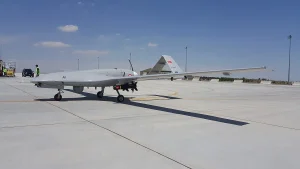
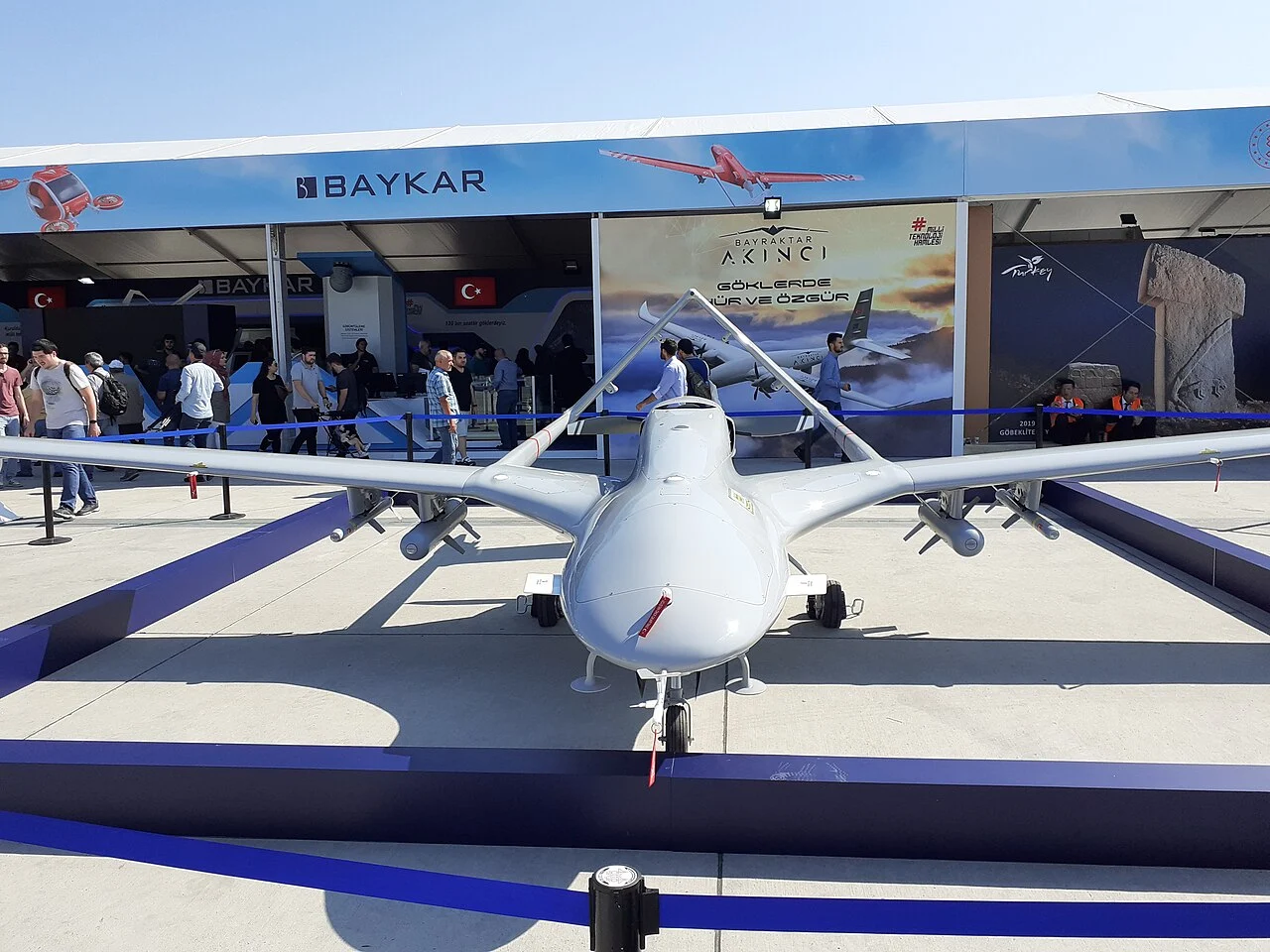
Photo: A Bayraktar TB2-type UCAV, one of the unmanned platforms the Royal Moroccan Air Force operates. Credit: Kingbjelica, CC BY-SA 4.0, via Wikimedia Commons
EDGE Group announced on 9 October that it had signed the deal with Morocco’s Administration de la Défense Nationale (ADN) at the Marrakech Air Show, which ran from 7 to 10 October. The Abu Dhabi-based conglomerate will supply the Royal Moroccan Air Force (RMAF) with two UAE-made precision munitions and integrate them across the service’s fleet of unmanned combat aerial vehicles (UCAVs).
What was signed
The contract covers two weapons built by EDGE subsidiaries. The Desert Sting 16 (DS-16) is a 23 kg guided glide bomb with a reach of up to 15 km, using GNSS-assisted inertial navigation with an optional semi-active laser seeker. The Thunder P-31 is a guidance kit that converts the MK 81 general-purpose bomb into a precision-guided munition, with a range of roughly 10 km when released from an unmanned aircraft and up to 20 km from faster, higher-flying platforms.
Janes reported that the Desert Sting had already been integrated on the Bayraktar TB2 for the UAE’s own air force, but that the Morocco contract is the first disclosed case of the Thunder series being paired with an unmanned aircraft. The RMAF does not routinely disclose its UCAV order of battle, but open-source reporting places the Turkish-made Bayraktar TB2 and the larger Akıncı, plus the Chinese-made Wing Loong II, in Moroccan service. EDGE and ADN did not disclose which specific aircraft will carry the new munitions, nor contract value, quantities or an integration timeline.
Alongside the munitions contract, the two sides signed a separate, earlier-stage memorandum of understanding to explore local production in Morocco of high-performance light weapons under EDGE’s Caracal brand and UAV propulsion systems under its Powertech brand, according to Ecoactu.ma. That piece has not progressed beyond the MoU stage.
Morocco’s growing drone arsenal
Morocco has built one of the largest and most diverse drone fleets in Africa over the past several years. It operates Turkish Bayraktar TB2s and is reported to be building out a wider UCAV and strike-drone programme, including a locally developed, 2,000km-range Irifi strike drone under development with Harmattan AI. The Royal Moroccan Air Force has separately added the Israeli-origin Barak MX air-defence system and is the launch customer for Lockheed Martin’s new-build F-16 Block 72, the first example of which completed its maiden flight from Greenville, South Carolina, on 6 October.
Until now, Morocco’s UCAV investment has centred on the airframes themselves rather than disclosed precision-strike payloads. The EDGE contract marks the first time Rabat has put a name and a specification sheet to the munitions its drones will carry, rather than leaving the armament question to inference from the aircraft type alone.
EDGE’s expanding African and regional footprint
The Morocco deal is the latest in a run of EDGE contracts across Africa and the wider Gulf-adjacent market this year. In Angola, EDGE and France’s CMN are delivering the first of three BR71 Mk II corvettes under a roughly €1 billion programme, and EDGE has already delivered six HT-100 naval drones to the Angolan Navy ahead of the lead ship’s handover. EDGE has also signed a $2.45 billion Falaj-3 missile-boat deal with Kuwait. Taken together, the three contracts show EDGE positioning itself as a supplier of complete naval and aerial systems — hardware plus munitions plus, increasingly, local-production tie-ups — rather than single-item sales.
For Morocco specifically, the Caracal/Powertech MoU fits a broader industrial strategy: Rabat has set a target of raising aeronautics-sector exports from roughly $3 billion to $5 billion within three years, and has separately signed a deal with India’s MKU to build an electro-optics and armour manufacturing facility in the country. Localising munitions and drone-engine production would extend that strategy from airframes and components into precision weapons.
Why it matters for Africa
Morocco’s air force is already the most capable in North Africa on paper, and the EDGE contract closes a gap between the drones it operates and the weapons they carry. A UCAV fleet with disclosed, integrated precision munitions changes the calculus for neighbouring air forces and for the Sahel-facing security environment in which Moroccan-operated drones could plausibly be employed. It also deepens the UAE’s industrial footprint in North Africa at a moment when Gulf states are competing for defence-export relationships across the continent — EDGE in Morocco and Angola, Turkish firms such as ASELSAN and Baykar across West and Southern Africa, and European and American suppliers still dominant in Egypt and sub-Saharan francophone markets. The local-production MoU, if it advances beyond its current early stage, would also make Morocco one of a small number of African states with declared ambitions to manufacture precision-guided munition components rather than only operate imported ones.
Sources
- EDR Magazine — “EDGE strengthens Morocco’s Air Power with precision weapons for its unmanned combat fleet”
- Janes — “EDGE to integrate guided weapons on Moroccan UCAVs”
- Ecoactu.ma — “Drones de combat : EDGE fournira des armements de précision au Maroc”