
Algeria has rebuilt its missile arsenal around four pillars: a Russian-supplied short-range ballistic missile, a growing family of ship- and air-launched anti-ship weapons from Russia, China and Sweden, and a modernised anti-tank guided missile fleet. This guide identifies the major systems confirmed in Algerian service as of October 2026, their suppliers, verified specifications and status.
DEFENCE AFRICA | One country, one category | Data as of October 2026
Photo: Algerian Air Force Su-30MKA refuelling in flight. Credit: Soulaho, CC BY-SA 3.0, via Wikimedia Commons
Algeria’s armed forces have spent the past decade diversifying missile suppliers while concentrating on three mission sets: a theatre-range strike capability built around the Iskander-E, a layered anti-ship missile inventory spread across submarines, frigates, coastal batteries and strike aircraft, and an infantry-level anti-tank missile fleet fitted to most of the army’s armoured vehicles. The result is an arsenal still dominated by Russian hardware but increasingly supplemented by Chinese and Swedish systems.
The Stockholm International Peace Research Institute’s Arms Transfers Database records Russia as Algeria’s largest arms supplier across every recent reporting period, accounting for 48 percent of imports in 2019-23 and still 39 percent in 2021-25, with China’s share rising from 14 percent to 27 percent over the same span and Germany supplying around 18 percent, mostly naval platforms rather than missiles themselves. That shift in suppliers shows up directly in the missile inventory below: Soviet-era anti-ship and anti-tank missiles are being replaced by newer Russian, Chinese and Swedish types rather than retired outright.
This entry excludes Algeria’s surface-to-air and ballistic missile defence systems, such as the S-300PMU2 and the reported HQ-17, which are covered in Which African Countries Operate Advanced Air Defence Systems; it also excludes unguided artillery rockets.
Key facts
- Russia supplied 48% of Algeria’s arms imports in 2019-23 and 39% in 2021-25; China’s share rose to 27% over the same period (SIPRI Arms Transfers Database, 2025).
- Algeria received four Iskander-E short-range ballistic missile regiments between 2014 and 2017, publicly displayed for the first time in November 2024 (Army Recognition, 2024).
- Algeria confirmed Chinese YJ-12B/CM-302 anti-ship missiles for coastal defence in 2024, after ordering the system in April 2020 (Army Recognition, 2024).
- 360 Algerian BMP-2 infantry fighting vehicles have been upgraded to BMP-2M standard with the Berezhok module and four 9M133 Kornet-E missiles each (Army Recognition, 2021).
- Algeria’s two MEKO A-200AN frigates each carry 16 Saab RBS-15 Mk3 anti-ship missiles with a quoted range of 200 km (Quwa Defence News).
ACTIVE
1. Iskander-E — Russian-supplied short-range ballistic missile
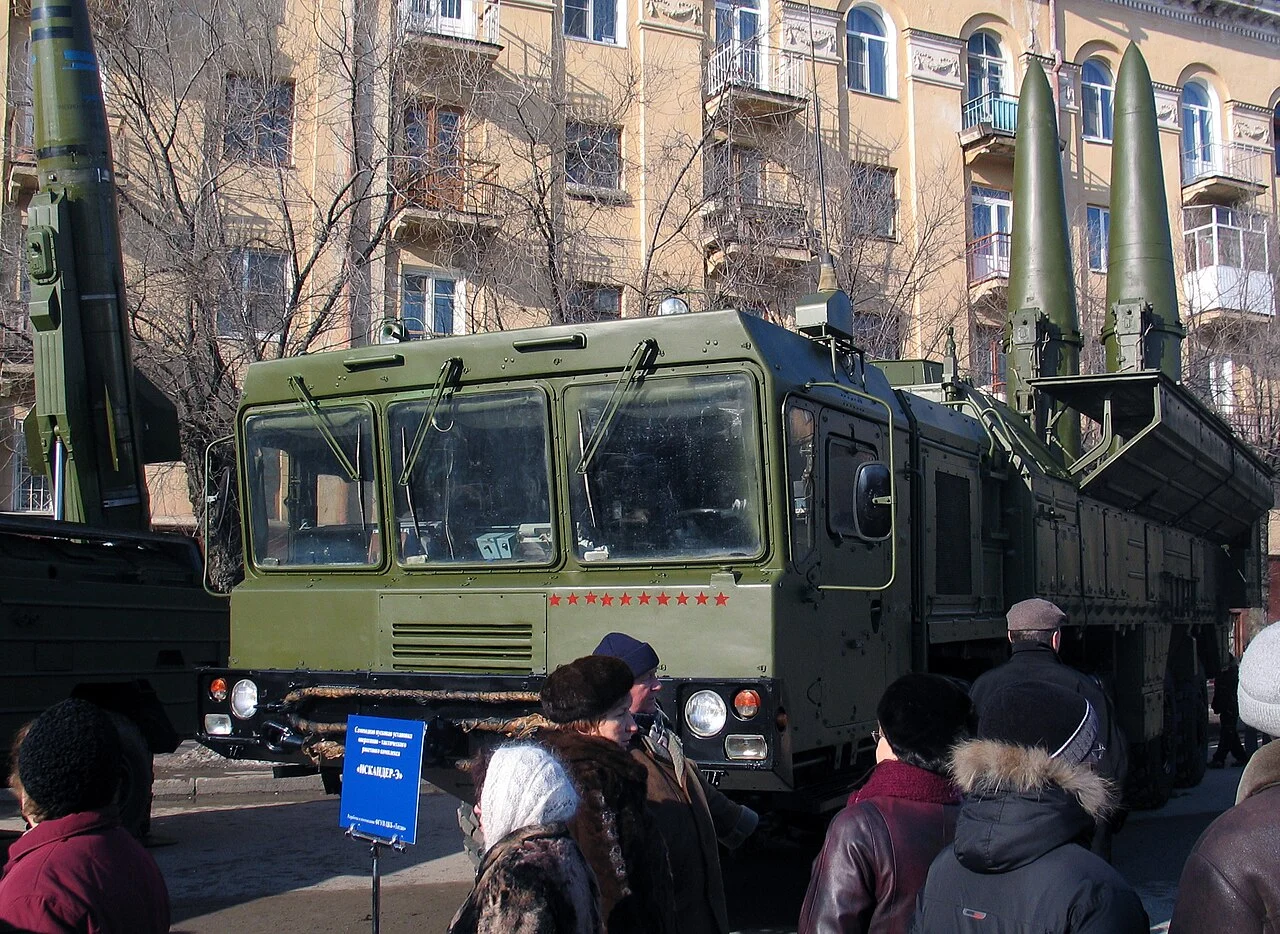
Algeria operates the 9K720 Iskander-E, the export version of Russia’s road-mobile short-range ballistic missile, known to NATO as the SS-26 Stone. Algeria became only the second foreign operator after Armenia, taking delivery of four missile regiments between 2014 and 2017; the system remained unacknowledged publicly until it was displayed during the November 2024 parade marking the 70th anniversary of Algeria’s revolution (Army Recognition, 2024). The export Iskander-E is capped at a 280 km range to comply with Missile Technology Control Regime limits, with a quoted circular error probable of 30-70 metres using inertial guidance (Army Recognition, 2024; CSIS Missile Threat). A full regiment fields roughly fifty vehicles and 48 missiles across twelve 9P78-1 launchers and twelve transloader vehicles. Status: operational. The Iskander-E gives Algeria a precision-strike option against fixed targets at ranges beyond its artillery and most of its air defence systems, and it remains the only confirmed ballistic missile type in Algerian service; reported Algerian interest in China’s SY-400 short-range rocket system has not been confirmed as a contract.
2. 3M-54E1 Klub-S — submarine-launched anti-ship missile
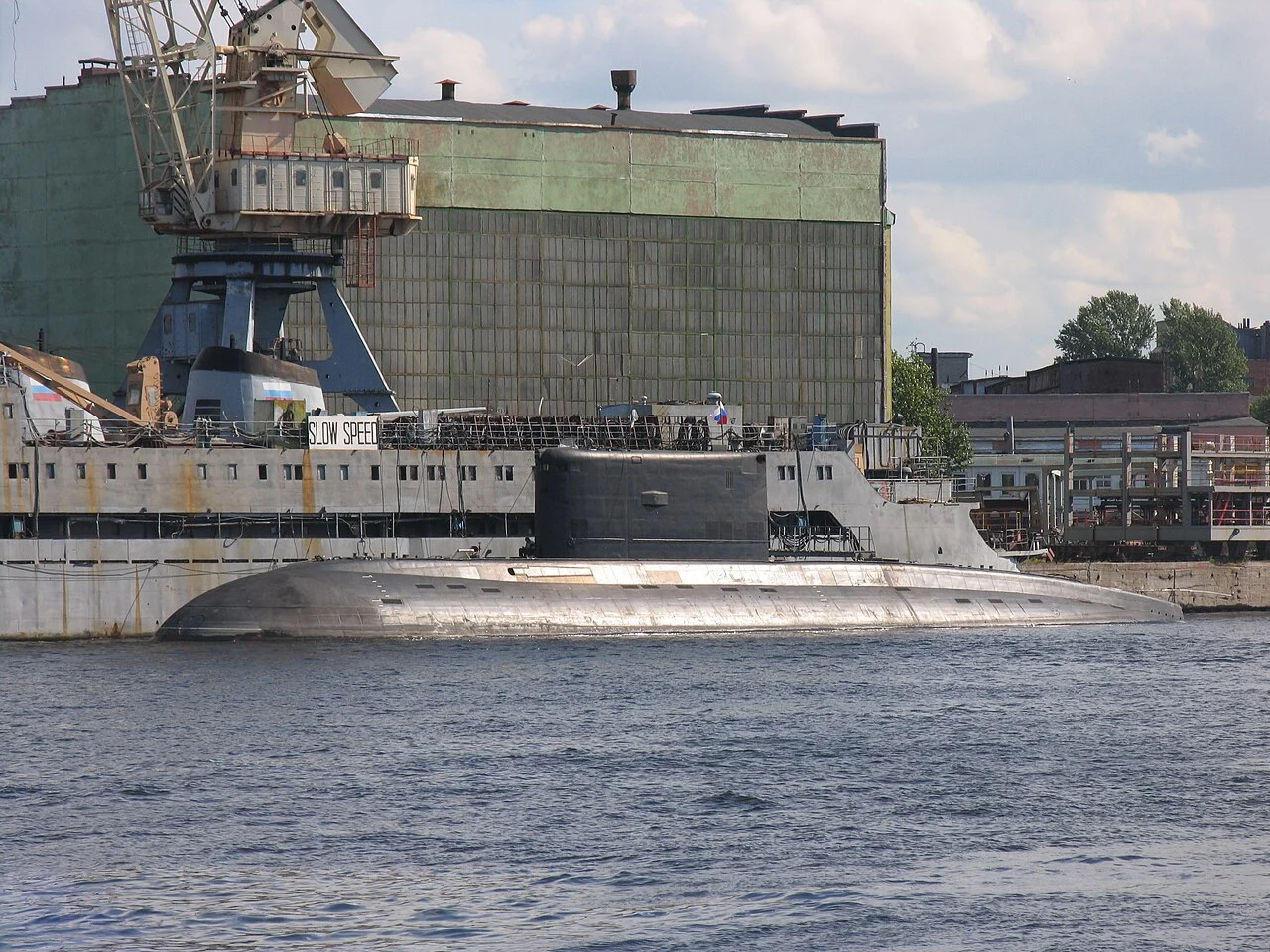
Algeria’s Kilo-class submarine fleet, comprising two earlier project 877 boats and four later project 636M boats, is armed with the Klub-S weapon system, whose submarine-launched anti-ship variant is the 3M-54E1 (SS-N-27 “Sizzler” in NATO reporting), fired through the standard 533 mm torpedo tubes. Published figures give the 3M-54E1 a range of around 300 km, delivered as a sea-skimming cruise missile with a terminal supersonic sprint in the related 3M-54E variant (StrategyPage, 2010). The boats themselves displace roughly 3,100-3,130 tonnes submerged and carry six torpedo tubes. Status: operational. The Klub-S gives Algeria’s submarine force a stand-off anti-ship capability that extends well beyond the range of most regional surface-to-surface weapons, reinforcing Algeria’s role as the only North African navy currently operating a multi-boat conventional submarine fleet.
3. Kh-35 Uran — ship-launched anti-ship missile
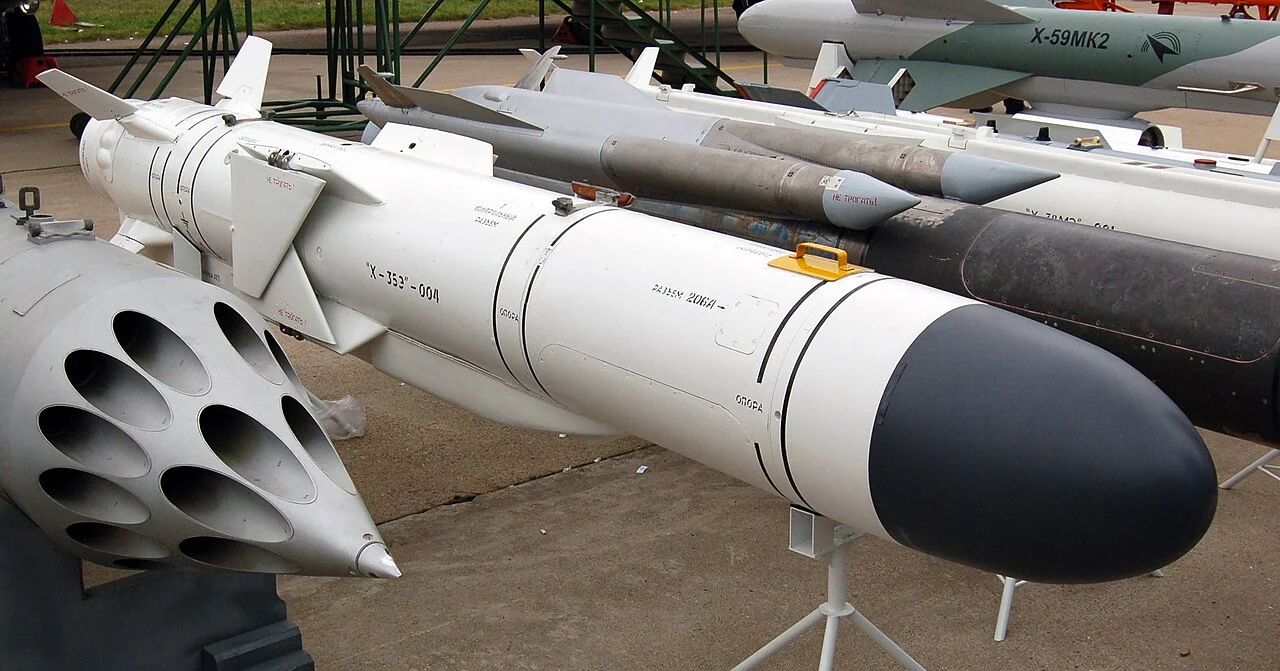
Algeria’s three Mourad Rais-class (Koni-class) light frigates were upgraded with new search radar and 16 Kh-35 Uran anti-ship missiles (SS-N-25 in NATO reporting) in place of their original Soviet P-15 Styx launchers, according to FlightGlobal’s reporting on the order (FlightGlobal). The turbojet-powered, active radar-guided Kh-35E has a publicly quoted range above 130 km. Status: operational. The upgrade kept Algeria’s older Koni-class hulls militarily relevant into the 2020s and illustrates the navy’s pattern of replacing Soviet-era weapons on existing platforms rather than retiring the ships themselves.
4. Saab RBS-15 Mk3 — ship-launched anti-ship missile
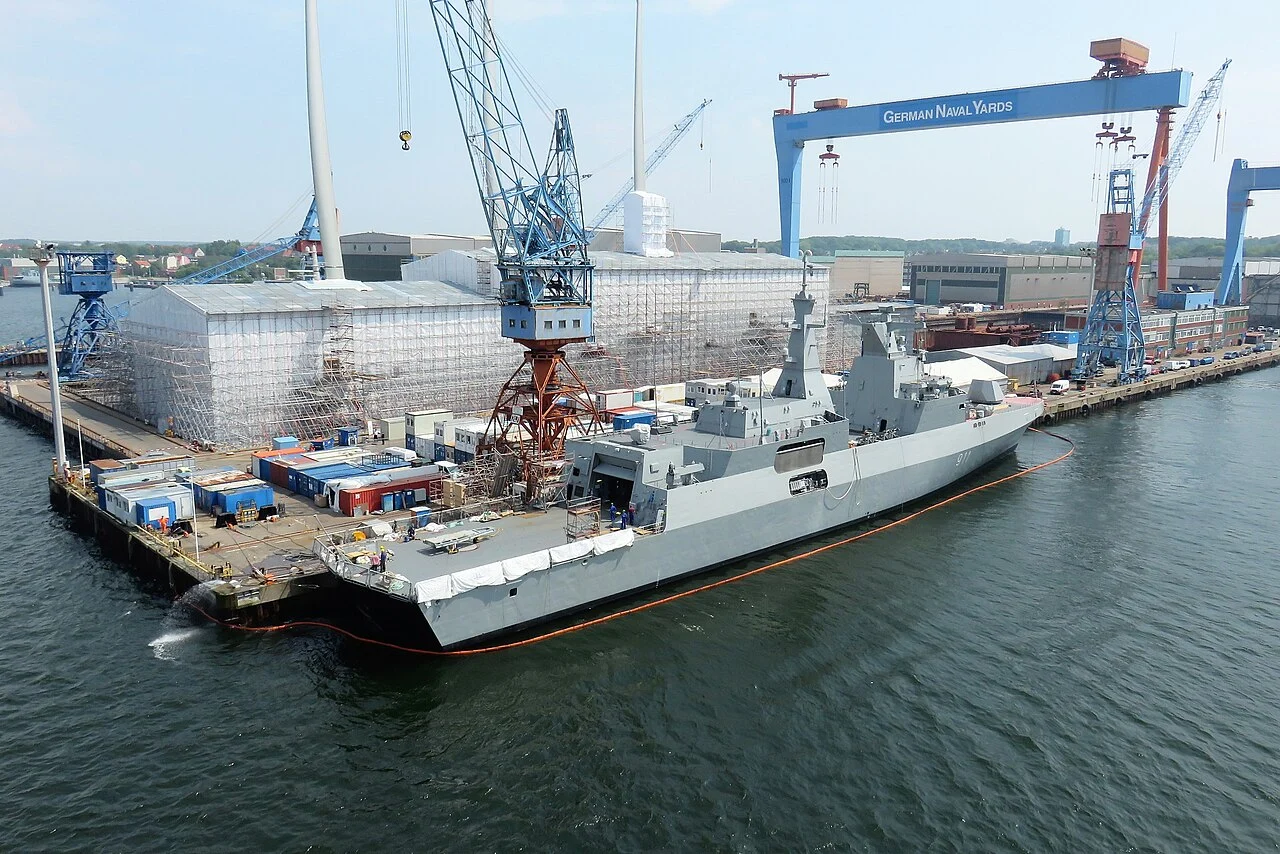
Algeria’s two German-built MEKO A-200AN frigates, ordered in March 2012 as part of a package reported at roughly $2.7 billion that also included Super Lynx 300 helicopters, each carry up to 16 Swedish-made Saab RBS-15 Mk3 anti-ship missiles with a manufacturer-quoted range of around 200 km (Quwa Defence News). The first ship, Erradii, was commissioned in 2016, with the second, El Moudamir, following. Status: operational. The RBS-15 gives Algeria’s two most modern surface combatants a longer-reaching anti-ship weapon than the Kh-35 fitted to its older frigates, and the programme marked Algeria’s first major Western-sourced missile acquisition in a fleet otherwise built on Russian and Chinese systems.
5. YJ-12B / CM-302 — Chinese supersonic anti-ship and coastal defence missile
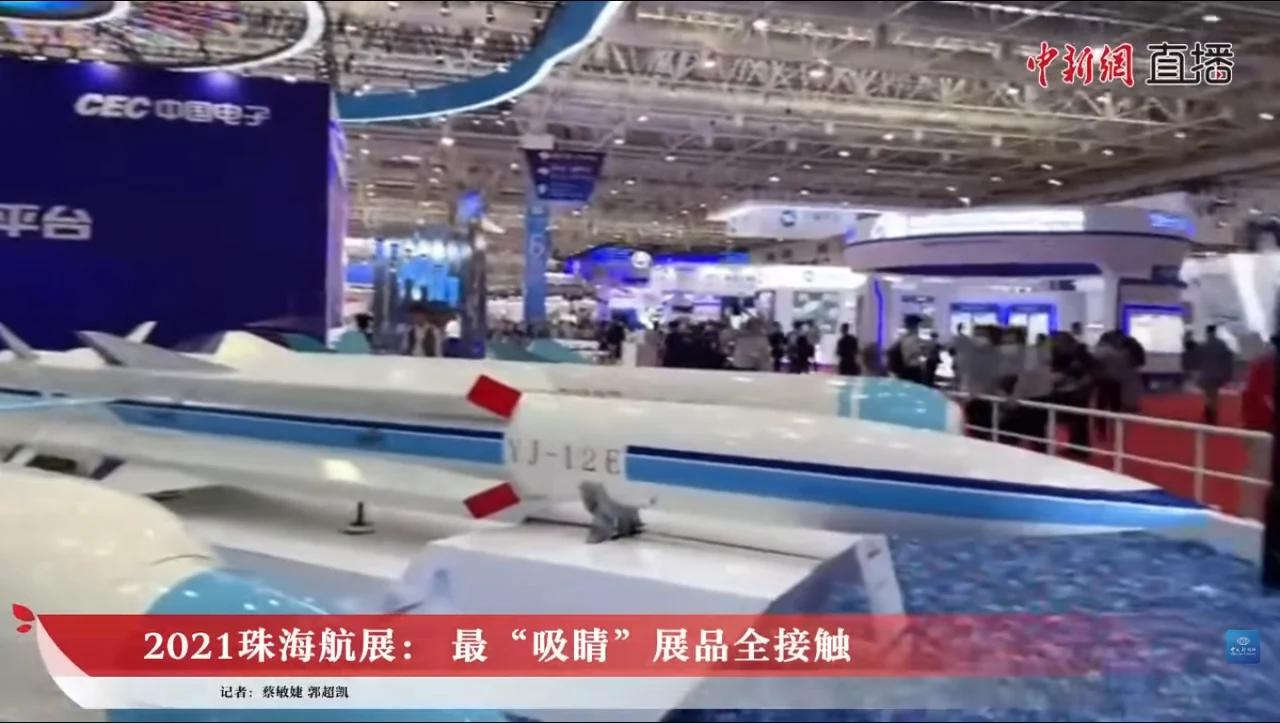
Algeria publicly confirmed the operational use of a Chinese supersonic anti-ship cruise missile for coastal defence in 2024, having placed the order in April 2020; the system is referred to in reporting as the YJ-12B, with the mobile coastal-defence launcher variant also marketed as the CM-302 (Army Recognition, 2024). Published figures describe a missile capable of Mach 2-3 speeds with an effective range cited at roughly 500 km, intended to replace Algeria’s remaining Soviet-era P-15 Styx coastal and ship-based anti-ship missiles. Status: operational. The acquisition gave Algeria a long-range, difficult-to-intercept coastal strike option covering the western Mediterranean and the approaches to the Strait of Gibraltar, and it marked one of the most significant Chinese missile exports to North Africa to date.
6. Kh-31 and Kh-29 — Su-30MKA air-to-surface missiles
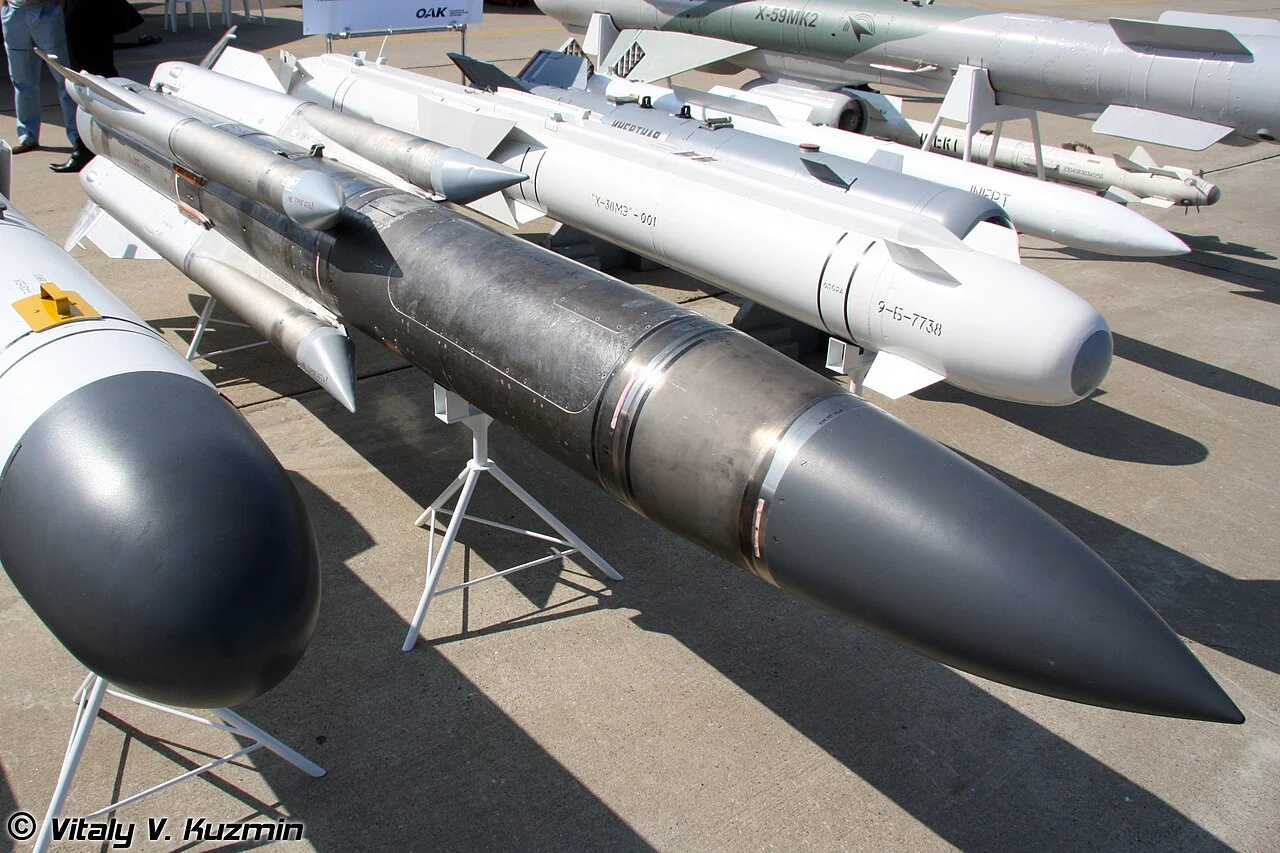
Algeria’s roughly 58-strong Su-30MKA fleet, delivered from 2007 onward, carries the Zvezda Kh-31 family (NATO reporting name AS-17 Krypton), used in anti-ship and anti-radiation roles at supersonic speed, and the Raduga/Tactical Missiles Corporation Kh-29 (AS-14 Kedge), a heavier TV-command-guided weapon with a roughly 317 kg warhead for hardened point targets (Airforce Technology; GlobalSecurity.org). Both are integrated with the aircraft’s N011M phased-array radar and targeting systems. Status: operational. These weapons give Algeria’s Su-30MKA fleet a stand-off precision-strike capability against ships, air defence radars and fixed installations that complements the navy’s own anti-ship missiles and extends the reach of Algerian airpower well beyond its borders.
7. R-77 and R-27ER — Su-30MKA and Su-35 air-to-air missiles
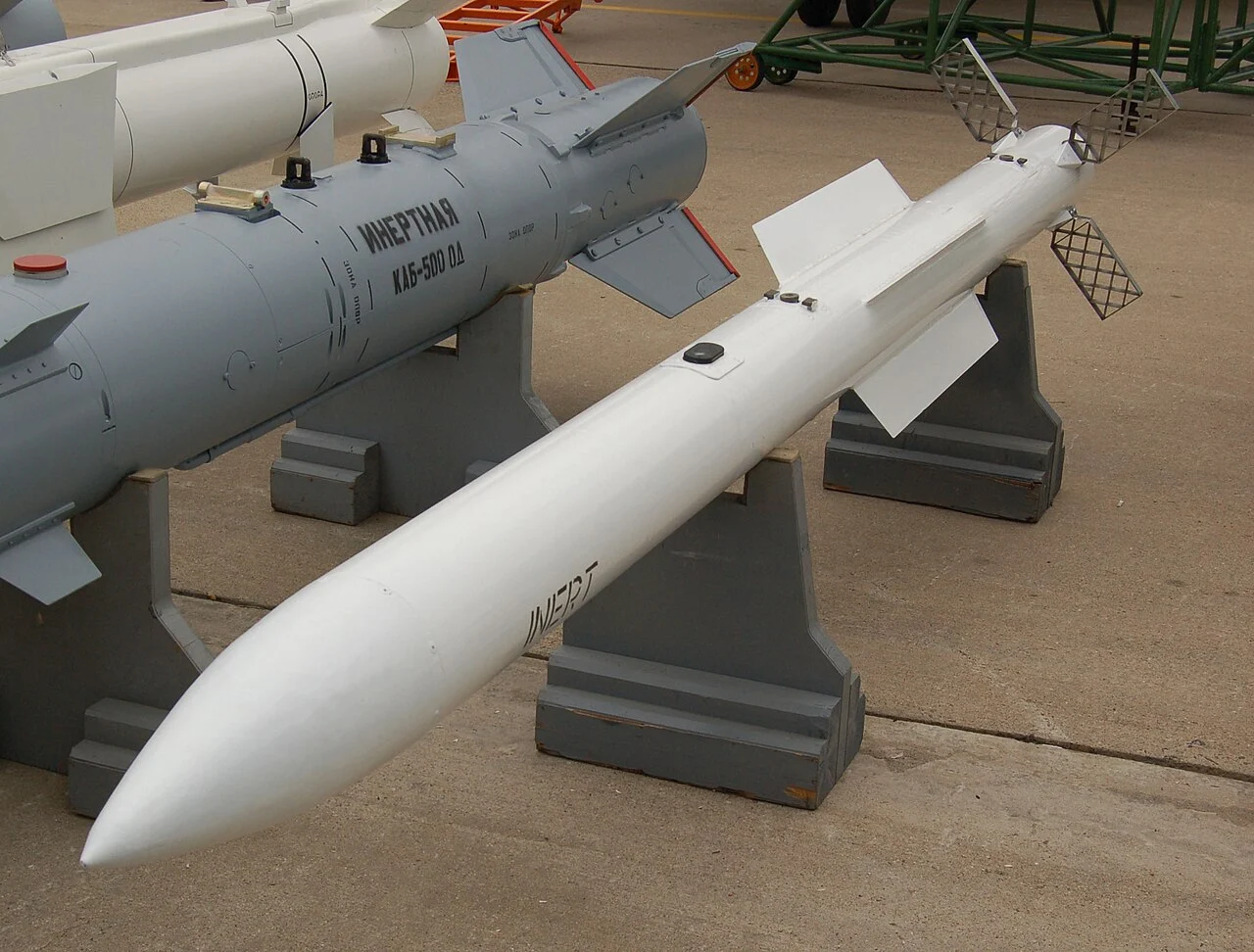
Algeria’s Su-30MKA fleet, and the small number of Su-35s delivered since 2025 as satellite imagery first confirmed, carry the active radar-guided Vympel R-77 (AA-12 Adder) for beyond-visual-range engagements and the older semi-active radar-homing R-27ER for extended-range shots (Airforce Technology; Army Recognition, 2025). Status: operational. Together with the Kh-31 and Kh-29, these missiles make Algeria’s Flanker fleet the most heavily armed fighter force in North Africa, and they underpin Algeria’s long-standing preference for air superiority through range and missile performance rather than numbers alone.
8. 9M133 Kornet-E / Kornet-EM — anti-tank guided missile
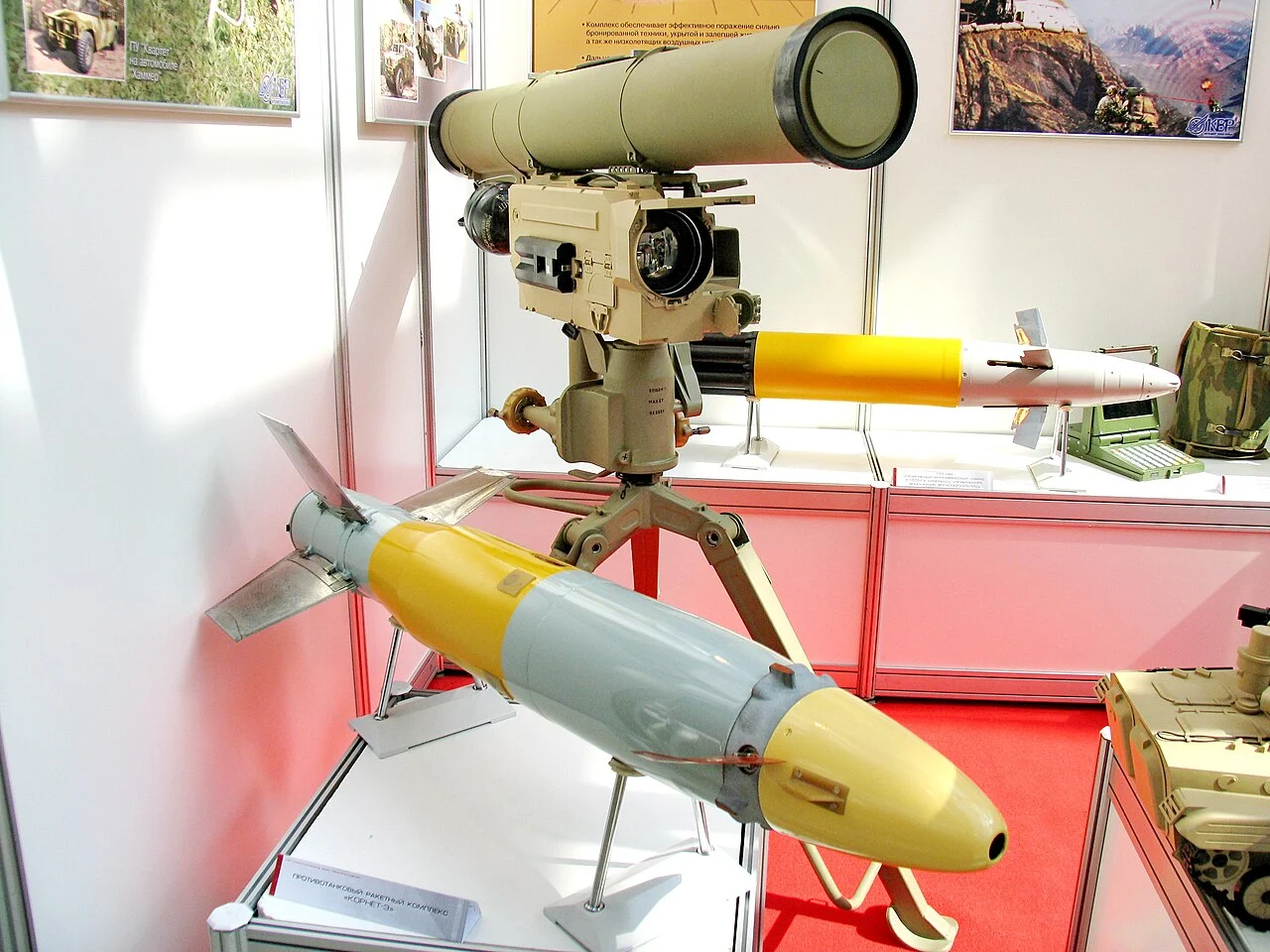
The laser-guided 9M133 Kornet-E has become Algeria’s standard anti-tank guided missile, fielded across several platforms. Around 360 BMP-2 infantry fighting vehicles have been upgraded to BMP-2M standard with the Berezhok combat module, each carrying four ready-to-fire Kornet-E missiles, after an initial 2016 programme covering 304 vehicles (Army Recognition, 2016; Army Recognition, 2021). Separately, Algeria’s defence ministry ordered 28 vehicle-mounted Kornet-EM systems on VPK-233136 Tigr-M 4×4 vehicles from Russia’s KBP, with first deliveries slated for late 2014 (Shephard Media). Kornet-E launchers have also been retrofitted to BTR-80 armoured personnel carriers and Panhard AML-60 scout cars. Published ranges for the Kornet-E reach up to 5.5 km against armour and 8-10 km against the Kornet-EM’s thermobaric variant for other targets. Status: operational. The Kornet programme gives most of Algeria’s armoured vehicle fleet a common, longer-ranged anti-tank missile than the Konkurs it is steadily replacing.
BEING REPLACED
9. 9M113 Konkurs — legacy anti-tank guided missile
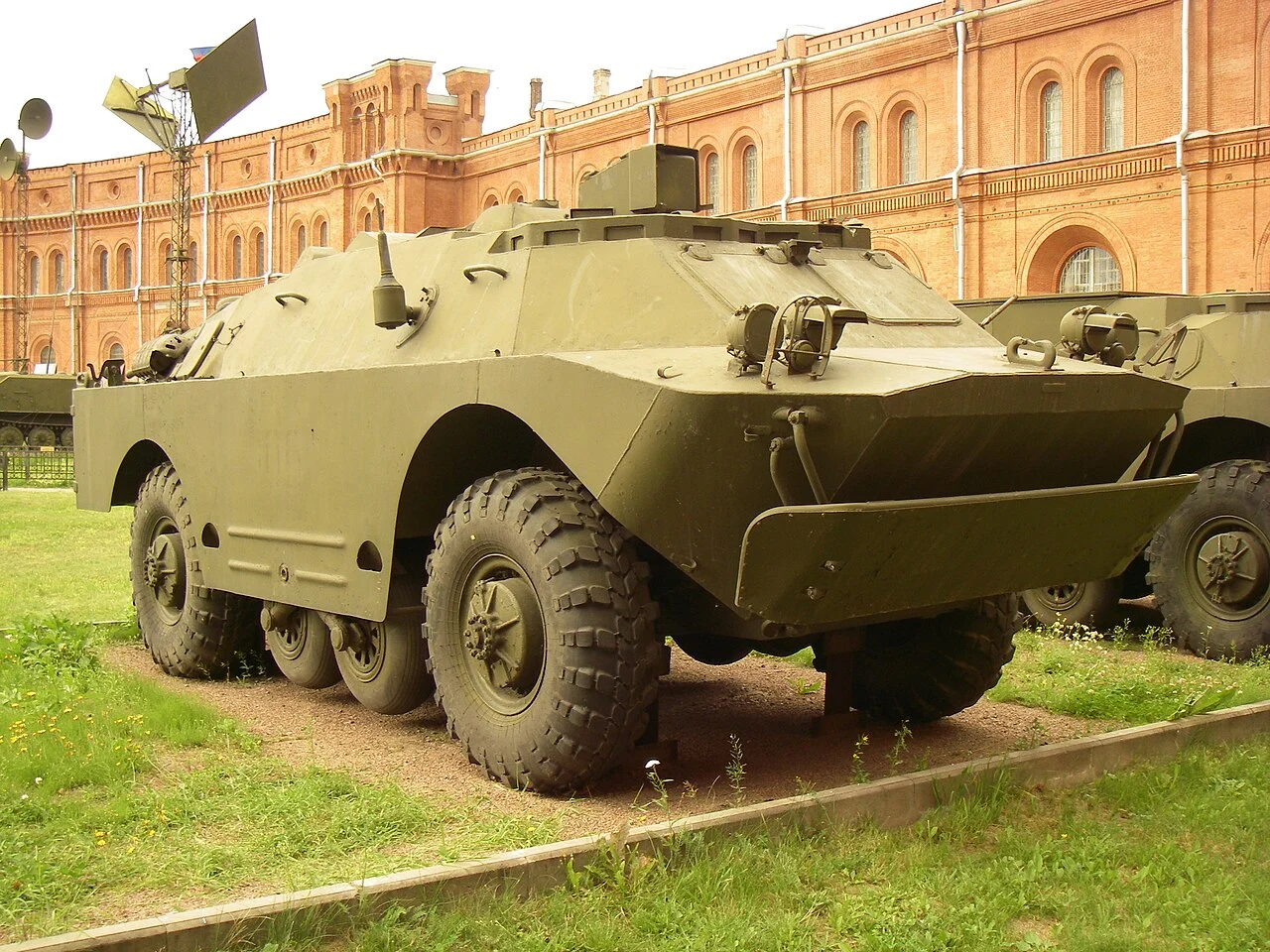
Algeria’s original anti-tank guided missile, the wire- and radio-guided 9M113 Konkurs (AT-5 Spandrel), entered service from Soviet-era deliveries on 9P148 BRDM-2 tank-destroyer vehicles and towed launchers, with a published range of around 4 km. Published figures vary on how many Algerian platforms still carry the Konkurs rather than the newer Kornet-E: some accounts describe BRDM-2 modernisation programmes fitted with Konkurs, while Army Recognition’s reporting on the 2016 and 2021 BMP-2M Berezhok programmes specifically describes Kornet-E as the replacement missile on upgraded vehicles (Army Recognition, 2016; Army Recognition, 2021). Status: being replaced. The pattern is consistent with the rest of Algeria’s ATGM fleet, where the 1980s-era Konkurs is being superseded by the longer-ranged, tandem-warhead Kornet family as vehicles are modernised.
10. P-15 Styx (SS-N-2) — legacy anti-ship missile
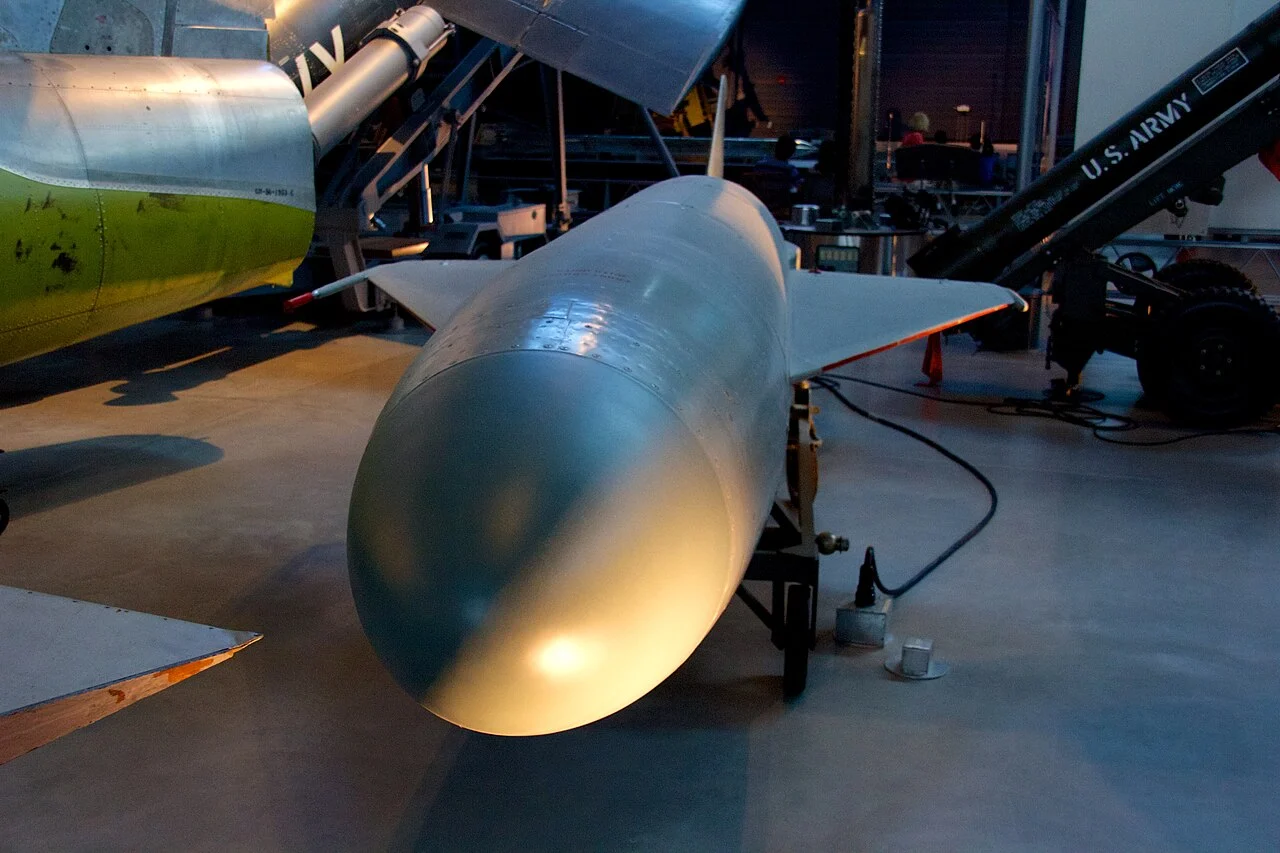
The subsonic, radar-guided P-15 Styx (SS-N-2 in NATO reporting) was Algeria’s original ship- and coastal-based anti-ship missile, supplied with its early Soviet-built frigates and fast-attack craft. Its limited range and ageing guidance package made it increasingly vulnerable to modern air defences, and Algeria has removed it from its Mourad Rais-class frigates in favour of the Kh-35 (FlightGlobal) while also fielding the YJ-12B/CM-302 for coastal defence missions the Styx previously covered (Army Recognition, 2024). Status: being replaced. No verified source places a confirmed retirement date on the last Styx launchers still in Algerian service, so this entry is listed as being phased out rather than fully retired.
Why it matters for Africa
Algeria fields the most diverse and capable missile inventory in North Africa, and the pattern of acquisition shown here, upgrading existing platforms with newer missiles rather than buying new hulls or vehicles outright, reflects an affordability and sustainment logic common across African militaries operating on constrained budgets. The BMP-2M and MEKO A-200AN programmes both show how outside technology transfer, Russian combat modules fitted locally on Algerian vehicles, Swedish missiles integrated onto German-built hulls, lets a mid-sized force extend the service life of its platforms rather than replace them. Algeria’s decision to diversify from a near-total reliance on Russian missiles toward Chinese anti-ship weapons and Swedish naval missiles also offers a template other African buyers increasingly follow, spreading sustainment risk across several suppliers rather than depending on any single one. For neighbouring and rival forces, the breadth of Algeria’s missile fleet, spanning ballistic, anti-ship, air-to-surface, air-to-air and anti-tank types, sets a regional benchmark for integrated strike capability that few African air forces or navies currently match.
Sources
- Army Recognition — Algeria reveals acquisition of Russian Iskander-E ballistic missile system (2024)
- Army Recognition — Algeria officially announces the use of Chinese anti-ship missiles for coastal defense (2024)
- Army Recognition — Algeria has upgraded 360 BMP-2 IFVs to BMP-2M standard with Kornet anti-tank missiles (2021)
- Army Recognition — Algeria to deploy 304 Russian BMP-2M fitted with Berezhok combat module (2016)
- Shephard Media — Anti-tank Kornet for Algeria
- FlightGlobal — Algeria buys Kh-35
- Quwa Defence News — MEKO A-200AN: Algeria’s new warships
- SIPRI Arms Transfers Database
- Airforce Technology — Su-30MK project profile
- Army Recognition — Algeria receives first Sukhoi Su-35 fighter jets from Russia (2025)
- StrategyPage — Submarines: Algeria gets a pair
- CSIS Missile Threat — OTR-21 Tochka (SS-21) / Iskander family reference
Related reading: Algeria’s Su-30MKA Fleet Explained, Inside Algeria’s Russian-Built Arsenal, Algeria Reportedly Adds Chinese HQ-17 Air Defence System and the Algeria military strength profile. More Algeria coverage: defencemena.com/tag/algeria.