US Africa Command has struck al-Shabaab near the southern Somali village of Qumbi for the third time this month, part of a bombing campaign that independent trackers say has already made 2026 the most intense year of American air operations in Somalia on record.
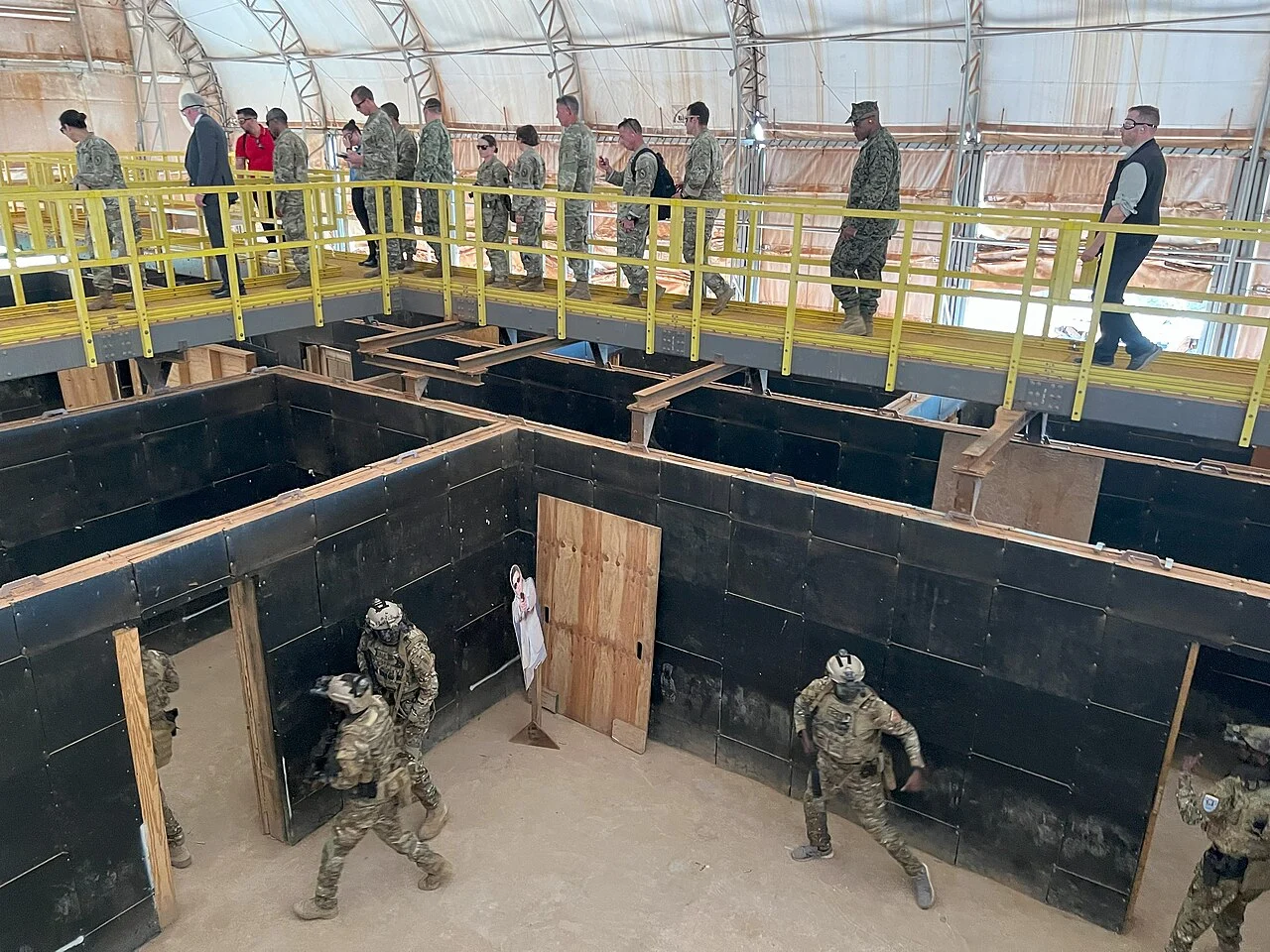
Photo: A U.S. Africa Command visit to a Somalia outpost to meet US and partner troops. Credit: Lt.Cmdr. Bobby Dixon, Public domain, via Wikimedia Commons
AFRICOM said in a statement issued this week that, in coordination with the Federal Government of Somalia, US forces “conducted a strike targeting al-Shabaab” on 24 September in the vicinity of Qumbi, a village roughly 88km (55 miles) northwest of the southern port city of Kismayo. As with earlier releases this year, the command gave no details on the aircraft or munitions used and said it would not disclose “specific details about units and assets” for operational security reasons.
A campaign with no public tally of harm
According to reporting by Dave DeCamp at Antiwar.com, which tracks AFRICOM’s Somalia releases, the 24 September strike was the third the US has carried out near Qumbi alone this month, following raids on 4, 5, 8, 14 and 17 September elsewhere in the country, including a strike on an al-Shabaab facility near Saacow on 14 September and one on a weapons storage site in northern Somalia on 17 September. DeCamp’s tally puts the 2026 total at more than 85 strikes, ahead of the 124 recorded in 2025 and well above the previous record of 63 in 2019, both also under the Trump administration.
AFRICOM has not published casualty or civilian harm estimates for its Somalia strikes since last year, a change from earlier practice when the command periodically confirmed militant deaths. That leaves outside monitors, rather than the Pentagon, as the main source for how the campaign is unfolding on the ground.
Why the pace has picked up
The strikes are being carried out in support of the Federal Government of Somalia and the Somali National Army as they try to hold ground against al-Shabaab in Jubaland and other southern regions, and separately against an Islamic State affiliate in the northeast of the country. US officials have also been engaging Somalia’s federal member states directly: AFRICOM’s outgoing and incoming commanders have each made multiple trips to Mogadishu, and, according to Antiwar.com, Washington has been discussing an expanded US military footprint at Bosaso in Puntland.
The intensified air campaign comes as regional troop contributions to Somalia’s stabilisation mission are set to shrink. Uganda, the largest single contributor to the African Union mission in Somalia, has set an August 2027 deadline to withdraw its forces, a decision that will leave a gap in ground-holding capacity even as US air support against al-Shabaab increases.
Why it matters for Africa
For East Africa, the arithmetic is straightforward: as African Union troop contributors plan their exit timelines, Washington’s answer has been more airpower rather than more soldiers on the ground. That keeps pressure on al-Shabaab’s ability to mass and move, but it does not by itself hold territory or govern it, a gap the Somali National Army and federal government will have to fill as Uganda and other contributors draw down. It also raises the stakes for regional partners: Kenya, which shares a long and porous border with Somalia’s al-Shabaab strongholds, has deepened its own base-defence cooperation with Washington at Manda Bay this year, and a reported US interest in a base at Bosaso would put American forces closer to the Gulf of Aden shipping lanes that matter to Djibouti, Kenya and the wider Horn. Without public accounting of casualties, African governments and civil society groups are also left with fewer means to independently assess whether the campaign is degrading al-Shabaab or generating the kind of civilian harm that has fuelled recruitment for the group in the past.