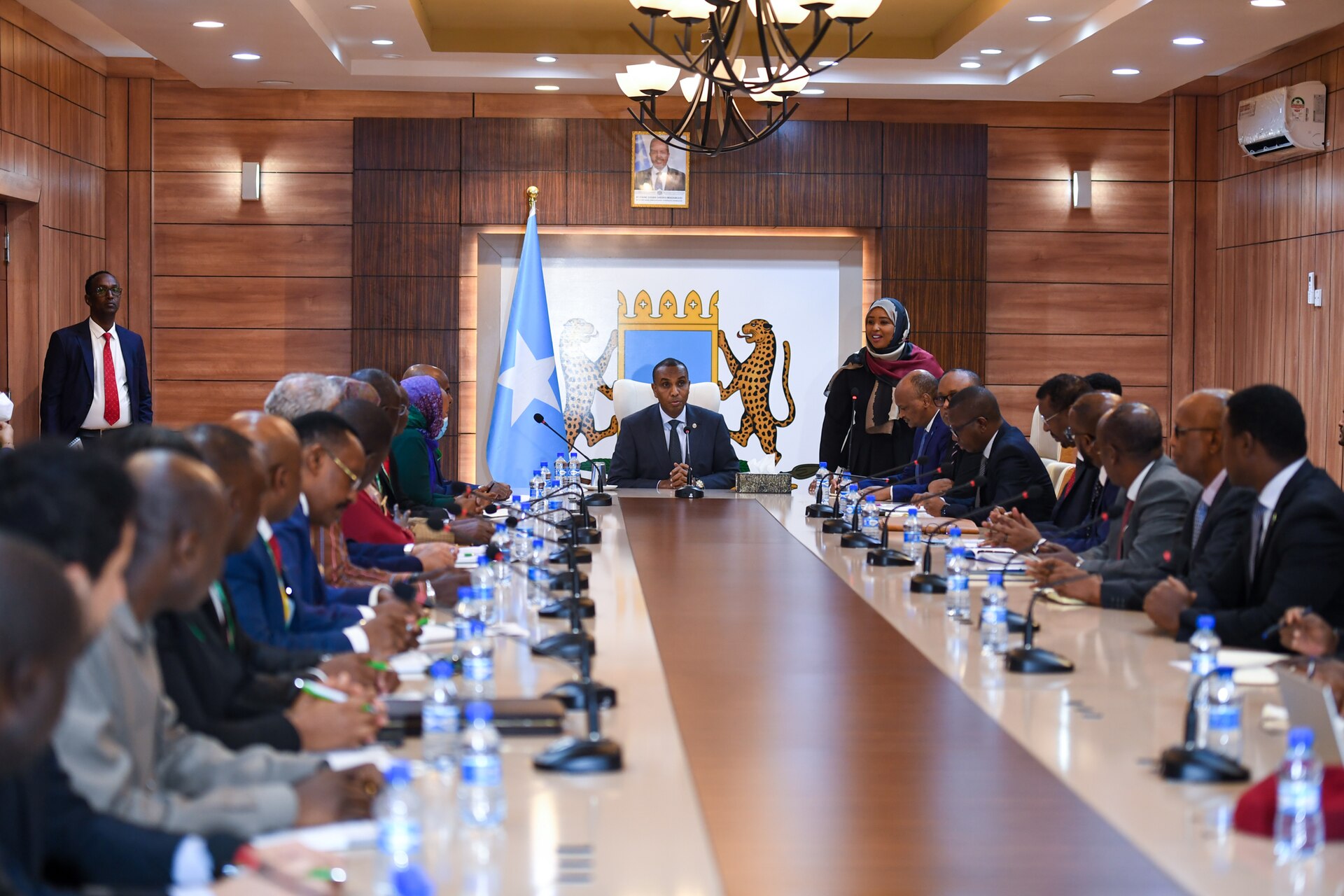
Somalia has ordered the United Arab Emirates’ ambassador to leave the country within 72 hours and recalled its own ambassador from Abu Dhabi for consultations. The cabinet took the decision on Thursday 19 November at a meeting chaired by Prime Minister Hamza Abdi Barre, citing what it called Emirati “aggression” and interference that violate Somalia’s sovereignty, unity and territorial integrity. Information Minister Abdifatah Kasim Mohamud announced the move on state media, Reuters reported. It comes two days after President Hassan Sheikh Mohamud accused the UAE of building military bases in Somalia without federal approval.
What the cabinet decided
According to the state news agency SONNA, ministers heard reports on Emirati “interventions and movements” in Somalia before taking four steps:
- Recall Somalia’s ambassador to the UAE for consultations.
- Tell the Emirati ambassador in Mogadishu to leave within 72 hours.
- Have the foreign ministry brief other states and international organisations on the government’s report about the UAE.
- Warn any party that cooperates with the UAE “in the aggression against Somalia” that the government will act against it.
The cabinet said the government would take “a series of measures” to defend the country’s sovereignty and internal security “using all available means”. It did not say what those measures are. Somali outlet Garowe Online reported that the government also promised legal steps against violations of its sovereignty. Some early social media reports said the deadline was 24 hours. The official statement and Reuters both give 72 hours.
By publication the UAE had not responded publicly to the expulsion order.
How the row escalated
The dispute has been building all year. In January 2026, Somalia’s cabinet cancelled security, defence and port cooperation agreements with the UAE, according to Garowe Online and Somalia Today. This week it turned into an open confrontation:
- 17 November: President Hassan Sheikh Mohamud accused the UAE of setting up military bases and arming forces in Somalia without the federal government’s approval. He did not name any specific base. Senior Emirati adviser Anwar Gargash replied by describing the “shifting positions” of an “outgoing” president. Our report: Somalia’s president accuses the UAE of building bases without federal approval.
- 18 November: The foreign ministry accused Abu Dhabi of undermining Somalia’s sovereignty, territorial integrity and national unity. It rejected any security agreement made with foreign parties without federal approval, Garowe Online reported.
- 19 November: The cabinet ordered the ambassador out.
The core of the dispute is the UAE’s direct security ties with Somalia’s federal member states and with the breakaway region of Somaliland. Abu Dhabi has trained and funded forces in Puntland and Jubaland, and DP World operates the port of Berbera in Somaliland. Mogadishu says only the federal government can sign security deals. Our fact-check of Somalia’s foreign backers sets out what is documented about Turkish, Egyptian and Emirati roles.
A divided home front
Not every Somali leader backs the move. Kaab TV reported that Abdiaziz Laftagareen, president of South West State, defended the UAE’s record of security and humanitarian support and rejected the president’s claims. Jubaland leader Ahmed Madobe said Somalia was heading towards “collapse and fragmentation” and accused the president of putting personal interests first, according to Garowe Online. Both leaders are in open dispute with Mogadishu over the president’s term and the electoral timetable.
The expulsion also comes as the security picture inside the federal system is under strain. Fighting broke out in Beledweyne on Thursday around the city’s airport, where Djiboutian troops serving with the African Union mission (AUSSOM) are based, after reports that federal reinforcements were about to fly in. Accounts of who fought whom differ. Our earlier report covers the Hawadle clan dispute in Beledweyne.
Why it matters for security
Breaking diplomatic ties at ambassador level does not end the UAE’s presence on the ground. Emirati-backed forces and facilities in the federal member states and Somaliland do not depend on an embassy in Mogadishu. The practical questions are whether Mogadishu tries to stop flights and deliveries to Emirati-linked sites, and whether member states such as Puntland and Jubaland side with Abu Dhabi.
The row also touches Somalia’s other partners. Türkiye is Mogadishu’s main security partner, Egypt is preparing troops for AUSSOM, and the African Union mission’s funding is under review. The United States recently backed a one-year renewal of AUSSOM and the UN support office. A Gulf-Horn rivalry played out through Somalia’s regions would complicate the fight against al-Shabaab.
What to watch
- Whether the Emirati ambassador leaves within the deadline, and whether Abu Dhabi responds by expelling Somalia’s diplomats or cutting aid
- Any federal move against Emirati-linked bases, flights or security programmes in Puntland, Jubaland or Somaliland
- The positions of Puntland, Jubaland and South West State
- Statements from the African Union, the Arab League, Türkiye and Egypt
Sources
- SONNA (Somali National News Agency, Arabic), cabinet decision, 19 November 2026: sonna.so; SONNA on X: x.com/SONNALIVE
- Reuters, “Somalia asks UAE ambassador to leave within 72 hours”, 19 November 2026 (via Internazionale): internazionale.it
- Garowe Online, “Somalia Orders UAE Ambassador to Leave Within 72 Hours Amid Diplomatic Row”, 19 November 2026: garoweonline.com
- Somalia Today, “Somalia expels UAE ambassador, recalls its envoy from Abu Dhabi”, 19 November 2026: somaliatoday.com
- Kaab TV on X, Laftagareen statement, 19 November 2026: x.com/KaabTV
- Garowe Online on X, Madobe remarks, 19 November 2026: x.com/GaroweOnline