Last updated: 25 November 2026.
Port Sudan is the Sudanese Navy’s main Red Sea base and the country’s principal commercial port. Since the war that began in April 2023 it has also served as the seat of the army-led government. Russia wants a logistics foothold there. In 2020 Moscow and Khartoum signed a 25-year agreement on a naval logistics support point, allowing up to 300 Russian military or civilian personnel and up to four ships, including nuclear-powered vessels, according to the text published on Russia’s official legal portal and reported by TASS on 8 December 2020. The base has not been built, and it has not been formally cancelled.
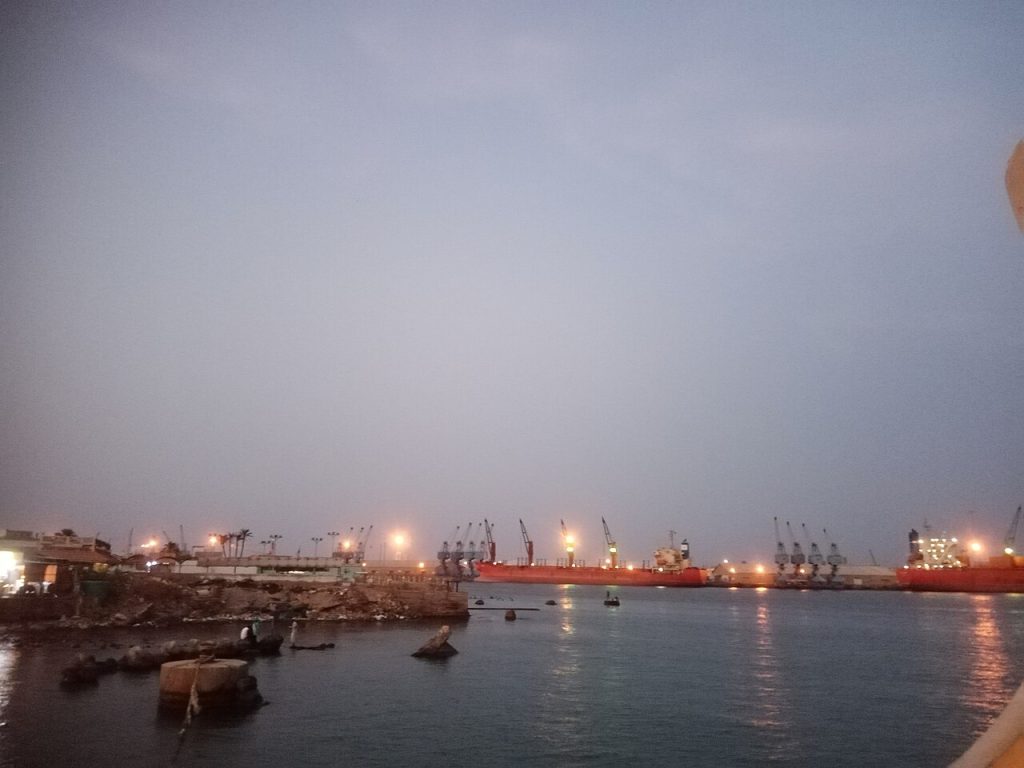
That gap between a signed text and an empty quay is the story. The port sits on the western shore of the Red Sea, on the sea lane that links Asia and the Gulf to the Suez Canal. A logistics point there would be Russia’s first enduring naval facility on that route. Egypt, Saudi Arabia, the United States and, more recently, Türkiye all have reasons to watch the harbour and Flamingo naval base, north of the commercial port.
What Port Sudan and Flamingo naval base are
Port Sudan, in Red Sea State, is Sudan’s main sea outlet and the wartime administrative and humanitarian hub. The Sudanese Navy’s principal shore establishment is at Flamingo (also written Flamingo Bay), north of the commercial harbour. Public reporting treats Flamingo as the site most often named in discussion of a future Russian logistics point. No official Sudanese or Russian statement reviewed for this article confirms that construction of a Russian facility has started.
The navy’s job at the port is coastal patrol, harbour protection and support of Sudan’s small surface fleet. That is a different question from who may one day berth there. A Turkish naval visit in November 2026 inspected repair workshops and the slipway; Türkiye’s Ministry of National Defence said the aim was to increase the Sudanese Navy’s shipbuilding capability. No vessel contract was announced.
What the 2020 Russia–Sudan agreement actually says
The Russian government published the agreement in early December 2020. TASS, quoting the official text, reported these terms:
- The facility is a logistics support point for repairs, resupply and crew rest, described in the text as defensive and “not aimed against other countries.”
- Russia may keep a maximum of four warships there at one time, including ships with nuclear propulsion, “on condition of observing nuclear and environmental safety norms.”
- Military and civilian personnel are not to exceed 300, unless Sudan agrees to an increase.
- Sudan is to hand over, free of charge for the life of the agreement, the coastal zone, water area and berths that make up the site.
- The agreement runs for 25 years and may be extended for further 10-year periods unless a party gives at least 12 months’ written notice.
TASS also reported that, on 16 November 2020, President Vladimir Putin accepted the government’s proposal to sign and instructed the Defence Ministry to conclude the deal. Carnegie Endowment analysis published on 5 November 2026, by a former Russian diplomat in Khartoum, dates the Sudanese signature to 23 July 2019 in Khartoum, on behalf of the Transitional Sovereignty Council, and the Russian signature to 1 December 2020 in Moscow. The published Russian text and TASS confirm the cap on ships and personnel.
The idea is older. According to the Kremlin transcript cited by Carnegie, during a November 2017 visit to Sochi, then-President Omar al-Bashir proposed discussing “the use of military bases in the Red Sea.” A signed agreement is not ratification, and ratification is not construction. Those steps remain separate, and only the signing is clearly documented.
What happened after the signing
The file did not move in a straight line. Carnegie records that Putin submitted the agreement to the State Duma for ratification in July 2021, after which Khartoum said it wanted the text revised, arguing that it had not been approved by Sudan’s parliament and did not reflect current national interests. In February 2023, after visiting Khartoum and meeting both General Abdel Fattah al-Burhan and Rapid Support Forces commander Mohamed Hamdan Dagalo (Hemedti), Russian Foreign Minister Sergey Lavrov said the agreement had been revised and was awaiting ratification by the Sudanese parliament. Sudan no longer had a sitting parliament at that point. War began on 15 April 2023.
In February 2025, Sudanese Foreign Minister Ali Youssef Sharif, after talks in Moscow with Lavrov, said the two sides had “agreed on everything” concerning the naval-base agreement, a remark later recalled by TASS. In December 2025, Russian Ambassador to Sudan Andrey Chernovol told TASS that there had been “no progress,” that the 2020 document was still subject to ratification, and that “at this stage, everything has stalled.” He said reports of a new Sudanese offer, published that week by The Wall Street Journal, referred back to the 2020 text, and that talk of something “opening” was “at the very least, premature.”
Sudan Tribune, citing an anonymous military source in Port Sudan on 6 December 2025, reported that the government had frozen work on a Russian Red Sea base “for the time being.” That account has not been matched by a named official statement in the sources reviewed here. Carnegie, writing in November 2026, says the base has neither been built nor officially scrapped, and that in November 2025 Chernovol had already said progress was suspended because of the war. In early November 2026, Sudan Tribune, again citing unnamed sources around Russia–Africa talks in Moscow, reported that Sudan had floated a “free economic zone” on the Red Sea as a civilian and logistics formula. That, too, is a single-source report and is not treated here as a signed revision of the 2020 agreement.
Why the Red Sea location matters
A logistics point at Port Sudan would sit on the sea lane between the Bab el-Mandeb strait and the approaches to the Suez Canal. For Russia, which already uses a long-standing logistical presence at Tartus in Syria, a Sudanese facility would be its first enduring naval support point on the Red Sea itself. The published 2020 text is a logistics-support agreement, not a plan to station a large fleet. The cap of four ships and 300 people is the official limit unless both sides agree otherwise.
Egypt depends on Suez Canal traffic and shares a long land border with Sudan. Saudi Arabia sits on the opposite shore. The United States has treated a Russian naval foothold on the Red Sea as a strategic concern in public commentary; this article does not invent a US force posture at Port Sudan, because no such basing arrangement is documented in the sources used here. Sudan’s Security and Defence Council cut diplomatic ties with the United Arab Emirates in May 2025 after strikes on the city, accusing Abu Dhabi of arming the RSF. The UAE has denied arming the RSF.
The May 2025 strikes: damage at Flamingo, attacker not confirmed
Between 4 and 7 May 2025, drone strikes were reported across Port Sudan. The Centre for Information Resilience (CIR) verified video and satellite imagery of fires and damage at several sites: Osman Digna Airbase at the northern end of Port Sudan International Airport on 4 May, including a hangar and an Ilyushin-76; fuel depots on 5 and 6 May; the Port Sudan converter station; and Flamingo naval base between 6 and 7 May. CIR also verified damage at the Marina (Coral) Hotel.
The Sudanese Armed Forces blamed the Rapid Support Forces. CIR did not confirm the attacker. It noted that some munition remnants in verified footage resembled a Chinese-made guided bomb compatible with drones previously linked to the RSF and their allies, while other, unverified images circulating online more closely resembled a Russian-made surface-to-air missile of a type that can be launched from equipment operated by the SAF. The RSF did not claim responsibility, CIR reported. The UN said Humanitarian Air Service flights were temporarily paused.
Some later commentary described Flamingo as a Russian base under construction. That claim is not established. CIR verified damage at the Sudanese naval base. It did not verify a completed, or even started, Russian facility. For a wider evidence review of drones in the war, including these strikes, see DefenceMENA’s Sudan war drones file.
What is still not established
No official source reviewed for this article shows that a Russian naval logistics point at Port Sudan has been ratified by both sides in final form, funded, or built. Figures of 300 people and four ships are treaty caps from the 2020 text, not a count of forces present. Single-source reports of a freeze, a new 25-year offer, or a “free economic zone” compromise should be labelled as such until Sudan or Russia publishes a new text. Satellite damage at Flamingo in May 2025 is independently verified; attribution of those strikes, and any claim that the target was already a Russian base, is not.
Frequently asked questions
Does Russia already have a naval base in Port Sudan?
No. Russia and Sudan signed a logistics-support agreement in 2020, but the Russian ambassador told TASS in December 2025 that the file had stalled and that talk of a facility opening was premature. Independent reporting, including Carnegie in November 2026, says the base has not been built and has not been formally scrapped.
How many Russian ships and troops would the 2020 deal allow?
The published agreement caps the site at four ships at a time, including nuclear-powered vessels under safety conditions, and at 300 military and civilian personnel unless Sudan agrees to more. Those are legal limits in a text that still required ratification, not a count of forces present.
Was Flamingo naval base hit in May 2025?
Yes. Damage at Flamingo between 6 and 7 May 2025 was identified by the Centre for Information Resilience on satellite imagery, as part of a wider set of verified strikes in Port Sudan. The SAF blamed the RSF. CIR did not confirm who fired, and it did not confirm that the site was a Russian base.
Is Türkiye building a base in Port Sudan?
There is no public evidence of that. In November 2026 a Turkish naval and shipyards delegation inspected workshops and the slipway and discussed shipbuilding capacity. The Turkish Defence Ministry did not announce a basing agreement or a ship contract.
Sources
- TASS, “Russia inks deal on naval logistics base in Sudan,” 8 December 2020, quoting the agreement posted on Russia’s official legal information portal: tass.com/economy/1232695
- TASS, “No progress on Russian naval base issue in Sudan, ambassador says,” 2 December 2025, interview with Ambassador Andrey Chernovol: tass.com/politics/2052213
- Sergey Konyashin, “Red Sea Mirage: Why Russia Is Still Waiting on a Military Base in Sudan,” Carnegie Endowment for International Peace, 5 November 2026: carnegieendowment.org
- Centre for Information Resilience, “Alleged drone strikes in Port Sudan,” 13 May 2025: info-res.org
- Sudan Tribune, “Sudan freezes plans for Russian naval base on Red Sea,” 6 December 2025 (anonymous military source; not independently corroborated in sources reviewed here): sudantribune.com/article/307846
- Sudan Tribune, “Sudan proposes Red Sea free economic zone to Russia during Moscow talks,” 3–4 November 2026 (unnamed sources; not treated as an official text): sudantribune.com/article/320863
- DefenceMENA, “Turkish Naval Delegation Visits Port Sudan to Help Boost Sudanese Navy’s Shipbuilding Capability,” 10 November 2026, based on Türkiye’s Ministry of National Defence: defencemena.com
- DefenceMENA, “Sudan War Drones: What the Evidence Shows on SAF and RSF Since 2023”: defencemena.com/drones-in-sudan-war/