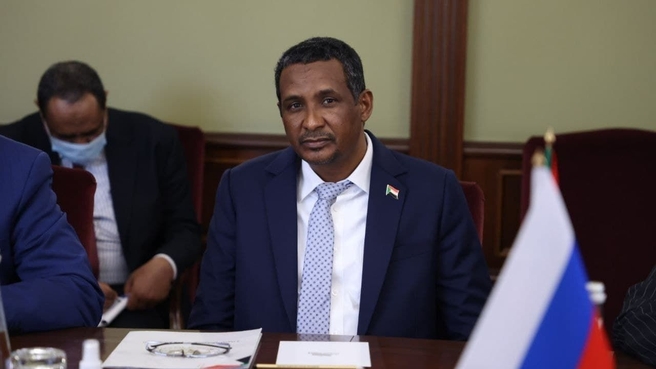
Al-Tayeb Mohamed Jabara, described by Sudanese and Arab media as head of the Rapid Support Forces’ (RSF) counterintelligence department, announced in a video released on 24 November 2026 that he had left the paramilitary group and was ready to fight alongside the Sudanese Armed Forces (SAF). It is the second high-profile RSF defection in two days, after Maj. Gen. Ammar Mohamed Zain Rabih appeared at Khartoum airport on 23 November. Neither the RSF nor the SAF had commented on Jabara’s statement by the time of publication.
What Jabara said
The video was first broadcast by Al Arabiya and Al Hadath. Al Arabiya identified Jabara as director of the counterintelligence department and an intelligence staff officer in the Special Protection Force, the unit attached to RSF commander Mohamed Hamdan Dagalo (“Hemedti”). In the recording, Jabara apologised to the Sudanese people for taking part in what he called the rebellion against the state. He said the RSF now served only the interests of Hemedti and his family, accused Hemedti of carrying out “foreign agendas” aimed at dividing Sudan, and said he was leading RSF fighters into a “furnace” to fulfil his personal ambitions.
He called on RSF members to leave the force immediately and to take up the amnesty offered by army chief and Sovereignty Council head Gen. Abdel Fattah al-Burhan, according to Al Arabiya and the Sudanese outlet Nabd Sudan. The same remarks were reported by Egypt’s Al-Nahar and Saudi Arabia’s Okaz.
What is not known
The video does not show where it was recorded, and none of the reports says whether Jabara is already in army-held territory. As Khartoum Wire noted, it is also not clear whether other personnel left with him, what role he might take within the army, or how much sensitive information he had access to. His rank has not been given in the reports Defence Mena has seen, and the SAF has not published its own statement on the defection.
- Reported by several outlets: Jabara’s video statement announcing his defection and his accusations against Hemedti.
- Not confirmed: His exact post and rank, where he is now, whether others came with him, and whether he has handed any intelligence to the army.
- No response yet: The RSF had not addressed the announcement as of publication. The group has dismissed some earlier defection announcements as false, as it did with reports about Lt. Gen. Khalid Bireish on 10 November.
Why a counterintelligence chief matters
A counterintelligence department is responsible for detecting infiltration, vetting personnel and protecting internal communications. In a force that has been losing commanders to the army, that work includes tracking possible defectors. If Jabara held the post the reports describe, he would know how the RSF screens its own people and protects its command network. Whether that knowledge reaches the army, and how useful it is, cannot be judged from public information. Public defection announcements are also part of the information war between the two sides, and job titles in such statements are often hard to check.
A run of defections in November
Jabara’s announcement follows several others this month, all presented through army-aligned or Sudanese media:
- On 10 November, Lt. Gen. Khalid Nour al-Daim Bireish was reported to have joined the army; the RSF called it a rumour.
- Around 18 to 19 November, a group led by Mishal Abdelrahman, described as commander of RSF Groups 27 and 28, announced it had joined the army.
- Khartoum Wire reported that about 200 fighters led by Abubakr Hamouda Dahlob, described as an RSF special tasks intelligence commander in North Kordofan, had joined the army.
- On 23 November, Maj. Gen. Ammar Rabih, described as a senior RSF logistics officer, announced his defection in Khartoum and alleged that Israeli experts were training RSF officers in Nyala, a claim that remains unverified (our report).
Earlier in the war, Al Arabiya recalled, the most significant switch was that of Abu Aqla Keikel, commander of the Sudan Shield Forces, in October 2024. In 2026, Al-Nour Ahmed Adam (“Al-Gubba”) joined the army in April and Brig. Ali Rizgallah (“Al-Savanna”) in May. Al Arabiya also said Sudanese authorities announced in August that 21 commanders and 270 RSF fighters had defected, handing over 37 combat vehicles, and that seven officers defected in October, among them the commander of the South Nyala sector.
The defections come as the army presses its offensive in North and West Kordofan, including the recapture of Al-Khuwai earlier this month. Not every announced defection has held up: on 12 November the Tamazuj movement denied that two men shown in a defection video had any link to it. For background on the two forces, see our guides to Sudan army ranks and Sudan’s military strength.
Defence Mena will update this report if the SAF or the RSF responds.
Sources
- Al Arabiya, “Prominent leader who defected from the RSF: I apologise for my rebellion against the state” (Arabic), 24 November 2026: alarabiya.net; Al Arabiya and Al Hadath posts on X carrying the video, 24 November 2026
- Nabd Sudan, via Kul Yawm, report on Jabara’s statement (Arabic), 24 November 2026: klyoum.com
- Khartoum Wire, “RSF Counterintelligence Chief Defects to Sudan’s Army,” 24 November 2026: khartoumwire.com
- Okaz, report on the defection of the RSF intelligence director (Arabic), 24 November 2026: okaz.com.sa
- Al-Nahar (Egypt), report on Jabara’s defection (Arabic), 24 November 2026: alnaharegypt.com
- Sudan Axis posts on X, 24 November 2026.