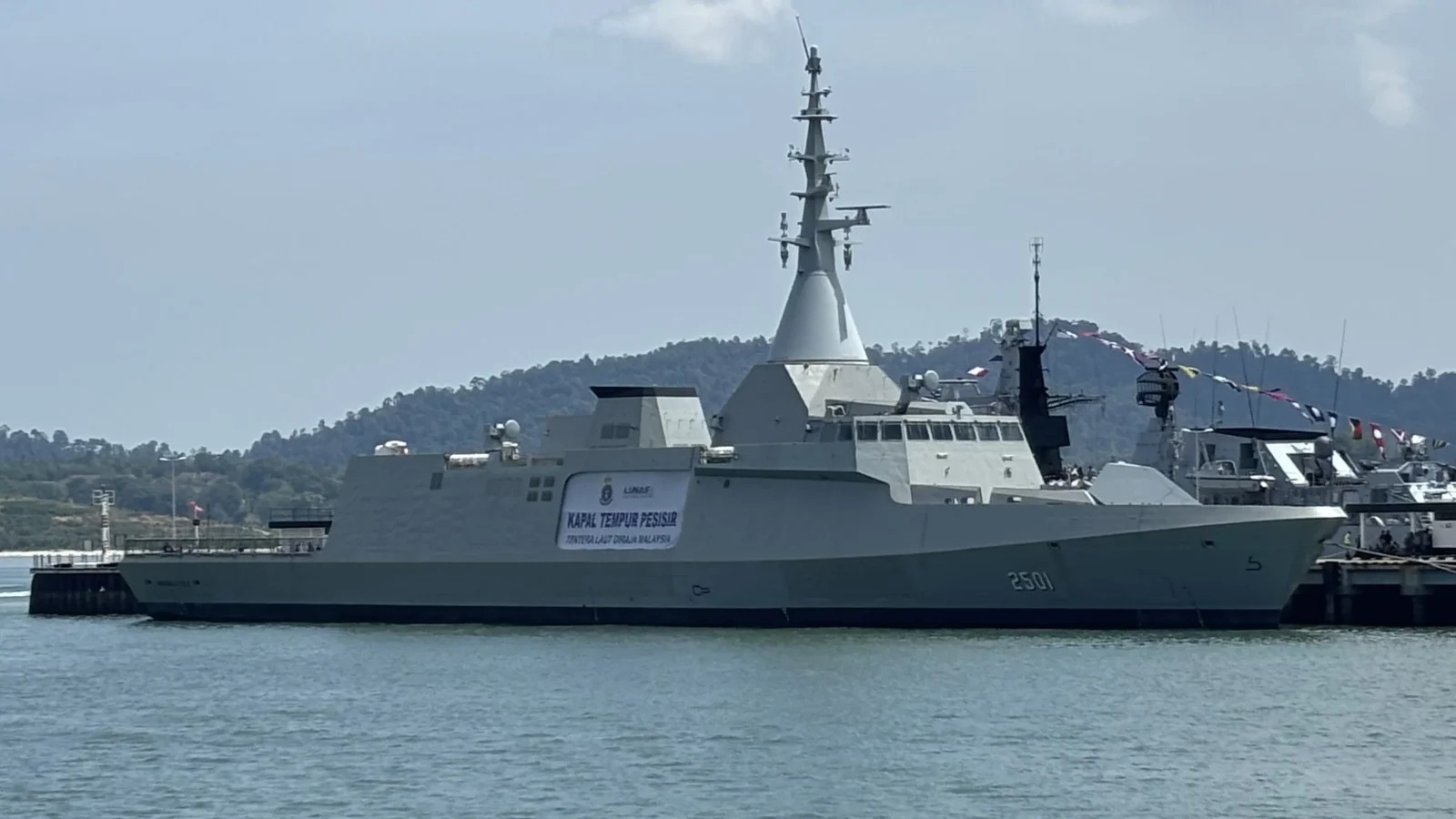
Malaysia has chosen Türkiye’s ROKETSAN ATMACA anti-ship missile as the preferred replacement for Norway’s Naval Strike Missile on the Royal Malaysian Navy’s Littoral Combat Ships. Defence Minister Datuk Seri Mohamed Khaled Nordin said exclusive negotiations with the Turkish side will now begin; a final LCS contract has not been signed.
Speaking in Kuala Lumpur on 12 November 2026 after the Defence Ministry’s Innovation Day, Khaled said the ministry had compared proposals from Türkiye, France and Italy. Price, delivery time and the upfront costs Malaysia would have to carry were the deciding factors, the New Straits Times reported. Türkiye is now the only country with which Malaysia will negotiate the replacement.
We have reached the stage of determining which country would be the best source of an alternative to replace our missiles. That country is Türkiye. In terms of price, delivery timeline and the initial costs we would have to incur, we have decided that the missile from Türkiye is the best option for us to consider as a replacement for the NSM missiles from Norway.
The selection, the turn to exclusive talks and the compatibility assurances were also reported by Bernama, as carried by Malay Mail and Free Malaysia Today. Khaled did not disclose how many missiles or launchers the LCS ships would receive, or a contract price for that class.
Compatibility assurances — and work still ahead
The minister said Malaysia had received assurances that ATMACA would be compatible with the ships’ existing combat management system, and that integration questions would be examined more closely once talks with the Turkish company started:
We have already been given assurances regarding compatibility, integration and related matters. We will examine these aspects in greater detail and begin negotiations with the Turkish company.
The published remarks do not name the combat management system, and they treat integration as a matter for negotiation rather than a finished technical step.
Why 2029 is on the table
Khaled tied an earlier delivery window to an order Malaysia has already placed for the same missile on three Littoral Mission Ship Batch 2 corvettes. According to the New Straits Times, a brand-new purchase without that LMS order would take about 30 months, but some ATMACA rounds could be supplied ahead of schedule “perhaps by 2029”, rather than leaving the combat ships waiting until 2035.
He also said Malaysia would not have to fund an entirely new missile buy. The New Straits Times reported that the missiles had already been paid for under the LMS contract, and that additional spending would likely be limited to launchers and integration on the LCS combat system. A completely new procurement, the minister said, could cost between RM700 million and RM900 million — a sum he said Malaysia would not need to spend for this replacement. That range is not a signed LCS contract value.
Norway’s NSM and the next legal steps
Malaysia has accepted that it will not receive the Norwegian NSM rounds despite having paid for them, Khaled said, and is now moving through the contract’s dispute mechanism. An attempt at an amicable settlement has already failed. A bilateral dispute-resolution committee is the next stage; if that also fails, arbitration can be held in Kuala Lumpur. He warned that the process will take time and that compliance with an eventual award is not guaranteed. The government will not wait for a refund before it pursues a missile for the ships.
The decision sits on top of an existing Türkiye–Malaysia naval line, rather than opening one from scratch: the LMS Batch 2 ships are being built in Istanbul by STM, and ATMACA was already contracted for that class in April 2026. Thursday’s announcement records a preferred supplier for the delayed LCS programme after Norway’s export licences were reversed. It does not, by itself, conclude the LCS buy. For a technical overview of the missile itself, see Defence Mena’s earlier explainer on the ATMACA anti-ship missile.
Sources
- New Straits Times, 12 November 2026, Fuad Nizam: Malaysia picks Türkiye’s Atmaca missile to replace NSM for Navy LCS
- Bernama, via Malay Mail, 12 November 2026: Malaysia selects Turkiye as preferred alternative missile supplier for Navy’s LCS project
- Free Malaysia Today, 12 November 2026, citing Bernama: Govt to acquire Turkish missiles for LCS