Libya’s Eastern Parliament Approves the 2019 Maritime Deal With Türkiye: What the Vote Changes



Libya’s eastern-based House of Representatives voted unanimously on Tuesday 20 October 2026 to approve the 2019 maritime memorandum of understanding between Türkiye and Libya’s former Government of National Accord (GNA). In the same session in Benghazi, lawmakers repealed two 2020 resolutions: one that had rejected the Türkiye–Libya agreements and one that called for cutting political ties with Ankara. The vote was announced by the House spokesman, Abdullah Bliheg, and reported by Reuters and Anadolu Agency.
Image: DefenceMENA briefing cover (abstract graphic, not a map of the claimed maritime zones).
What the House of Representatives voted on
According to the House statement, as reported by Anadolu Agency and the Libyan outlet Al-Wasat, lawmakers voted unanimously to:
- Approve the memorandum on the delimitation of maritime jurisdiction areas in the Mediterranean, signed by Türkiye and the GNA. Al-Wasat says it covers the continental shelf and the exclusive economic zone.
- Repeal Resolution No. 1 of 2020, in which the House had refused to ratify the two memoranda signed by Türkiye and the GNA and declared them null and void.
- Repeal Resolution No. 6 of 2020, which called for severing political relations with Ankara.
Reuters, citing two members of parliament, reported that the House approved a maritime agreement with Türkiye and revoked its 2020 boycott decision.
Two memoranda, one approval
On 27 November 2019 the GNA, led by Fayez al-Sarraj, and the Turkish government signed two memoranda in Istanbul. The first covered security and military cooperation. The second drew maritime boundaries between the two countries in the Mediterranean.
The reports of Tuesday’s session describe an explicit vote to approve the maritime memorandum only. Repealing Resolution No. 1 removes the House’s earlier formal rejection of both documents, but none of the reports reviewed for this article says the House voted to ratify the security and military cooperation memorandum. Until the full text of the House decision is published, that distinction matters.
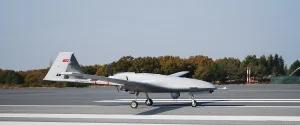
The security memorandum was the legal basis for Türkiye’s military support to the Tripoli government in 2019 and 2020, when the eastern-based Libyan National Army (LNA) of Khalifa Haftar was fighting for the capital. That support included Bayraktar TB2 drones and air-defence systems; see what TB2 combat use in Libya actually showed.
Why the eastern camp changed course
The House of Representatives sits in the east and is aligned with Haftar’s camp, which fought the Turkish-backed government in Tripoli. Its reversal follows a year of contacts between Ankara and Benghazi. The Warsaw-based Centre for Eastern Studies (OSW) wrote in December 2025 that the head of Turkish intelligence had visited Benghazi in August 2025 and met Haftar. OSW said Ankara’s outreach to the LNA was meant to secure ratification of the 2019 maritime agreement by the eastern parliament, and that Ankara had received “preliminary assurances” in exchange for re-establishing ties and possible military support. That is OSW’s analysis; neither Ankara nor Benghazi has published the terms of any such understanding.
The vote means both of Libya’s rival political camps now back the maritime deal in some form. The Tripoli-based Government of National Unity, which succeeded the GNA, signed a separate hydrocarbons memorandum with Türkiye in October 2022.
Greece and the Eastern Mediterranean
Greece rejects the 2019 memorandum. In an October 2022 statement on the Türkiye–GNU hydrocarbons deal, the Greek Ministry of Foreign Affairs called the 2019 memorandum “illegal, null and void”. It pointed to Greece’s own exclusive economic zone delimitation with Egypt and said any action to implement the Türkiye–Libya memorandum would draw a response at bilateral, European Union and NATO level.
Eastern Libyan officials had previously given Athens a different message. The Libya Observer, citing the Greek daily Kathimerini, reported that officials in Benghazi had confirmed the House would not ratify the memorandum, at a time when Belgassim Haftar was visiting Athens.
At the time of writing, the sources reviewed for this article did not include a Greek, Egyptian or EU reaction to Tuesday’s vote.
What the vote does and does not change
- It removes the eastern parliament’s main objection. The House had argued in 2020 that any memorandum signed by the government needed legislative approval. It has now given that approval for the maritime deal.
- It does not settle the dispute with Greece. Athens and Ankara disagree on how islands such as Crete affect maritime boundaries. A vote in Benghazi does not change Greece’s position or the Greece–Egypt agreement.
- It does not, by itself, open new drilling. No exploration licence, survey or drilling plan in the waters concerned has been announced alongside the vote.
- It does not unify Libya. The country still has rival governments in Tripoli and the east. The vote aligns the two on this issue only.
What to watch next
- Publication of the House decision and whether it covers the security and military cooperation memorandum.
- Responses from Athens, Cairo and Brussels.
- Any Turkish research vessel or naval activity in waters off eastern Libya.
- Further Turkish defence cooperation with the LNA, which would test how far the rapprochement goes. For other foreign military partnerships in Libya, see Italy and Libya’s moves to deepen military cooperation.
Sources
- Anadolu Agency: “Libya’s parliament approves maritime deal with Türkiye, reverses previous rejection”, 20 October 2026
- Reuters via Devdiscourse: “Libya parliament approves maritime deal with Turkey, lifts 2020 boycott”, 20 October 2026
- Al-Wasat: “House of Representatives Unanimously Approves Maritime Memorandum of Understanding with Turkey”, 20 October 2026
- OSW Centre for Eastern Studies: “Turkey’s policy towards Libya: a year of major shifts”, 2 December 2025
- Hellenic Republic Ministry of Foreign Affairs: statement on the GNU–Türkiye hydrocarbons memorandum, 3 October 2022 (in Greek)
- The Libya Observer: “Greek Newspaper: Benghazi officials confirm House of Representatives’ rejection of Libya–Turkey MoU”
- Clash Report on X, 20 October 2026