Nigeria Military Strength: Ranking, Budget and Peers

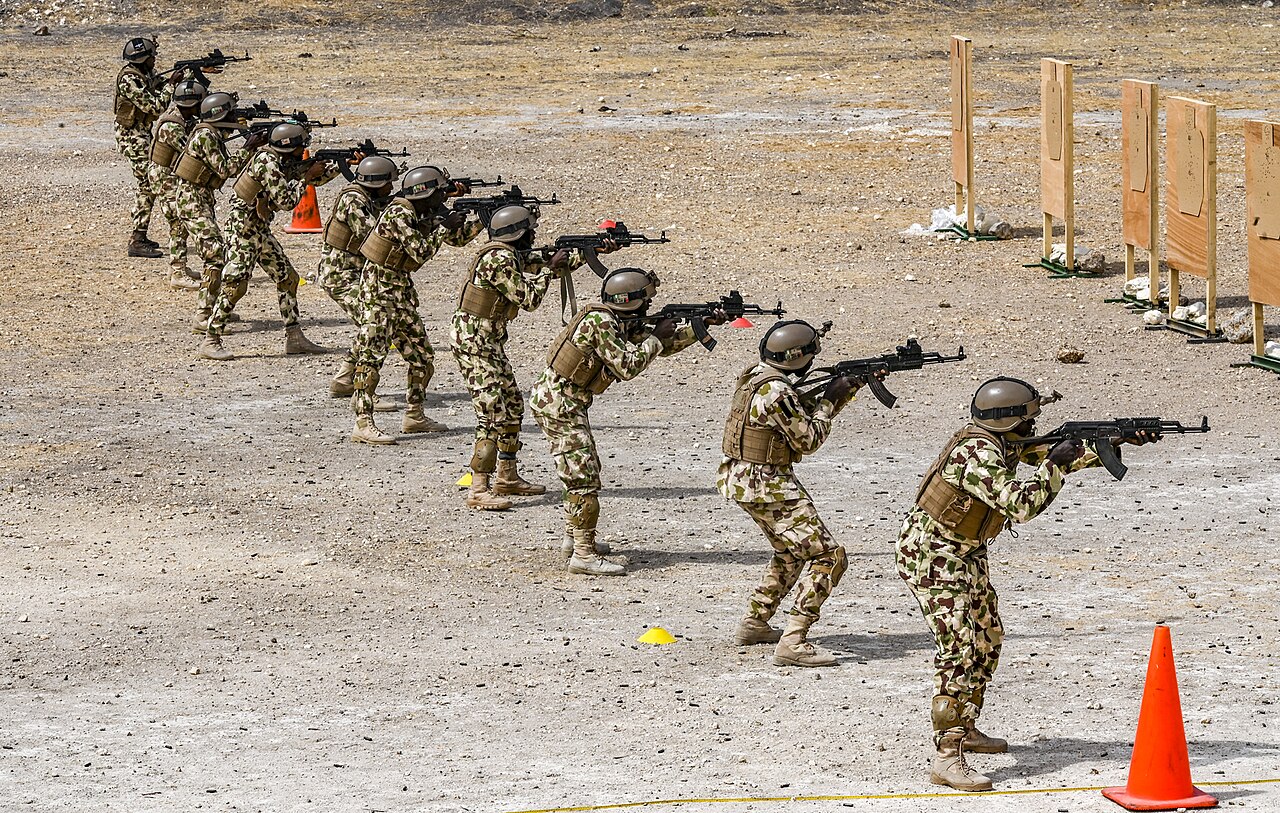


Nigeria military strength ranks 33rd among 145 countries in the 2026 Global Firepower index, which makes the Nigerian Armed Forces the third-strongest conventional force in Africa by that measure, behind Egypt and Algeria. The score is a composite of more than 60 factors, and it sits beside very different spending figures: SIPRI puts Nigerian military expenditure for 2025 at $2.1 billion, up 55%, while Global Firepower lists $3.9 billion. This guide explains how the index is built, how Nigeria compares with its main African peers and why the numbers should be read together.
Nigeria Military Strength: Where the Ranking Stands
Nigeria holds 33rd place with a PowerIndex score of 0.6097. In the index a lower score means a stronger conventional force, and a perfect 0.0000 is described as unattainable. The United States leads at 0.0741, followed by Russia at 0.0791 and China at 0.0919.
Within Africa Nigeria is third. Egypt is 19th (0.3651) and Algeria 27th (0.4849). South Africa follows at 40th, Ethiopia at 47th and Morocco at 56th. In West Africa Nigeria is far ahead of Mali (104th), Côte d’Ivoire (108th) and Ghana (112th). The DefenceMENA Nigeria military profile covers inventories and procurement in more depth.
How the Global Firepower Index Is Built
Global Firepower, a private ranking site and not an official assessment, says its index draws on more than 60 factors covering unit quantities, financial standing, logistical capability and geography. Bonuses and penalties are then applied. The site warns that trend arrows can reflect a change in the formula rather than a real change in power. Nigeria’s entry was last reviewed on 21 January 2026.
The equipment counts are labelled as stock holdings. They describe what a country is listed as owning, not how many aircraft or vehicles are serviceable on a given day. That distinction matters for any air force or army that relies on ageing platforms.
Nigeria’s Personnel and Equipment in the Index
The table lists the values Global Firepower gives for Nigeria. They are index figures and not official Nigerian statistics, which the government does not publish in this form.
| Category | Global Firepower value |
|---|---|
| Active personnel | 230,000 |
| Paramilitary | 50,000 |
| Reserve personnel | 0 |
| Total aircraft | 159 |
| Fighters | 14 |
| Helicopters | 69 |
| Tanks | 330 |
| Armoured vehicles | 12,219 |
| Towed and self-propelled artillery | 339 and 40 |
| Multiple rocket launchers | 37 |
| Navy assets | 152 |
| Population and available manpower | 236.7 million and 125.5 million |
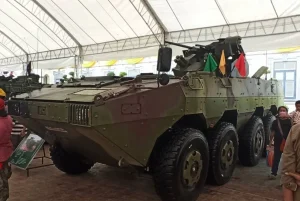
Nigeria military strength is concentrated on land, so the profile is that of a large land force with a small air arm. Armoured vehicles number over 12,000 in the listing, while fighters stand at 14. The individual aircraft types are set out in the Nigerian Air Force aircraft guide.
Nigeria Military Strength Against Regional Peers
The comparison below uses the same index and the same edition, so the figures can be set side by side. Budgets are the amounts the index itself lists and differ from SIPRI estimates.
| Country | World rank | PowerIndex | Active personnel | Aircraft | Fighters | Tanks | Listed budget |
|---|---|---|---|---|---|---|---|
| Egypt | 19 | 0.3651 | 438,500 | 1,088 | 242 | 3,620 | $5.19 billion |
| Algeria | 27 | 0.4849 | 130,000 | 620 | 111 | 1,485 | $25 billion |
| Nigeria | 33 | 0.6097 | 230,000 | 159 | 14 | 330 | $3.9 billion |
| South Africa | 40 | 0.6843 | 68,731 | 181 | 2 | 248 | $2.88 billion |
| Ethiopia | 47 | 0.8525 | 503,000 | 104 | 25 | 338 | $3.72 billion |
| Ghana | 112 | 2.4566 | 15,500 | 18 | 0 | 0 | $0.95 billion |
The table shows what drives Nigeria’s position. Its 230,000 personnel and large vehicle fleet lift the score, while its air and armoured inventories are a fraction of Egypt’s or Algeria’s. Ethiopia lists more personnel (503,000) but ranks lower, with 104 aircraft. South Africa lists two fighters and still ranks 40th. For detail on the two stronger peers, see the profiles of Egypt and Algeria.
Defence Spending: SIPRI Data and the Federal Budget
SIPRI reports that Nigeria’s military spending rose 55% to $2.1 billion in 2025, which it links to a worsening security situation tied to insurgencies and extremist violence. That made Nigeria the second-largest spender in sub-Saharan Africa after South Africa, which spent $3.2 billion, down 1.2%. Spending across Africa reached $58.2 billion, up 8.5%, with Algeria alone at $25.4 billion and Morocco at $6.3 billion.
The federal allocation looks different when read in naira. Budget Office of the Federation documents, as reported by TVC News, give the Ministry of Defence about ₦3.15 trillion for the current fiscal year. Allocations are not releases, and the figures can change when funds are actually disbursed.
| Item | Allocation | Share of ministry total |
|---|---|---|
| Personnel | ₦2.39 trillion | 75.9% |
| Overheads | ₦297 billion | 9.4% |
| Capital | ₦464 billion | 14.7% |
| Nigerian Army (all items) | ₦1.50 trillion | 47.7% |
| Nigerian Navy (all items) | ₦444 billion | 14.1% |
| Nigerian Air Force (all items) | ₦409 billion | 13.0% |
The remaining quarter goes to defence headquarters, the Army Training and Doctrine Command, defence missions, the Defence Intelligence Agency and other bodies. A separate ₦5.41 trillion for the wider national security architecture is not part of the ministry figure.
Why the Ranking and the Spending Figures Differ
Global Firepower lists a Nigerian defence budget of $3.9 billion, against SIPRI’s $2.1 billion for 2025. For South Africa the gap runs the other way: the index shows $2.88 billion while SIPRI reports $3.2 billion and calls South Africa the largest sub-Saharan spender. The two sources use different years, definitions and exchange rates, so neither should be mixed with the other in one calculation.
The naira breakdown adds a second point. About three-quarters of the ministry allocation is personnel cost and about 15% is capital. A force of Nigeria’s size therefore has limited room to buy equipment, even when the headline budget grows. That arithmetic comes from the allocation table above and is not a statement by the government.
Procurement Under Way and What the Index Cannot Show
SIPRI’s data for 2021 to 2025 shows Nigeria as the largest sub-Saharan recipient of major arms, with 16% of the subregion’s imports. China was the largest supplier to sub-Saharan Africa, with 22% of imports and 23 recipient states, followed by Russia at 12% and Türkiye at 11%.
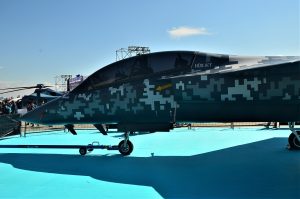
Current Nigerian orders reflect that mix. Military Africa reports that the Air Force has 24 Leonardo M-346FA light fighter-attack jets on order, with the first three having completed factory acceptance testing around the turn of June and July. Three of ten Leonardo AW109 Trekker helicopters were formally accepted on 6 October, and 12 AH-1Z Viper attack helicopters entered production in the United States in September.
None of these will change the index until they are delivered and listed. Equipment counts also say little about training, maintenance or sustainment, which Nigeria does not itemise in public data. Treat any single Nigeria military strength ranking as a starting point, and read it with budget and procurement evidence.
Frequently Asked Questions
What is Nigeria’s military strength ranking?
Nigeria ranks 33rd of 145 countries in the 2026 Global Firepower index, with a PowerIndex of 0.6097. That places it third in Africa, behind Egypt (19th) and Algeria (27th). The index is a private ranking based on more than 60 factors and does not measure readiness directly.
How many active troops does Nigeria have?
Global Firepower lists 230,000 active personnel and 50,000 paramilitary, with no reserve component. These are index estimates and not official Nigerian figures. Other trackers publish different totals, and the government does not release a full breakdown by service, so the numbers should be treated as approximate.
How much does Nigeria spend on defence?
SIPRI estimates Nigerian military spending at $2.1 billion in 2025, up 55% on the year before. The Ministry of Defence budget documents show about ₦3.15 trillion, three-quarters of it personnel costs. Global Firepower lists a different figure of $3.9 billion because it uses its own definitions.
Is Nigeria the strongest military in West Africa?
By the Global Firepower index, yes. Nigeria is 33rd, well ahead of Mali (104th), Côte d’Ivoire (108th) and Ghana (112th). SIPRI separately describes Nigeria as the second-largest military spender in sub-Saharan Africa and the largest arms importer in that subregion. A broader African comparison is in the strongest militaries in Africa ranking.
Sources
- Global Firepower: Nigeria military strength profile
- Global Firepower: countries ranking and methodology
- Global Firepower: Egypt
- Global Firepower: Algeria
- Global Firepower: South Africa
- Global Firepower: Ethiopia
- Global Firepower: Ghana
- SIPRI: Trends in World Military Expenditure, 2025
- SIPRI Fact Sheet on world military expenditure (PDF)
- SIPRI: Trends in International Arms Transfers, 2025 (PDF)
- TVC News: Budget breakdown for the Ministry of Defence
- Military Africa: Nigeria’s AH-1Z Viper order enters production as Air Force expands