Nigeria’s $2 Billion Bet on Local Defence Production: What DICON Has Actually Delivered




Nigeria has signed three defence-industrial partnerships worth a combined multi-billion-dollar bet since mid-2025, opened a dedicated training institute in Kaduna, and unveiled AI-guided loitering munitions built with a private drone maker — yet little of the hardware promised in these deals has actually reached the Nigerian Armed Forces.
A $2 billion joint venture, fifteen months on
The centrepiece is the partnership agreement the Defence Industries Corporation of Nigeria (DICON) signed with SP Offshore Nigeria Limited on 16 July 2025 at DICON’s headquarters in Kaduna. According to DICON’s own statement, the agreement unveiled a $2 billion investment plan covering assembly lines for ammunition, small arms, drones, radars and biometric systems. DICON’s Director-General, Major General Babatunde Ibrahim Alaya, described it as “a transformative step towards achieving Nigeria’s vision of a robust military-industrial complex” and said the goal was self-sufficiency in defence manufacturing, with reduced foreign imports, by 2027.
SP Offshore is described in the DICON release as a foreign-backed drone and weapons developer; Nigerian outlets including ThisDay and Arise News reported the signing in similar terms. DICON’s Director-General said local ammunition production would begin “within the next one year” of the signing, with full weapons manufacturing to follow. That one-year mark fell in July 2026; no DICON statement, Nigerian ministry notice or independent report has yet confirmed that ammunition lines under the SP Offshore venture are producing. The joint venture vehicle itself, often referred to in Nigerian trade press as SPO-DICON, has continued to attract smaller, more specific partnerships, including talks with the French shipbuilder Couach reported by Military Africa in June 2026 on fast assault craft — a narrower, naval-platform deal than the ammunition and small-arms core of the original announcement.
Building the ecosystem around DICON
The SP Offshore deal is the largest of several announcements rather than a stand-alone project. In late January 2026, the Lagos-based drone manufacturer UNICCON Group unveiled its UNIKAM family of AI-guided loitering munitions — multi-rotor “kamikaze” drones the company says can exceed 200 km/h — in partnership with DICON, demonstrated at a joint event covered by ThisDay and the state news agency NAN. The same partnership has extended to counter-drone systems, with associated firms LZ Tech and Babasky demonstrating detection, jamming and tracking equipment at Nigerian military facilities. These performance claims are company-reported; neither DICON nor Nigeria’s Ministry of Defence has published independent test results.
On 29 July 2026, Minister of State for Defence Bello Matawalle inaugurated the DICON Institute of Technology in Kaduna, intended to train personnel in designing and sustaining locally built platforms and in specialist skills such as bomb disposal and hostage-rescue support, according to a ThisDay commentary carried by AllAfrica. That same account lists two further, less-detailed DICON partnerships: with Terra Industries on surveillance, robotics and cybersecurity, and with EIB Group on unmanned aerial systems — part of a wider pattern of memoranda that has not yet been matched by comparable public reporting on deliveries or production figures.
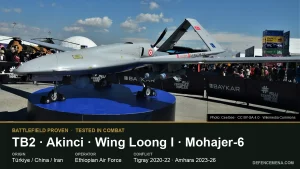
The legal basis for all of this is the DICON Act 2023, sponsored by Hon. Babajimi Benson and signed by President Bola Ahmed Tinubu, which gave the state-owned arsenal — previously limited mostly to small arms, ammunition, armoured personnel carriers and ballistic vests for the Nigerian Armed Forces and police — the authority to enter joint ventures with private and foreign capital. DefenceMena has separately tracked how Nigeria’s existing hardware, from its armoured vehicle fleet built around locally assembled Proforce designs to its Turkish- and Chinese-sourced drone fleet, already blends imported systems with a small but growing domestic base; the SP Offshore and UNICCON deals are an attempt to tilt that balance further toward production at home.
The gap between announcements and output
Nigeria’s push follows a familiar regional pattern: a signing ceremony, a large headline figure, and a stated delivery window that slips. President Tinubu’s message to the opening of AFRIDEX 2026 in Lagos on 26 October, read by Senate President Godswill Akpabio and reported by defenceWeb, argued that “the measure of a successful partnership is the capability it leaves behind” — a standard that the DICON-SP Offshore venture has not yet been shown to meet. Nigeria’s defence minister told the same exhibition that local tanks, armoured personnel carriers and drones would follow “within a year,” a pledge DefenceMena covered in detail in a separate report on the AFRIDEX opening.
What is missing from the public record is independent verification: no third-party audit of SP Offshore’s ownership or manufacturing capacity, no published output figures for DICON’s existing small-arms lines against which to measure growth, and no confirmed date for when ammunition under the new venture will actually leave a Nigerian factory floor. Nigeria is not alone in this gap between signing ceremony and shipped hardware — South Africa’s Denel has spent years working to restore production lines it once had running, and Algeria’s and Morocco’s state arsenals have taken similarly long routes from licensing agreements to real output — but the scale of the figures involved, and their direct bearing on a $50 billion-plus annual African defence market, make Nigeria’s case worth tracking closely over the next year.
Why it matters for Africa
Nigeria’s armed forces are fighting Boko Haram and Islamic State West Africa Province insurgents in the northeast, bandits in the northwest and separatist violence in the southeast simultaneously, a demand that has made its import bill for ammunition, small arms and drones one of the largest on the continent — and, as Nigerian commentators have noted, a direct drag on foreign-exchange reserves given the naira’s exposure to dollar-denominated arms purchases. A DICON capable of supplying even a meaningful share of that demand domestically would change the calculus not just for Abuja but for the ECOWAS states that increasingly look to Nigeria for security cooperation and, potentially, for exports of its own. It would also set a marker for the continent’s broader self-reliance push, the theme Tinubu’s government chose to put at the centre of Africa’s newest pan-African defence exhibition. Whether DICON’s partnerships deliver real production capacity or remain a sequence of signing ceremonies is likely to shape how seriously that self-reliance message is taken elsewhere on the continent.
Sources
- DICON: “DICON Signs a $2 Billion Landmark Joint Venture Partnership With SP Offshore Nigeria Limited”
- ThisDay: “DICON Signs $2bn Deal to Boost Local Production of Military Munitions”
- Arise News: “DICON Signs $2 Billion Joint Venture Agreement With SP Offshore Nigeria Limited”
- Military Africa: “French Shipbuilder Couach Partners With Nigeria’s SPO-DICON”
- ThisDay: “Insecurity: UNICCON, DICON Launch AI-powered Drones to Curb Insurgency”
- News Agency of Nigeria: “UNICCON Unveils AI-powered Drones, Partners DICON to Meet Security Needs”
- AllAfrica/ThisDay: “Nigeria: Towards Self-Reliance in Defence Production”
- defenceWeb: “Africa needs to be more self-reliant and strengthen its security capabilities – Tinubu”