UK Sends RAF Typhoons to Defend Saudi Arabia From Houthi Attacks: What the Mission Covers

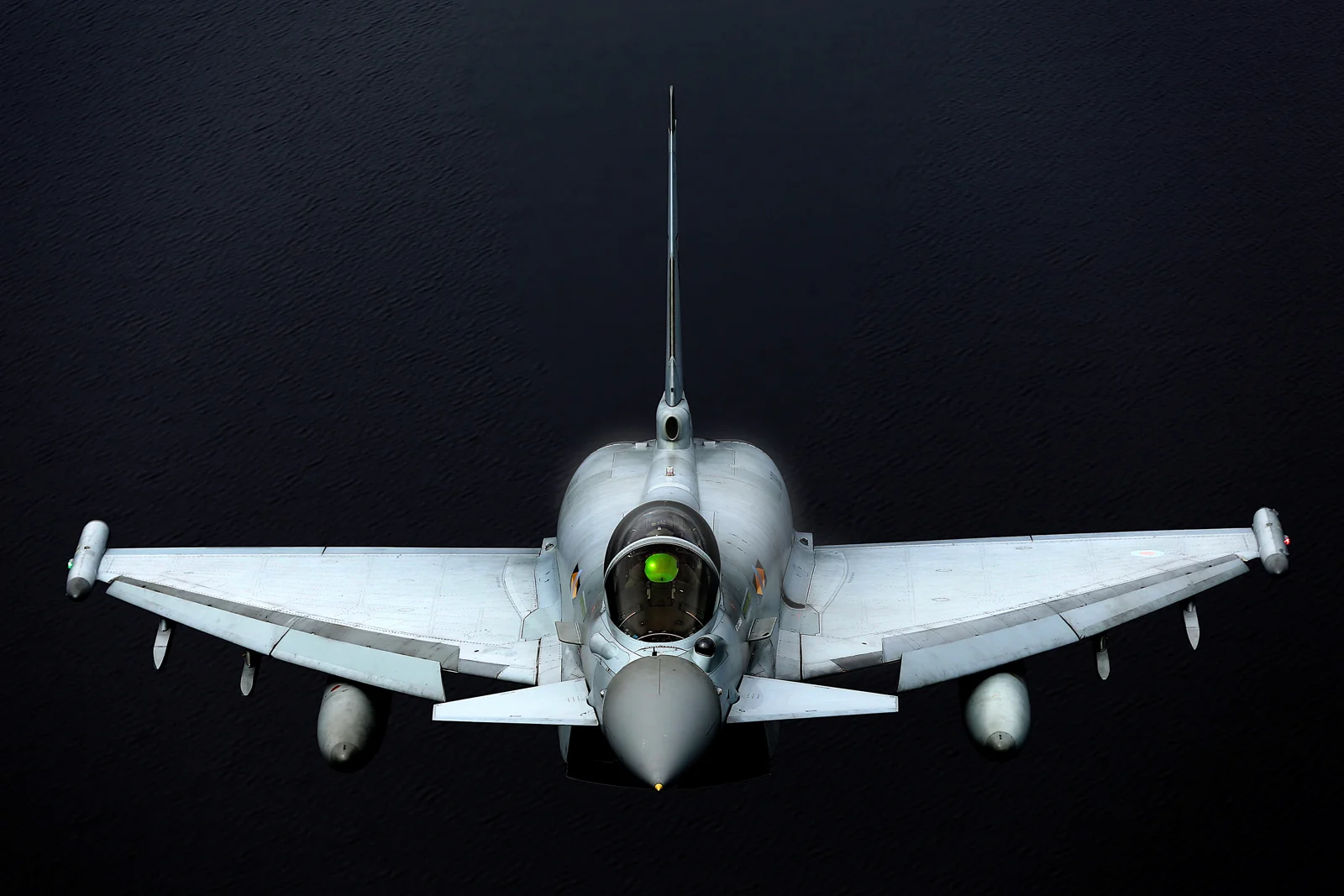


The United Kingdom will send Royal Air Force Typhoon fighters to fly defensive counter-air missions over Saudi Arabia, the Ministry of Defence announced on Tuesday 20 October 2026. The jets are meant to help protect Saudi cities and critical infrastructure from Houthi missiles and drones, and London says they will not strike targets in Yemen. The package also includes an RAF A400M transport aircraft, UK military advisers for Saudi staff officers, and a 90-day extension of existing air-to-air refuelling support.
Defence Secretary Wes Streeting said he had approved the additional support after continued Houthi attacks on the kingdom, singling out the strikes on Riyadh’s King Khalid International Airport.
What the UK has committed
The Ministry of Defence operational update of 20 October lists four elements:
- RAF Typhoons for defensive counter-air. The aircraft “will operate in a defensive role and will not conduct offensive strikes against the Houthis”. In practice, as AP explains, that means trying to shoot down incoming missiles and drones in the air.
- An RAF A400M Atlas to move defence materiel within Saudi Arabia.
- UK military advisers to support Saudi staff officers.
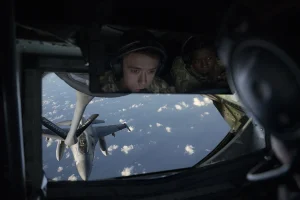
- Extended air-to-air refuelling for Saudi “defensive air operations including to degrade Houthi military targets in Yemen that threaten the Saudi and Yemeni people”. The BBC reports the refuelling support has been extended by 90 days.
The statement does not say how many Typhoons will deploy, where in Saudi Arabia they will be based, or how long the mission will last. No figures for aircraft numbers or cost have been published, and none should be assumed.
Defensive jets, but with an offensive knock-on
The UK framing is strictly defensive: British jets intercept, they do not bomb. The refuelling line is different. The MoD’s own wording says UK tankers support Saudi operations that include degrading Houthi military targets inside Yemen. British aircraft will not drop weapons on Yemen, but UK refuelling will keep extending the range and endurance of Saudi jets that do.
The BBC adds a further point: by taking on part of the air-defence burden, the RAF frees Saudi aircraft for offensive strikes against the Houthis. Saudi Arabia, the BBC notes, has struggled to stop incoming missiles and drones because much of its air-defence capacity was used up against Iranian attacks earlier this year, and the size of the country makes comprehensive cover difficult.
Why London moved now
The announcement follows weeks of Houthi strikes deep into Saudi territory after the Yemen ceasefire broke down in September. The BBC reports that a missile strike on Riyadh’s international airport on 10 October killed 13 people and injured 308, the deadliest attack inside Saudi Arabia in more than a decade, and that Saudi authorities said last week that 19 people had been killed in Houthi attacks on the kingdom’s airports. For the earlier airport strikes and the Patriot and THAAD layer they tested, see our report on the Houthi attacks on Riyadh and Abha airports.
On 19 October the Houthi military spokesman Yahya Saree claimed six operations over 48 hours against targets including an Aramco facility at Yanbu, the Shaybah oilfield, King Khalid airport, Abha airport and a Saudi naval task-force camp. Reuters said it could not immediately verify those claims and there was no immediate Saudi confirmation. They remain Houthi claims.
Inside Yemen, the BBC reports that more than 70 security personnel were killed this week in a Houthi ballistic-missile strike on al-Alam camp near Ataq in Shabwa province, according to a spokesman for the Saudi-backed Yemeni armed forces. The Houthis are also striking the government side in the south; see the missile attack on Aden’s al-Maashiq palace.
What was already in place
The Typhoon decision expands an existing UK role rather than starting a new one. According to the MoD, Britain had already deployed air-defence equipment to Saudi Arabia to protect against missiles and drones, and was providing air-to-air refuelling. The National reports that the UK’s September announcement added an RAF Voyager tanker but no fighter support, and that in March Downing Street sent four fighters to the region to provide cover against Iranian missiles, joining four Typhoons already based in Qatar.
The Royal Saudi Air Force is itself one of the largest Typhoon operators outside Europe. It ordered 72 aircraft under the UK–Saudi Salam programme agreed in 2007, with BAE Systems as prime contractor, so RAF and Saudi crews will be flying the same basic type, which simplifies tanking, deconfliction and maintenance support. What the RAF adds is additional airframes and pilots to spread a defensive air-patrol burden that the kingdom has been carrying largely alone.
What a Typhoon can and cannot do against this threat
The Eurofighter Typhoon is a twin-engine multirole fighter. In a defensive counter-air role its tools are air-to-air missiles and its 27 mm cannon. Fighters are well suited to intercepting drones and cruise missiles, which fly slower and lower, if they are in the right place and cued early enough by ground radar or airborne early warning.
Ballistic missiles are a different problem. A fighter jet is not a ballistic-missile defence system; those threats fall to ground-based interceptors such as Patriot and THAAD. The UK package therefore helps most against the drone and cruise-missile part of the Houthi arsenal, not against every weapon the group fires. The National reports that the Houthis now field a missile they call Palestine-2, which they describe as manoeuvring at high speed; those performance figures are Houthi claims and have not been independently confirmed.
The regional picture
Britain is not the only state moving to shore up Saudi air defence. Egypt’s president asked parliament for authority to defend Saudi Arabia (our report), the UAE has reportedly agreed to resume funding Yemeni forces under Saudi air cover (details), and the text of the Türkiye–Saudi Arabia–Pakistan Mecca agreement, which treats an attack on one member as an attack on all, is now before the Turkish parliament (what the 16 articles say).
Streeting also linked the decision to costs at home, saying violence in the Gulf drives up energy prices and the cost of living in the UK. AP reported that the government stressed there is no military solution to the conflict.
What to watch
- Whether the MoD publishes the number of aircraft, their basing and the expected duration.
- Whether RAF Typhoons record confirmed intercepts, and whether London reports them.
- How the UK keeps the line between “defensive” fighters and refuelling support for Saudi strikes in Yemen.
- Houthi reaction, including any claim to have targeted UK aircraft or personnel. Any such claim would need independent confirmation.
Sources
- UK Ministry of Defence: “Operational update 20 October – UK military support to the Kingdom of Saudi Arabia”, 20 October 2026
- BBC News: “UK to deploy jets to defend Saudi Arabia from Houthi attacks”, 20 October 2026
- AP: “UK to deploy jets to help defend Saudi Arabia against Houthis”, 20 October 2026
- The National: “UK mission to defend Saudi Arabia adds Typhoon jets”, 20 October 2026
- Dawn (Reuters): “Yemen’s Houthis claim attacks on Saudi Aramco site, airports and military targets”, 19 October 2026
- Clash Report on X, 20 October 2026