Boko Haram and ISWAP Are Using AI Chatbots to Plan Attacks, Cambridge Study Finds



A University of Cambridge study based on interviews with 27 former Boko Haram and Islamic State West Africa Province (ISWAP) members says the groups have built AI chatbots into attack planning, weapons troubleshooting and bomb-making guidance, with trainers tied to the wider Islamic State network coaching commanders on how to use the tools. The findings, reported by Africa Defense Forum, land as Nigeria and the US expand counter-terrorism cooperation on a separate track.
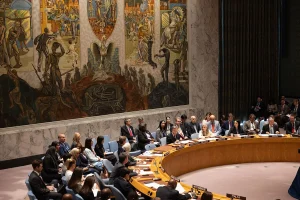
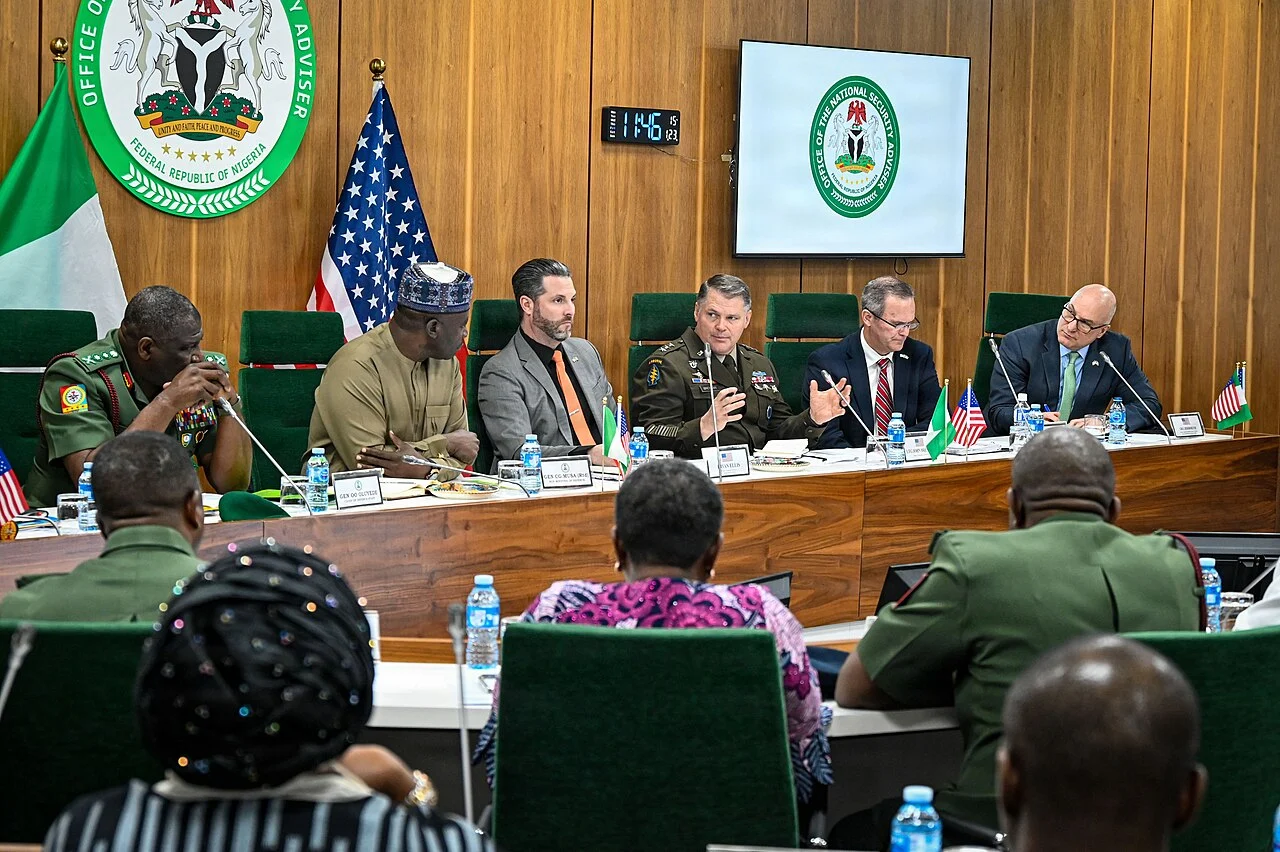
Photo: Nigerian and US defence and security officials, including Gen. Olufemi Olatubosun Oluyede and Defence Minister Christopher Musa, meet at the US-Nigeria Joint Working Group, Abuja, 22 January 2026. Credit: Sgt. 1st Class Kenneth Tucceri, U.S. Army SETAF-AF, Public domain, via Wikimedia Commons
Cambridge researcher Antonia Juelich’s study, titled “God has helped us, and so will AI: How the Terrorist Group Boko Haram Uses Frontier AI,” is based on 57 face-to-face interviews with 27 former members of Boko Haram’s two factions — Jama’atu Ahlis Sunna Lidda’awati wal-Jihad (JAS) and ISWAP. As reported by Africa Defense Forum, the interviewees describe using consumer chatbots — ChatGPT, Claude, Gemini, Grok, Meta AI and the Chinese-developed DeepSeek — across the full arc of an operation, from planning and logistics to troubleshooting weapons and, in some accounts, designing improvised explosive devices.
What the former fighters described
According to coverage of the study in the South China Morning Post, one former fighter said his unit consulted an AI chatbot on how to modify motorcycles to clear defensive trenches, after a failed assault on a military base — a granular, battlefield-level use rather than abstract ideological material. A former commander told researchers that AI “trainers,” believed to be linked to the broader Islamic State network, coached ISWAP members in northeastern Nigeria during 2023 and 2024, part of what the ADF report describes as an institutionalised effort complete with specialised units and internal training on the tools, rather than ad hoc individual experimentation.
Researchers estimate ISWAP’s use of generative AI began around 2023, roughly a year after ChatGPT’s public release, with JAS receiving parallel training through separate networks. The study’s authors caution that the accounts are self-reported by former members and have not been independently verified against each specific operation, and ADF’s report does not include a casualty count or a list of specific attacks tied to AI-assisted planning.
Context from researchers: uplift, not a new kind of threat
Two experts quoted in ADF’s report frame the significance differently from the study’s more alarming headline. Graig Klein of Leiden University argues that generative AI is unlikely to create genuinely new forms of terrorism or weaponry; its real effect, he says, is as a force multiplier for capabilities groups like ISWAP already possess. Adonijah Ndege, writing for TechCabal, describes the same effect as “uplift” — experienced operators becoming more efficient at what they already do, rather than untrained recruits suddenly gaining sophisticated capability. That distinction matters for how Nigerian and allied security services should weigh the threat: it points toward tightening chatbot guardrails and monitoring known extremist use patterns, rather than treating AI access itself as the primary vulnerability.
ISWAP and JAS remain the dominant jihadist threat in Nigeria’s northeast, and DefenceMENA has tracked their continued operational tempo through 2026, including an overrun of a Nigerian base at Mairari, Borno, and a repelled attack on Forward Operating Base Garaha in Adamawa. Nigeria’s military says it has inflicted heavy losses on the groups, including a claimed air strike that killed 40 ISWAP fighters near Badu, Borno; independent verification of such figures remains difficult given limited access to the areas affected.
A parallel track: deepening US-Nigeria counter-terrorism cooperation
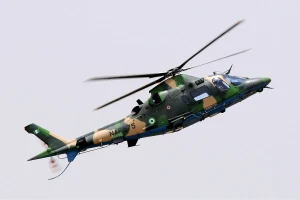
The AI findings surface as Abuja and Washington expand security cooperation on hardware and training. DefenceMENA has reported on Bell starting construction of Nigeria’s first AH-1Z Viper attack helicopters under a counter-terrorism-focused programme, even as the US placed Nigeria on its 2026 Child Soldiers List, a designation DefenceMENA examined for its implications for military aid. A US-Nigeria Joint Working Group, which includes Nigeria’s chief of defence staff and defence minister alongside senior AFRICOM officials, met in Abuja in January 2026 to coordinate exactly the kind of counter-terrorism programming that the AI chatbot findings suggest needs to adapt. None of the public readouts from that meeting reference generative AI specifically, which points to a gap: Nigeria’s bilateral security planning has so far focused on conventional hardware and training rather than the software layer insurgents are already exploiting.
Why it matters for Africa
Nigeria’s experience is likely to be an early indicator rather than an isolated case. Islamic State affiliates routinely share tactical and technical knowledge across provinces, from the Sahel to Somalia to Mozambique, and researchers in the Cambridge study suggest the training pipeline identified in Nigeria has probably reached other affiliates already. For African governments and their foreign partners, the findings argue for widening counter-terrorism cooperation beyond the weapons, vehicles and training programmes that dominate current bilateral agreements, to include chatbot providers’ own safety systems and the digital literacy of security services tasked with recognising AI-assisted planning in the field — an area where, unlike an arms shipment, there is no customs record or delivery ceremony to track.
Sources
- Africa Defense Forum — “AI-Enhanced Terrorism Already Showing Up in Nigeria”
- South China Morning Post — “Boko Haram exploited US and Chinese AI chatbots for attacks, Cambridge study finds”
- The Defense Post — on the Cambridge study’s initial release