Why Mali Bought the A-29 Super Tucano: Timeline, Cost and Results



Mali ordered six A-29 Super Tucanos from Brazil’s Embraer in June 2015 because the 2012 jihadist and Tuareg uprising had exposed an air force with almost no flyable combat aircraft — its Soviet-era MiG-21s were already grounded for lack of spares, ammunition and pilots, and it was French jets and helicopters, not Malian ones, that stopped the advance toward Bamako in January 2013. Funding problems cut the order to four aircraft, delivered in July 2018, three years after the contract was signed. One crashed in 2020, killing both pilots. After coups in 2020 and 2021 brought Colonel Assimi Goïta to power and France withdrew its forces, Mali rebuilt its air power mainly around Russian and Turkish equipment, leaving the Super Tucano a small, ageing piece of a fleet built since around other suppliers.
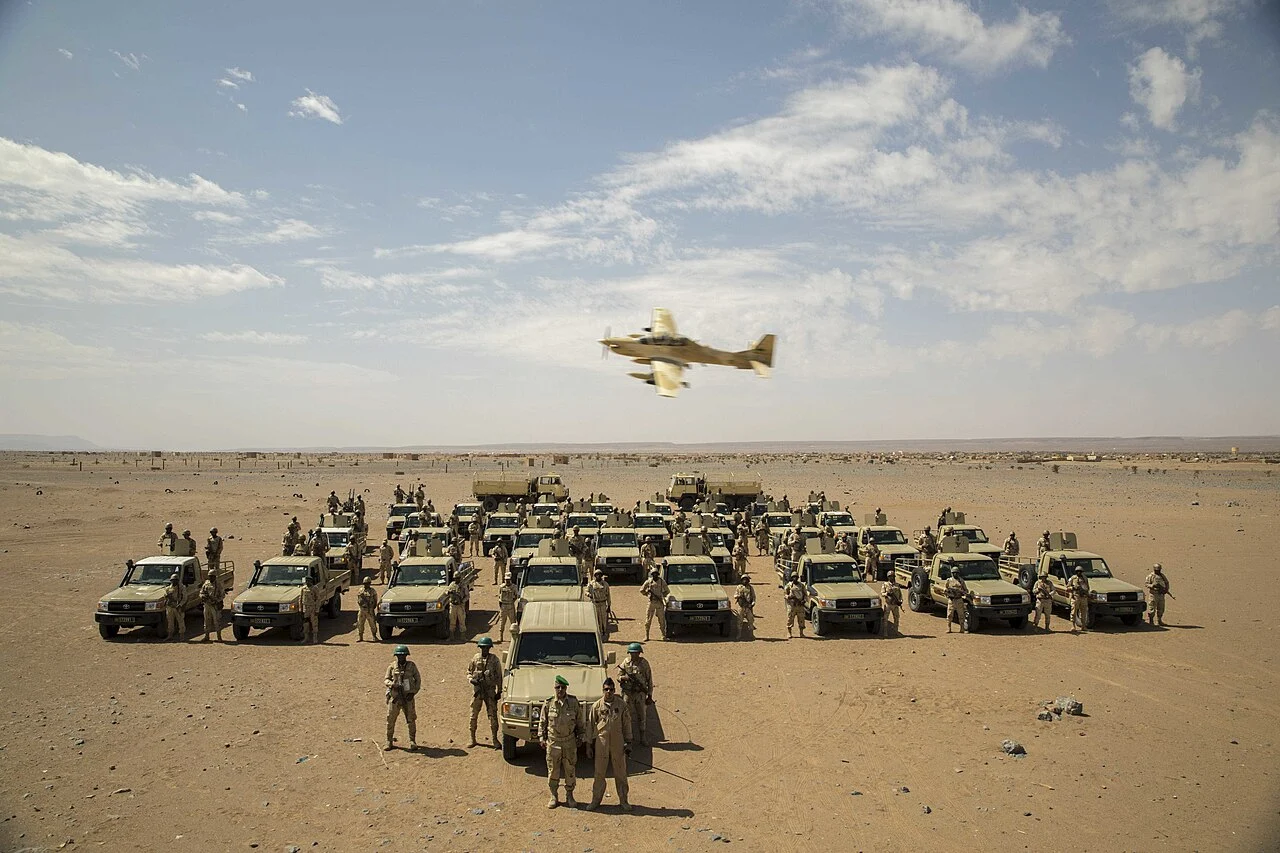
Photo: An A-29B Super Tucano of the Mauritanian Air Force flies over Mauritanian Army troops during the Flintlock 20 exercise in Atar, Mauritania, 17 February 2020. This is a Mauritanian aircraft, not a Malian one; no photograph of a Malian Super Tucano in service has been found on Wikimedia Commons. Credit: U.S. Army / Pfc. Clara Soria-Hernandez, Wikimedia Commons (public domain).
This explainer follows one question: why did this African customer choose this system? The answer comes from the 2015 contract announcement, Malian presidential statements at the 2018 delivery, and reporting on the aircraft’s loss and on Mali’s post-coup shift to other suppliers. Where the public record is silent — and for this deal it often is — this article says so rather than filling the gap with a plausible motive.
| Item | What the record shows | Status |
|---|---|---|
| Customer | Malian Air Force (Force Aérienne du Mali / FAMa) | Confirmed |
| System | A-29 Super Tucano light-attack and trainer turboprop (Embraer, Brazil) | Confirmed |
| Route | Direct commercial contract with Embraer, signed at the 2015 Paris Air Show | Confirmed; not a US FMS case |
| Quantity ordered | 6 | Contract, June 2015 |
| Quantity delivered | 4 (registrations PT-ZTN, PT-ZTI, PT-ZTJ, PT-ZTF before Malian markings) | Delivered July 2018 |
| Remaining 2 aircraft | One report says cancelled for lack of funds; no source confirms later delivery | Unclear |
| Contract value | Not publicly disclosed | Unknown |
| Losses | 1 aircraft crashed near Sévaré, 7 April 2020, killing both pilots | Confirmed |
| Fleet status, 2024 | Reported at 3 airframes, cited as grounded for lack of spares | Single secondary source, unverified |
| Local production | None documented | — |
What capability did Mali need?
The requirement traces to the collapse of Malian state authority in the north in 2012. Tuareg separatists and jihadist groups including Ansar Dine and AQIM-linked factions overran garrisons across the north following a March 2012 coup in Bamako, and in January 2013 fighters pushed south and seized the town of Konna, which Malian and French officials described as the gateway to the country’s south (News24; The Aviationist). Mali’s own air force played essentially no part in stopping that advance. France launched Operation Serval on 11 January 2013, and it was French attack helicopters and Mirage 2000D jets, not Malian aircraft, that halted the column and then pushed north to retake Timbuktu and Gao over the following weeks.
That episode is the backdrop to the 2015 order, though no Malian government document spelling out a formal requirement has been found. What is on record is a statement from President Ibrahim Boubacar Keïta at the 2018 delivery ceremony, describing the aircraft as part of the “rejuvenation of the country’s military” and saying the “need for aircraft was great in such a large nation” (defense.info, syndicating defenceWeb). That is a general statement about rebuilding air power in a vast, landlocked country after 2012, not a document naming Boko Haram-style insurgents, a specific mission profile or a competing bid.
What did the Air Force operate before?
Before 2015, Mali’s fast-jet fleet was Soviet-era and largely grounded. English-language Wikipedia’s sourcing, repeated by several secondary military-aviation sites, states that by January 2012 only one MiG-21MF and one MiG-21UM remained airworthy, and that these were grounded within months for lack of spare parts, ammunition and trained pilots. A Nigerian Air Force technical team travelled to Bamako in January 2013 to attempt a refurbishment of the MiG-21s; the project was abandoned. Six L-29 Delfin trainers had already been withdrawn from service. Mi-24 attack helicopters, some flown by contracted Ukrainian crews, carried most of what little airborne firepower Mali could generate during the 2012 crisis. There was no light-attack, sensor-equipped fixed-wing type in the inventory at all — the gap the Super Tucano was bought to fill. No dedicated Mali aircraft-inventory page exists yet on this site; the closest related coverage is our Mi-24/Mi-35 combat record across Africa, which covers Mali’s helicopter fleet.
Procurement timeline
| Stage | Date | What happened | Source |
|---|---|---|---|
| Capability gap exposed | Jan 2012–Jan 2013 | MiG-21s grounded; jihadist/Tuareg advance reaches Konna; France intervenes (Operation Serval) | Wikipedia (sourced); News24; The Aviationist |
| Bilateral talks | Undated, c. 2015 | Mali’s defence minister Tieman Hubert Coulibaly discusses buying six Super Tucanos with Brazilian defence minister Jaques Wagner, who pledges to help “accelerate” the deal | defensa.com |
| Contract / selection | 15 June 2015 | Embraer and Mali’s Ministry of Defence sign for 6 A-29s with a logistics-support and pilot/mechanic training package, announced at the Paris Air Show | Defense News; Army Recognition |
| Evaluation / tender | None found | No public competition identified for this requirement | Unknown |
| Financing difficulty | 2015–2018 | Order reduced from 6 to 4 aircraft; Malian presidency says the delivered aircraft were fully funded by Mali | c4defence; military.africa |
| Training | By 2018 | 10 pilots and 17 technicians trained under the contract | defense.info |
| First delivery | 10–11 July 2018 | Four aircraft arrive via Recife, Brazil; formally received by President Keïta at Air Base 101, Bamako | defense.info; c4defence |
| Operational service | 2018–2020 | Used, per one secondary account, “intensively” in Mali’s counter-terrorism campaign; no official mission log public | military.africa |
| Loss | 7 Apr 2020 | One aircraft crashes on landing at Sévaré after a reconnaissance mission over the Timbuktu sector; both pilots killed | military.africa |
| Political rupture | Aug 2020, May 2021 | Two coups bring Col. Assimi Goïta to power; Mali’s relationship with France deteriorates | Widely reported |
| Supplier shift begins | 2022 | Mali takes delivery of Bayraktar TB2 drones, L-39C Albatros jets and a Su-25, mostly from Turkey and Russia | Jane’s; military.africa; overtdefense |
| Additional Super Tucano order | None found | No confirmed order for more A-29s since 2015 | Unknown |
Two things stand out. First, the gap between contract and delivery — three years — is attributed in the reporting to Malian financing problems, not to a supplier-side licensing delay of the kind that slowed Nigeria’s US-sourced A-29s. Second, the political rupture of 2020–21 happened after the Super Tucanos were already in service, so it shaped what Mali bought next, not the original decision.
What was purchased?
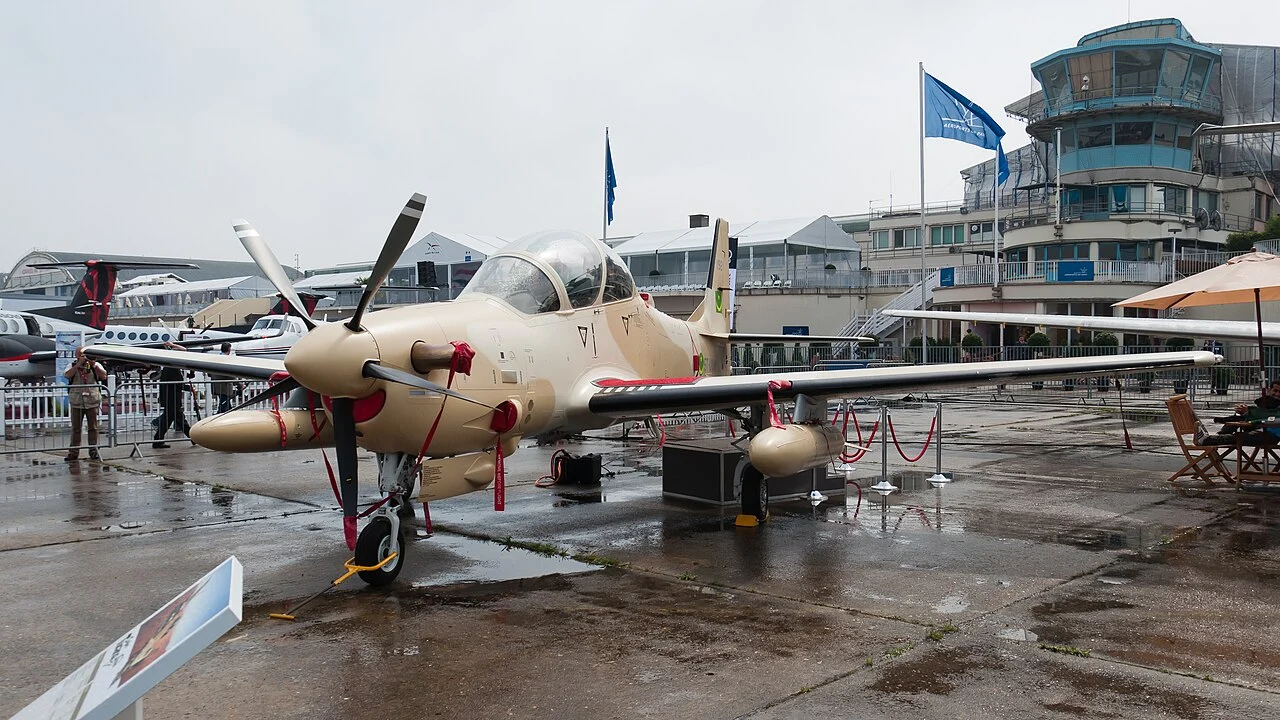
The package, as described by Embraer’s 2015 announcement and confirmed at the 2018 handover, was six A-29 Super Tucanos with a logistics-support arrangement and a training system for pilots and mechanics. Of the four aircraft actually delivered, reporting splits them by role: two were said to be configured for light attack and close air support, and two for intelligence, surveillance and reconnaissance (ISR) including border patrol, though a separate account describes all four as light-attack/CAS aircraft armed with 12.7 mm machine guns, 70 mm rocket pods, 250 kg bombs and 20 mm cannon pods. The two accounts do not fully agree, and no manufacturer-level configuration list for the Malian aircraft has been published.
What did it cost?
No contract value for the Mali deal has been published by Embraer, the Malian government or any outlet found for this article. Unlike Nigeria’s later US Foreign Military Sale, this was a direct commercial contract between Mali and Embraer, so there is no US congressional notification setting a ceiling figure. The only financial detail on record is indirect: multiple reports describe the order being cut from six to four aircraft because of Malian funding shortfalls, and the Malian presidency said the four delivered aircraft were paid for entirely by Mali, without external financing being named. No figure exists from which a reliable per-aircraft price could be derived, and this article does not attempt to estimate one.
Why was the system selected?
| Factor | Evidence | Strength |
|---|---|---|
| Rebuilding air power after 2012 | President Keïta’s 2018 statement on “rejuvenation of the country’s military” | Official, but general; not a named threat or mission study |
| Existing Brazil–Mali defence relationship | Mali’s defence minister told Embraer’s CEO he was satisfied with bilateral military cooperation with Brazil; ministerial talks preceded the contract | Documented, but a relationship cited, not a comparison with alternatives |
| Low cost and simplicity relative to jets | General reporting describes the A-29 as rugged and cheap to operate; not sourced to a Malian cost study | Industry framing, not confirmed Malian analysis |
| Regional precedent | Burkina Faso (2011), Mauritania (2012) and Angola (2013) already operated the type before Mali ordered | Documented timing; no Malian statement ties the decision to these precedents |
| Price versus competitors | No published comparison | Unknown |
| Local production or technology transfer | None documented | Not a factor on the record |
| Financing | Funding shortfall cut the order by a third; no loan or credit line identified | Documented constraint, not a selection factor |
No public Malian evaluation report compares the A-29 with any other aircraft. The documented record shows a relationship with Brazil, a general statement about rebuilding the air force, and a deal that Mali could not fully pay for on its original terms — not a competitive assessment of capability against cost.
Were alternatives considered?
| Category | Aircraft | Evidence |
|---|---|---|
| Confirmed competitor | None found | No public tender or head-to-head evaluation located for Mali’s 2015 order |
| Reported alternative | Continued MiG-21 refurbishment | Nigeria sent a technical team to attempt this in 2013; the project was abandoned, which is a fallback that failed, not a live bid against the A-29 |
| Theoretical same-class alternatives | Beechcraft AT-6, other light-attack turboprops | Defense News calls the AT-6 the A-29’s “only true competitor” as a general market statement; no evidence Mali itself evaluated it |
| Later purchases in a similar or overlapping role | L-39C Albatros, Su-25, Bayraktar TB2 and Akinci (from 2022) | Bought years later, after the 2020–21 coups, from Russia and Turkey rather than Brazil; see our Bayraktar TB2 and Akinci combat-record piece |
It would be wrong to say Mali “chose the A-29 over” any named competitor in 2015. The record shows an existing relationship with Brazil, a general modernisation statement and no evidence of a competitive process. The more telling alternative comparison is temporal: when Mali’s political alignment changed after 2021, its next aircraft purchases went almost entirely to different suppliers.
Training and support
The 2015 contract included a training system for pilots and mechanics, and by the time of the 2018 delivery ten pilots and 17 technicians had been trained on the type, according to defense.info’s syndication of defenceWeb reporting. No location for this training has been confirmed in the sources reviewed for this article; unlike Nigeria’s A-29 programme, there is no documented record of Malian crews training in Brazil or the United States for this specific deal. No field-service-representative arrangement, sustainment contract length or spare-parts pipeline has been publicly detailed for Mali’s aircraft.
Delivery and operational service
Four aircraft arrived via Recife, Brazil, on 10 July 2018 and were formally received by President Keïta the next day at Air Base 101 in Bamako, three years after the contract was signed. One secondary source describes the aircraft as having been “used intensively” in Mali’s counter-terrorism operations in the years that followed, without naming specific strikes, casualty figures or official mission reporting. On 7 April 2020, one Super Tucano crashed while attempting to land at Sévaré after what the Malian air force chief of staff, Brig. Gen. Souleymane Doucouré, described as a reconnaissance mission over the Timbuktu sector; both pilots were killed, and the cause was reported as unresolved at the time (military.africa).
| Claim | Who made it | Grade |
|---|---|---|
| Aircraft “used intensively” in counter-terror operations, 2018–2020 | military.africa | Independent reporting, no official mission log cited |
| Crash cause “still unknown” as of April 2020 | Malian Air Force chief of staff, via military.africa | Official statement, investigation outcome not found |
| Fleet reduced to about 3 airframes and grounded for spares by 2024 | Secondary aviation-reference site, citing Jane’s World Air Forces | Unverified battlefield/readiness claim, single source chain |
| Two undelivered aircraft “cancelled” for lack of funds | military.africa (one article) | Single source; not corroborated elsewhere |
No independent combat-damage assessment, strike count or casualty figure specific to Mali’s Super Tucano operations has been found for this piece. That is a gap in the public record, not evidence either way about the aircraft’s performance.
Industrial cooperation
None is documented. The aircraft were built by Embraer in Brazil and delivered complete; no assembly, maintenance-repair-overhaul facility or technology-transfer arrangement in Mali has been reported. Local assembly and indigenous development are not the same thing, and neither applies here — this was a straightforward import with an attached training package.
Was it a good fit? Documented trade-offs
| Dimension | Evidence in favour | Trade-off or open question |
|---|---|---|
| Mission | Light-attack/ISR turboprop matches a counter-insurgency requirement in a vast, poorly-paved country | Four airframes (from an order of six) is a very small fleet for operations across northern and central Mali |
| Environment | Reinforced airframe and ability to operate from rough or unpaved strips, a general feature of the type | No Mali-specific performance reporting found for the Sahel’s heat, dust and rainy season |
| Weapons | Rockets, bombs and gun pods reported in Mali’s inventory | Precision-guided weapons, as supplied to Nigeria’s A-29s, are not documented for Mali’s aircraft |
| Training and maintenance | Ten pilots and 17 technicians trained under the original contract | No publicly documented long-term sustainment arrangement; one crash and a reportedly reduced, partly grounded fleet by 2024 |
| Political durability | Aircraft entered service while Mali still had a civilian, France-aligned government | The supplier relationship did not extend into Mali’s post-2021 procurement, which shifted to Russia and Turkey |
How it compares with same-class alternatives
A specification comparison would mislead, because Mali never published one and its post-2015 aircraft serve overlapping but not identical roles. What the record shows: the Su-25 is a jet close-support aircraft, faster and more heavily armoured than the A-29 but reportedly down to very low numbers after losses; the L-39C Albatros is a lighter, older jet trainer that can also carry light ordnance, with roughly a dozen in Malian service by 2023; and the Bayraktar TB2 and Akinci are uncrewed systems that provide persistent surveillance and strike without placing a pilot at risk — a capability the Super Tucano cannot match. The Super Tucano remains the only crewed, Western-built light-attack type Mali has operated since 2018, but it is now a minority element in a fleet rebuilt mostly around Russian and Turkish hardware. Our Mi-24/Mi-35 combat-record piece and TB2/Akinci combat-record piece cover those other types’ use in Mali in more depth.
Africa-wide consequence
Mali’s 2018 delivery made it one of several Sahel-region operators of the type, after Burkina Faso (2011), Mauritania (2012) and Angola (2013). Nothing in the available sources shows that Mali’s order influenced those other countries’ choices, or vice versa; the sequencing simply reflects Embraer’s broader marketing push into Francophone and Lusophone Africa in the early 2010s. The more significant continental pattern is the one that followed, not preceded, Mali’s purchase: after Mali’s 2020–21 coups, Burkina Faso and Niger underwent similar juntas-and-realignment cycles, and all three have since leaned toward Russian and Turkish suppliers for new combat aircraft, a shift our West Africa military-strength comparison and reporting on Mali’s army and Wagner forces cover in more detail.
What happened next
Mali did not reorder Super Tucanos or expand the programme. Instead, from 2022 onward it built a new air-strike and surveillance capability around Bayraktar TB2 drones from Turkey, L-39C Albatros jets and at least one Su-25 largely associated with Russian supply channels, and Bayraktar Akinci drones delivered from late 2024, making Mali the fourth African Akinci operator. That shift tracks the political rupture with France and the West after the 2020 and 2021 coups, not a stated dissatisfaction with the A-29 itself; no Malian official statement found for this article criticises the Super Tucano’s performance. The aircraft simply stopped being the type Mali’s new suppliers were offering. Our prior reporting covers that pivot in Bayraktar TB2 and Akinci in Mali and Burkina Faso and in Mali’s new batch of Akinci drones at Sévaré.
FAQ
Why did Mali buy the Super Tucano?
To rebuild a combat-capable air force after its Soviet-era MiG-21s were grounded and French forces, not Malian ones, stopped the 2012–13 jihadist advance. The only stated Malian rationale on record is President Keïta’s 2018 reference to “rejuvenation of the country’s military.”
How many Super Tucanos does Mali have?
Mali ordered six in 2015; four were delivered in 2018; one crashed in 2020. A secondary source puts the 2024 fleet at about three aircraft, partly grounded, but this is not independently confirmed.
How much did Mali pay for its Super Tucanos?
No contract value has been published. The order was cut from six to four aircraft for funding reasons, and Mali’s presidency said the delivered aircraft were paid for entirely by Mali.
Was there a competition for this contract?
No public tender or named competitor has been found. The deal followed direct talks between Mali’s and Brazil’s defence ministries.
Does Mali still rely on the Super Tucano?
It remains in the inventory but is now a minority asset. Since 2022 Mali has built most of its new air capability around Turkish Bayraktar drones and Russian-linked jets and helicopters.
Did the Super Tucano deal affect other African air forces?
No evidence found ties Mali’s order to other countries’ decisions. Burkina Faso, Mauritania and Angola had already ordered the type before Mali did.
Related reading
- Strongest militaries in West Africa in 2026 (regional comparison)
- Bayraktar TB2 and Akinci in Mali and Burkina Faso: combat record (sibling procurement/combat piece)
- Mi-24 and Mi-35 attack helicopters in Africa (Mali’s helicopter fleet)
- Amnesty details civilian killings by Mali’s army and Wagner forces (post-coup context)
- Why Nigeria bought the A-29 Super Tucano (another African A-29 buyer, different route and outcome)
- Military equipment database
Sources
- Defense News, Super Tucano nets sale to Mali (15 June 2015)
- Army Recognition, Embraer and Mali sign contract for six A-29 Super Tucano aircraft (2015)
- defensa.com, Acuerdos de defensa entre Brasil y Mali pueden favorecer venta de Super Tucano
- defense.info (syndicating defenceWeb), Mali receives Super Tucanos (July 2018)
- C4Defence, Mali obtains four Super Tucanos (13 July 2018)
- Military Africa, Mali loses Super Tucano light-attack and trainer aircraft, crew dead (April 2020)
- News24, French troops help drive back Mali rebels (12 January 2013)
- The Aviationist, France (at) war in Mali (12 January 2013)
- Wikipedia, Malian Air Force (pre-2015 fleet status, cited for background only)
- Overt Defense, Mali becomes fourth African operator of Bayraktar Akinci UCAVs (December 2024)