The Su-30 split into two manufacturing lines and at least eight major production variants after its early-1990s debut, but only three ever reached an African air force: Algeria’s Su-30MKA, Uganda’s Su-30MK2 and Angola’s Su-30K. This explainer traces every major Su-30 variant, with in-service dates and specifications sourced to SIPRI’s Arms Transfers Database, manufacturer and official data, and defence trade press, as of October 2026.
DEFENCE AFRICA | Family explained | Data as of October 2026
Sukhoi developed the Su-30 as a long-range, two-seat derivative of the Su-27 interceptor, intended to give Soviet and later Russian air defence crews extended endurance for patrol missions far from base. The first production-standard aircraft entered service in 1992, and within a decade the design had grown into an entire family of multirole fighters built, upgraded and marketed on two separate production lines.
Irkut Corporation, based in Irkutsk, built the canard-and-thrust-vectoring branch of the family: the Su-30MKI for India, the related Su-30MKM for Malaysia, and the Su-30MKA for Algeria. KnAAPO, the Sukhoi plant at Komsomolsk-on-Amur, built a separate, non-canard export line sold to China, Vietnam, Indonesia, Venezuela and Uganda. The two branches share an airframe lineage but differ in radar, avionics and flight-control hardware, which matters directly for sustainment: an air force flying an Irkut-line jet cannot simply borrow spares or simulators built for the KnAAPO line.
In Africa, the result is three air forces operating three different Su-30 sub-variants with three distinct logistics chains. Algeria’s fleet is covered in more detail in Inside Algeria’s Russian-Built Arsenal; the Su-30’s place among other African fast jets is set out in Fighter Aircraft Flown by African Air Forces in 2026.
Key facts
- Algeria operates Africa’s only Su-30MKA fleet, Africa’s largest Su-30 fleet by a wide margin; deliveries have continued in successive batches since 2007 (Military Africa, 2019; Army Recognition, 2025).
- Uganda took delivery of six Su-30MK2 aircraft between July 2011 and May 2012 under a 2010 contract with Rosoboronexport (Army Recognition, 2022).
- Angola’s Su-30K aircraft are refurbished ex-Indian Air Force airframes, upgraded at Belarus’s 558th Aircraft Repair Plant; deliveries were reported complete in 2019, though published figures vary, with sources citing 6, 8 and up to 12 aircraft (GlobalSecurity.org, 2019).
- The Su-30 family divides into an Irkut-built, canard-and-thrust-vectoring line (MKI, MKM, MKA, and Russia’s own SM) and a KnAAPO-built, conventional-control export line (MKK, MK2).
- No African air force currently operates the Russian domestic Su-30SM.
1. Su-30 — the baseline that started the family
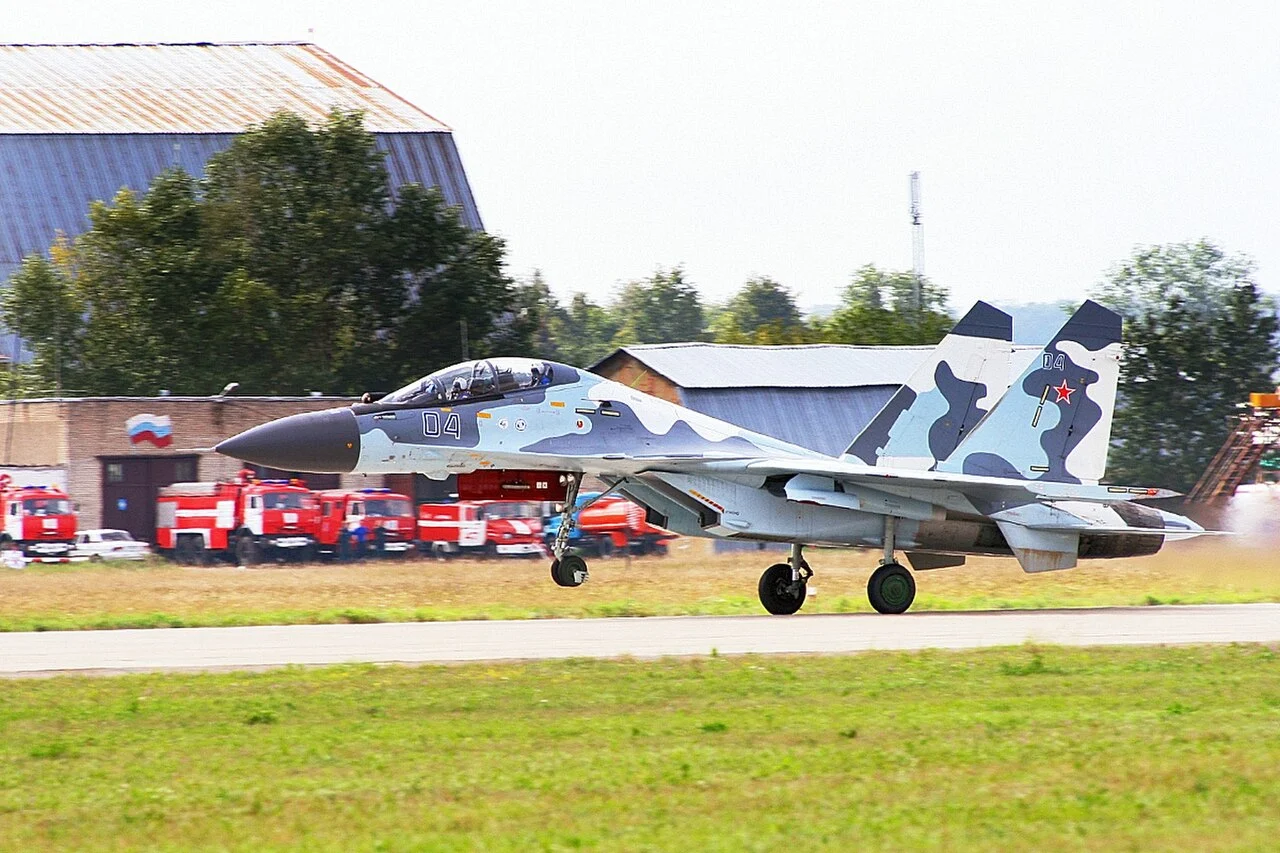
The original Su-30 entered Russian service in 1992 as a two-seat, long-range air-defence fighter built around the Su-27UB trainer airframe, with extra fuel capacity and an in-flight refuelling probe for extended patrol missions. It kept the Su-27’s N001 radar and was not designed as a dedicated multirole strike platform; that step came with the next variant. No African air force has operated the baseline Su-30, which is now out of front-line production, but it is the common ancestor of every variant described below, and its airframe, twin NPO Saturn AL-31F engines and basic flight-control layout persist across the family (Sukhoi/United Aircraft Corporation technical data, cited via airforce-technology.com, 2026).
2. Su-30MK — the first export multirole demonstrator
Unveiled in 1993, the Su-30MK (“Modernizirovannyi Kommercheskiy”, modernised-commercial) added precision air-to-ground weapons, an upgraded N001VE radar with limited ground-mapping modes, and a multi-function cockpit aimed at export customers. It served as Sukhoi’s demonstrator rather than a mass-production standard: most customers who showed interest went on to order a more specific derivative. Algeria’s Air Force did briefly operate early-standard Su-30MK aircraft pending Su-30MKA deliveries, a detail covered in Inside Algeria’s Russian-Built Arsenal; no other African country has operated this baseline export standard. It remains relevant as the template from which both the Irkut and KnAAPO production lines diverged (airforce-technology.com, Su-30MK project page, 2026).
3. Su-30MKK — China’s land-based multirole workhorse
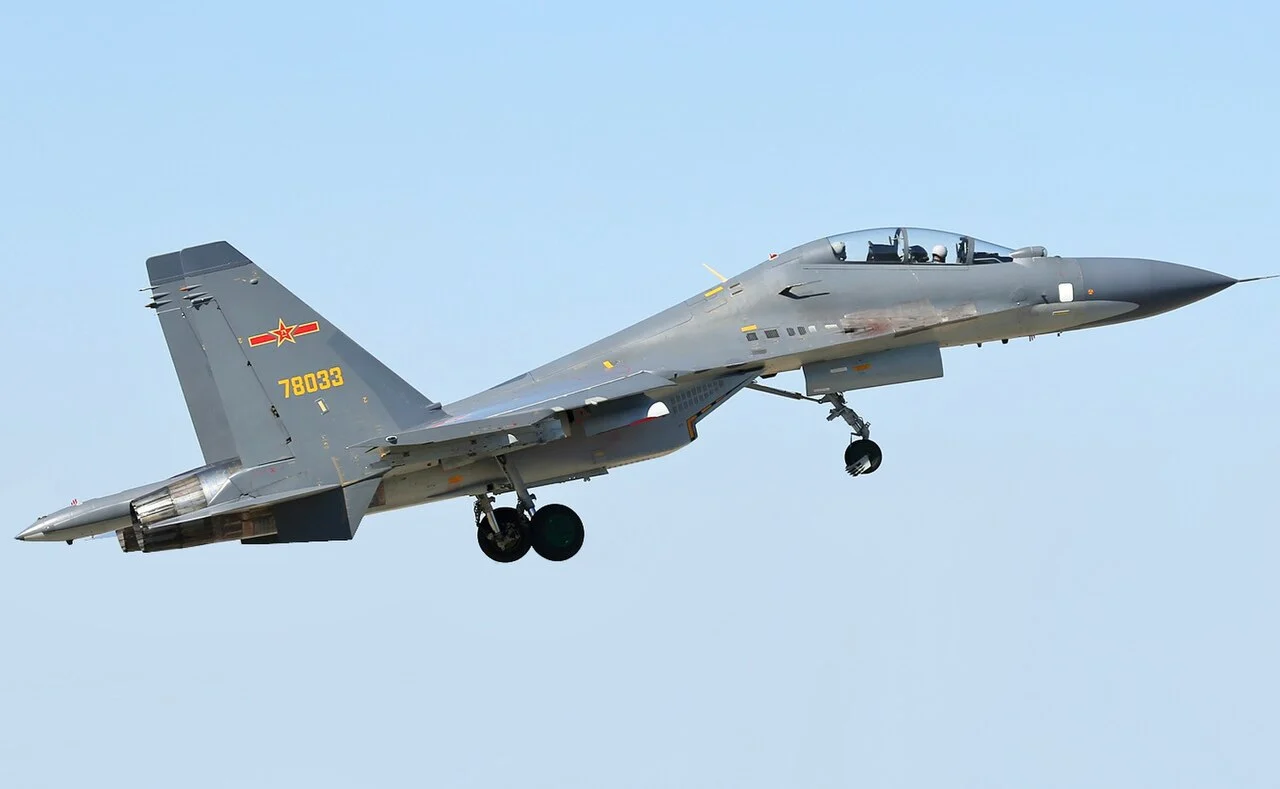
KnAAPO’s first dedicated export derivative, in service with China’s PLA Air Force and PLA Naval Air Force from 1999-2000, strengthened the airframe for higher weapon loads, fitted the N001VE radar with upgraded ground-attack modes, and retained conventional (non-vectoring) AL-31F engines rather than the canard-and-vectoring layout Irkut was developing in parallel for India. The Su-30MKK is not operated by any African air force; it matters to the African story only as the direct basis for the maritime-optimised Su-30MK2 described next (airforce-technology.com; GlobalSecurity.org, 2026).
4. Su-30MK2 — operational in Uganda since 2011
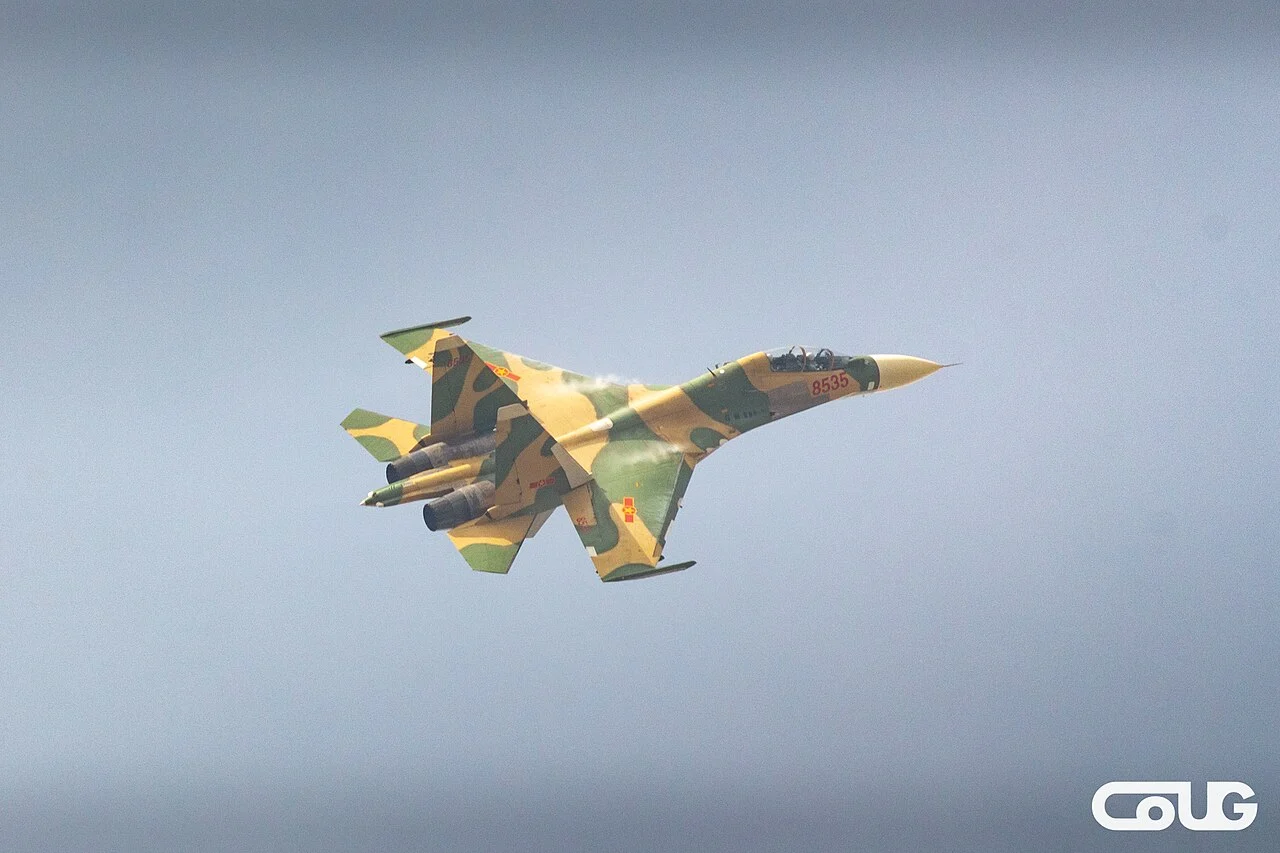
The Su-30MK2 adapted the MKK for maritime strike, adding compatibility with the Kh-31 and Kh-59 anti-ship missile families and an upgraded radar mode for over-water target tracking. Uganda is the variant’s only African operator, status: operational. The Uganda People’s Defence Force Air Wing ordered six Su-30MK2 aircraft from Rosoboronexport in April 2010; the first pair arrived in July 2011, a second pair in November 2011 and the final two in May 2012 (Army Recognition, 2022, citing contract and delivery records). In 2022 Uganda contracted India’s Hindustan Aeronautics Limited to support maintenance of the fleet, a sustainment arrangement distinct from either the original KnAAPO supply chain or Algeria’s Irkut-line logistics (Army Recognition, 2022). Key specifications carried over from the MKK baseline include two AL-31F engines without thrust vectoring, a published combat radius in the 1,500 km class for the MKK/MK2 family (Sukhoi/KnAAPO data, cited via airforce-technology.com), and a reported maximum take-off weight around 34,500 kg. Uganda’s jets give the country the only African air arm with an organic maritime-strike-capable fast jet, relevant to its operations on Lake Victoria and regional deterrence posture.
5. Su-30MKI — India’s canard-equipped flagship
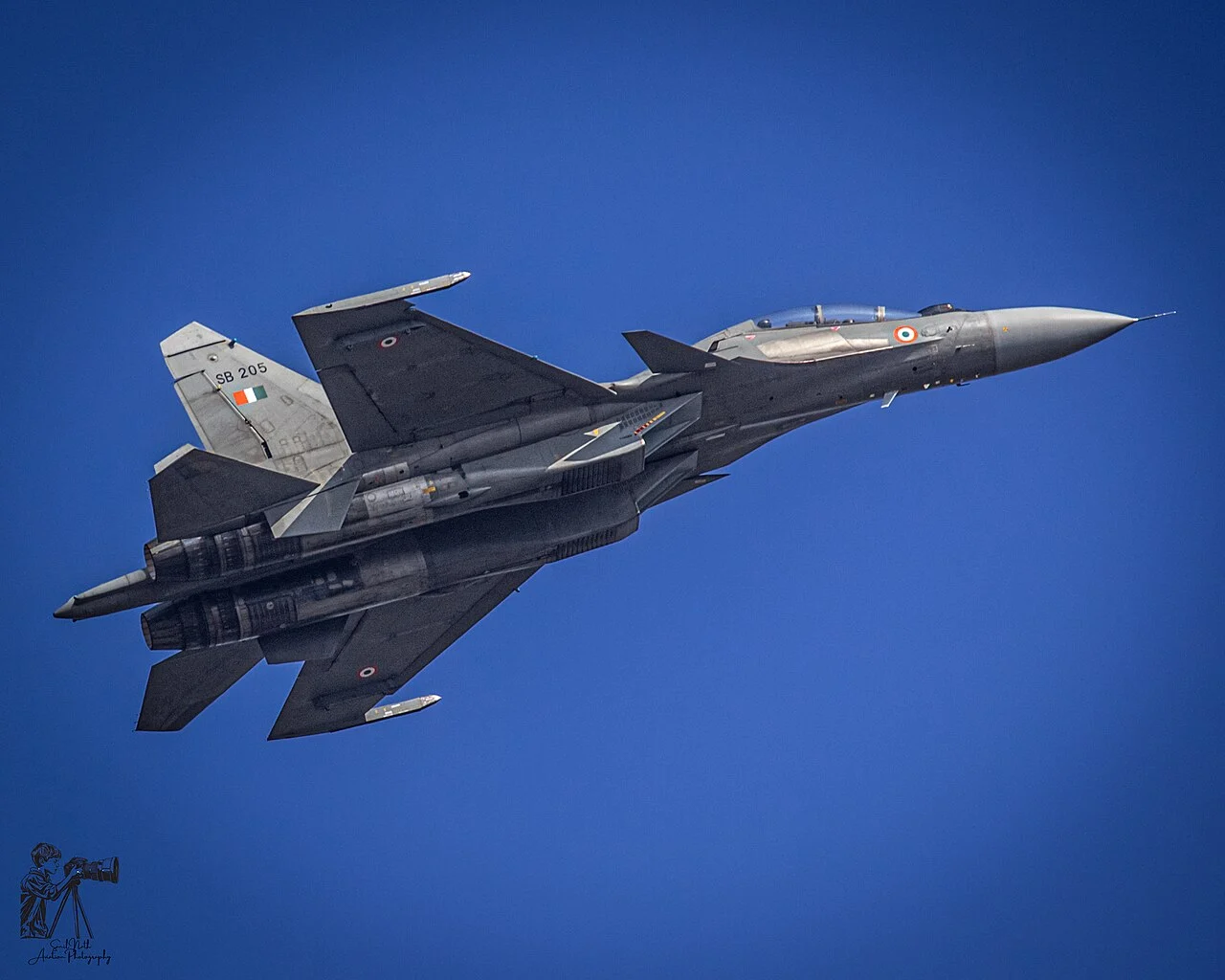
Developed by Irkut for India from the mid-1990s and entering Indian Air Force service in 2002, the Su-30MKI added canard foreplanes, AL-31FP engines with thrust-vectoring nozzles, the N011M Bars passive electronically scanned array-adjacent radar, and a mixed Indian, French and Israeli avionics suite. It is generally regarded as the most capable Su-30 standard built, and no African air force operates it directly, but it is the direct technological basis for Algeria’s Su-30MKA, covered next. India has continued to upgrade the fleet domestically under license at Hindustan Aeronautics Limited (airforce-technology.com; Indian Ministry of Defence statements, cited via multiple outlets, 2026).
6. Su-30MKA — operational in Algeria, Africa’s largest Flanker fleet
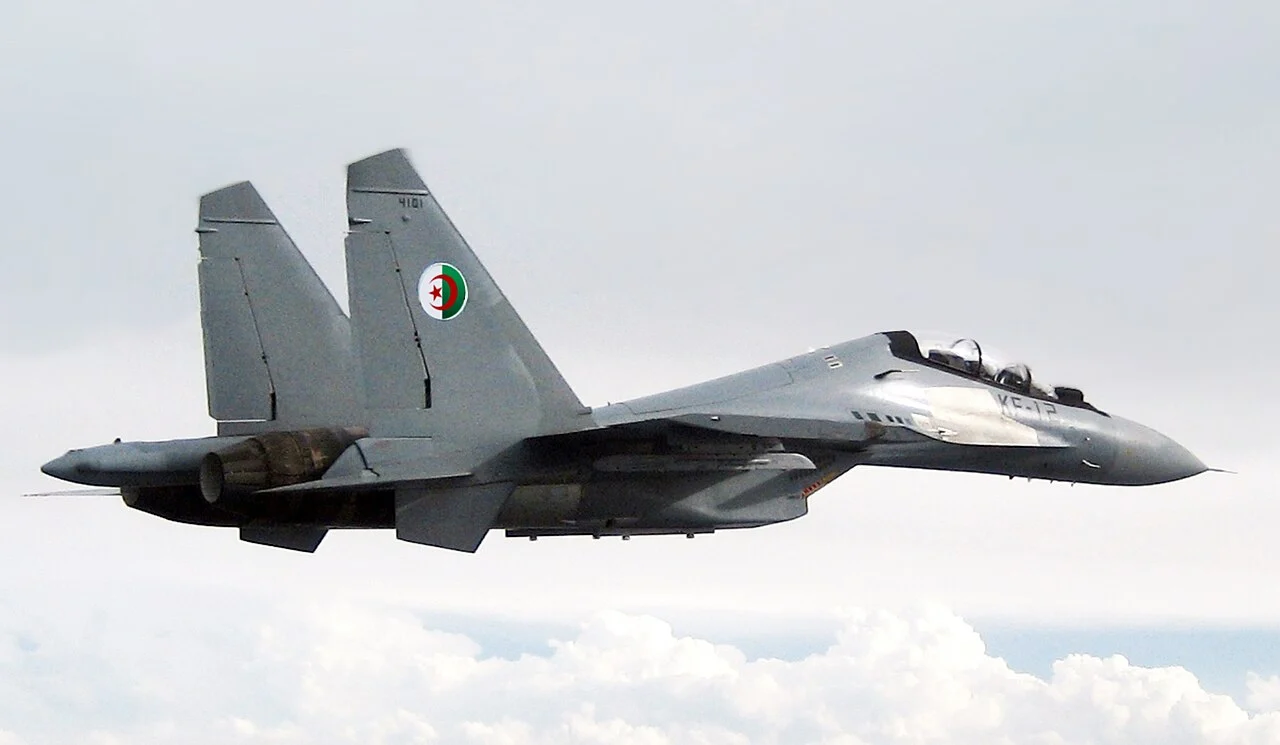
Status: operational, with further batches reportedly ordered. Algeria is the Su-30MKA’s only operator worldwide. Developed by Irkut specifically for the Algerian Air Force and based on the Su-30MKI/MKM airframe, the MKA entered Algerian service from 2007 and is reported to carry French-sourced avionics elements, with some reporting pointing to a Thales Damocles-family targeting pod, alongside the canard and AL-31FP thrust-vectoring layout shared with the MKI (Military Africa, 2019; Frontier India, 2026, citing industry reporting). Published fleet totals vary by source and date: Military Africa’s 2019 reporting referenced a fleet that had grown to around 44 aircraft with a further batch of 14 then in progress, and subsequent reporting has referred to additional batches since; exact current totals are not independently confirmed and should be treated as approximate. Algeria’s Su-30MKA fleet is the backbone of its air-to-air and strike capability alongside the newer Su-35 and Su-57 discussed in Inside Algeria’s Russian-Built Arsenal, and remains the only Su-30 variant in North African service.
7. Su-30K — refurbished for Angola, Africa’s rarest Flanker
Status: operational, published figures vary. The Su-30K is not a new-build variant but a refurbishment standard: early-production Su-30 aircraft originally delivered to India between 1997 and 1999, later withdrawn from Indian service and upgraded at Belarus’s 558th Aircraft Repair Plant for resale. Angola agreed to acquire a batch during a 2013 visit by Russian deputy prime minister Dmitry Rogozin, and deliveries were reported completed in 2019; however, published figures vary across sources, with reporting citing an order for up to 12 aircraft and delivery totals reported elsewhere as 6 or 8 airframes (GlobalSecurity.org, 2019; AIN Online, 2015). No image meeting this site’s licensing standard could be confirmed for an Angolan-marked airframe at the time of writing, so this entry carries no illustration. The Su-30K retains the baseline family’s N001 radar family rather than the MKI/MKA’s Bars radar or the MK2’s upgraded N001VE, and lacks thrust vectoring, making it the least capable Su-30 standard in African service. It nonetheless gives Angola its only twin-seat, long-range fast jet, supplementing a fleet discussed in the site’s wider coverage of Russian-supplied African air power.
8. Su-30SM — Russia’s modernised variant, absent from Africa
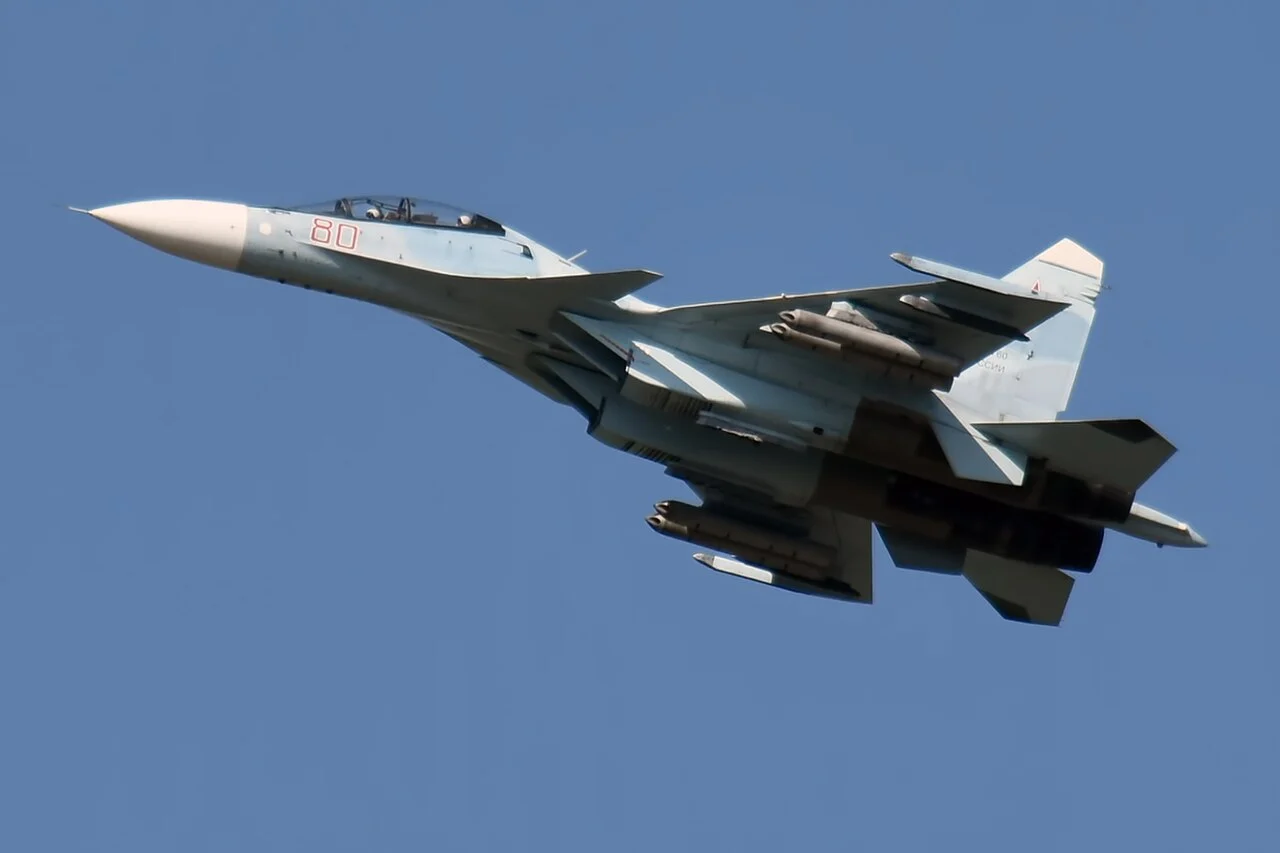
Entering Russian Aerospace Forces service from 2012, the Su-30SM is Irkut’s domestic development of the MKI-lineage airframe, combining the canard and thrust-vectoring layout with Russian-specific avionics and radar updates, and later a further-upgraded Su-30SM2 standard with more Su-35-derived systems. It is operated by Russia, Belarus and Kazakhstan; no African air force has ordered or received it, and it is included here only to complete the family picture. Its absence from Africa underlines how the continent’s three Su-30 operators each bought into a different export sub-branch rather than the current-production Russian domestic standard.
Which variants are operated in Africa?
Of eight major Su-30 standards, exactly three reached African air forces, each through a different export route: Algeria via Irkut’s India-derived MKA line, Uganda via KnAAPO’s China-derived MK2 line, and Angola via a refurbished-airframe resale route that bypassed new production altogether. No African country operates the baseline Su-30, Su-30MK, Su-30MKK, Su-30MKI or Su-30SM.
| Variant | First flight / service entry | Key change from previous standard | African status |
|---|---|---|---|
| Su-30 (baseline) | 1992 (Russian service) | Two-seat, long-range derivative of Su-27UB with air-refuelling probe | Not operated in Africa |
| Su-30MK | 1993 (export demonstrator) | Added precision strike weapons and N001VE radar modes | Operated briefly, Algeria (pending Su-30MKA) |
| Su-30MKK | 1999-2000 (China) | Strengthened airframe for higher weapon loads | Not operated in Africa |
| Su-30MK2 | 2004 (China/export) | Added Kh-31/Kh-59 anti-ship capability | Operational, Uganda (6 delivered 2011-2012) |
| Su-30MKI | 2002 (India) | Added canards, thrust vectoring, N011M Bars radar | Not operated in Africa |
| Su-30MKA | 2007 (Algeria) | MKI-derived airframe with French-sourced avionics elements | Operational, Algeria (largest African Su-30 fleet; further batches reportedly ordered) |
| Su-30K (refurbished) | Originally 1997-99 (India); refurbished deliveries reported complete 2019 | Belarus-refurbished early-standard airframes resold as a distinct standard | Operational, Angola (published figures vary, 6-12 aircraft) |
| Su-30SM | 2012 (Russia) | Domestic Russian avionics/radar update on MKI-lineage airframe | Not operated in Africa |
Why it matters for Africa
Three African air forces operating three different Su-30 sub-variants is, in sustainment terms, equivalent to three separate weapon systems rather than one shared fleet. Algeria’s Irkut-line MKA, Uganda’s KnAAPO-line MK2 and Angola’s refurbished-K airframes draw on different radars, different engine control software and, in Uganda’s case, a maintenance arrangement routed through India rather than Russia or Belarus. That fragmentation limits the pooled-spares and shared-training advantages that a continent-wide common type would offer, even though all three governments describe their jets as filling the same broad role: a long-range, twin-seat multirole fighter at the top of each air force’s order of battle. Algeria’s fleet is by far the most combat-relevant by scale and is backed by the deepest industrial relationship with Russia, discussed further in Inside Algeria’s Russian-Built Arsenal. Uganda’s and Angola’s much smaller fleets function more as a high-end deterrent and prestige asset than as a force generator, a pattern consistent with how most African air forces have approached Russian-built fast jets, as set out in Fighter Aircraft Flown by African Air Forces in 2026. For all three states, the Su-30’s two-seat, long-range design, rather than any single weapon or sensor, remains the variant’s defining advantage over single-seat alternatives in African service.
Sources
- SIPRI Arms Transfers Database
- Military Africa, “Algerian Air Force Orders More Su-30, MiG-29 Fighter Jets” (2019)
- Army Recognition, “Sukhoi Su-30MK2 Fighters of Uganda Air Force to Be Maintained by HAL” (2022)
- GlobalSecurity.org / Sputnik, “Deliveries of 8 Russian SU-30K Fighter Jets to Angola Completed” (2019)
- Airforce Technology, Su-30 project data
- Airforce Technology, Su-30MK project data
- DefenceMENA, “Inside Algeria’s Russian-Built Arsenal”
- DefenceMENA, “Fighter Aircraft Flown by African Air Forces in 2026”