Over four decades the United Arab Emirates has built one of the most layered air and missile defence networks in the Middle East, moving from a single medium-range SAM type to a network spanning short-range guns, theatre ballistic missile interceptors and an indigenous counter-rocket layer. This evolution traces nine stages from the 1989 fielding of the MIM-23B Improved HAWK to the PAC-3 MSE order notified to the US Congress in December 2024, drawing on DSCA notifications, manufacturer statements and regional defence reporting current to September 2026.
DEFENCE MENA | Evolution | Data as of September 2026
The UAE Armed Forces inherited no integrated air defence structure at the country’s founding in 1971. What followed was a decades-long build-out driven first by the missile threats of the Iran-Iraq War era, then by Iran’s expanding ballistic missile inventory, and more recently by drone and missile attacks from Yemen’s Houthi movement and, in 2026, from Iran directly. Each stage added a distinct altitude or range band, producing the layered structure the UAE operates today.
The result combines Russian short-range point defence, US medium- and upper-tier interceptors, South Korean theatre-range systems and a growing indigenous missile industry led by EDGE Group subsidiary HALCON. Three systems — Patriot, THAAD and Cheongung-II — have each carried out combat intercepts over Emirati territory since 2022, giving the UAE rare, documented operational engagement data across multiple interceptor types.
Key facts
- THAAD’s first international customer: the UAE, in 2011, under an initial $1.96bn tranche of a $3.48bn programme (DSCA, 2011).
- The UAE fielded Patriot from 2009, the first GCC state to operate it (Army Technology, 2017).
- South Korea’s $3.5bn, ten-system Cheongung-II order, signed January 2022, was Seoul’s largest arms export contract to date (Defense News, 2022).
- THAAD’s first confirmed operational intercept anywhere occurred over Abu Dhabi, 24 January 2022, against a Houthi ballistic missile (Air Force Times, 2022).
- Washington notified Congress in December 2024 of a possible $2.728bn sale of 452 PAC-3 MSE interceptors — a notification ceiling, not a signed contract (Defence Blog, 2024).
Stage 1 (1989): No dedicated medium-range layer → MIM-23B Improved HAWK
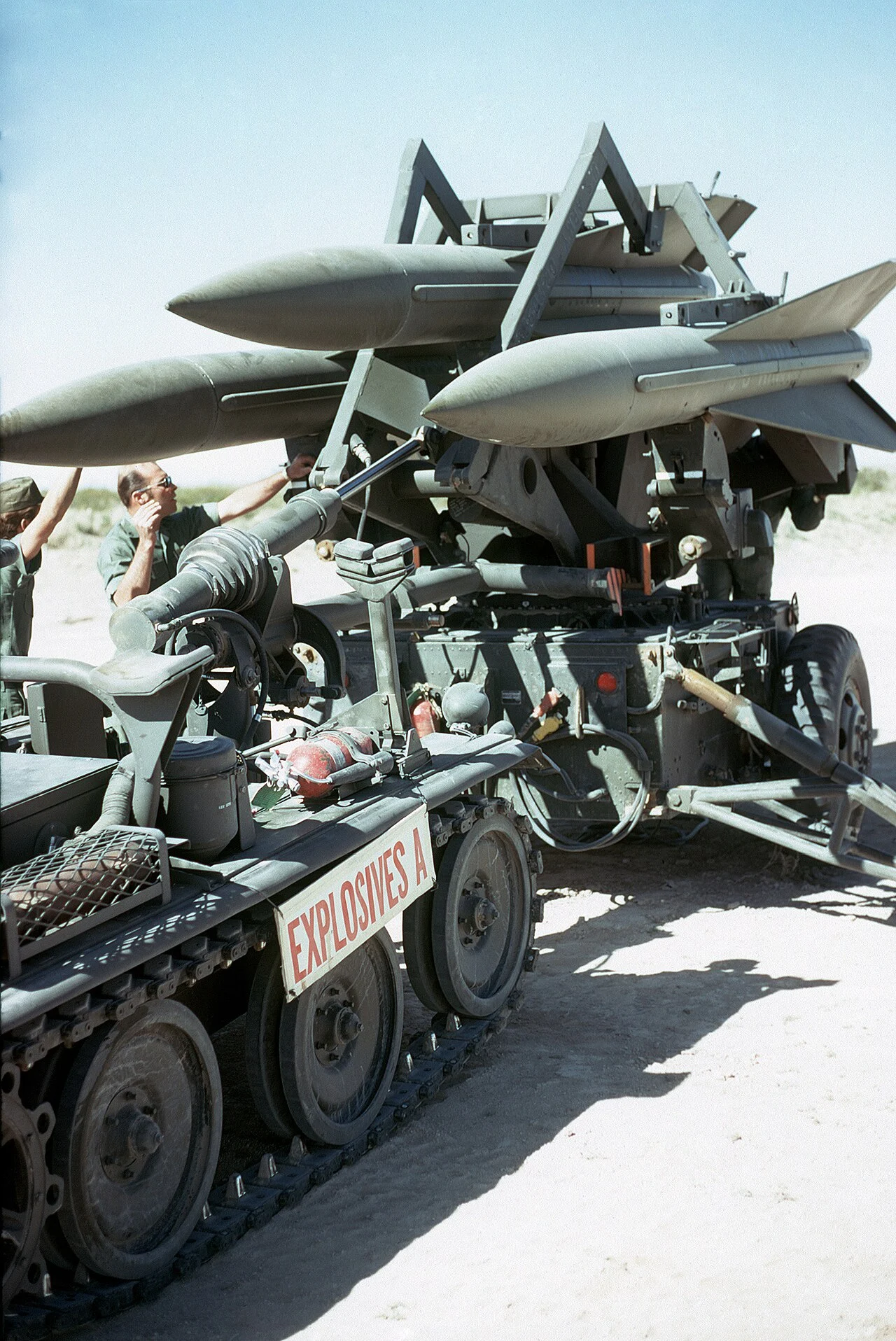
- Previous: no dedicated medium- or long-range SAM layer; point defence relied on light anti-aircraft artillery.
- New: MIM-23B Improved HAWK (I-HAWK), five batteries, roughly 30 launchers.
- Key improvement: first radar-guided medium-altitude SAM umbrella, engaging aircraft at ranges cited by manufacturer literature around 40 km.
- Why: the newly unified UAE Armed Forces needed a credible air defence layer amid regional threats through the 1980s.
- Current status: operational (legacy tier).
I-HAWK, exported widely across the Gulf including to Bahrain, Oman, Qatar and Egypt, gave the UAE its first structured medium-altitude SAM belt. Per European Security & Defence‘s regional survey, the batteries remain nominally in the order of battle as the oldest tier beneath three later generations of interceptors.
Stage 2 (2000–2004): I-HAWK alone → Pantsir-S1 short-range layer
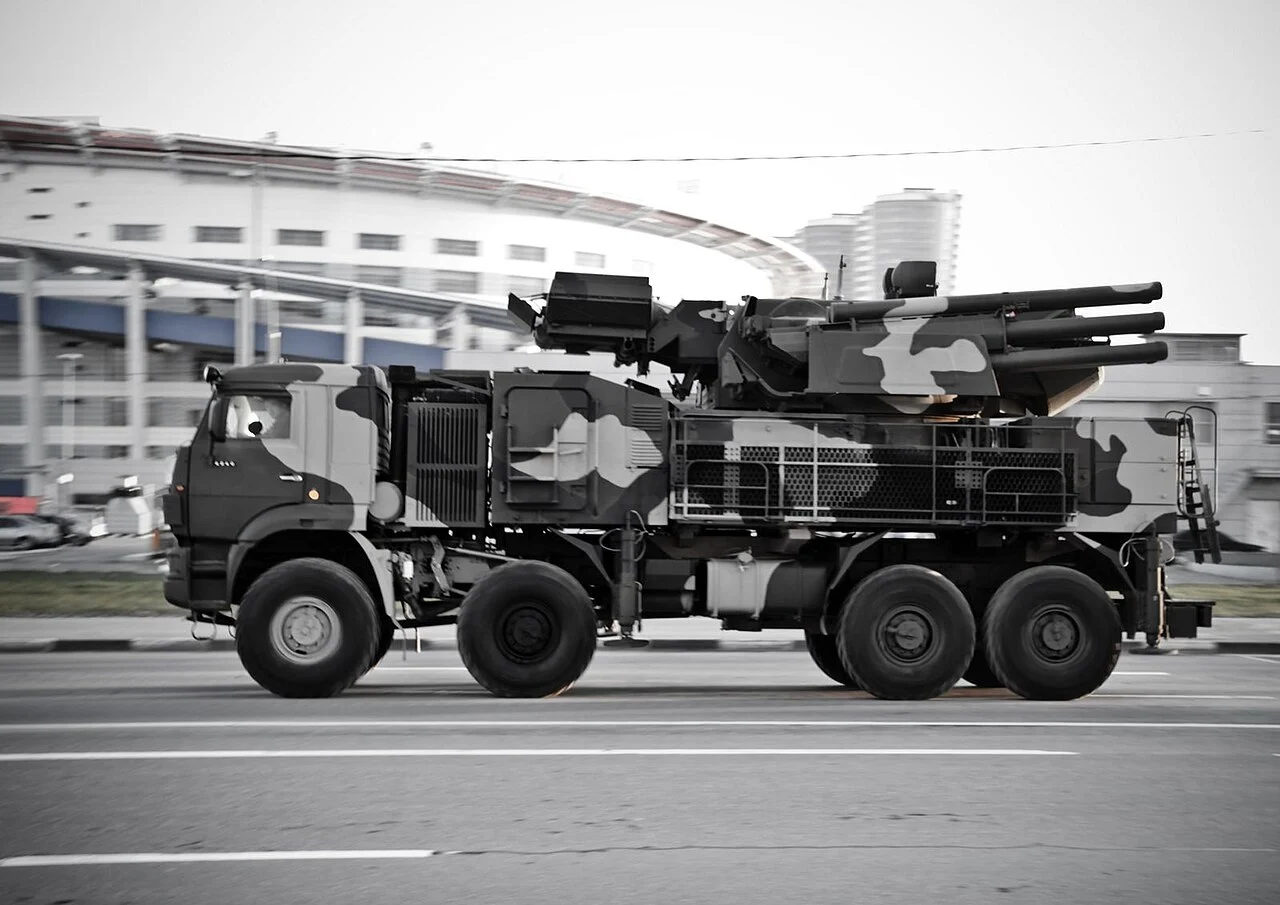
- Previous: I-HAWK covered medium altitudes only, leaving low-altitude threats to unguided anti-aircraft guns.
- New: Pantsir-S1 gun/missile system, 50 units ordered from Russia for $734 million, deliveries from 2004.
- Key improvement: mobile short-range defence combining twin 30 mm cannon (to roughly 4 km) with vertically-launched missiles, protecting fixed sites against low-flying threats.
- Why: a layered network needs a short-range tier that medium- and long-range radars cannot efficiently service.
- Current status: operational.
The UAE was a launch export customer for Pantsir-S1, ordering half its batteries on tracked chassis and half on wheeled platforms, per Gulf News. The order gave Abu Dhabi a short-range capability distinct from its US-sourced interceptors, an early example of the multi-supplier pattern now defining Emirati air defence.
Stage 3 (2008–2009): I-HAWK/Pantsir-S1 → Patriot PAC-2/GEM-T
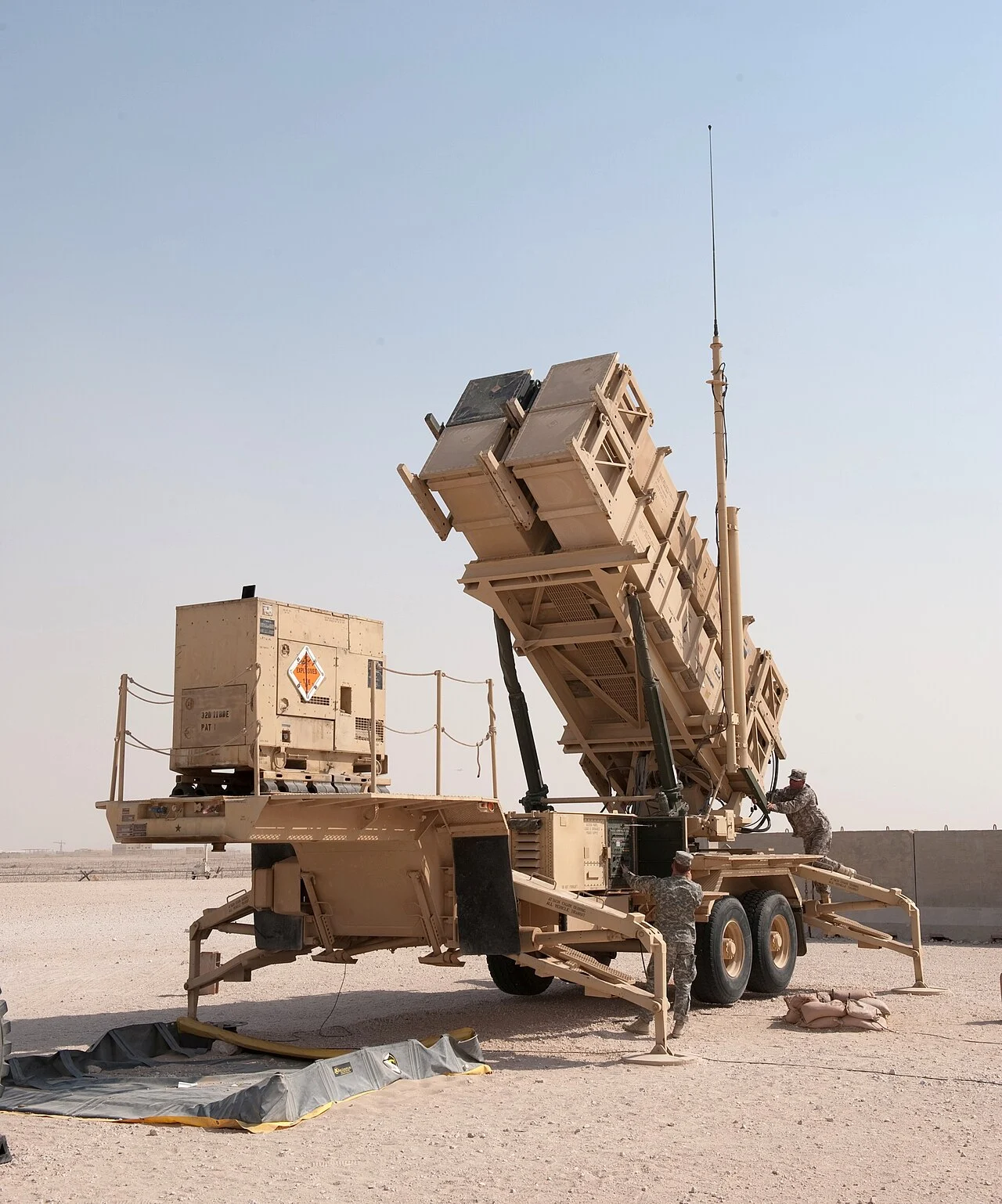
- Previous: no phased-array-radar interceptor with ballistic missile defence capability; I-HAWK could not engage tactical ballistic missiles.
- New: MIM-104 Patriot, PAC-2/GEM-T configuration.
- Key improvement: modern radar guidance and an initial point-defence capability against short-range ballistic missiles, aircraft and cruise missiles.
- Why: growing concern over Iranian short- and medium-range ballistic missile inventories.
- Current status: operational, since expanded with PAC-3 MSE interceptors (Stage 5).
The UAE fielded Patriot from 2009, the first GCC state to operate the system, according to Army Technology. Batteries were positioned to protect key population centres and infrastructure, adding an upper-medium tier above Pantsir-S1 and the ageing I-HAWK belt.
Stage 4 (2011–2016): Patriot alone → THAAD, first international sale
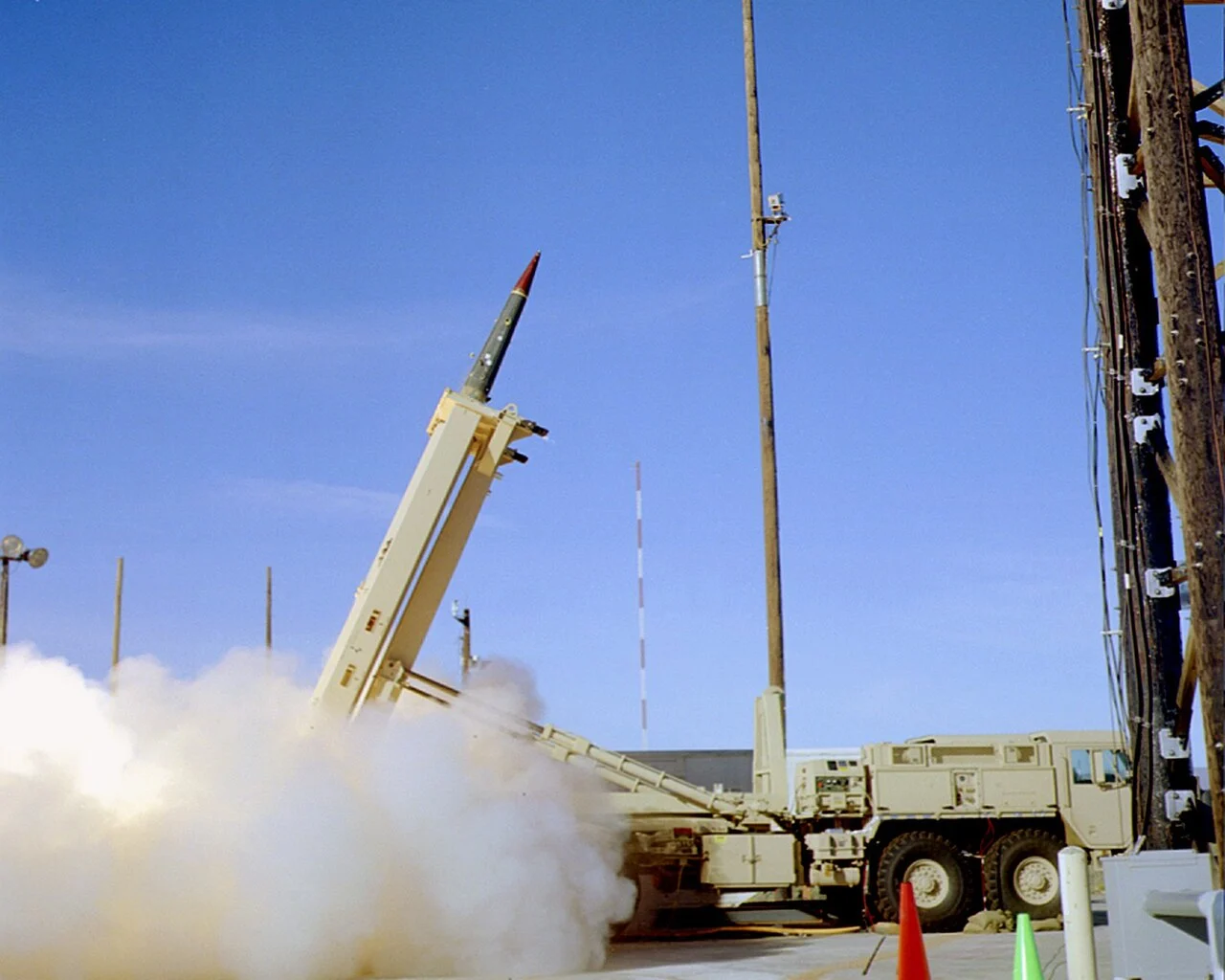
- Previous: Patriot’s PAC-2/GEM-T interceptors provided only lower-tier, point-defence engagement against ballistic missiles.
- New: Terminal High Altitude Area Defense (THAAD), two batteries with AN/TPY-2 radars.
- Key improvement: a wide-area, upper-tier hit-to-kill intercept capability against medium-range ballistic missiles in their terminal phase, above the altitude Patriot can reach.
- Why: closing the gap between lower-tier Patriot defence and the higher-altitude threat of Iranian medium-range ballistic missiles.
- Current status: operational; first battery delivered October 2015, full operational status reported by 2016.
The UAE became THAAD’s first international customer in 2011, under an initial $1.96 billion tranche of a $3.48 billion agreement covering two batteries, 96 interceptors and AN/TPY-2 radars, per DSCA figures reported by industry press. Lockheed Martin marked a decade of continuous UAE operation in 2025, at sites in northern Abu Dhabi and coastal Al Ruwais.
Stage 5 (2017): PAC-2/GEM-T only → PAC-3 MSE hit-to-kill interceptors
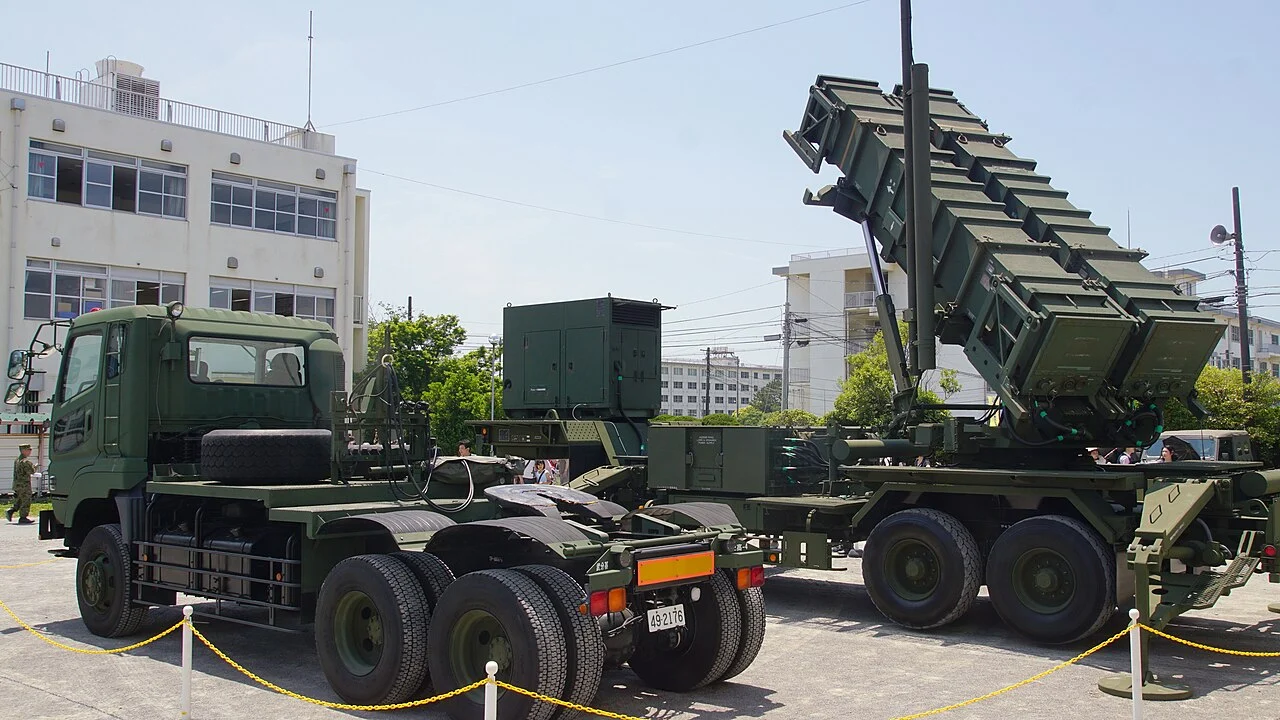
- Previous: PAC-2/GEM-T interceptors use blast-fragmentation warheads rather than direct hit-to-kill guidance.
- New: Patriot Advanced Capability-3 (PAC-3) hit-to-kill missiles, 60 ordered alongside 100 further GEM-T rounds.
- Key improvement: direct hit-to-kill guidance against ballistic missiles, improving the lower Patriot tier’s performance against manoeuvring or hardened targets.
- Why: sustaining and upgrading the Patriot inventory that had by then been in Emirati service for close to a decade.
- Current status: contracted; the US State Department approved the estimated $2 billion sale in May 2017, with follow-on delivery and sustainment contracts continuing through the 2020s.
The DSCA notified Congress in May 2017 of the possible sale, according to Army Technology and CSIS’s Missile Threat project. The hit-to-kill interceptors brought the UAE’s lower Patriot tier into line with the capability already fielded by Saudi Arabia and other regional operators.
Stage 6 (2021): Imported C-RAM only → indigenous SkyKnight missile
- Previous: counter-rocket, artillery and mortar (C-RAM) and short-range counter-drone defence depended entirely on imported systems.
- New: SkyKnight, a UAE-designed and built C-RAM interceptor developed by HALCON, an EDGE Group company.
- Key improvement: domestic missile production for the short-range counter-rocket and counter-drone mission, integrated by EDGE and Germany’s Rheinmetall into the Skynex gun-based air defence system.
- Why: the UAE’s defence-industrial strategy prioritises local production of munitions used at high tempo against drone and rocket threats.
- Current status: in production; EDGE has since won a UAE Ministry of Defence contract for a wider counter-drone (C-UAS) solution.
HALCON unveiled SkyKnight at IDEX 2021, a compact interceptor rated by the manufacturer at ranges up to 10 km against drones, according to Army Technology‘s project profile. The programme marked the UAE’s shift toward local production of short-range interceptor technology.
Stage 7 (January 2022): Gap in the medium-range tier → KM-SAM Cheongung-II
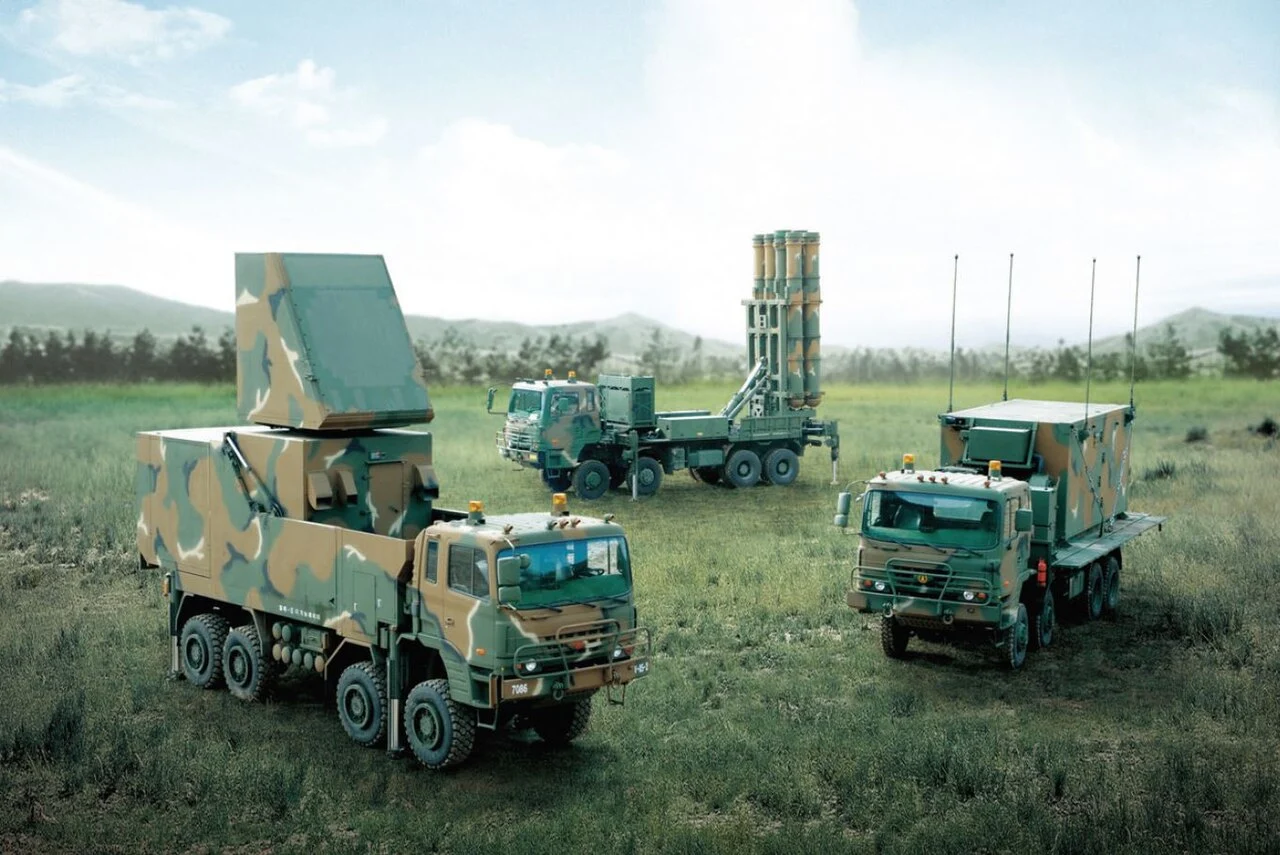
- Previous: the medium-range tier relied entirely on Patriot’s own engagement envelope, alongside short-range Pantsir-S1 and upper-tier THAAD.
- New: Cheongung-II (KM-SAM Block II), ten fire units ordered from South Korea for $3.5 billion.
- Key improvement: an additional medium-range interceptor line, diversifying the UAE’s supplier base beyond the United States and Russia.
- Why: signed 16 January 2022, the contract added supplier diversity and offsets through the UAE’s Tawazun Economic Council, partnering South Korean firms LIG Nex1, Hanwha Systems and Hanwha Defense.
- Current status: delivered (partially); the first battery arrived by early 2023 and a third by March 2026, per open-source reporting.
The Cheongung-II order was South Korea’s largest arms export contract to that date, according to Defense News and The Defense Post. Signature came one day before a Houthi missile and drone attack on Abu Dhabi, a coincidence of timing, and the programme has since become a core part of the UAE’s medium-range layer.
Stage 8 (2022–2026): Layered defence on paper → combat-tested multi-system network
- Previous: the UAE’s layered network had accumulated on paper but had not been tested in combat against a ballistic missile attack.
- New: operational validation across three interceptor types in live engagements.
- Key improvement: confirmed combat performance data rather than manufacturer test figures alone.
- Why: direct ballistic missile and drone attacks from Yemen’s Houthi movement in January 2022 and from Iran in 2026.
- Current status: operational, with intercepts confirmed by UAE and US authorities and reported by defence media.
On 24 January 2022, US and Emirati forces intercepted a Houthi medium-range ballistic missile over Abu Dhabi, reported by Air Force Times as THAAD’s first confirmed operational intercept anywhere in the world; Military Times reported a Patriot engagement the same week. Cheongung-II recorded its own first combat intercept during the 2026 Iran-UAE exchanges, per Militarnyi. Published intercept counts for 2026 vary between outlets; only the specific, attributed claims above are cited here.
Stage 9 (December 2024–NEXT): Existing Patriot inventory → PAC-3 MSE expansion and additional THAAD interceptors
- Previous: the Patriot PAC-3 inventory dated to the 2017 order of 60 missiles, and THAAD batteries to the original 2011 96-interceptor programme.
- New: a possible sale of 452 further PAC-3 MSE interceptors, plus a 2022-approved follow-on of 96 THAAD interceptors and a 2026 contract for additional THAAD launchers.
- Key improvement: a deeper magazine of hit-to-kill interceptors across both tiers, addressing expenditure demonstrated during the 2022 and 2026 engagements.
- Why: replenishing interceptor stocks after confirmed combat use, and hedging against continued regional threats.
- Current status: reportedly under negotiation; the DSCA’s December 2024 notification of the estimated $2.728 billion PAC-3 MSE package is a Congressional ceiling, not a signed contract, per Defence Blog. Lockheed Martin separately signed a $211 million 2026 contract for additional THAAD launchers.
The pending PAC-3 MSE request is more than seven times the 60 missiles ordered in 2017, reflecting interceptor use in recent engagements. Combined with the THAAD follow-on, it points to the next phase being depth within the existing four-tier structure rather than a new layer.
| Period | From | To | Key improvement | Status |
|---|---|---|---|---|
| 1989 | No dedicated SAM layer | MIM-23B I-HAWK | First medium-altitude SAM umbrella | Operational |
| 2000–2004 | I-HAWK only | Pantsir-S1 | Mobile short-range gun/missile layer | Operational |
| 2008–2009 | I-HAWK/Pantsir-S1 | Patriot PAC-2/GEM-T | Modern radar guidance, initial BMD | Operational |
| 2011–2016 | Patriot alone | THAAD | Upper-tier terminal BMD, first int’l customer | Operational |
| 2017 | PAC-2/GEM-T only | PAC-3 MSE | Hit-to-kill guidance | Contracted |
| 2021 | Imported C-RAM only | SkyKnight (indigenous) | Domestic missile production | In production |
| Jan 2022 | Medium-tier gap | KM-SAM Cheongung-II | Supplier diversification | Delivered (partial) |
| 2022–2026 | Untested network | Combat-validated network | Confirmed operational intercepts | Operational |
| Dec 2024–NEXT | 2017/2011 interceptor stocks | 452 PAC-3 MSE + THAAD follow-on | Deeper interceptor magazine | Reportedly under negotiation |
Why it matters for the MENA region
The UAE’s build-out shows how a mid-sized Gulf state has assembled a multi-supplier, multi-tier network rather than relying on one partner or one altitude band. Its role as THAAD’s first international customer, and now a repeat Patriot and Cheongung-II buyer, has shaped how other Gulf states structure their layered defences, and has produced the world’s only combat-validated THAAD and Cheongung-II intercept data. The scale of the pending PAC-3 MSE request signals how the pace of missile exchanges since 2022 is driving demand for deeper interceptor stockpiles rather than new architectures. For neighbouring procurement authorities, the UAE’s experience is a live case study in balancing US, Russian, South Korean and domestic Emirati suppliers within one command structure.
Sources
- European Security & Defence, “Ground-Based Air Defence in the Gulf Region,” 2023
- Gulf News, “Russia, UAE to complete delivery of 50 Pantsir-S1”
- Army Technology, “UAE requests $2bn sale of PAC-3 and GEM-T missiles from US,” 2017
- CSIS Missile Threat, “US State Department Approves PAC-3 Sales to Bahrain, UAE”
- Lockheed Martin, “Ten Years of THAAD in the UAE,” 2025
- Air Force Times, “THAAD, in first operational use, destroys midrange ballistic missile in Houthi attack,” 2022
- Military Times, “UAE, US intercept Houthi missile attack targeting Abu Dhabi,” 2022
- Defense News, “South Korea inks largest arms export deal with UAE for missile interceptor,” 2022
- The Defense Post, “S. Korea and UAE Sign $3.5B Missile System Contract,” 2022
- Militarnyi, “Korean Cheongung-II SAM Successfully Intercepts Iranian Missile Over UAE,” 2026
- Army Technology, “SkyKnight C-RAM Missile System, UAE”
- Defence Blog, “U.S. State Dept approves possible $2.7 bln sale of PAC-3 guided air-and-missile defense system to UAE,” 2024
- Overt Defense, “Lockheed Martin Wins $211 Million UAE THAAD Deal,” 2026
- Army Recognition, “IDEX 2019: Raytheon contract to deliver Patriot missiles to UAE”
Related reading: The Biggest Defence Deals of Saudi Arabia, Main Battle Tanks of Arab Armies in 2026, and our United Arab Emirates and THAAD desk pages.