ExecuJet MRO Services has extended its long-running contract to maintain the South African Air Force’s three Dassault Falcon jets, the company confirmed at the Africa Aerospace and Defence exhibition this month, keeping a 35-year relationship with the SAAF’s VIP and utility fleet intact.
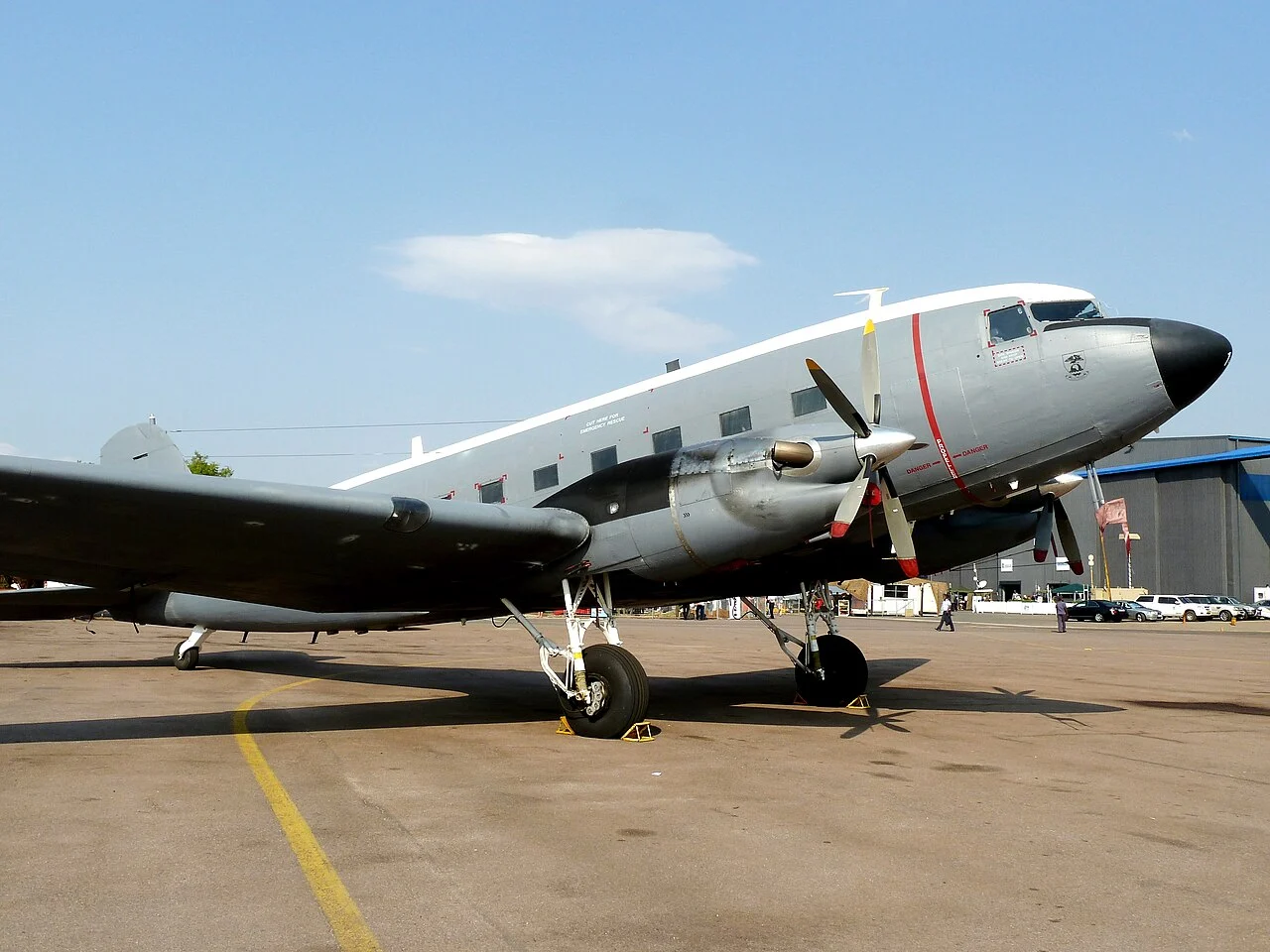
Photo: A South African Air Force C-47TP Dakota at Waterkloof Air Force Base, Pretoria, the base that also hosts the AAD exhibition where ExecuJet set out its SAAF support work. Credit: JMK, CC BY-SA 3.0, via Wikimedia Commons
ExecuJet MRO Services, the Dassault Aviation-owned maintenance house based at Lanseria International Airport near Johannesburg, has renewed its airframe heavy maintenance and component-support contract for the South African Air Force’s Falcon fleet, the company said at AAD 2026, held from 16 to 18 September at Waterkloof Air Force Base. Vince Goncalves, ExecuJet’s regional vice president for Africa, said the company was “proud to support this important event and demonstrate our ongoing commitment” to the SAAF.
A 35-Year Relationship Renewed
The extension covers the SAAF’s two Falcon 50 aircraft and single Falcon 900, jets used primarily for VIP transport and long-range utility flights on behalf of the South African government. ExecuJet traces its roots in the country to 1991, when the SAAF became its founding customer — a relationship the company has now maintained for 35 years, surviving multiple changes in ownership and the broader financial pressures that have periodically squeezed South Africa’s defence budget.
Beyond the Falcon work, ExecuJet also handles Honeywell TFE731 engine inspections and repairs on the Falcon jets and Honeywell TPE331 engine overhauls for the SAAF’s CASA C-212 transports, and has previously supported the air force’s Beechcraft King Air fleet. The company says it recently completed a major C-check on one of the SAAF’s Falcon 50s, including an extensive refurbishment of the landing gear and interior — the kind of deep structural inspection military VIP jets need every few years to stay airworthy.
Africa’s Largest Business Aviation MRO Shop
ExecuJet MRO Services describes itself as Africa’s largest business aviation maintenance, repair and overhaul organisation, employing around 130 people, 70 of them engineers, at its Lanseria facility. The SAAF contract sits alongside a wider book of civilian and government business-jet clients across the region, and the company used its AAD 2026 presence to argue that a properly resourced private MRO sector is what keeps small, high-value military fleets — like the SAAF’s three Falcons — flying at all, rather than grounded for want of spares or specialist labour.
That argument lands at a moment when South Africa’s own defence-industry conference programme, running alongside AAD 2026, was openly debating how much of the country’s fleet the SAAF can actually still fly. The SAAF’s own Falcon jets are a small but visible part of a wider inventory detailed in DefenceMENA’s South African Air Force aircraft inventory, which spans everything from Gripen fighters to Oryx helicopters, much of it dependent on contracted civilian maintenance to stay serviceable.
Why It Matters for Africa
Air forces across the continent increasingly rely on contracted, private-sector MRO rather than in-house depot maintenance, because building and staffing a full military overhaul capability is prohibitively expensive for all but the largest defence budgets. South Africa’s experience with ExecuJet is a working example of that model: a private, Dassault-backed company sustaining a small VIP/utility fleet for three and a half decades without the SAAF needing to build parallel in-house capacity for just three aircraft.
For the wider African market, AAD 2026’s mix of MRO announcements — alongside bigger-ticket items like Milkor’s tactical-drone cooperation with Safran — pointed to a defence-industrial base that is maturing around services and partnerships rather than only new-platform sales. Sustainment contracts rarely make headlines the way a fighter order does, but they are what determines whether an air force’s existing aircraft — and the capability they represent — are actually available on any given day.