Last updated: 25 November 2026.
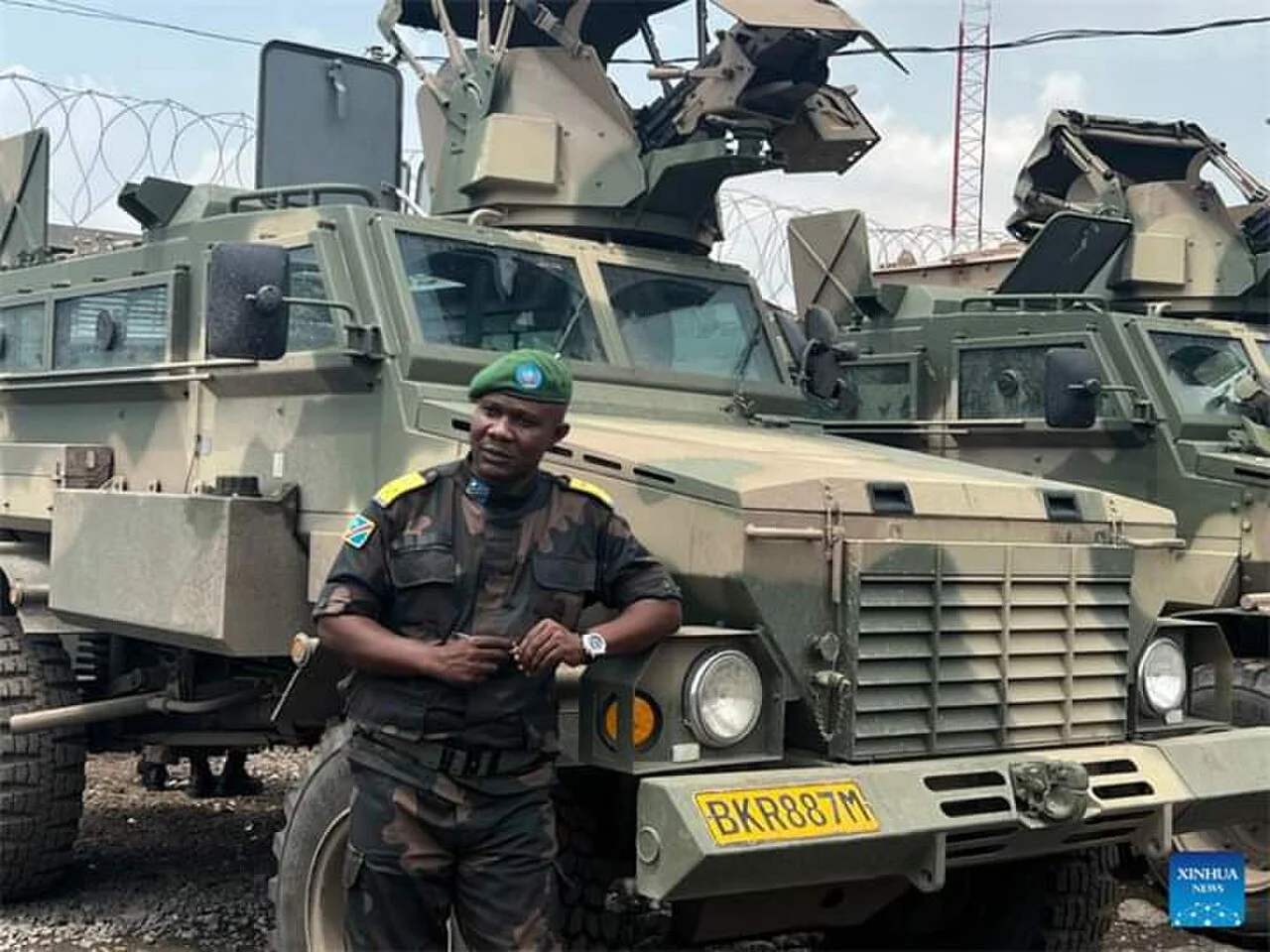
The Democratic Republic of the Congo has spent the past several years buying new military equipment, mainly from South Africa, China and Türkiye, while also taking delivery of vehicles from the United Arab Emirates and one-way attack drones from Belarus. The SIPRI Arms Transfers Database, generated on 3 November 2026 and covering deliveries through the end of 2025, is the backbone of the account below. SIPRI’s military expenditure fact sheets show why the shopping list grew: Congolese military spending more than doubled in 2023, to $794 million, the largest percentage increase of any country that year, and rose by a further 20 per cent to $1.2 billion in 2025. Those are spending estimates, not a published official inventory, and a delivery is not the same thing as a vehicle or aircraft that is operational.
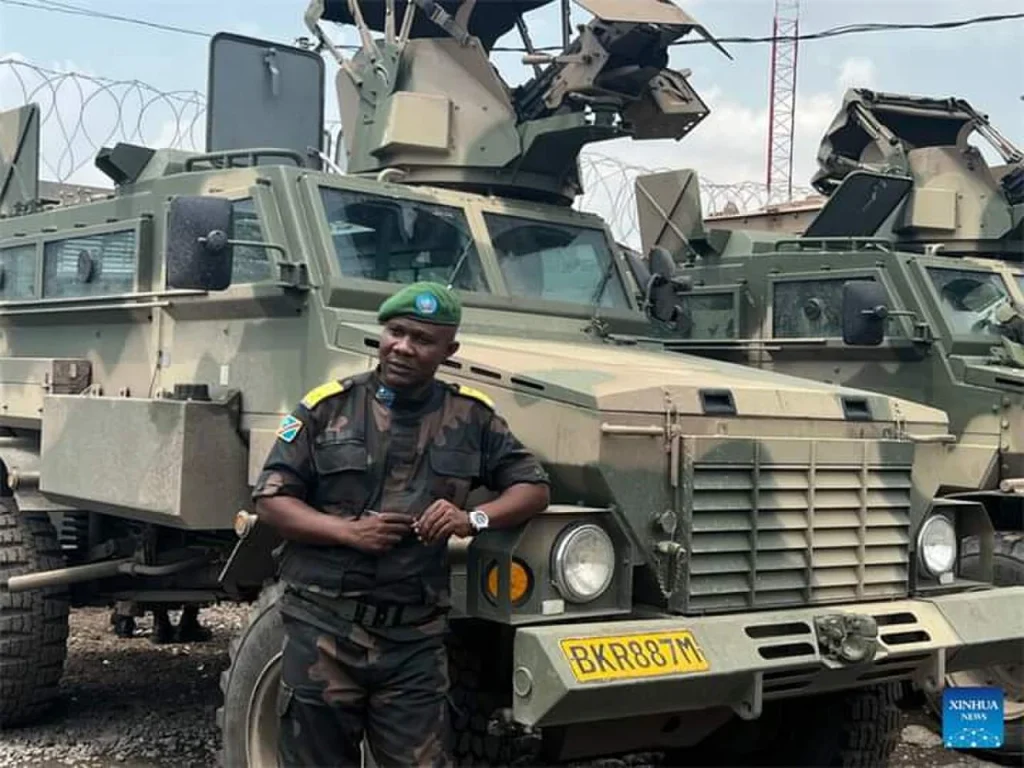
The purchases have been driven by the war in North and South Kivu against AFC/M23, which UN experts, the United States and Kinshasa say is backed by Rwanda — a charge Kigali denies. This article does not attempt a “who is stronger” ranking. It sets out what official and independently compiled records show was ordered, what was delivered by the end of 2025, and where the public record stops.
Spending went up. That is not the same as a new army.
SIPRI’s April 2024 fact sheet on world military expenditure in 2023 said the DRC’s spending more than doubled (+105 per cent) to $794 million, amid tensions with Rwanda, a surge in clashes with armed groups, and an effort to strengthen the FARDC after Kinshasa demanded the early withdrawal of a large United Nations peacekeeping presence. The April 2026 fact sheet, covering 2025, said expenditure increased by 20 per cent to $1.2 billion “as the conflict with a Rwandan-backed non-state armed group escalated during the first half of the year,” and noted a ceasefire in July 2025.
These figures are SIPRI’s standardised estimates of military spending, in the current US dollars published in the fact sheets, not SIPRI trend-indicator values (TIV). TIV measures the volume of major arms transferred; it is not a price and should not be read as a contract value. No official, itemised FARDC inventory has been published in the sources reviewed here. A French-language DefenceMENA profile of FARDC personnel and budget discusses the same spending series. For a continental comparison, see the site’s African defence budgets ranking.
Recent major arms deliveries, according to SIPRI
The table lists the main transfers in SIPRI’s DR Congo trade register for orders from 2020 onwards. Quantities marked as estimates in the register are labelled as such. “Delivered” means SIPRI records a delivery in the years shown, not that every system is serviceable today.
| Supplier | System | Ordered (SIPRI) | Delivered (SIPRI) | Years | Notes |
|---|---|---|---|---|---|
| China | CASC CH-4B armed drone | 9 (estimated) | 9 (estimated) | 2023–2024 | New. Operational remainder is not an official figure. |
| Belarus | Berkut-BM one-way attack drone | 20 (estimated) | 20 (estimated) | 2024 | New. |
| Türkiye | Katmerciler Hizir armoured vehicle | 40 (estimated) | 40 | 2024 | New. SIPRI annotates a $75 million deal. Some secondary reports cite a 185-vehicle package; that quantity is not recorded as delivered in this register. |
| South Africa | Paramount Mbombe-4 APC | 20 (estimated) | 20 (estimated) | 2023 | New. |
| South Africa | Maatla APC | 25 (estimated) | 25 (estimated) | 2023 | New. Some defence reporting has attributed a Maatla batch to the police; SIPRI’s row does not itself name the end user. |
| South Africa | Reva-5 / Kasser-2 APC | 160 (estimated) | 125 (estimated) | 2025 | New. SIPRI: for the Republican Guard; Kasser-2 version from an assembly line in the UAE. Ordered is not fully delivered. |
| South Africa | Paramount Mwari aircraft | 6 | None recorded to end-2025 | Order 2022 | On order. Related Canadian PT6A engines are also undelivered in the register. |
| United Arab Emirates | Calidus MCAV-20 armoured vehicle | 30 (estimated) | 30 (estimated) | 2023 | New. |
| Unknown supplier | BATT-UMG armoured vehicle | 10 (estimated) | 10 (estimated) | 2024 | New. Supplier not identified in the register. |
South Africa is the largest supplier in this recent cluster, measured by the number of vehicle deliveries recorded, followed by China in the air and Türkiye. That is a statement about the SIPRI register, not a ranking of combat performance.
China: the CH-4B, and what is still unconfirmed
The most visible Chinese delivery is the CH-4B. SIPRI records nine aircraft, estimated, delivered in 2023 and 2024. DefenceMENA has already examined why Kinshasa bought the type and how it sits in the air force inventory. Kinshasa has not published a contract value in the official sources reviewed here, so no unit cost is given. Reports of a follow-on Chinese type, including the Wing Loong II, have appeared in secondary coverage; they are not recorded as deliveries in the SIPRI register used for this article and are treated as unconfirmed.
Belarus, not China, is the supplier SIPRI lists for about 20 Berkut-BM one-way attack drones delivered in 2024. Those should not be folded into the CH-4 total. An earlier Chinese transfer in the same database, five CS/VP3 armoured vehicles delivered in 2015, belongs to a previous procurement cycle.
Türkiye: the Hizir delivery, and claims that go beyond the register
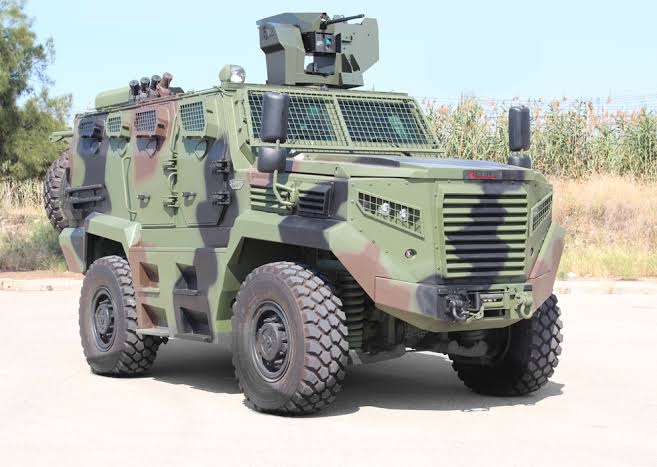
SIPRI records 40 Katmerciler Hizir armoured vehicles delivered from Türkiye in 2024, against an estimated order placed in 2020, and annotates the transfer as a $75 million deal. That dollar figure is a SIPRI annotation, not a published official Congolese or Turkish contract text, and it should not be divided to invent a unit price. Some secondary reports have described a package of 185 Hizir vehicles for the same $75 million. The 185 figure is not a completed delivery in SIPRI’s register through the end of 2025. Until an official delivery statement or an updated SIPRI row appears, the documented transfer remains 40 vehicles delivered, with the larger number unconfirmed.
The Hizir is a 4×4 mine-resistant vehicle produced by Katmerciler. A concise product description is on Envanter Medya’s survey of Turkish defence programmes. It is not the same vehicle as the Otokar Cobra or Cobra II, which several other African armies operate, as set out in DefenceMENA’s Cobra operator list. SIPRI’s DR Congo register does not record a Cobra delivery to Kinshasa.
Reports that the FARDC has also received Turkish armed drones, including the Bayraktar TB2 or TUSAŞ Anka, have not been confirmed by an official Congolese, Turkish or SIPRI delivery record in the sources reviewed here. DefenceMENA’s air force inventory already flags those claims as unconfirmed. They are omitted from the table above. No public document reviewed for this article names the Turkish Presidency of Defence Industries (SSB) as the contracting authority for the Hizir sale; the transfer is recorded as a commercial supply from Türkiye.
South Africa and the UAE: vehicles delivered, aircraft still on order
Paramount’s Mbombe-4 (about 20 vehicles, 2023) and the Maatla (about 25, 2023) are the main South African vehicle deliveries in the recent register. A larger row follows in 2025: about 125 of an estimated 160 Reva-5 vehicles, identified by SIPRI as the Kasser-2 version assembled in the UAE, delivered for the Republican Guard. The remaining balance of that order had not been recorded as delivered by the end of 2025.
Six Paramount Mwari aircraft were ordered in 2022. SIPRI recorded no delivery by the end of 2025. A related order for six Pratt & Whitney Canada PT6A-66B engines is also listed without a delivery year. Until a delivery appears in the register or in an official statement, the Mwari remains on order, not in service. From the United Arab Emirates, SIPRI records about 30 Calidus MCAV-20 armoured vehicles delivered in 2023.
Where Europe actually appears in the record
A reader looking for a large, new European weapons package for the FARDC will not find one in the 2020–2025 SIPRI register. The main European-linked entries in the wider database are older. In 2010, Ukraine delivered second-hand but, in some cases, modernised systems, including 100 T-72B tanks, 30 T-55 tanks, 12 2S1 and 12 2S3 self-propelled guns, 12 BM-21 Grad launchers and four Mi-24V/Mi-35 helicopters, among other items. In 2016, SIPRI records 25 second-hand T-64A tanks, modernised to T-64B1M before delivery. Those are historical transfers. They say nothing reliable about how many of those tanks are serviceable now, and they should not be added to the 2023–2025 vehicle totals as if they were new.
The only recent North American or European industrial footprint in the current order book is the still-undelivered Canadian engines for the Mwari. European governments have been more visible in diplomacy, sanctions and, previously, peacekeeping than as suppliers of new major arms in this period.
What “modernisation” does not mean
The FARDC has taken delivery of new drones and protected vehicles since 2023. That is a change from years when the open record was dominated by second-hand Soviet-designed armour and a small number of Su-25s and Mi-24s. It does not follow that every delivered system is in service, that losses have been replaced, or that training, spare parts and munitions have kept pace. The UN Group of Experts has separately documented the use of private technicians on CH-4 drones and military aircraft, discussed in DefenceMENA’s article on private military contractors in the DRC.
No official end-of-year inventory, and no official statement of losses, was found in the sources used here. Figures from ranking websites that treat Global Firepower totals as a census have been left out. Where a number is an estimate, it is labelled as one.
Frequently asked questions
Who is the DRC’s main recent arms supplier?
In SIPRI’s register of major conventional arms, South Africa accounts for the largest cluster of recent vehicle deliveries (Mbombe-4, Maatla and, in 2025, Reva-5/Kasser-2 for the Republican Guard), with China supplying the CH-4B drones and Türkiye the Hizir vehicles. That is a delivery record through 2025, not a judgement of which system has been most effective in the east.
How many CH-4 drones does the FARDC have?
SIPRI estimates nine CH-4Bs were delivered in 2023–2024. It does not publish an official figure for how many are still operational. Kinshasa has not issued a public inventory in the sources reviewed for this article.
Did the DRC buy 185 Turkish Hizir vehicles?
SIPRI records 40 Hizir vehicles delivered in 2024 and annotates a $75 million deal. Some secondary reports mention 185 vehicles. That larger quantity is not in the SIPRI delivery record through the end of 2025 and is not treated here as confirmed.
Has the Mwari aircraft been delivered?
Not according to SIPRI’s register to the end of 2025. Six aircraft were ordered from South Africa’s Paramount in 2022. Until a delivery is recorded or announced officially, they remain on order.
Does the FARDC operate the Otokar Cobra?
SIPRI’s DR Congo trade register does not record a Cobra delivery. The Turkish vehicle in that register is the Katmerciler Hizir. Other African armed forces do operate the Cobra, which is a different 4×4 family.
Sources
- SIPRI Arms Transfers Database, trade register for DR Congo, 1960–2025, data generated 3 November 2026: armstransfers.sipri.org
- SIPRI, “Trends in World Military Expenditure, 2023,” April 2024 fact sheet (DRC spending $794 million, +105%): sipri.org
- SIPRI, “Trends in World Military Expenditure, 2025,” April 2026 fact sheet (DRC spending $1.2 billion, +20%): sipri.org
- DefenceMENA, “Why DR Congo Bought the Chinese CH-4 Attack Drone”: defencemena.com/why-drc-bought-ch-4-drone/
- DefenceMENA, “DRC Air Force Aircraft: Su-25s, CH-4 Drones and Fleet Size”: defencemena.com/drc-air-force-aircraft/
- DefenceMENA, “Otokar Cobra and Cobra II Operators in Africa”: defencemena.com/which-african-countries-operate-otokar-cobra/
- DefenceMENA, “African Defence Budgets Ranked: Who Spends Most in 2026?”: defencemena.com/african-defence-budgets-ranked/
- DefenceMENA, “Armée de la RDC (FARDC) : effectifs, budget et équipements”: defencemena.com/fr/armee-de-la-rdc-fardc-effectifs-budget-equipements/
- Envanter Medya, “Türkiye Cumhuriyeti’nin 2026 Savunma Gücü: 20 Öne Çıkan Kapasite” (Hizir section): envantermedya.com/turkiye-2026-savunma-20-kapasite/