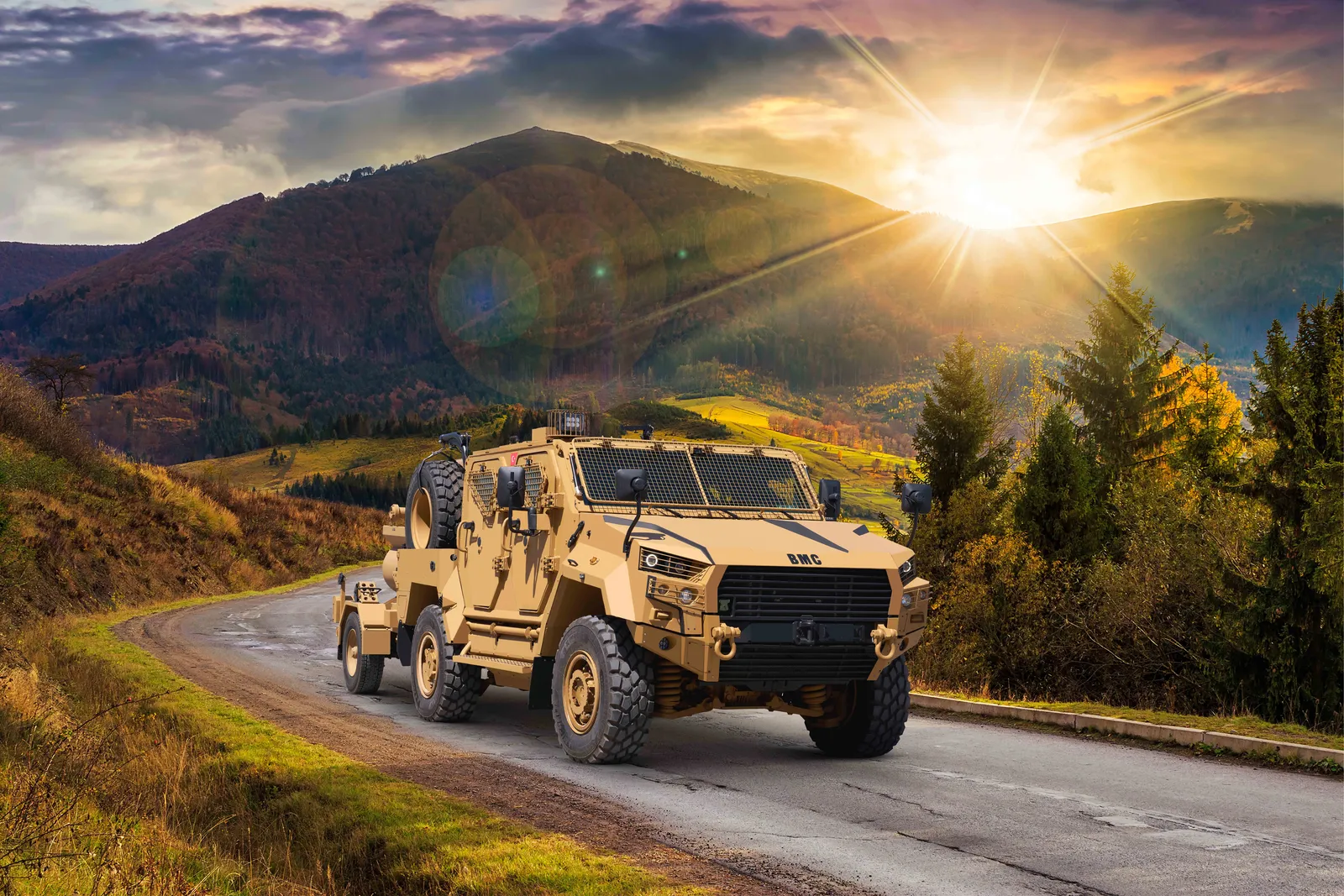
Protected combat vehicles get most of the attention, but armies run on trucks. Türkiye’s Presidency of Defence Industries (SSB) is now giving the Turkish Land Forces a new generation of BMC cargo and personnel vehicles in the ¾-ton and 2.5-ton classes, with ballistic and mine protection built in and a domestic engine planned for the larger vehicles. The SSB programme covers 220 vehicles in four configurations. This file explains the family, its specifications, the programme behind it and why protected logistics vehicles matter for African forces.
Photo: Presidency of Defence Industries (SSB), Türkiye.
What are BMC’s cargo and personnel vehicles?
The SSB Cargo and Personnel Vehicles programme brings together BMC’s newest light and medium tactical vehicles under a single procurement for the Turkish Land Forces Command. Its purpose, as SSB defines it, is to move personnel, weapons, ammunition and supplies safely and quickly, and to provide combat service support. In other words, these are the vehicles that keep units supplied and moving behind and alongside the armoured vehicles at the front.
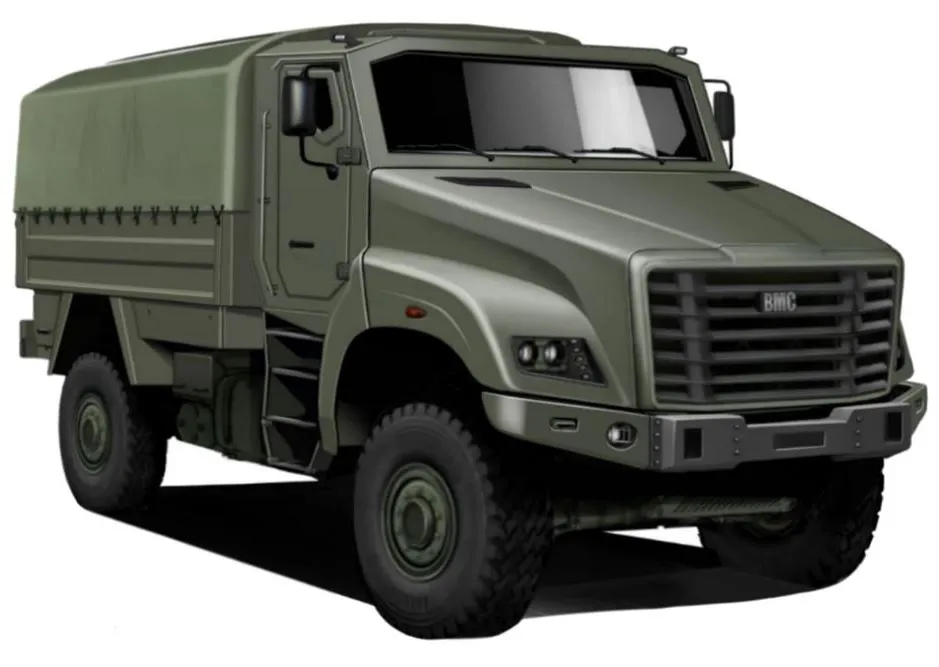
Three BMC designs appear in the SSB material. The TURAN 4×4, shown in the main photograph, is an armoured cargo and personnel carrier that BMC unveiled at IDEF 2025. It has a protected monocoque cab, a V-shaped hull for mine and underbelly blast protection to STANAG 4569, seats for four to nine fully equipped personnel depending on the mission, and an open or closed rear bed that can carry up to 750 kg of logistics load. Turkish reporting says it has completed qualification and entered the inventory. The PAMİR 4×4, unveiled at SAHA 2026, is a light tactical vehicle for troop transport and logistics, with a flatbed or enclosed cargo body, room for ten personnel and qualification for the Land Forces under way. The third member is a 2.5-ton class truck with a bonneted cab and canvas-covered cargo bed, for which BMC has not yet released a product name or detailed data.
What links them is the requirement SSB has written into the programme: every class comes with ballistic and mine protection, a 300+ hp engine and an automatic transmission. That is a significant change from the unprotected light trucks and utility vehicles that armies have traditionally used for second-line tasks.
Key specifications
The programme data below is from SSB; individual vehicle data for TURAN and PAMİR is from BMC and published reporting.
| Prime contractor | BMC Otomotiv, Türkiye |
| Procurement authority | Presidency of Defence Industries (SSB) |
| User | Turkish Land Forces Command |
| Programme scope (SSB, Sept 2026) | 220 vehicles in 4 configurations |
| Vehicle classes | ¾-ton and 2.5-ton |
| Protection | Ballistic and mine protection |
| Powertrain | 300+ hp engine, automatic transmission |
| Critical subsystems (SSB) | Domestic engine, domestic armour |
| Domestic engine | To be used on the 2.5-ton vehicles |
| TURAN 4×4 | Armoured ¾-ton class; 4-9 personnel; 750 kg payload; 105 km/h; 650 km range; 70% gradient, 30% side slope |
| PAMİR 4×4 | Light tactical; 10 personnel; 120 km/h; up to 600 km range; 60% gradient, 30% side slope |
| Mission roles | Personnel and cargo transport, weapons carrier, patrol, command |
The SSB programme and Turkish service
The programme is a good illustration of how SSB has extended protection and local content beyond front-line armour. Over the past fifteen years Türkiye built up large fleets of mine-protected combat vehicles such as the Kirpi II and the Vuran. The logic of this programme is that supply runs, ammunition resupply and troop movements behind the line face the same mines and roadside bombs, so the trucks that do that work should be protected as well.
Local content is the other thread. SSB lists a domestic engine and domestic armour as the programme’s critical subsystems and states that the 2.5-ton vehicles will use a domestic engine. BMC Power’s TUNA diesel is already in service in the Kirpi II and the Vuran, and extending domestic power to the logistics fleet would give the Land Forces a common Turkish engine across both combat and support vehicles, with the training and spares advantages that follow.
The programme covers 220 vehicles in four configurations for the Land Forces Command, according to SSB’s September 2026 data. The TURAN has completed qualification and entered the inventory, while the PAMİR is in Land Forces qualification. By drawing on one prime contractor for both weight classes, the army gets a family with shared support rather than a mix of unrelated light vehicles and trucks.
Who operates them?
The vehicles are new and are being procured first for the Turkish Land Forces Command, which is the only user named by SSB. No export customer has been announced for the TURAN, the PAMİR or the 2.5-ton vehicle at the time of writing, and all three are offered by BMC for export. The Turkish Land Forces will act as the reference customer, as they have for BMC’s armoured vehicles, which are in service in countries from Qatar to Tunisia and Georgia.
Can these vehicles go to Africa?
The need is clear. In much of Africa the logistics convoy is the most exposed part of any operation. In the Sahel, the Lake Chad basin, northern Mozambique and Somalia, insurgent groups target supply trucks, fuel tankers and troop transports with roadside bombs and ambushes because they are easier to hit than armoured patrols. Many African armies still move supplies in commercial trucks or unprotected military vehicles, so a single mine can stop a convoy and cost lives.
A family of protected ¾-ton and 2.5-ton vehicles answers that problem directly. The ¾-ton class, represented by the TURAN, suits liaison, light resupply, small-unit transport and command tasks on poor roads, while the 2.5-ton class can carry the ammunition, rations and water that forward bases need. The 300+ hp engines and automatic transmissions make them easier to drive for conscripts and less experienced drivers, and the 600 to 650 km ranges quoted for the light vehicles fit the long distances between bases in large countries.
Turkish land vehicles already have a strong footing on the continent, from Kirpi MRAPs in Tunisia and Somalia to the wider presence described in our survey of Turkish systems in African armed forces. That matters for logistics vehicles in particular, because buyers can add protected trucks to an existing Turkish support relationship. Countries already operating BMC armour, North and West African forces fighting insurgencies along long supply routes, and East African contributors to peace-support missions are the most natural opportunities.
How they compare
Protected tactical trucks are a growing segment, with offers from South African, European and Chinese manufacturers. BMC’s case rests on three points: one prime contractor for both the light and medium classes, protection designed in from the start rather than added as a kit, and a domestic Turkish powertrain backed by SSB. For an army that already operates the Amazon, Vuran or Kirpi, it offers the chance to bring combat and support vehicles under one manufacturer.
Frequently asked questions
What is the SSB Cargo and Personnel Vehicles programme?
It is a Presidency of Defence Industries (SSB) programme, with BMC as prime contractor, covering 220 protected ¾-ton and 2.5-ton class vehicles in four configurations for the Turkish Land Forces Command.
Which BMC vehicles are in the family?
The armoured TURAN 4×4 (¾-ton class), the PAMİR 4×4 light tactical vehicle and a 2.5-ton class cargo and personnel truck.
Are the vehicles protected?
Yes. SSB specifies ballistic and mine protection, a 300+ hp engine and an automatic transmission for the programme.
Do they use a Turkish engine?
SSB says the 2.5-ton vehicles will use a domestic engine, and lists domestic engine and armour as the programme’s critical subsystems.
Have they been exported?
Not yet. The Turkish Land Forces Command is the first user, and BMC offers the vehicles for export.
Related: BMC Kirpi II product file · BMC Vuran product file · Turkish systems in African armed forces