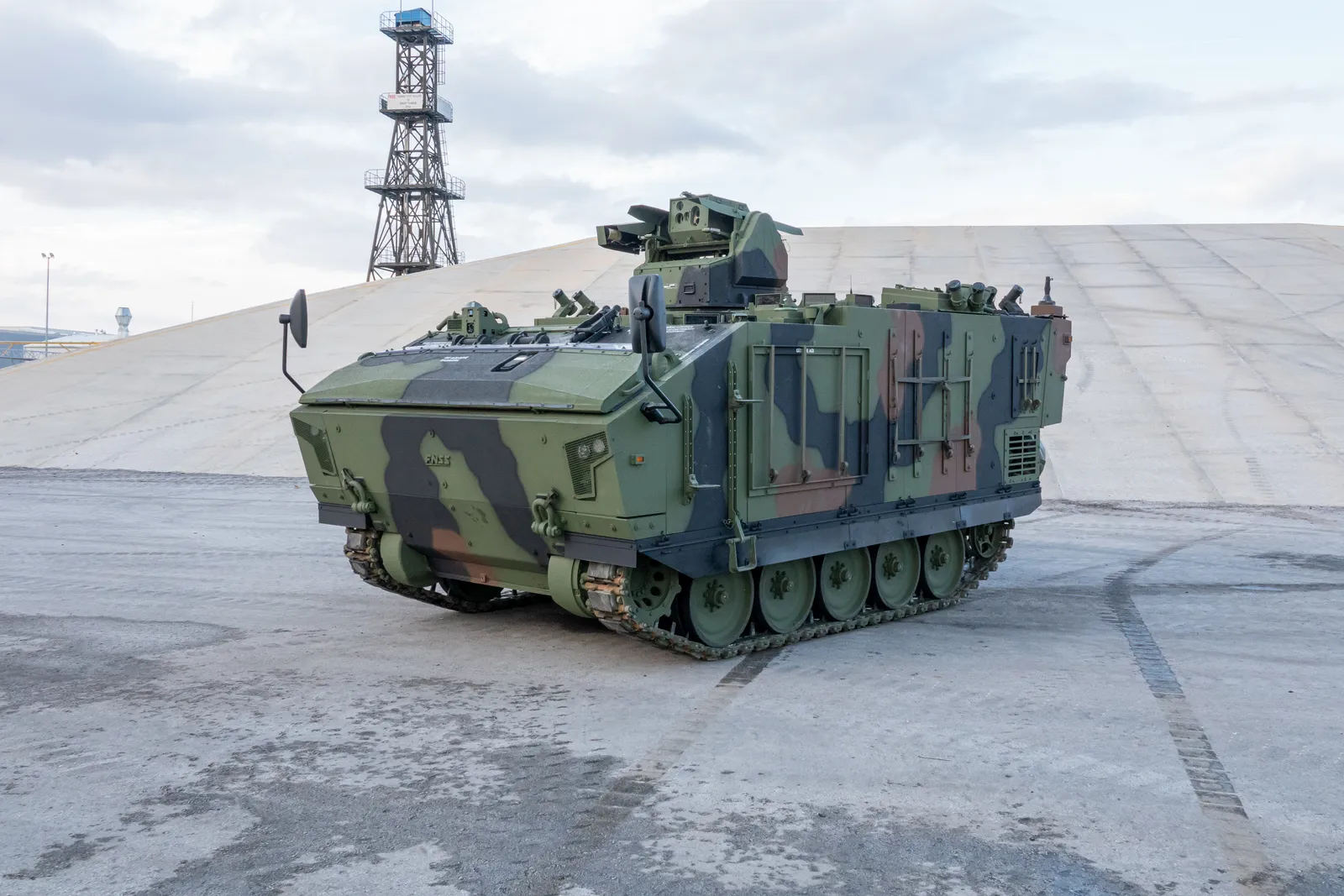
The STA weapon carrier vehicles are how the Turkish Land Forces put Roketsan’s OMTAS anti-tank missile on wheels and tracks. Built by FNSS in two versions, the tracked KAPLAN STA and the wheeled PARS 4×4 STA, the fleet has grown to 368 delivered vehicles under a programme run by Türkiye’s Presidency of Defence Industries (SSB), with acceptance of further vehicles under way. For African armies facing armour, fortified positions and fast-moving technicals, it is a complete, domestically produced anti-tank package.
Photo: Presidency of Defence Industries (SSB), Türkiye.
What is the STA?
STA stands for Silah Taşıyıcı Araç, or weapon carrier vehicle. The programme grew out of a straightforward problem. SSB was already procuring OMTAS, a medium-range anti-tank missile developed by Roketsan, under a separate project. To use those missiles from vehicles rather than only from dismounted firing posts, the Land Forces needed protected platforms with a turret that could carry, aim and launch them. SSB’s answer was to have those weapon carriers developed at home, by FNSS, rather than adapting a foreign vehicle.
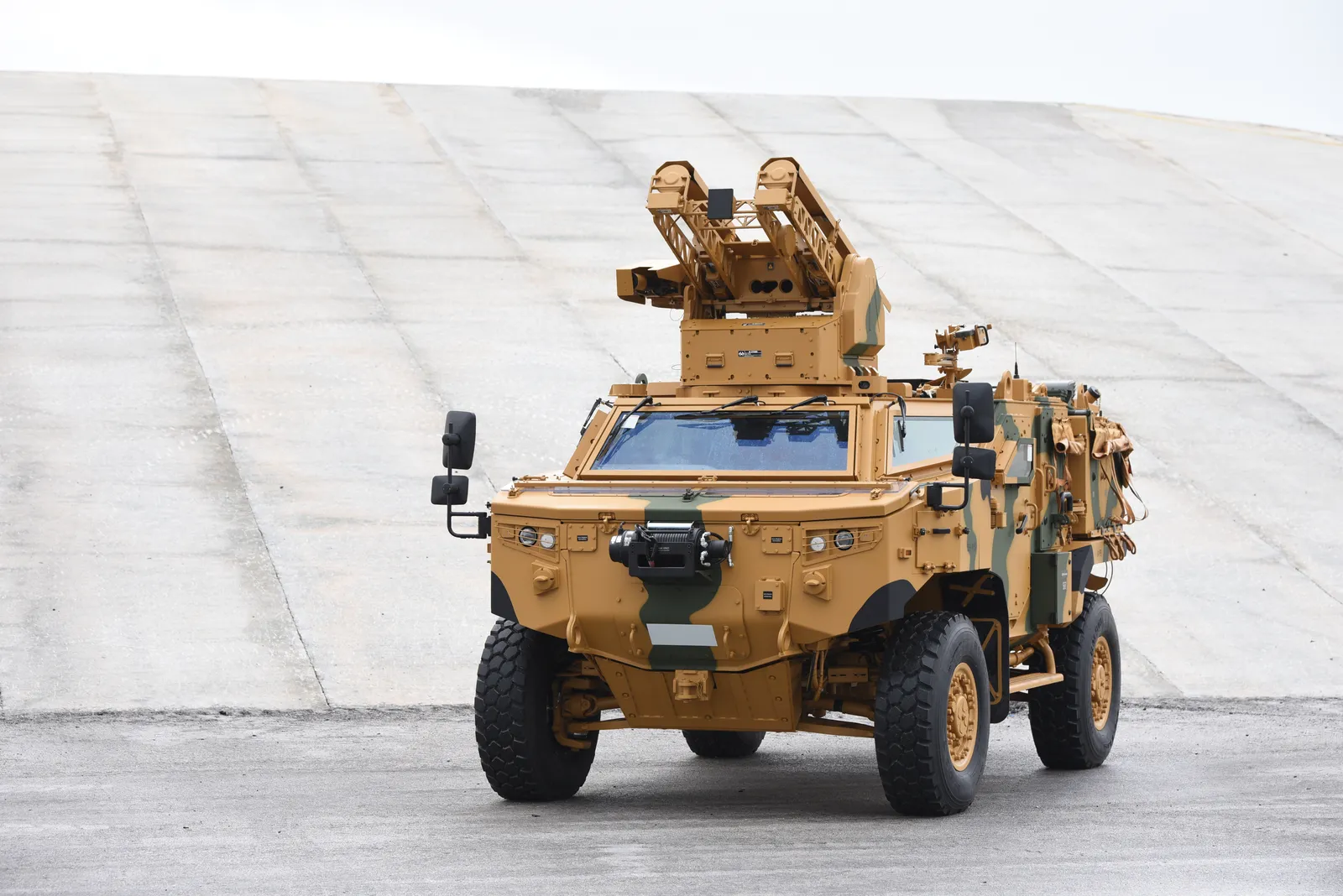
The result is a two-vehicle family. The KAPLAN STA is a tracked vehicle from FNSS’s KAPLAN family, designed to move with mechanised and armoured units across rough ground. The PARS 4×4 STA is a wheeled vehicle that gives lighter, faster units the same anti-tank punch on roads and tracks. Both carry a remotely operated launcher turret with ready-to-fire missiles, so the crew can engage from under armour, and both share the same missile, fire control logic and training pipeline.
OMTAS itself is a fire-and-forget missile with an imaging infrared seeker, built for engagements out to around four kilometres. Mounted on a vehicle with good optics, it lets a small team ambush tanks and armoured vehicles from long range and then move before the enemy can respond.
Key specifications
| Manufacturer | FNSS Savunma Sistemleri (Ankara, Türkiye) |
| Versions | KAPLAN STA (tracked); PARS 4×4 STA (wheeled) |
| Main weapon | OMTAS medium-range anti-tank missile (Roketsan) |
| Turkish user | Turkish Land Forces Command |
| Procurement authority | Presidency of Defence Industries (SSB) |
| Maximum speed | 110 km/h; 65 km/h off-road (SSB data) |
| Combat weight | 12,500 kg (SSB data) |
| Gradient / side slope | 60% / 30% |
| Protection | High ballistic and mine protection; spall liner; fire extinguishing and explosion suppression; mask-type CBRN protection |
| Crew systems | Air conditioning and heating; driver vision system; positioning and navigation; command, control and communications information system; auxiliary power unit |
| Status (Sept 2026) | 368 vehicles delivered; acceptance of vehicles added by contract amendments 7 and 8 under way |
The SSB specification reads like a list of lessons learned from recent wars. Spall liners and explosion suppression matter because an anti-tank vehicle is a priority target and will be shot at. The auxiliary power unit allows the crew to keep sensors and the turret running in a hide position with the main engine off, cutting both the heat and the noise signature that would give the vehicle away. The command and control information system links the vehicle to its unit’s battle network, so targets spotted by drones or reconnaissance teams can be handed to the missile crews. A 110 km/h road speed lets the wheeled version redeploy quickly between threatened sectors, while 65 km/h off-road keeps the tracked version moving with the units it protects.
The SSB programme and Turkish service
SSB signed the weapon carrier contract with FNSS in June 2016. The first contract covered 260 vehicles, reported at the time as 184 tracked KAPLAN and 76 wheeled PARS 4×4 vehicles. Prototype qualification was completed in October 2019 and the first vehicles entered service with the Turkish Land Forces in January 2020. Since then the programme has grown through successive contract amendments; FNSS marked its 300th delivered anti-tank platform at its Gölbaşı facility, and SSB’s September 2026 status puts the total at 368 vehicles delivered, with acceptance activities continuing for the vehicles added by amendments 7 and 8.
That steady growth is a credit to SSB’s approach. Instead of buying an imported anti-tank vehicle and a separate imported missile, Türkiye matched a domestic missile with a domestic vehicle and turret, and then expanded the order as the Land Forces gained experience. The programme also gave FNSS a production base for both its tracked KAPLAN and wheeled PARS lines, which now feeds into its wider export offer.
Who operates it?
The STA configurations are in service with the Turkish Land Forces. No foreign operator of the KAPLAN STA or PARS 4×4 STA has been officially announced, though Turkish press has reported strong international interest in the turret-armed anti-tank vehicles since they entered service.
Both underlying vehicle families have export customers. The KAPLAN family is in Indonesian service: the KAPLAN MT medium tank, developed jointly by FNSS and PT Pindad and known locally as the Harimau, was Türkiye’s first tank export, with the first vehicles handed over in 2022 and local production continuing at Pindad. In October 2024 FNSS and Pindad also agreed to build a KAPLAN armoured personnel carrier for the Indonesian Army. On the wheeled side, FNSS and Malaysia’s DefTech announced a partnership in 2022 to offer the PARS 4×4 and 6×6 to the Malaysian Army, building on the AV8 Gempita 8×8 programme. A buyer of the STA would therefore be choosing vehicle lines that are already supported abroad.
Can the STA go to Africa?
Anti-tank missiles have become one of the most useful weapons in African conflicts, and not only against tanks. In the wars in Libya, Sudan and the Sahel, guided missiles have been used against armoured vehicles, fortified positions, bunkers and armed pickups, often at long range. What many African armies lack is a protected vehicle that can carry modern missiles, find targets with good optics, fire and then move under armour. A turret-mounted, fire-and-forget system such as OMTAS on a mine-protected vehicle meets exactly that need.
The two-version structure also suits African terrain. The wheeled PARS 4×4 STA fits armies that cover long distances on poor roads, from the Sahel to East Africa, and want a fast reaction force able to stop an armoured raid. The tracked KAPLAN STA suits mechanised forces in North Africa that operate heavy armour and need anti-tank vehicles that can keep up with tanks across sand and rocky ground.
The most logical candidates are the armies with large armoured threats on their borders or in their own inventories. Morocco and Egypt run large mechanised forces and have both bought Turkish equipment in recent years. Nigeria, which already operates Turkish armoured vehicles and drones, faces insurgents who use captured armoured vehicles. Kenya and Ethiopia both maintain sizeable armoured fleets in an unstable region. In West Africa, Senegal and Côte d’Ivoire are modernising their forces with an eye on the Sahel, where mobile anti-armour capability is a sensible insurance policy.
The strongest argument for the Turkish package is that it comes complete: vehicle, turret and missile from one country, backed by a government procurement agency that has already managed the integration and fielded the system at scale. That shortens the path from contract to capability and simplifies training and spare parts, issues that often decide whether a new weapon system is used well or sits in a depot.
How it compares
Many armies field anti-tank missiles on light vehicles, but often as add-on launchers that expose the gunner. The STA’s remotely operated turret keeps the crew under armour, and the pairing with a fire-and-forget missile means the vehicle does not need to stay exposed while the missile flies. That combination puts it in the same class as Western and Russian dedicated tank-destroyer vehicles while keeping the cost and logistics of a light armoured vehicle.
FAQ
What does STA stand for?
STA stands for Silah Taşıyıcı Araç, meaning weapon carrier vehicle. The programme provides vehicles that carry Roketsan’s OMTAS anti-tank missile for the Turkish Land Forces.
How many STA vehicles have been delivered?
According to SSB, 368 weapon carrier vehicles had been delivered as of September 2026, with acceptance of vehicles added by contract amendments 7 and 8 continuing.
What is the difference between KAPLAN STA and PARS 4×4 STA?
The KAPLAN STA is a tracked vehicle for mechanised and armoured units, while the PARS 4×4 STA is a wheeled vehicle for faster, lighter formations. Both carry OMTAS missiles in a remotely operated turret.
What missile does the STA carry?
The STA carries OMTAS, a medium-range, fire-and-forget anti-tank missile developed by Roketsan with an imaging infrared seeker.
Has the STA been exported?
No export of the STA versions has been announced. The KAPLAN family is in Indonesian service through the KAPLAN MT (Harimau) and a KAPLAN APC programme, and FNSS has offered the PARS 4×4 in Malaysia with DefTech.
Related: Roketsan company profile · FNSS company profile · Turkish systems in African service