Kenya and Tanzania Are Building Very Different Militaries

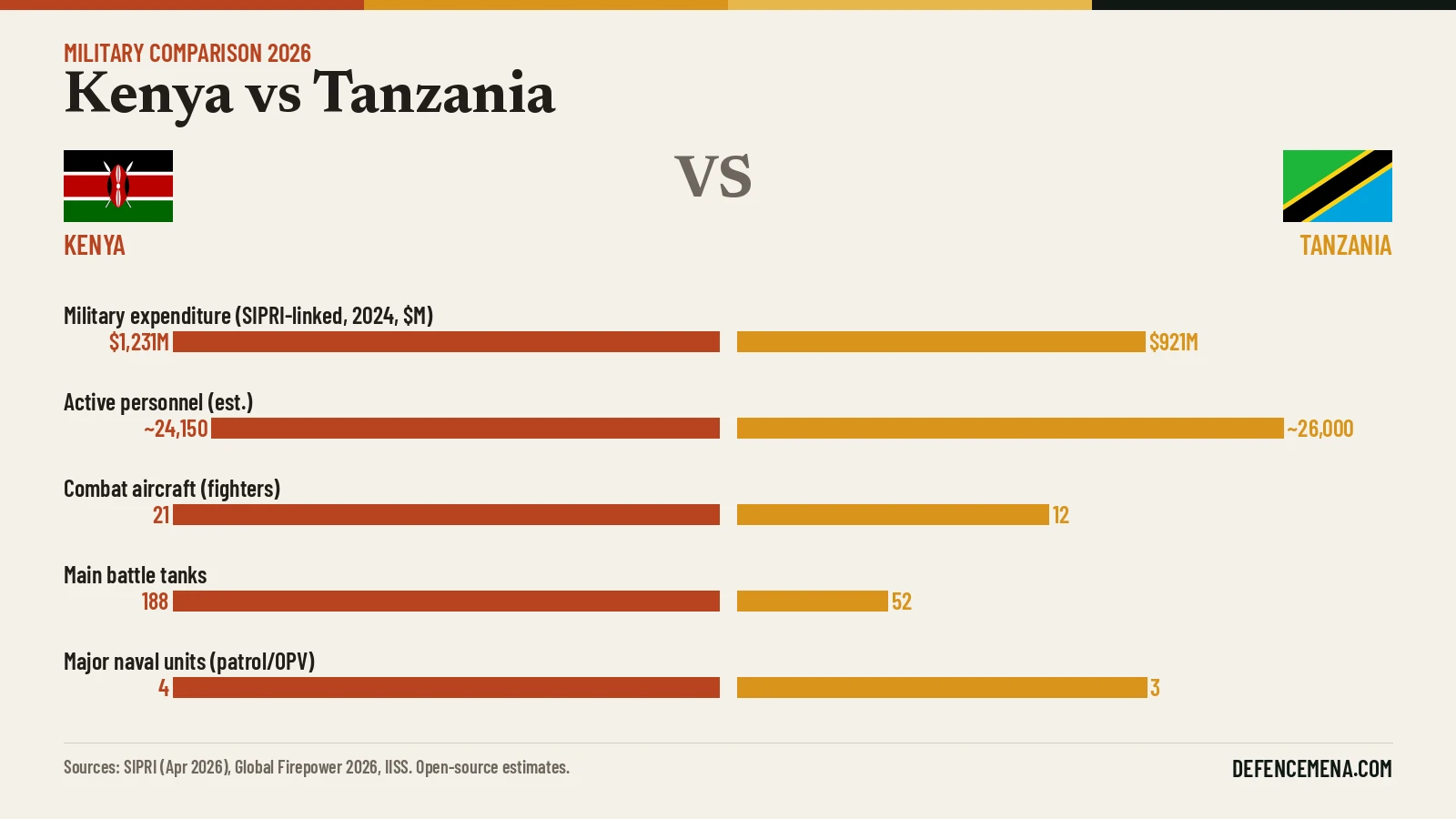


Kenya and Tanzania share a border, a coastline and decades of wary cooperation inside the East African Community, but they have built their armed forces in almost opposite directions. Kenya has leaned into a diversified, Western- and Turkish-linked modernisation built around counter-terrorism in Somalia; Tanzania has kept a smaller, more conservative force still anchored in Chinese and Soviet-era equipment, now backed by a sharply rising budget.
Both countries field forces shaped more by internal security and regional stability than by any prospect of fighting each other. This comparison sits alongside DefenceMENA’s Kenya desk and Tanzania desk, in the East Africa category. For a fuller look at one side of this pairing, see DefenceMENA’s Kenya military strength profile and its companion piece on the Kenya Air Force aircraft inventory; no equivalent Tanzania profile has been published yet.
Kenya vs Tanzania at a glance
| Metric | Kenya | Tanzania | Source / year |
|---|---|---|---|
| Military expenditure (SIPRI-linked) | $1,231m (2024) | $920.8m (2024) | SIPRI data via Trading Economics, 2024 (latest consistent figure for both) |
| Official defence budget | Ksh252.15bn (~$1.95bn), FY2026/27 MoD estimate | Sh4.29 trillion (~$1.62bn), FY2026/27 approved | Kenya MoD; The Citizen / Defence24, 2026 |
| Active personnel | Estimated 24,000–50,000 (sources disagree sharply) | Estimated 25,000–27,000 | GFP 2018/CIA Factbook vs ADF Magazine 2026; CIA Factbook 2020 |
| Reserve / paramilitary | ~5,000 reserve (dated figure, 2018) | ~80,000 People’s Militia (dated figure, 2005) | Open-source, both figures old – treat as indicative only |
| Main battle tanks | ~188 (78 confirmed Vickers Mk3 + ~110 estimated T-72/T-72AV, status unclear) | ~52 (32 T-54, 15 Type 59G, 5 VT-2) | DefenceMENA data store; GlobalMilitary.net 2026 (single-tracker estimate) |
| Combat aircraft (fighters) | ~21 F-5E/F Tiger II (range 17–23 across sources) | ~12 J-7G (plus 2 two-seat trainers) | migflug.com; Military Africa, 2026 |
| Attack helicopters | Up to 12 MD-530F Cayuse Warrior (6 delivered) + ~2 AH-1F Cobra | None confirmed | AFRICOM/DVIDS; DefenceMENA research |
| UAV / armed drones | 6+ Bayraktar TB2 (armed) + 3 Anka-S | None confirmed | Military Africa; Army Recognition, 2024–25 |
| Major naval vessels | 1 OPV (Jasiri) + 2 Shupavu-class patrol boats; ~25 small craft (tracker estimate) | Small number of patrol boats; no frigates, OPVs or submarines | defensa.com; globalsecurity.org; DefenceMENA research |
| Submarines | 0 | 0 | – |
| Air defence | 1 SPYDER medium-range battery (delivered Dec 2025) + legacy towed guns | Legacy Soviet-era SA-3/SA-6/SA-7 systems, operational status unclear; no confirmed modern SAM | Military Africa; Army Recognition (dated) |
| Defence industry | Kenya Ordnance Factories Corporation (ammunition); Small Arms Factory, Ruiru | Mzinga Corporation (ordnance); SUMA JKT; Nyumbu Automotive Technology Centre | mod.go.ke; Tanzania MoD reporting |
| GFP rank (auxiliary, Africa) | ~12th (2026 index) | ~14th (2026 index) | Global Firepower 2026 index, via secondary reporting – not a capability measure |
Defence budgets
Kenya and Tanzania illustrate why a country’s official defence budget and its SIPRI-estimated military expenditure are not the same number. SIPRI’s consistent cross-country methodology put Kenya at $1,231m and Tanzania at $920.8m in 2024, the most recent comparable year for both. Kenya’s own Ministry of Defence, by contrast, requested Ksh252.15bn for FY2026/27 – Ksh235.5bn for the core Defence programme plus Ksh13.14bn for a new Defence Industrialisation line – roughly $1.95bn at the October 2026 rate of about Ksh129.5/USD. Kenyan press citing SIPRI-linked figures separately put 2025 spending at a record Sh190bn (about $1.47bn), 4.63% of government spending and the highest share since 2018.
Tanzania’s government has been even more explicit about the trajectory: the FY2025/26 budget rose to around Sh3.65 trillion, then Parliament approved a further 17.57% increase to Sh4.29 trillion for FY2026/27 (roughly $1.62bn at an October 2026 rate of about 2,645 shillings/USD), explicitly framed around modernisation. The Chanzo reported a slightly different figure of Sh4.2 trillion, a reminder that Tanzanian budget reporting is not fully consistent across outlets. Set against SIPRI’s $920.8m 2024 estimate, Tanzania’s official allocation is growing faster in percentage terms than Kenya’s, even though Kenya still spends more in absolute terms on both measures.
Personnel
Open-source personnel figures are unusually inconsistent here and should be read as ranges. A 2018 Global Firepower assessment put the Kenya Defence Forces at 24,150 active personnel and 5,000 reserves – figures still echoed in SIPRI-linked press reporting – while an ADF Magazine report from September 2026 cites 50,000 active, a figure Wikipedia also carries without a clear primary source; DefenceMENA could not resolve the gap, which may reflect different counting conventions (regulars only vs regulars plus paramilitary formations like the General Service Unit). Tanzania’s numbers cluster more tightly: a 2020 CIA Factbook estimate gives 26,000 active personnel (22,000 land, 1,000 naval, 3,000 air), and its People’s Militia reserve was last reliably put at about 80,000 in 2005 – both figures dated rather than current.
Air power
Kenya’s air force is still built around a single fighter type bought new in the 1970s. Its roughly 21 Northrop F-5E/F Tiger IIs (counts range 17–23) have been upgraded twice but have no confirmed successor, despite a 2015 rumour of ex-Israeli F-15s no later source has corroborated and a January 2026 Indian offer of the HAL Tejas Mk1A still a pitch, not a contract. Tanzania’s fighter fleet is smaller and newer in design lineage but arguably no more capable in practice: around 12 Chengdu J-7G fighters acquired from China from 2009, alongside older F-5 and F-7 airframes a MilAvia assessment cited on Wikipedia says fly only rarely due to airworthiness problems.
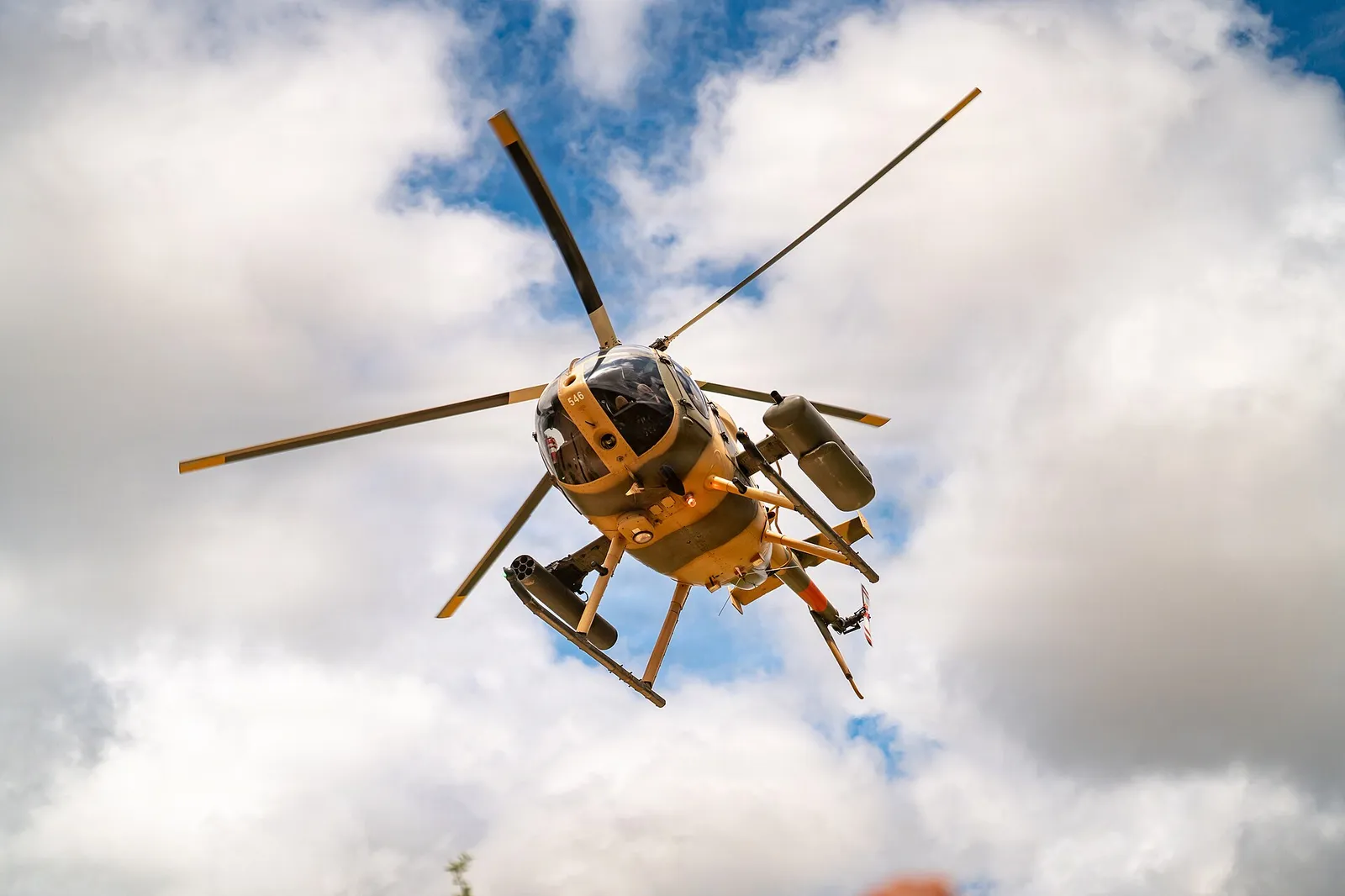
Transport and rotary assets separate the two forces more clearly. Kenya operates three Leonardo C-27J Spartan transports delivered in 2020, a mixed Dash 8/Harbin Y-12/PZL Skytruck fleet, and the region’s most varied helicopter inventory – up to roughly 40 MD-500/MD-530F Cayuse Warrior scout and armed types, around 13 SA330/IAR 330 Puma, plus smaller Z-9, AW139, UH-1H Huey II, AH-1F Cobra and Mi-171 fleets. Tanzania’s transport modernisation lags: a January 2024 contract for two C-27J Spartans had not been confirmed as delivered by October 2026. Trainers favour Kenya too, with an all-Grob G120TP/G120A fleet at the Aviation Centre of Excellence opened at Laikipia in 2022; no equivalent dedicated trainer fleet was found for the Tanzania Air Force Command. The gap is starkest on armed UAVs: Kenya’s 6-plus Bayraktar TB2 and 3 Anka-S drones, both Turkish, give it a strike and surveillance capability Tanzania has no confirmed equivalent of – no Wing Loong, CH-4 or other Chinese combat drone was found in Tanzanian service.
Land forces
Armour counts come from open-source trackers rather than official orders of battle and should be read with that caveat. Kenya’s tank fleet is reported at around 188 vehicles: 78 confirmed British-origin Vickers Mk3 and an estimated 110 Soviet-design T-72/T-72AV acquired via Ukraine (including 33 delivered aboard the hijacked MV Faina in 2008), though the T-72 component’s operational status is not well documented. Tanzania’s fleet is smaller and more homogeneous: GlobalMilitary.net’s 2026 estimate gives 32 T-54, 15 Type 59G and 5 Norinco VT-2 (first shown at a 2021 independence parade) – a single-tracker figure DefenceMENA could not cross-check.
Kenya’s wheeled-vehicle fleet is unusually diverse by supplier: South African Puma M26-15 and Mamba Mk7, Turkish Hizir (a 2021, $69m order from Katmerciler), US M1117 (an Excess Defense Articles transfer commissioned only in May 2026), Chinese Type-92A/WZ-551 and British Bastion among others. Artillery mixes Serbian Nora B-52 155mm self-propelled guns (up to 18), British L118 Light Guns (40) and Soviet-design BM-21 Grad MLRS (11), with Milan and Carl Gustaf anti-tank weapons. Tanzania’s land-forces picture is thinner in public reporting: GlobalMilitary.net credits it with around 12 infantry fighting vehicles, 75 armoured personnel carriers (including Chinese WZ-551s), 163 light armoured vehicles and an estimated 285 artillery pieces – more than double Kenya’s count, though again from a single aggregator. No confirmed modern anti-tank guided weapon was found in Tanzanian service. The clearest land-forces modernisation on the Tanzanian side is industrial: a 2025 partnership between the state-linked Tanzania Automotive Technology Centre and the UAE’s Streit Group to manufacture and repair armoured vehicles domestically, starting with military variants.
Naval power
Both countries have Indian Ocean coastlines, so this is a genuine comparison, but neither operates what most navies would call a blue-water fleet. Kenya’s main surface combatant is the OPV KNS Jasiri, an 85-metre, 1,400-tonne vessel whose delivery was long delayed by a contractual dispute and only recently fitted with armament; it is backed by two ageing Shupavu-class patrol boats in service since 1997. GlobalMilitary.net’s internally inconsistent 2026 estimate puts total Kenyan naval strength at around 25 vessels. Japan’s Official Security Assistance programme has selected Kenya for possible future patrol boats with no confirmed timeline, and September 2026 reporting describes the navy’s budget as constrained toward personnel and maintenance rather than new vessels.
Tanzania’s navy is smaller still, and recent procurement has mostly gone to other agencies. Two US-donated patrol boats handed to the Tanzanian Navy in 2022 are the only clearly navy-attributed vessels found. More recent additions – two Japanese-built Sailfish-class speedboats launched in July 2026 and a Turkish contract for boats at Mtwara and Bukoba ports – went to the Tanzania Shipping Agencies Corporation and other civil bodies, not the navy proper, and Bukoba serves Lake Victoria rather than the coast. Neither country operates a frigate, corvette, missile boat or submarine, which is why DefenceMENA treats “total ships” as a weak strength measure here: Kenya’s one real oceangoing combatant and Tanzania’s handful of patrol boats are not comparable platform-for-platform.
Air defence
This is the sharpest capability gap in the comparison. Kenya fielded a SPYDER medium-range air-defence battery from Israel’s Rafael in December 2025, financed through a roughly $6m loan, firing Python-5 infrared and Derby radar-guided missiles with Elta EL/M-2106 and EL/M-2084 radars; the exact fielded configuration has not been officially detailed. Below SPYDER, Kenya’s layer is only legacy towed guns – Swedish L-70 40mm and Swiss Oerlikon 20mm – with no long-range SAM or documented integrated command-and-control network. Tanzania’s inventory is reported mainly through Cold War-era references: SA-3 and SA-6 systems first identified in the 1970s, and 9K32 Strela-2 MANPADS shown in a 2021 parade, with Army Recognition listing two air-defence artillery battalions. None of this confirms current operational status, and a 2022 Tanzanian delegation visit to India’s Bharat Dynamics Limited, which offered the Akash and Medium Range SAM systems, produced no confirmed follow-on contract. On present evidence, Kenya has fielded one modern, networked SAM layer that Tanzania has no reported equivalent of.
Drones and loitering munitions
Kenya operates the only confirmed armed-drone capability in this comparison: at least six Bayraktar TB2s from Türkiye’s Baykar, delivered in late 2024 after Kenyan crews trained at Baykar’s Keşan facility, flying alongside three earlier Turkish Aerospace Anka-S drones, both used operationally against al-Shabaab including in the Boni Forest. Tanzania shows no confirmed military UAV or loitering-munition inventory – its visible drone activity is civilian, including a domestically built agricultural-drone sector profiled by IEEE Spectrum. This is a case where the absence of a system is itself the finding: no Chinese Wing Loong, CH-4 or other combat UAV type was found in Tanzanian service.
Turkish systems in Kenya and Tanzania
Türkiye is a significant and recent supplier to Kenya but has no confirmed presence in Tanzania’s inventory, so this section covers one side of the pairing rather than a head-to-head.
| System | Manufacturer | Quantity | Status | Role |
|---|---|---|---|---|
| Bayraktar TB2 | Baykar | 6+ (exact total unconfirmed) | Delivered late 2024, operational | Armed/surveillance UAV |
| Anka-S | Turkish Aerospace Industries | 3 | Operational, acquired earlier than TB2 | Surveillance/strike UAV |
| Hizir MRAP | Katmerciler | 118 | On contract from a 2021 order worth $69m | Mine-resistant troop carrier |
The practical case for these systems is cost, delivery speed and fit with Kenya’s counter-terrorism mission rather than any inherent superiority over Chinese or Western equivalents: Baykar’s TB2 is cheaper to acquire and operate than Western medium-altitude drones of similar endurance, Turkish contracts have moved from signature to delivery faster than Kenya’s long-pending Western fighter discussions, and Katmerciler’s Hizir fits a mine-resistant troop-carrier niche Kenya’s South African and American MRAPs only partly covered. SIPRI-linked reporting names Türkiye, alongside the United States, as one of Kenya’s two leading arms suppliers by value in 2024. Tanzania’s closest equivalent systems are Chinese – J-7G fighters and Type 63A amphibious tanks, not Turkish drones – which makes this less a contest between suppliers’ equipment and more a reflection of which modernisation path each country has taken.
Defence industry
Neither country has a large indigenous arms industry, and ammunition production is the most developed segment in both. Kenya’s Kenya Ordnance Factories Corporation in Eldoret is the country’s only ammunition manufacturer, historically producing 20,000–60,000 rounds per day, with a three-phase upgrade targeting a 35% capacity increase by FY2027/28; a Small Arms Factory opened in Ruiru in 2021 with roughly 60% local components and capacity of about 12,000 rifles a year. A reported South African-linked armoured-vehicle venture, Osprea Logistics, has been described in Kenyan reporting as having failed to begin production – a reminder that announced projects do not always translate into output.
Tanzania’s industrial base is built around army-linked conglomerates rather than a single ordnance corporation: Mzinga Corporation handles ammunition; SUMA JKT, run by the National Service, is a diversified industrial arm well beyond defence manufacturing; and the Tanzania Automotive Technology Centre at Nyumbu, Kibaha, hosts the 2025 Streit Group partnership for armoured-vehicle manufacturing, starting with military variants. Neither country’s industrial base supports large-scale export or complex platform production – both remain import-dependent for combat aircraft, modern armour and air defence.
Main suppliers
SIPRI’s public Arms Transfers fact sheet for 2021–25 does not break out country-level supplier shares for Kenya or Tanzania – like most African states outside the largest importers, both are folded into regional totals (sub-Saharan Africa’s imports fell 41% between the two periods). The figures below are drawn from national and trade reporting rather than a direct SIPRI country pull, and should be read as indicative only.
| Country | Leading suppliers reported | Basis |
|---|---|---|
| Kenya | Israel, Italy and the United States reported to account for roughly 90% of imports combined, 2020–25; Türkiye and China named as emerging suppliers | Business Daily Africa, citing SIPRI-linked reporting; Kenya ranked Africa’s 2nd-largest major arms importer by value in 2025 |
| Tanzania | China dominant historically (J-7G fighters, Type 63A tanks from a 2014-era acquisition); legacy Soviet/Russian equipment; no confirmed major Western or Turkish platform supplier | SIPRI-period secondary reporting (2021–22); DefenceMENA research |
Sub-Saharan Africa as a whole shifted supplier mix in the 2019–2023 period, with China’s 19% share narrowly overtaking Russia’s 17% to become the region’s largest arms supplier – a trend broadly consistent with Tanzania’s China-leaning inventory, while Kenya has moved toward a more diversified Western-Israeli-Turkish mix.
Modernisation and orders not yet in service
Kenya’s near-term modernisation centres on air defence and army aviation: the SPYDER battery is still building out its footprint, the Kenya Ordnance Factories Corporation upgrade is not due until FY2027/28, and 144 M1117 vehicles transferred under a US Excess Defense Articles programme were only commissioned in May 2026. India’s January 2026 Tejas Mk1A offer remains unconfirmed, and a recurring Sh41.8bn “US attack aircraft sale” figure traces to a 2017 DSCA notification with no confirmed delivery – a recycled report, not a pending acquisition. Tanzania’s signal is primarily budgetary and industrial: the 17.57% FY2026/27 increase is framed around modernising the TPDF, the Streit Group partnership began in 2025, and a 2022 Indian pitch of Akash/MRSAM systems has produced no confirmed contract. Neither country has a confirmed fighter-replacement programme under contract.
Geography and doctrine
Kenya’s security posture is dominated by its northern and eastern borders: an Indian Ocean coastline centred on Mombasa, and land borders with Somalia, Ethiopia, South Sudan and Uganda alongside Tanzania. Its defining recent commitment has been an extended troop presence in Somalia under AMISOM, then ATMIS, now AUSSOM, against al-Shabaab – the campaign shaping most of its recent equipment choices, from the MD-530F helicopters delivered after the 2020 Manda Bay attack to the TB2 drones now flying over the Boni Forest. A 2024 US designation as a Major Non-NATO Ally, the first in Sub-Saharan Africa, underlines how far Kenya’s defence relationships have tilted toward Washington even as it diversifies suppliers elsewhere.
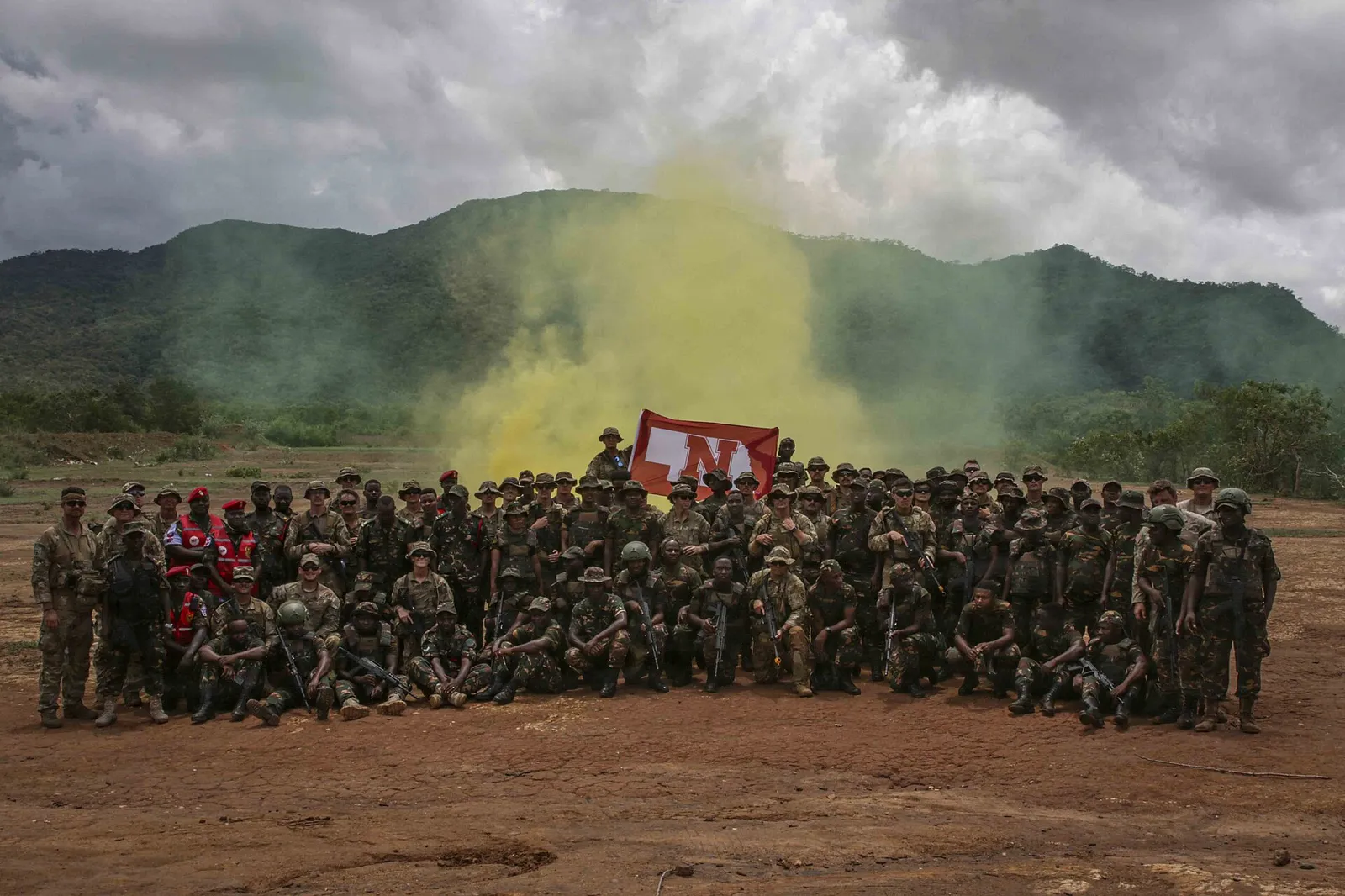
Tanzania’s geography is more complex: alongside its own Indian Ocean coast (Dar es Salaam, Tanga, Mtwara, Zanzibar), it borders Lake Victoria, Lake Tanganyika and Lake Nyasa, and shares land borders with eight countries – more neighbours than almost any other African state. That has pushed Tanzania toward riverine and lake-security questions (reflected in the Turkish-built boats destined for Lake Victoria’s Bukoba port) as much as blue-water ones, and its forces have contributed to regional peacekeeping, including in the DRC and the SADC-led response to the insurgency in Mozambique’s Cabo Delgado. Tanzania’s historically non-aligned defence posture, rooted in Cold War-era ties to China, still shows in an inventory more Chinese- and Soviet-equipped than Kenya’s increasingly mixed one.
What the numbers show
Kenya fields the larger, more diversified force by most measures here – more tanks, a newer and better-networked (if still limited) air-defence layer, the only confirmed armed-drone capability, and a wider spread of recent-vintage helicopters – while Tanzania has invested more heavily, at least on paper, in raw artillery and APC numbers and is now raising its budget faster in percentage terms. Kenya’s modernisation has been driven by an active counter-insurgency campaign in Somalia, pulling in American, Israeli, Italian and Turkish suppliers; Tanzania’s inventory still reflects a longer relationship with Chinese and Soviet-era suppliers, its most concrete recent move being the Streit Group partnership to build vehicles locally rather than import a new platform. Personnel figures for both countries are too inconsistent to support a confident comparison, and naval strength in both cases is better described as coastal patrol capacity than as a fleet.
Methodology and data notes
- Military expenditure figures use SIPRI-linked data for 2024, the most recent year with a consistent figure available for both countries from the sources checked; official national defence-budget figures use each country’s FY2026/27 estimate and are clearly distinguished from the SIPRI figures throughout.
- Currency conversions use approximate October 2026 market rates (Ksh ~129.5/USD; TZS ~2,645/USD) and are indicative, not official Treasury or central-bank conversions.
- Equipment quantities drawn from open-source trackers (GlobalMilitary.net in particular) are explicitly flagged as single-tracker estimates where no second source could be found, and active/reserve/paramilitary figures are kept separate throughout.
- No ordered-but-undelivered system (Tejas Mk1A pitch, unconfirmed C-27J for Tanzania, Akash/MRSAM pitch) is counted in either country’s active inventory; these appear only in the modernisation section.
- Global Firepower’s index is cited only as an auxiliary, attributed figure, never as a definitive measure of military strength, and its exact 2026 African rankings vary between secondary sources that reproduce it.
- Where open-source fleet or personnel estimates disagreed significantly between sources, this piece states the range rather than selecting a single number.
Sources
- SIPRI, Trends in International Arms Transfers 2025 (Fact Sheet, March 2026)
- SIPRI, Trends in World Military Expenditure 2025 (Fact Sheet, April 2026)
- Trading Economics, Tanzania military expenditure (SIPRI-sourced)
- Business Daily Africa, Kenya now Africa’s second-largest major arms importer
- The Citizen, Government raises defence budget by 17.57pc to boost modernization
- Defence24, What to make of the increased defence spending in East Africa
- migflug.com, Kenya Air Force fleet compilation
- Military Africa, Kenya receives Bayraktar TB2 drones from Turkey
- GlobalMilitary.net, Kenya vs Tanzania military comparison (open-source tracker)
- Army Recognition, Tanzanian army parades with Russian-made 9K32 Strela-2 systems
- The Citizen, Tanzania picks UAE firm in landmark armoured vehicles deal
- Janes, Tanzania parades VT-2 tank
- The Guardian (Tanzania), US$1.6 million patrol boats step up Tanzania’s maritime security
- Eurasian Times, Tanzania could be India’s next defense customer: key BDL
- DefenceMENA, Kenya Air Force Aircraft Inventory (2026)