South Africa Tells Defence Industry to ‘Scale, Not Slow Down’ After R10bn Export Year



South Africa’s trade minister has told the country’s aerospace and defence sector to scale up production for export rather than ease off, pointing to a R10.1 billion ($560 million) year for defence exports and two decades of growth at a state-backed industrial support programme.
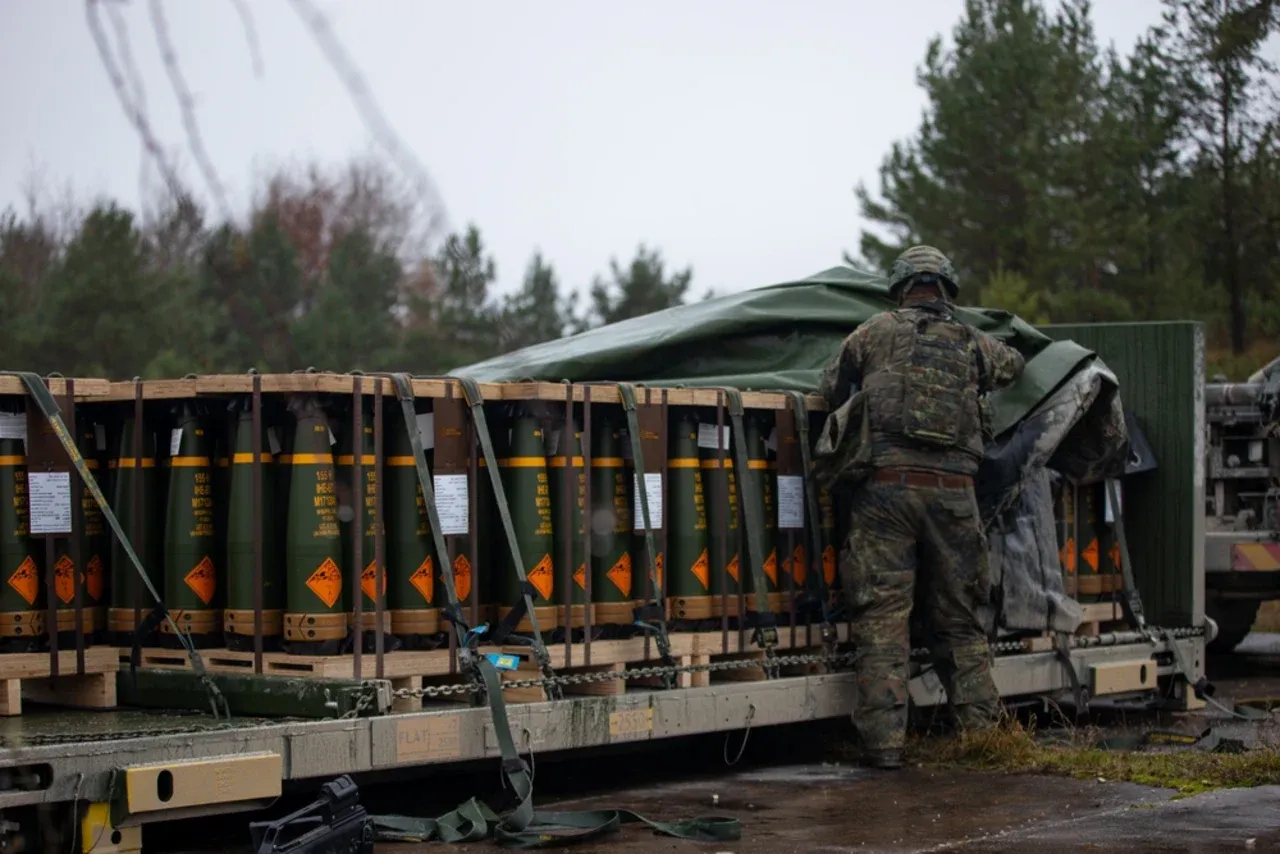
Photo: M1712A1 155mm high-explosive artillery shells manufactured by Rheinmetall Denel Munition of South Africa. Credit: Capt. Thomas McCarty/US Army, Public domain, via Wikimedia Commons
Speaking at the 20th anniversary of the Aerospace Industry Support Initiative (AISI) at Air Force Base Waterkloof on 17 September, Minister of Trade, Industry and Competition Parks Tau said South African firms needed to convert the momentum built around the Africa Aerospace and Defence (AAD) 2026 exhibition into sustained manufacturing capacity. “This is the moment to scale, not slow down,” Tau said, according to a defenceWeb report published on 12 October.
A R10 billion export base, led by munitions
Tau cited total South African defence exports of R10.1 billion in 2025, with Rheinmetall Denel Munition (RDM) accounting for R4.8 billion of that figure through munitions sales. RDM, the joint venture between Germany’s Rheinmetall and South Africa’s state-owned Denel, has told defenceWeb it invests close to R1 billion a year upgrading its four domestic production plants and plans to double production capacity within three years, as European and Gulf demand for 155mm artillery ammunition continues to outstrip supply.
Tau framed the build-out in terms of sovereignty rather than just trade, telling the Waterkloof audience that the ability to design, build, maintain and export local platforms “is a matter of national sovereignty,” not only an economic opportunity. He pointed to Armscor’s local-content requirements on state defence contracts as a tool that, in his view, builds industrial capability in a way that grants or subsidies alone cannot.
AISI: from a R300,000 budget to R50 million a year
The occasion for the speech was AISI’s 20th anniversary. The programme, which supports small and medium aerospace and advanced-manufacturing enterprises, started with an annual budget of roughly R300,000 and now operates on close to R50 million a year, according to figures Tau cited. Over the past decade, AISI says it has backed 142 SMEs, helped create or retain more than 1,236 jobs, supported development of 148 technologies and products, and helped firms obtain 49 international certifications and standards. Direct exports credited to AISI-supported companies exceed R332 million, on top of about R381 million in local industrial output.
One of the programme’s cited successes is Jonker Sailplanes, a Potchefstroom-based glider manufacturer whose JS5 sailplane has generated more than R30 million in export revenue to European customers — a rare example of a small South African aerospace manufacturer competing successfully in a developed export market.
Tau said the AISI model could be extended beyond aerospace into marine manufacturing and advanced manufacturing more broadly, and that government would look at special economic zones and other mechanisms to build manufacturing clusters around existing defence and aerospace suppliers. He also acknowledged the constraints working against that ambition: high energy costs, limited access to capital, logistics bottlenecks and a shortage of skilled labour, all problems that have dogged South African manufacturing well beyond the defence sector.
Context: an industry that has already found export markets
The minister’s remarks follow a year in which South Africa’s defence exports roughly tripled in value, driven heavily by European buyers restocking artillery ammunition stocks depleted by support for Ukraine, and by BRICS-aligned markets. Armscor, the state defence procurement agency, has separately been running a parallel push to bring historically excluded small businesses, including women-, youth- and veteran-owned firms, into defence supply chains through its own Supplier Information Day programme and a drone-pilot training scheme launched with Ntsu Aviation Academy.
RDM’s glide-bomb programme, the LongClaw, is one example of the higher-value, higher-margin products the sector hopes its export earnings can eventually fund — a shift from being principally an ammunition exporter toward precision-guided munitions.
Why it matters for Africa
South Africa remains the only country on the continent with a defence-industrial base capable of designing, testing and exporting complex weapons systems at scale, from RDM’s artillery ammunition to Denel’s guided missiles and Paramount Group’s armoured vehicles. Whether that base can translate a strong export year into durable local manufacturing jobs, rather than a commodity ammunition cycle tied to the war in Ukraine, will shape how much of the continent’s own defence procurement can eventually be met by African, rather than European, Turkish or Chinese, suppliers. A stronger AISI-style pipeline of SMEs also matters for African governments looking to reduce single-country dependency in their own arms imports, since a wider base of African suppliers gives buyers elsewhere on the continent more options than relying on Pretoria’s largest primes alone.
Sources
- defenceWeb: “Tau urges scaling of SA defence industry amid R10 bn in exports”
- defenceWeb: “From participation to prosperity: Armscor enables SMMEs to build defence industry of the future”