Saudi Arabia’s largest defence contracts of the past two decades span fighter aircraft, missile defence, armoured vehicles and warships. This list ranks the eight largest by publicly confirmed, signed contract value, not by the notification ceilings the Pentagon publishes when a possible sale first clears Congress. Data covers signed and implemented contracts from 2007 to 2020.
DEFENCE MENA | Biggest defence deals | Data as of September 2026
Saudi Arabia has for most of the past decade been among the world’s largest arms importers. According to the Stockholm International Peace Research Institute (SIPRI), the Kingdom was the largest single arms importer globally in 2015-19 before slipping to fourth largest in 2020-24. The United States supplied roughly 74 percent of Saudi arms imports in 2020-24, SIPRI’s Trends in International Arms Transfers report for 2025 states, with Spain and France the next-largest suppliers.
This ranking sets aside that broader import volume to focus on the contracts themselves: the dollar or pound-sterling figures written into signed letters of offer and acceptance, definitive contracts and production awards. Many of the numbers publicised around Saudi defence purchases are not contract values at all. A Defense Security Cooperation Agency (DSCA) notification sets a ceiling for a possible sale that Congress has cleared for negotiation, frequently two or three times the value of the contract eventually signed, if one is signed at all. This piece separates the two, ranking only confirmed signed-contract values and listing notable notified-but-unconfirmed cases separately.
How we ranked
Entries are ranked by the value of a signed, publicly confirmed contract, letter of offer and acceptance, or production award, sourced to the US government, the supplying company, or a reputable outlet citing one of those primary sources, with the year the contract was signed or definitized. Where a contract was later modified upward, the modified figure is used and both the initial and revised amounts are given. DSCA notifications, potential FMS ceilings, memoranda of understanding and letters of intent are excluded from the ranking; a selection appears under “Reported but unconfirmed” below. Eight deals met this bar with two independently corroborating sources as of the data date.
Key facts
- Saudi Arabia was the world’s largest arms importer in 2015-19 and fourth-largest in 2020-24 (SIPRI, 2025).
- The US supplied about 74 percent of Saudi arms imports in 2020-24 (SIPRI, 2025).
- The largest confirmed Saudi defence contract on record is the $29.4 billion F-15SA package signed in December 2011.
- Seven of the eight ranked deals below go to US suppliers; the eighth, the Typhoon, is British.
1. F-15SA fighter and upgrade programme — $29.4 billion
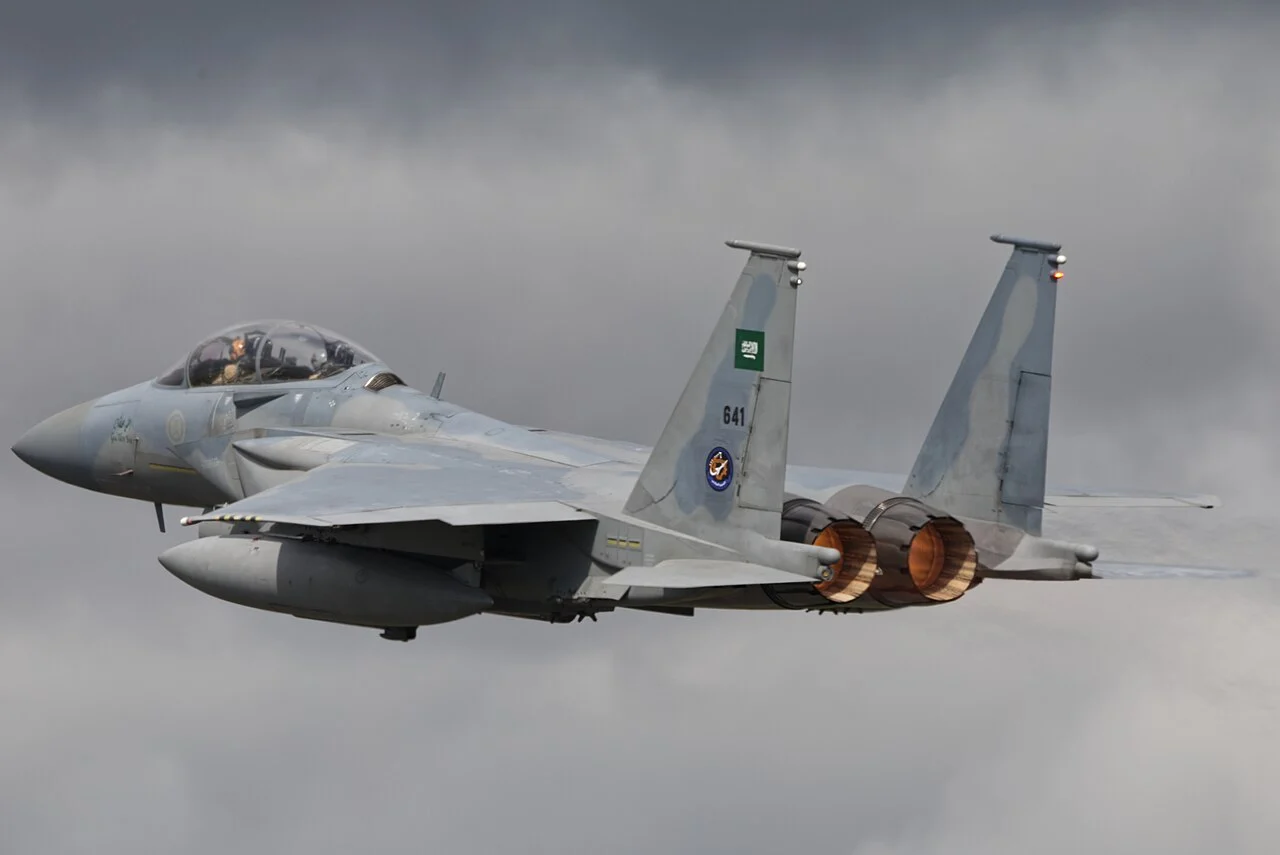
Buyer: Saudi Arabia. Supplier: Boeing, with the US government as FMS agent. System: F-15SA (Saudi Advanced) multirole fighter. Contract value: $29.4 billion, signed 29 December 2011 (CNN; Aerospace Manufacturing and Design). Quantity: 84 new-build F-15SA aircraft plus upgrade of 70 in-service F-15S airframes to the SA standard. Contract year: 2011. Delivery status: delivered and operational; new-build deliveries ran from 2015, upgraded F-15S aircraft began returning from 2014.
The package covered airframes, AN/APG-63(v)3 AESA radar, digital electronic warfare suite, conformal fuel tanks, munitions, spare parts, training and logistics support, with roughly $24 billion flowing to Boeing in letters of acceptance. It remains the largest single confirmed Saudi defence contract and one of the largest Foreign Military Sales agreements the United States has concluded, underwriting the Royal Saudi Air Force’s twin-seat, deep-strike-capable Eagle fleet, the backbone of Saudi airpower alongside the Typhoon fleet ranked below.
2. Saudi Arabian National Guard LAV 6.0 modernization — $15 billion
Buyer: Saudi Arabia (Ministry of the National Guard). Supplier: General Dynamics Land Systems-Canada. System: LAV 6.0-family light armoured vehicles in multiple variants. Contract value: reported at $15 billion, also cited as $14.8 billion (The Globe and Mail, 2016). Quantity: published figures vary by source; the programme covers several hundred vehicles in reconnaissance, command, ambulance and direct-fire configurations. Contract year: 2014. Delivery status: contracted, deliveries under way.
Negotiated government-to-government between Ottawa and Riyadh and executed through General Dynamics Land Systems-Canada’s London, Ontario plant, this is the largest manufacturing export contract in modern Canadian history and the largest confirmed Saudi land-systems deal. It replaced older LAV variants in National Guard service with a common, more survivable armoured family, independent of the Saudi Army’s separate M1A2S Abrams and armoured personnel carrier fleets.
3. F-15 fleet sustainment IDIQ — $9.8 billion
Buyer: Saudi Arabia. Supplier: Boeing. System: sustainment, maintenance and modernization support for the Royal Saudi Air Force’s roughly 130 F-15 aircraft. Contract value: $9.8 billion indefinite-delivery/indefinite-quantity (IDIQ) ceiling awarded by the US Department of Defense (UPI; FlightGlobal, both 10-11 November 2020). Quantity: covers the full in-service F-15 fleet, both S/SA-standard aircraft. Contract year: 2020. Delivery status: operational; work under the award runs on a multi-year basis.
An IDIQ contract sets a ceiling against which task orders are issued as needs arise, so the full $9.8 billion is not necessarily spent, but the award itself is a signed, binding vehicle rather than a notification. It keeps Boeing as through-life sustainment partner for the fleet the 2011 programme above put into service, covering depot maintenance, spares, technical support and incremental upgrades.
4. Eurofighter Typhoon — Project Salam — approximately $9 billion (£4.43 billion)
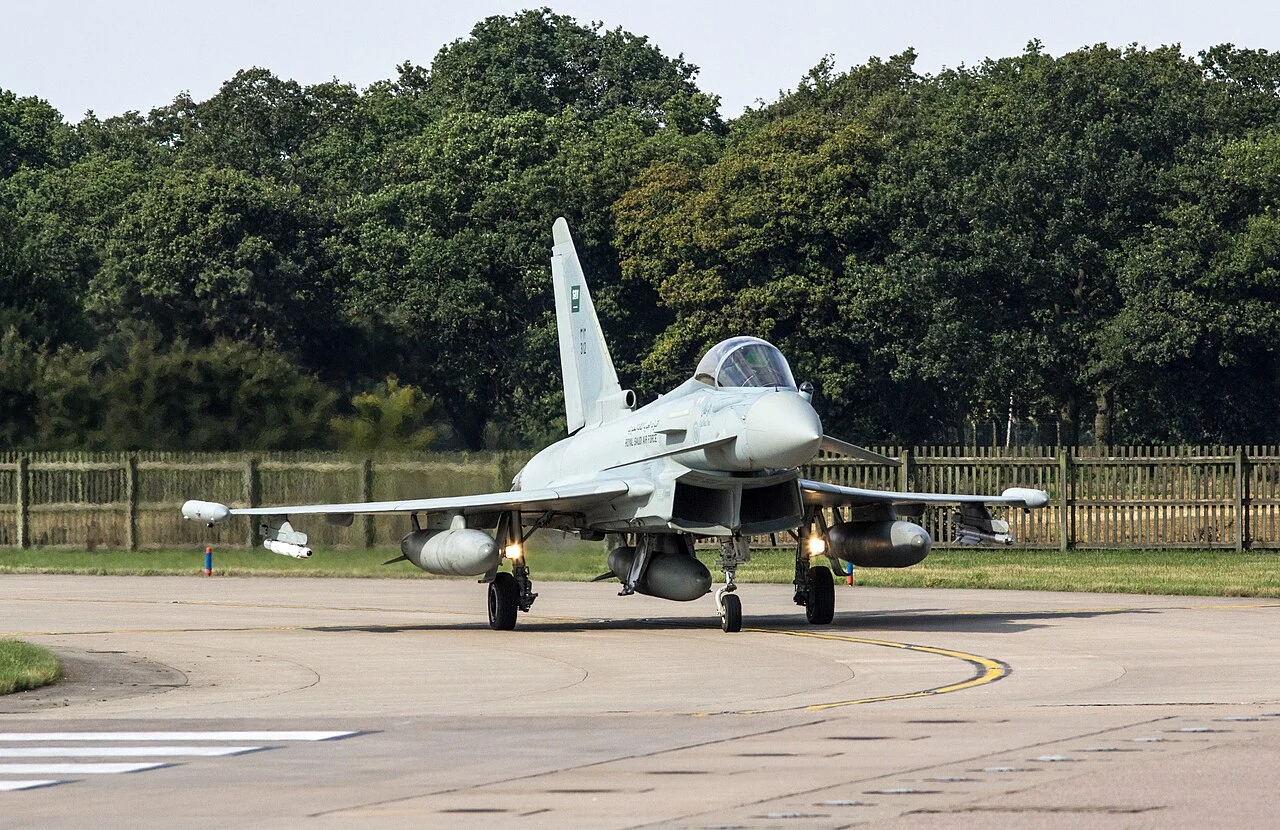
Buyer: Saudi Arabia. Supplier: BAE Systems, under a UK government-to-government agreement. System: Eurofighter Typhoon multirole fighter. Contract value: £4.43 billion at 2005 economic conditions (RUSI; contemporary press), commonly converted to roughly $9 billion, with add-on weapons and support pushing the lifetime programme value considerably higher. Quantity: 72 aircraft. Contract year: definitive contract signed September 2007, price terms revised February 2014. Delivery status: delivered and operational since 2009.
Project Salam followed the Al-Yamamah agreements as the successor UK-Saudi defence relationship, with final assembly split between BAE’s Warton site and Saudi facilities. The 72 Typhoons fly alongside the F-15SA as the RSAF’s two front-line multirole types; a follow-on tranche has been discussed with BAE Systems but remains reportedly under negotiation, not a signed contract (see “Reported but unconfirmed” below).
5. THAAD missile defence system — $6.3 billion
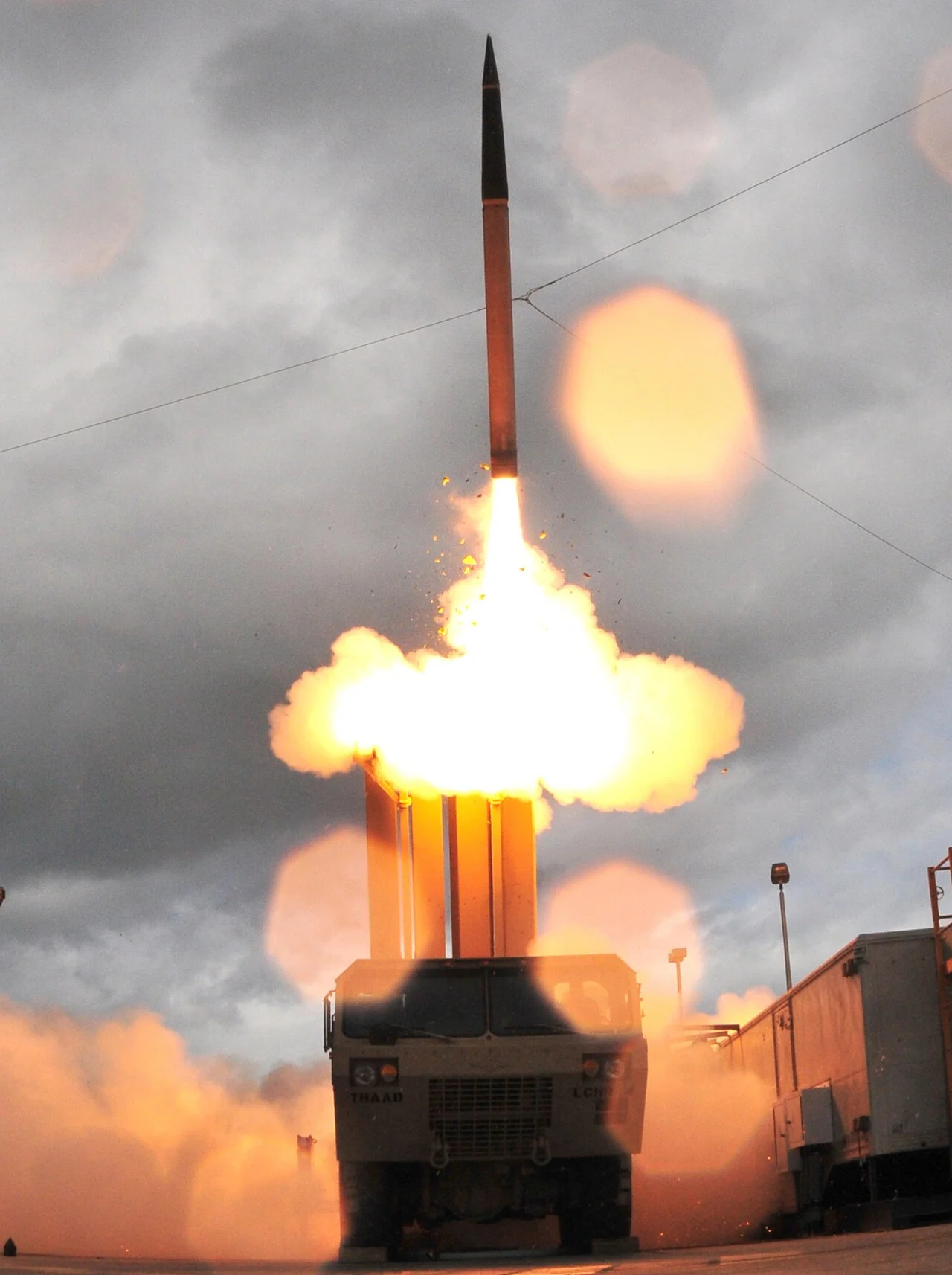
Buyer: Saudi Arabia. Supplier: Lockheed Martin. System: Terminal High Altitude Area Defense (THAAD), a hit-to-kill upper-tier ballistic missile interceptor. Contract value: a $1.48 billion production award in 2019 brought the cumulative contract to $5.36 billion; a March 2020 modification raised it to $6.3 billion (The Globe and Mail; The Defense Post; Inside Defense). Quantity: 44 launchers with associated missiles and fire-control equipment, per the November 2018 letters of offer and acceptance. Contract year: formalized November 2018. Delivery status: contracted, deliveries continuing; Saudi Arabia is the second THAAD export customer after the UAE.
The original DSCA notification put a $15 billion ceiling on the full THAAD case; the confirmed, signed contract value is well below that figure, illustrating the gap this ranking is built to track. THAAD gives Saudi Arabia an upper-tier layer against medium- and long-range ballistic missiles, complementing the Patriot batteries ranked below against Houthi and other regional missile and drone threats.
6. PAC-3 MSE missile production — $3.3 billion
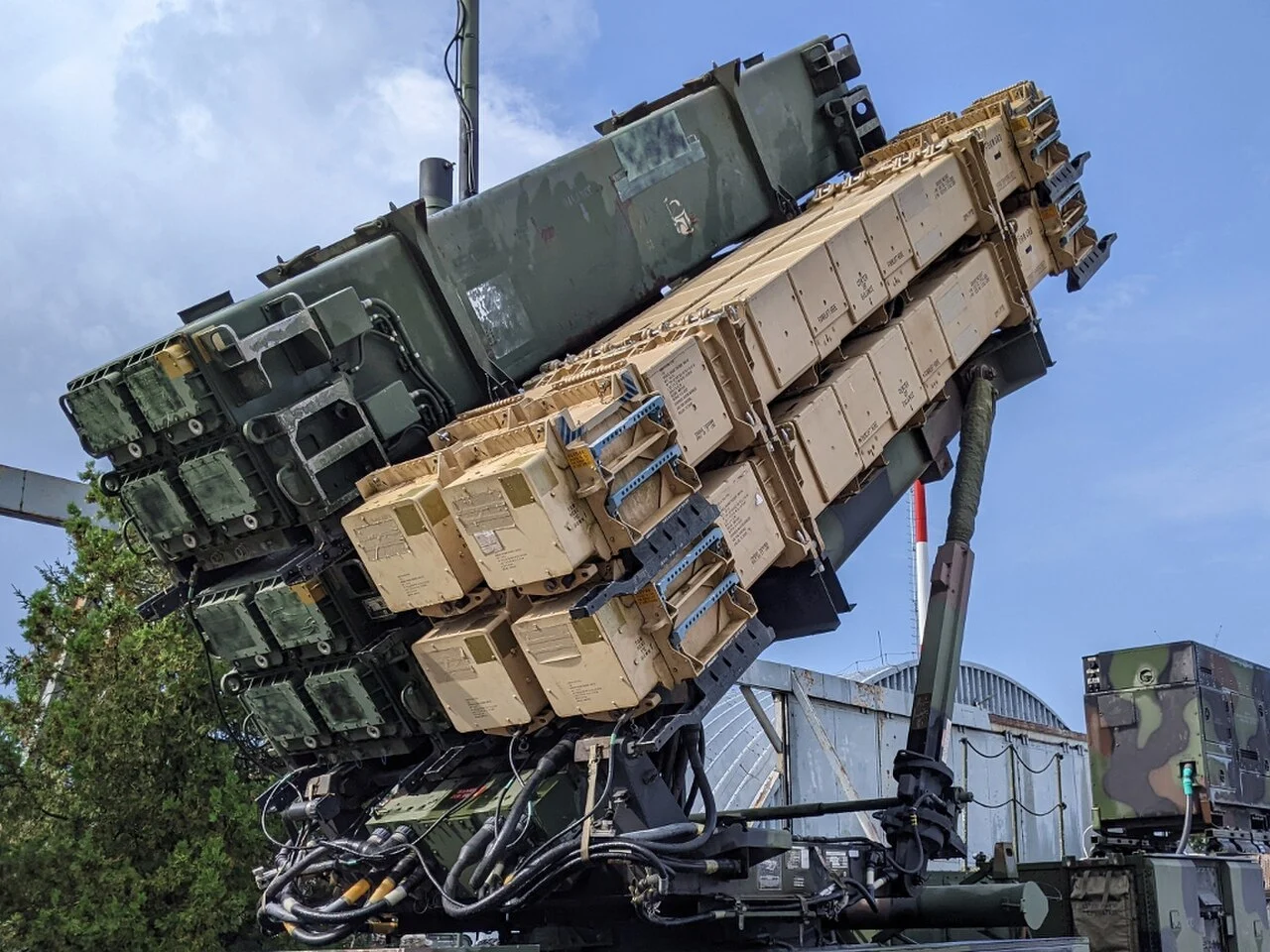
Buyer: Saudi Arabia and Kuwait, under a combined US Department of Defense contract. Supplier: Lockheed Martin. System: PAC-3 and PAC-3 Missile Segment Enhancement (MSE) interceptors. Contract value: $3.3 billion combined for both countries (UPI; Army Recognition, 21 December 2018); no confirmed Saudi-only split is published. Quantity: production of PAC-3 and PAC-3 MSE rounds plus ground support equipment and initial spares. Contract year: 2018, completion scheduled by 31 December 2024. Delivery status: contracted, deliveries continuing.
Because this contract covers two buyers under one Department of Defense award, the Saudi share of the $3.3 billion is not broken out in public sourcing; the full combined figure is used here with that caveat stated rather than an estimated split. The interceptors replenish Saudi Patriot batteries that have intercepted Houthi ballistic and cruise missile and drone launches from Yemen, making sustained PAC-3 production capacity an operational priority rather than a discretionary upgrade.
7. Multi-Mission Surface Combatant (Saudi Naval Expansion Program II) — $1.96 billion
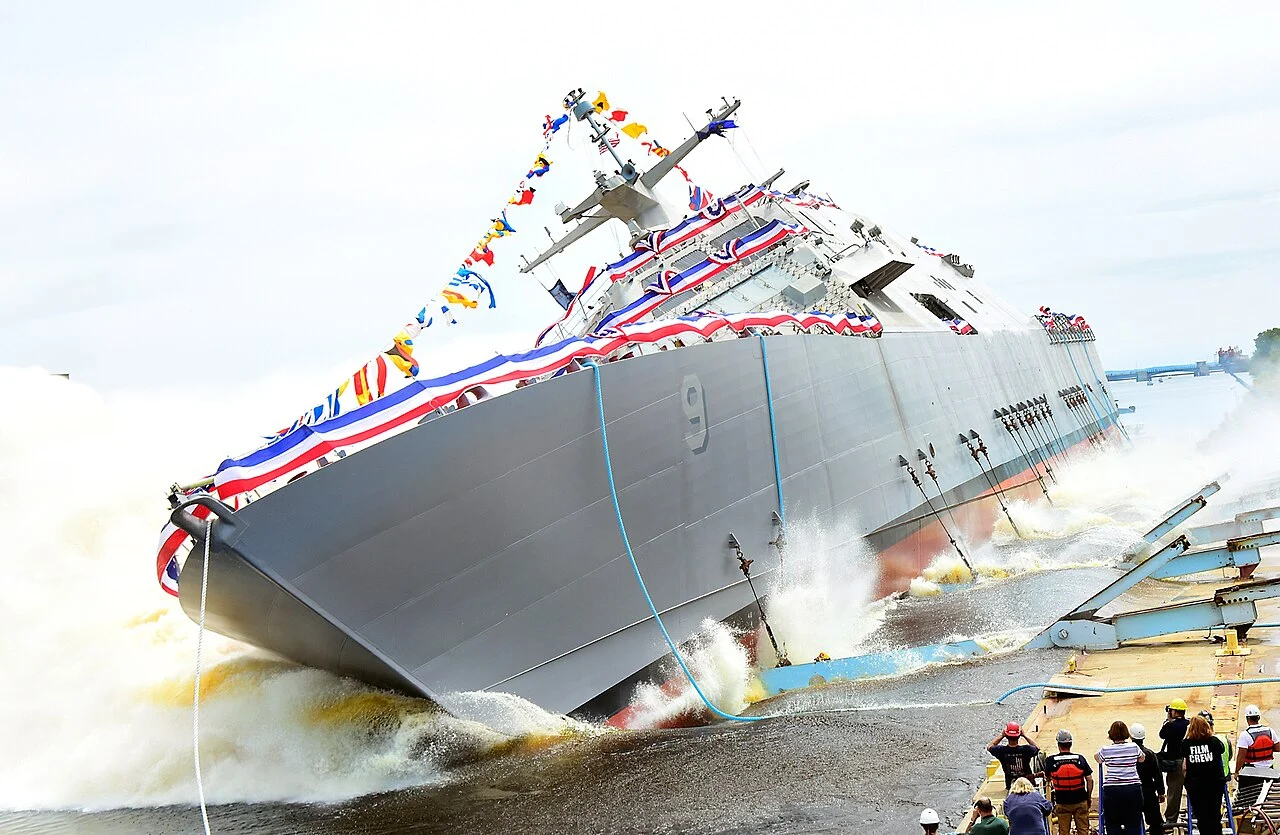
Buyer: Saudi Arabia (Royal Saudi Naval Forces). Supplier: Lockheed Martin, hulls built at Fincantieri Marinette Marine. System: Multi-Mission Surface Combatant (MMSC), a Freedom-class-derived frigate. Contract value: $1.96 billion production contract signed December 2019 (Defense News), after earlier long-lead-material awards of $481 million and $450 million in 2018 (Lockheed Martin). Quantity: four ships, part of Saudi Naval Expansion Program II, envisaged at up to four to five hulls with options. Contract year: 2019 production award, 2018 preparatory contracts. Delivery status: contracted, under construction.
SNEP-II is intended to give the Royal Saudi Naval Forces a modern multi-mission combatant, complementing the older French-supplied Al Riyadh-class frigates in Saudi Eastern and Western Fleet service. The MMSC design carries a COMBATSS-21 combat system, a 57mm main gun, vertical launch cells for surface-to-air missiles and a helicopter hangar, and is the largest confirmed Saudi naval shipbuilding contract of the period covered here.
8. Patriot Configuration-3 upgrade — $1.7 billion
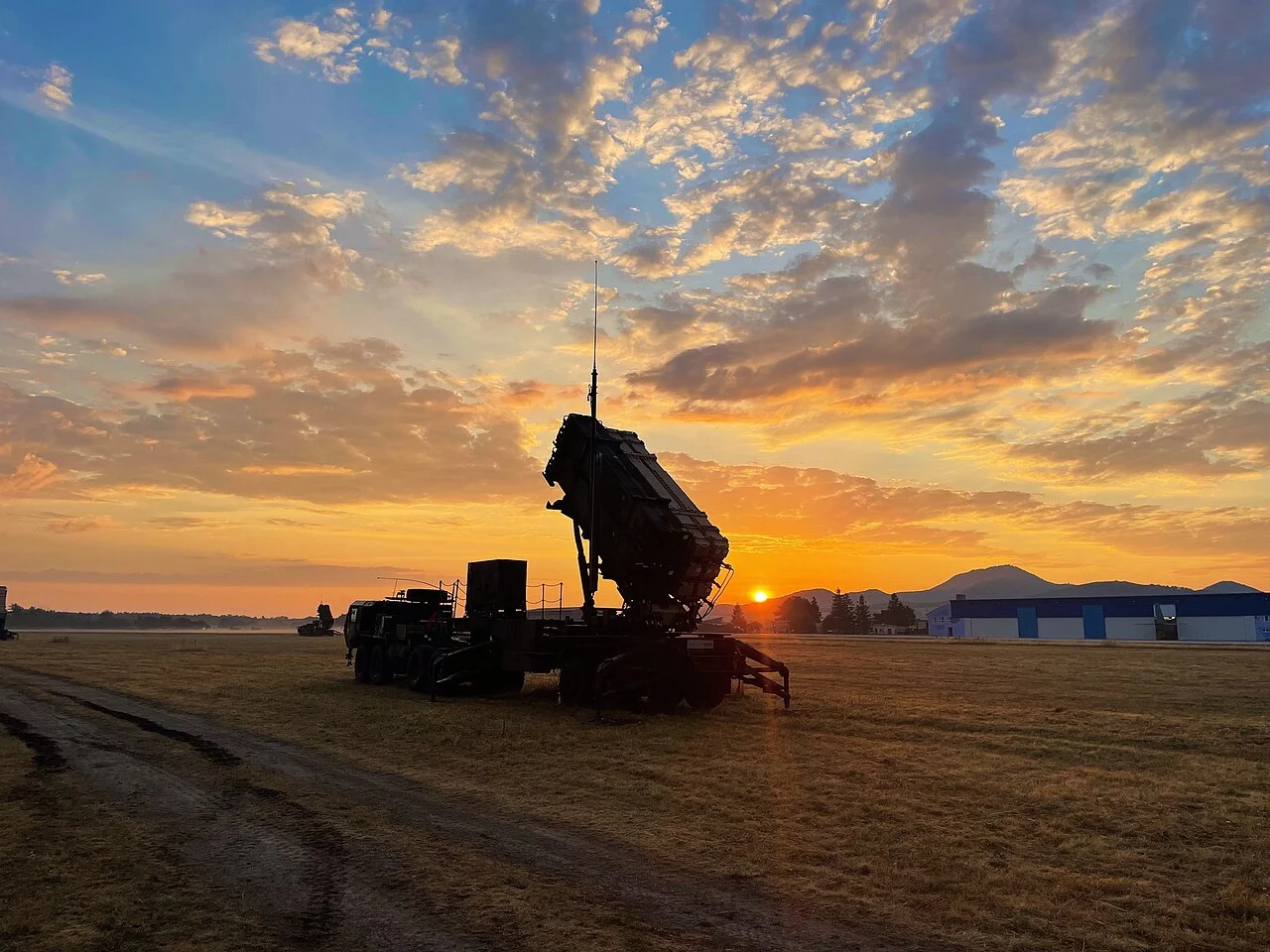
Buyer: Saudi Arabia. Supplier: Raytheon. System: Patriot air and missile defence system, upgraded to Configuration-3 standard. Contract value: $1.7 billion Direct Commercial Sale (Raytheon press release; UPI, 21 June 2011). Quantity: ground-system hardware, radar and fire-control upgrades and a training package across the Saudi Patriot battery fleet; published sources do not give a battery-by-battery count. Contract year: 2011. Delivery status: delivered and operational.
Configuration-3 brought Saudi Patriot batteries onto the same open-architecture command-and-control standard used by other US operators, improving integration with the later PAC-3 MSE and THAAD purchases ranked above. It predates the PAC-3 MSE contract by seven years, showing the pattern common to this list: Saudi missile defence procurement has proceeded in layered stages rather than as a single mega-contract.
Reported but unconfirmed
Several widely reported Saudi defence figures are not signed contracts and are excluded from the ranking above:
- $110 billion framework, 2017. Announced around a US presidential visit as letters of intent and potential sales; DSCA notifications issued since cover specific systems at smaller values, and the $110 billion figure was never one signed contract.
- PAC-3 MSE follow-on notification, $9 billion. A 2026 State Department approval for a possible sale of 730 additional interceptors. A DSCA notification ceiling, not a signed contract, pending negotiation.
- C-130J/KC-130J transport aircraft, $6.7 billion. A November 2012 DSCA notification for 20 C-130J and five KC-130J aircraft. Individual airframes have since been delivered under smaller, separately definitized contracts, but no confirmed total matching the notification has been published.
- CH-47F Chinook heavy-lift helicopters, $3.5 billion. A December 2016 DSCA notification for 48 helicopters. Confirmed contract increments identified in reporting (for example $222.5 million in 2017) are well below the notification ceiling.
- Eurofighter Typhoon follow-on tranche. BAE Systems and Saudi officials have discussed an additional order beyond the 72 Project Salam aircraft; this remains reportedly under negotiation, with no signed contract value.
Why it matters for the MENA region
Saudi Arabia’s confirmed contract history shows a procurement pattern built around layered air and missile defence, a two-type combat aircraft fleet, and infrequent, large-scale land and naval modernization contracts rather than continuous smaller ones. The F-15SA and Typhoon deals gave the Royal Saudi Air Force parallel US and European fighter fleets rather than dependence on a single supplier, shaping sustainment, munitions and training relationships on both sides of the Atlantic. The THAAD, PAC-3 MSE and Patriot Configuration-3 contracts form a layered defence against the ballistic missile, cruise missile and drone threats Saudi territory has faced from Yemen, with staged signing dates, upgrading fire control in 2011 before buying THAAD and PAC-3 MSE later, that show procurement responding to an evolving threat.
For the wider region, the scale of these contracts sets the benchmark against which Gulf neighbours’ own air and missile defence and fighter programmes are measured. The industrial offset and technology-transfer arrangements attached to several of them, including Saudi final-assembly work on the Typhoon, feed into Saudi Arabia’s Vision 2030 target of localizing 50 percent of military spending. Suppliers competing for the still-unconfirmed follow-on tranches listed above are, in effect, competing to become the next entrant on this list.
Sources
- CNN — “U.S., Saudi Arabia agree to $30 billion deal for F-15s” (2011)
- Aerospace Manufacturing and Design — “U.S., Saudi Arabia Sign $29.4 Billion F-15” (2011)
- The Globe and Mail — “The inside story of Canada’s $15-billion Saudi arms deal” (2016)
- UPI — “Boeing awarded $9.8B contract for Saudi F-15 support” (2020)
- FlightGlobal — “Boeing secures $9.8 billion contract for Saudi F-15 work” (2020)
- RUSI — “BAE Systems’ Salam Deal Hints at the Importance of Defence Industrial Partnerships with Emerging Powers”
- The Globe and Mail — “Lockheed Martin awarded $1.48-billion Saudi missile defense contract” (2019)
- The Defense Post — “Lockheed awarded $1.5 billion Saudi Arabia THAAD missile defense system contract” (2019)
- UPI — “Lockheed awarded $3.3B for PAC-3 missiles for Saudi Arabia, Kuwait” (2018)
- Army Recognition — “Lockheed Secures $3.3b Deal to Deliver PAC-3 Missiles to Saudi Arabia and Kuwait” (2018)
- Defense News — “Lockheed inks $1.96B contract for Saudi frigate” (2019)
- Lockheed Martin — “U.S. Government Awards Lockheed Martin Contract to Begin Production of Multi-Mission Surface Combatant for Kingdom of Saudi Arabia” (2018)
- Raytheon — “Raytheon Receives $1.7 Billion to Upgrade Patriot for Saudi Arabia” (2011)
- UPI — “Raytheon gets $1.7 billion Patriot deal” (2011)
- SIPRI — “Trends in International Arms Transfers, 2025” fact sheet
Related reading: Main Battle Tanks of Arab Armies in 2026 on DefenceMENA, and the Saudi Arabia desk for further coverage.