Last updated: 25 November 2026.
Private military companies and contractors have been used by the government of the Democratic Republic of the Congo to train troops, maintain and fly military aircraft, and, according to United Nations investigators, support some front-line operations against the Alliance Fleuve Congo / M23 (AFC/M23). The UN Group of Experts documented this in reports to the Security Council, including S/2025/446 (July 2025) and S/2026/466 (June 2026). Reuters, the BBC and RFI have corroborated parts of that record, especially the evacuation of Congo Protection staff from Goma in January 2025 and later work linked to Erik Prince. What the companies were contracted to do, and what they actually did, is not always the same thing.
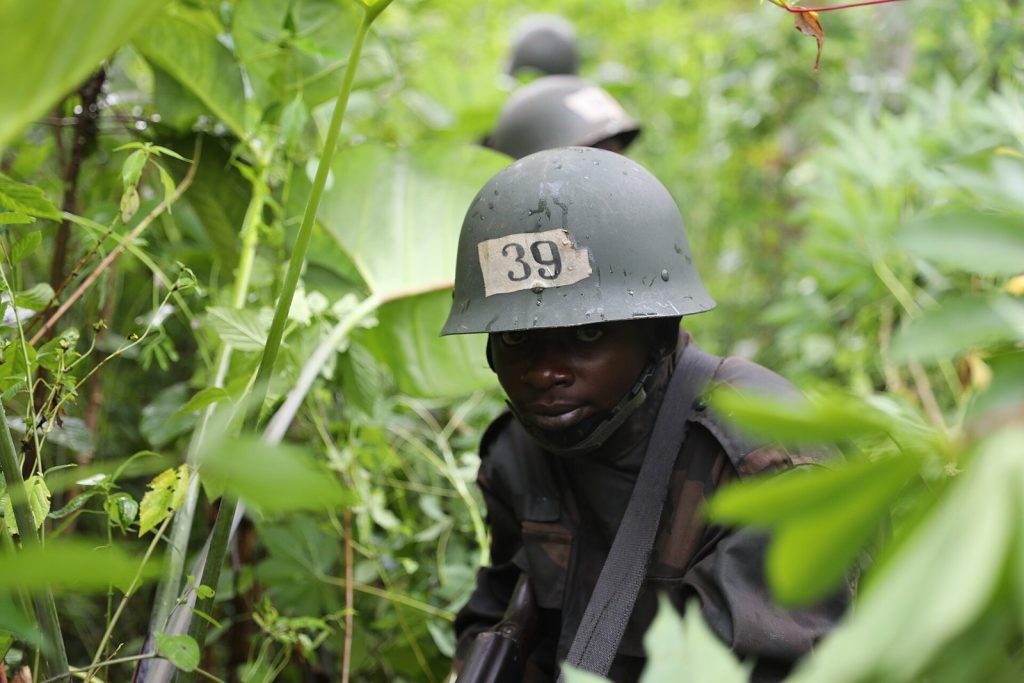
The FARDC is the national armed forces. AFC/M23, which the United States, Kinshasa and UN experts accuse Rwanda of supporting, has held large parts of North and South Kivu since early 2025, including Goma. Rwanda denies directing the rebellion. This article does not settle that dispute. It asks a narrower question: what role have private contractors played on the government side, in training and in the air.
What the UN record says contractors have been asked to do
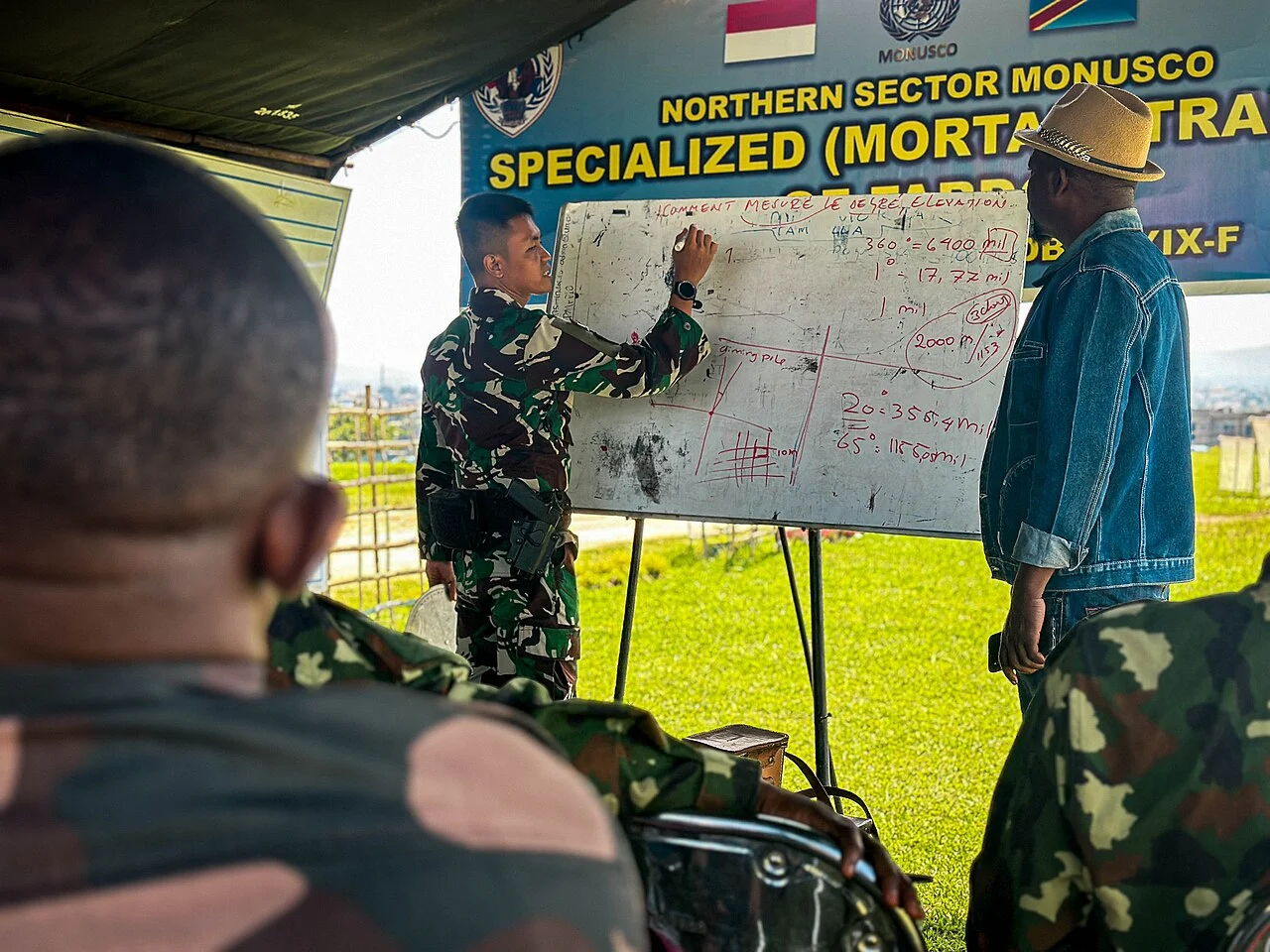
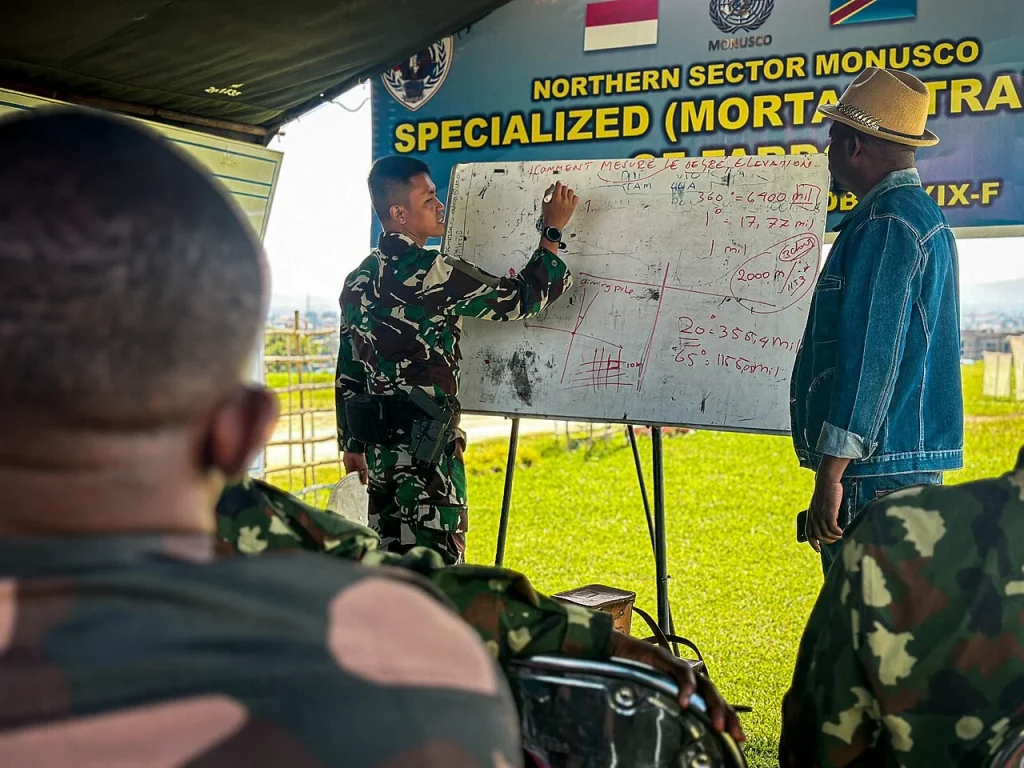
In its June 2026 final report, the Group of Experts wrote that foreign private military companies and contractors continued to operate in support of the FARDC. The activities it listed were the operation of military air assets, logistical help, specialised training (including drone piloting, radar operations, Sukhoi aircraft instruction and jungle warfare), operational planning, intelligence work, tactical communications and target identification. It placed these entities in Kisangani, Kinshasa, Walikale, Kalemie and Kindu.
The Group also said the chain of command through which instructions reached contractors on the front line “remained unclear.” A presence in the same theatre as the FARDC is not, by itself, proof of who gave a particular order, or of how many contractors took part.
Agemira: aircraft maintenance and CH-4 technicians
Agemira is the firm most closely tied to the air force. In S/2025/446, issued on 3 July 2025, the Group of Experts said that at the time of writing, 120 Agemira staff were still deployed in Kinshasa and Kisangani, “mostly technicians of CH-4 drones and military aircraft.” The company, the report added, planned to end its commitments in the DRC in September 2025.
That report did not later confirm that the withdrawal took place. The June 2026 report discusses continued contractor activity, including air operations, but does not name Agemira in the section reviewed here. The planned September 2025 exit is therefore the company’s intention as recorded in mid-2025, not a verified departure.
The CH-4B is the Chinese armed drone that Kinshasa bought in 2023–2024. SIPRI’s arms transfers register, generated on 3 November 2026, records an estimated nine CH-4Bs delivered in 2023 and 2024. How many remain serviceable is not an official figure; that question is covered in DefenceMENA’s DRC air force inventory. The UN finding here is narrower: at least through the first half of 2025, foreign technicians employed by a private company were part of the effort to keep those drones and other military aircraft flying.
Congo Protection: a training contract, then an evacuation from Goma
Congo Protection is the other company named in S/2025/446 alongside Agemira. The Group referred back to earlier reports (S/2023/431 and S/2023/990) on the firm’s support to FARDC counter-offensives.
During the assault on Goma, 291 Congo Protection staff sought protection at MONUSCO compounds. The mission sheltered them, the Group wrote, because they faced an imminent threat of being killed by AFC/M23. Negotiations between the United Nations and the Government of Rwanda led to their evacuation to Romania via Kigali. By the time that report was written, all Congo Protection staff had left DRC territory. A footnote added that after the Goma assault, 20 former Congo Protection staff were contracted by Agemira to secure the airport in Kisangani.
The BBC, Reuters and RFI reported the same evacuation in late January 2025, describing the men as Romanian security contractors. Romania’s Ministry of Foreign Affairs issued a press note on the withdrawal. Those accounts agree on the route — out through Rwanda — and on the fact of a negotiated departure. They do not settle how much of the company’s work before Goma fell was training, as earlier contract language described, and how much was combat. A former contractor told the BBC that only a very small number were actually trainers. That is one person’s account, not an official roster.
Erik Prince, Quantum Global and Vectus Global
In December 2024, according to S/2025/446, the DRC government concluded a five-year contract with Erik Prince. The Group said that through a “complex scheme of enterprises, some based in the United Arab Emirates,” Prince offered to secure North Kivu, South Kivu and Ituri through the training and deployment of ground troops and the operation of air assets, including armed drones, with a mining “police” envisaged to collect revenue from extractive industries.
S/2026/466 takes the contract further. In June 2025, it says, Prince’s UAE-based Quantum Global Consulting registered Quantum Global Consulting Africa in the DRC, then registered Vectus Global as another Congolese legal entity. Vectus, coordinated in the country by Christophe Sirot, a French-United States national, signed a contract with the Ministry of Finance to strengthen revenue collection in the extractive sector, including through a “mining brigade.” In late April 2026 the ministry announced a paramilitary “mining guard” to replace defence forces then deployed in mining zones.
The same report says the Vectus contract also contained a “covert military component,” initially meant to prioritise border security, including the borders with Rwanda and Zambia, and that it included advice to the FARDC, the acquisition and deployment of air assets, and the recruitment of former foreign military personnel. A Vectus staff member told the Group in late 2025 that hostilities had shifted the focus from revenue collection to security. In February 2026, a Vectus representative said the government had requested support in planning operations to retake Uvira and that Vectus staff had been deployed to the east for that purpose. In a March 2026 meeting, Mr Sirot denied involvement in the contract’s military aspects; the Group wrote that multiple sources, including Vectus staff, contradicted him.
Reuters reported on 17 April 2025 that Prince had reached a deal with Congo’s finance ministry to help secure and tax mineral wealth, and that sources close to him said there were then no plans to deploy contractors into areas of active conflict. On 10 February 2026, Reuters, citing four people briefed on the mission, reported that Prince had deployed a private force to operate drones and help the army around Uvira, and that a spokesperson for Prince declined to comment. The UN report and that February account point in the same direction. They are not a public copy of the contract, and no official Congolese communiqué reviewed for this article sets out a troop number or a contract value. Figures circulating in secondary commentary have not been used here.
Training, drones and the 2026 South Kivu operations
Between January and March 2026, the Group of Experts reported, private military contractors were engaged in operations alongside the FARDC in South Kivu. Wazalendo units were instructed to withdraw from parts of the Hauts Plateaux where FARDC special forces known as “Hiboux” and foreign contractors operated. Contractor support, the Group said, included coordination of artillery and drone attacks and intelligence assistance. Contractors accompanied the FARDC when they entered Uvira in January 2026. On 1 February 2026, multiple drone strikes conducted with contractor support targeted AFC/M23 positions around Minembwe. Between 2 and 8 February 2026, contractors airdropped Hiboux units at a location the report calls Point Zero.
The same report says several Wazalendo factions received training from foreign instructors in Walikale, North Kivu, and in Baraka, South Kivu, including on target identification, geolocation and the piloting of quadcopter reconnaissance drones. Among the beneficiaries, the Group named combatants led by two sanctioned individuals, Guidon Shimiray and William Yakutumba. Training those forces, it concluded, was prohibited technical assistance and a violation of the UN sanctions regime.
Separately, the Group identified a Salvadoran company, Importaciones de Productos Americanos S.A. de C.V., as an intermediary that recruited at least 300 Salvadoran nationals, mostly former military and police, on one-year contracts starting in July 2025, with a promised monthly payment of $4,225. Some later returned home after delays or failures in salary payments, or because of poor health. The Government of El Salvador told the Group it had no knowledge of its nationals in the DRC and that any such recruitment was not authorised by the state. Those pay figures are what the UN report says the contracts promised, not an official payroll.
What this does, and does not, show
The official record is consistent on three points. First, Kinshasa has hired foreign companies for tasks the FARDC could not, or did not, do alone: keeping aircraft in the air, training, and specialised support. Second, Congo Protection was extracted from Goma under UN protection when the city fell, a fact documented by the United Nations and by several news organisations. Third, a later contract associated with Erik Prince, signed as a finance-ministry arrangement, is described by UN experts as having acquired a military role in the east in 2025–2026, including around Uvira.
The record is weaker on scale and command. The Group has not published a full headcount of contractors still in the country in 2026, and it says the chain of command for front-line contractors is unclear. Company representatives have, in some cases, denied a combat role. Rwanda’s president has called the same men “mercenaries.” Those are political characterisations, not a finding by a court. None of this replaces the FARDC, the Wazalendo, or the now-ended SADC mission (SAMIDRC) as the main government-side forces in the east. It does show that training and air support have, for several years, been partly outsourced.
Frequently asked questions
Are private military contractors still operating with the FARDC?
Yes, according to the UN Group of Experts’ report of June 2026 (S/2026/466), which describes activity into early 2026, including in South Kivu. It does not give a current official headcount, and it does not confirm that Agemira’s planned September 2025 departure took place.
Did Congo Protection only train Congolese soldiers?
Earlier contract language described training and instruction. In January 2025, 291 of the company’s staff were evacuated from Goma via Rwanda after seeking protection at MONUSCO bases, according to S/2025/446. News organisations reported them as Romanian security contractors. Whether their work before the city’s fall stayed within a training mandate is not settled by a published official roster.
What is Vectus Global’s contract for?
UN experts say Vectus signed a contract with the Ministry of Finance to improve mining-revenue collection, and that the same arrangement included a military component. Reuters first reported a finance-ministry deal with Erik Prince in April 2025, and in February 2026 reported a drone and security role around Uvira. No official public text of the contract was reviewed for this article.
Do these companies fly the FARDC’s CH-4 drones?
S/2025/446 said that in mid-2025 most of the remaining Agemira staff in Kinshasa and Kisangani were technicians for CH-4 drones and military aircraft. That is evidence of technical support, not a public log of who piloted each sortie. Later 2026 reporting by the Group attributes some drone strikes to contractor support without always naming the firm.
Sources
- UN Security Council, Final report of the Group of Experts on the Democratic Republic of the Congo, S/2025/446, letter dated 3 July 2025 (paras. 51–52, 74–75 and footnote 63): docs.un.org/en/S/2025/446
- UN Security Council, Final report of the Group of Experts on the Democratic Republic of the Congo, S/2026/466, letter dated 5 June 2026, issued 11 June 2026 (paras. 139–152): docs.un.org/en/S/2026/466
- Reuters, “Trump supporter Prince reaches deal with Congo to help secure mineral wealth,” 17 April 2025: reuters.com
- Reuters, “Trump ally Prince sent men, drones to help Congo’s army secure strategic town,” 10 February 2026: reuters.com
- BBC News, “DR Congo’s failed gamble on Romanian mercenaries”: bbc.com
- Reuters, “Congo’s defeated foreign mercenaries head home with ‘big relief’,” 29 January 2025: reuters.com
- RFI, “Romanian security contractors surrender amid DR Congo fighting,” 29 January 2025: rfi.fr
- Ministry of Foreign Affairs of Romania, press clarification on the withdrawal: mae.ro/node/66286
- SIPRI Arms Transfers Database, trade register for DR Congo, 1960–2025, data generated 3 November 2026: armstransfers.sipri.org
- DefenceMENA, “Why DR Congo Bought the Chinese CH-4 Attack Drone”: defencemena.com/why-drc-bought-ch-4-drone/
- DefenceMENA, “DRC Air Force Aircraft: Su-25s, CH-4 Drones and Fleet Size”: defencemena.com/drc-air-force-aircraft/
- DefenceMENA, “SAMIDRC in the DRC: What Combat Against M23 Showed About South African Equipment”: defencemena.com/samidrc-drc-equipment-combat-record/