Last updated: 25 November 2026.
The Sudanese Armed Forces (SAF) have, over several decades, fielded a mixed fleet of main battle tanks built around Soviet T-54/T-55 and T-72 designs and Chinese Type 59 and later Chinese-derived types, some of them assembled or upgraded in Sudan under local names. The tanks most often asked about are the T-72, the Type 59D line known in Sudan as Al-Zubair 2, and the Al-Bashir (sometimes written Al-Bashier). What cannot be answered with a single honest number is how many of each are still operational in late 2026. The army has not published a current tank return, and the war that began in April 2023 has almost certainly changed any pre-war paper total through losses, captures and abandonment. Ordered, delivered, in service and still running are not the same thing.
This article sticks to documented types, official or officially reported deliveries, and the limits of the public record. It is a Sudan-specific companion to DefenceMENA’s continental tank guide, which already warns that Sudan has “the least reliable picture” in that ranking and that wartime losses may not be in the public listings. Global Firepower totals used in some league tables are estimates, not an official inventory, and are not used here as a count of tanks on the road.
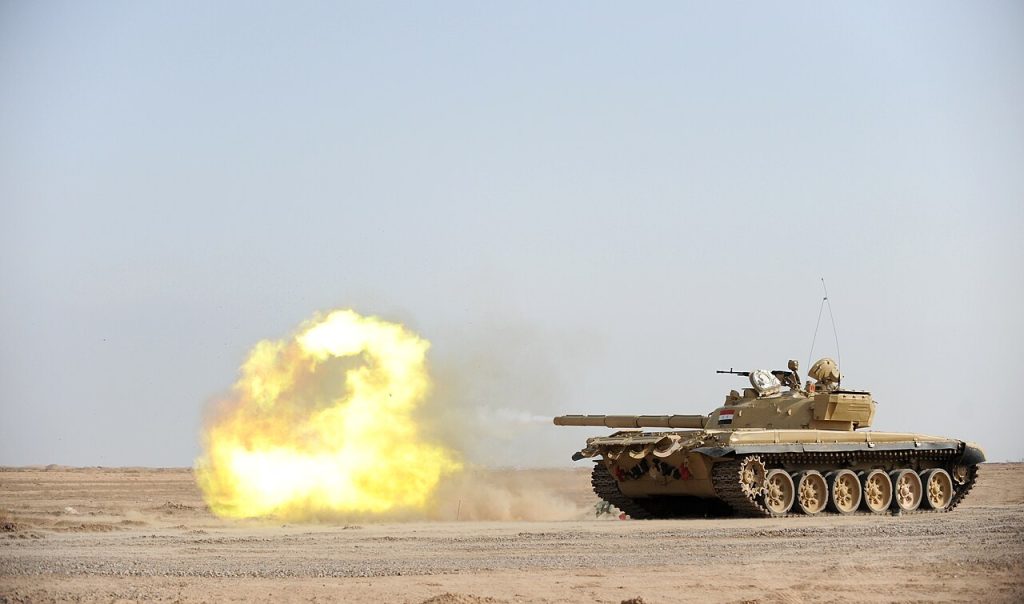
T-72: the best-documented delivery is Ukraine’s 2010 report
The T-72 is a Soviet-designed main battle tank, originally built in the 1970s, typically armed with a 125 mm smoothbore gun. Variants in African service are usually second-hand export models, not new-build T-72B3 or later Russian types, unless a specific delivery is documented. Sudan has used T-72-series vehicles; the question is which batches can be tied to a primary report.
The firmest official delivery figure found for this article is from Ukraine’s own export-control reporting, as cited by SIPRI. In July 2011 the Ukrainian State Export Control Service reported that Ukraine had exported 60 T-72 and 55 T-55 tanks to Sudan in 2010 (SIPRI Policy Paper 30, “Arms Flows to Sub-Saharan Africa,” December 2011). That is a supplier government figure for a single year. It is a delivery report, not a statement of how many T-72s Sudan still holds, and it does not by itself identify the variant as T-72M1, T-72AV or T-72B.
Secondary compilations often add later Ukrainian batches and reach a higher cumulative figure. Those wider totals were not matched, in the sources reviewed here, to a second official year-by-year table, so they are not repeated as fact. No Russian or Soviet official delivery table for earlier T-72s to Sudan was located for this piece. Because the 2010 report also included 55 T-55s, Sudan’s older T-54/T-55 fleet is part of the same story. That family, and Chinese Type 59 vehicles derived from it, is covered in outline in DefenceMENA’s T-55 operator guide.
Type 59, Type 59D and the Al-Zubair 2 name
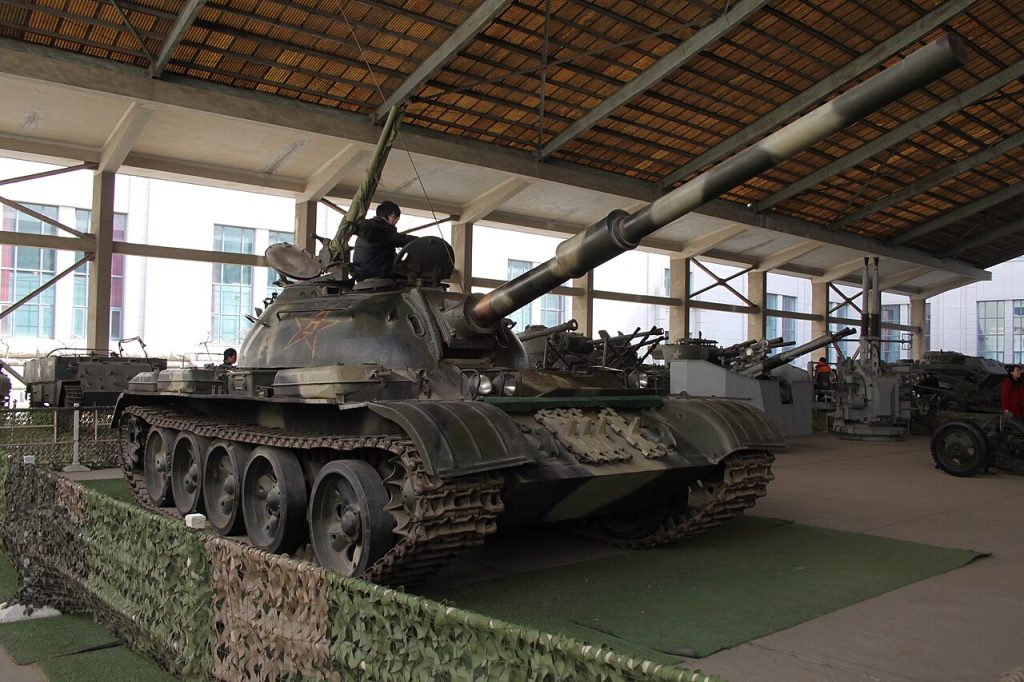
The Type 59 is China’s first-generation copy of the Soviet T-54A, with a 100 mm rifled gun in its original form. “Type 59D” refers to a later Chinese upgrade path, with improved fire control on the same basic hull. In Sudanese use, open-source writing has long associated a licence upgrade or assembly of Type 59D-standard vehicles with the local name Al-Zubair 2 (also spelled Al Zubair). Small Arms Survey’s MIC briefing listed “armoured vehicles and main battle tanks” among MIC’s advertised lines; the heavy-industry complex named for Ibrahim Shams el Deen is the plant most often linked, in secondary literature, to armour work. MIC itself has not, in the documents reviewed here, published a year-by-year Al-Zubair production table.
A commonly repeated figure of 50 original Type 59 tanks delivered in 1972, and of 50 vehicles upgraded to Type 59D / Al-Zubair 2 between about 2010 and 2015, appears in public equipment lists. Those numbers were not traced for this article to a Chinese or Sudanese official delivery communiqué, so they are noted only as widely circulated unconfirmed figures, not as a verified inventory. Even if a pre-war upgrade batch is accurate, it would still be a production or conversion claim from that period, not an operational count after 2023.
Al-Bashir: a local name on a Chinese-derived tank
Al-Bashir (Al-Bashier in some Latin spellings) is a Sudanese service name, not a unique indigenous design from a blank sheet. Open-source descriptions disagree on the exact Chinese parent: some treat it as a Type 85-IIM derivative, others as a Type 88 / Type 96-family vehicle assembled or finished in Sudan from around the early 2000s. That disagreement matters, because those Chinese types are not identical in gun, armour or fire control. Without an official MIC or Chinese export fact sheet for the Sudanese variant, this article does not pick one parent and present it as settled, and it does not invent a fleet total.
Pre-war research estimates exist and should be dated. An Institute for National Security Studies (INSS) compilation updated on 3 January 2016 listed 10 Type 96 tanks “in service” from 2006, about 250 T-55-family vehicles including T-54/T-55, Type 59 and Type 72Z, 70 Type 62 light tanks, and 20 M60A3 tanks from 1981, for a rounded total of 350. That is a 2016 research table, already a mix of types and estimates, and it is now a decade old and pre-war. It is not a 2026 SAF return. Other public lists have used much higher Al-Bashir or “Digna” figures; those lists are not official, often have no year on the row, and are the same class of source the continental guide already treats with caution.
What the numbers cannot say after 2023
Since 15 April 2023, tanks have been used, lost and captured in street fighting in Khartoum and later in other states. Open-source loss lists exist, but they are incomplete by nature: they count only what can be photographed or filmed, they can double-count, and they do not automatically say whether a vehicle was SAF- or RSF-operated at the moment it was hit. This article does not subtract an unverified loss list from an unverified pre-war total to produce a fake “remaining fleet.”
The RSF is not a second state army with a published tank inventory. Where paramilitary units have used tanks, they have typically used vehicles captured from the SAF or leftover stocks, not a documented foreign main-battle-tank purchase in the sources reviewed here. Serviceability is the other gap. A delivered T-72 from 2010 is not necessarily a runner in 2026. No official readiness percentage was found.
| Type (name as used in Sudan) | Origin / parent design | What is documented here | Status of the figure |
|---|---|---|---|
| T-72 (variant often unstated in official reporting) | Soviet design; 2010 batch reported by Ukraine | Ukraine reported 60 T-72 delivered to Sudan in 2010 (plus 55 T-55 the same year) | Official supplier delivery, single year; not an operational total |
| T-54/T-55 family | Soviet Union, plus later second-hand batches | Included in the same 2010 Ukrainian report (55 T-55); older Soviet and third-country batches exist in the historical record | Deliveries are not a current service count |
| Type 59 / Type 59D, locally called Al-Zubair 2 | China; Sudanese upgrade/assembly reported in open sources | Type and local name are widely reported; a “50 + 50” delivery/upgrade story is unconfirmed against an official communiqué in sources reviewed | Unconfirmed numbers; not an operational total |
| Al-Bashir (Al-Bashier) | Chinese-derived; parent type disputed in open sources | Local name is established in reporting; no official fleet number found | No verified 2026 count |
| Type 96 (if counted separately from Al-Bashir) | China | INSS 2016 estimate: 10 in service from 2006 | Dated research estimate only |
| M60A3 | United States | INSS 2016 estimate: 20 since 1981 | Dated research estimate; current status unknown |
How these tanks compare — without inventing a winner
Within the fleet, the useful distinctions are generation and logistics, not a scoreboard. A T-72 with a 125 mm smoothbore gun is a different weapons system from a Type 59 with a 100 mm rifled gun. An Al-Bashir, whatever the exact Chinese parent, was meant to be a step on from the T-54/59 generation. None of these is automatically “the best African tank.”
A modern Turkish main battle tank such as Altay sits in the same broad class — a tracked MBT — but it is not in Sudanese service, and no Sudanese order is documented here. Putting it in a sales table against Sudan’s in-service types would mix a tank that is actually in the country with one that is not. For the industrial background to local names and licence work, see the companion article on what happened to MIC’s factories.
There is no official, public SAF figure for operational Al-Bashir, T-72 or Type 59D tanks in 2026. League-table totals that put Sudan in the same numeric bracket as North African armies are estimates, often including stored or non-running hulls, and they are a poor guide after three years of war. The documented core is this: Sudan has long operated Soviet and Chinese-pattern tanks; Ukraine officially reported a 2010 delivery of 60 T-72s and 55 T-55s; local names cover Chinese-derived upgrade or assembly work; and the current serviceable fleet is unpublished.
Frequently asked questions
How many tanks does the Sudanese army have?
No official operational total has been published for 2026. Older research estimates and public rankings disagree and pre-date, or do not fully reflect, losses since April 2023. The only official single-year delivery figure used in this article is Ukraine’s report of 60 T-72 and 55 T-55 tanks exported to Sudan in 2010.
What is the Al-Bashir tank?
It is a Sudanese service name for a Chinese-derived main battle tank. Open sources disagree on whether the parent is a Type 85-IIM or a Type 88/Type 96-family vehicle. No official fleet number was found.
Is Al-Zubair 2 the same as the Type 59D?
In Sudanese use, Al-Zubair 2 is the local name widely applied to Type 59D-standard upgrades or licence work on the Type 59 family. MIC has not published an official production total in the sources reviewed for this article.
Does the RSF have its own tank fleet?
No official RSF main-battle-tank inventory was found. Reporting of RSF tank use has generally involved vehicles taken from army stocks. That is not a complete account of every vehicle, and it is not a second national fleet list.
Sources
- Paul Holtom and Pieter D. Wezeman, and colleagues, SIPRI Policy Paper 30, “Arms Flows to Sub-Saharan Africa,” December 2011, citing the Ukrainian State Export Control Service, July 2011, on 60 T-72 and 55 T-55 tanks exported to Sudan in 2010: sipri.org (PDF)
- Institute for National Security Studies (INSS), “Sudan” conventional-arms compilation, updated 3 January 2016 (dated estimates, not a 2026 inventory).
- Small Arms Survey, HSBA, “The Military Industry Corporation (MIC)” briefing (product lines including armoured vehicles and main battle tanks).
- DefenceMENA, “Main Battle Tanks in Africa: Who Operates What,” 11 November 2026 (continental ranking; explicitly flags Sudan’s figures as the least reliable): defencemena.com/main-battle-tanks-africa/
- DefenceMENA, “Sudan Military Strength 2026: The SAF, the RSF and What the Numbers Show”: defencemena.com/sudan-military-strength/
- DefenceMENA, “Which African Countries Operate the T-55 Tank?”: defencemena.com
- US Department of the Treasury press release JY1514, 1 June 2023 (DIS/MIC as SAF vehicle and weapons manufacturer; not a tank census).
Public equipment lists that give cumulative T-72 or Al-Bashir fleet sizes without a dated official source were consulted as a starting point and are not used as figures in the table above.