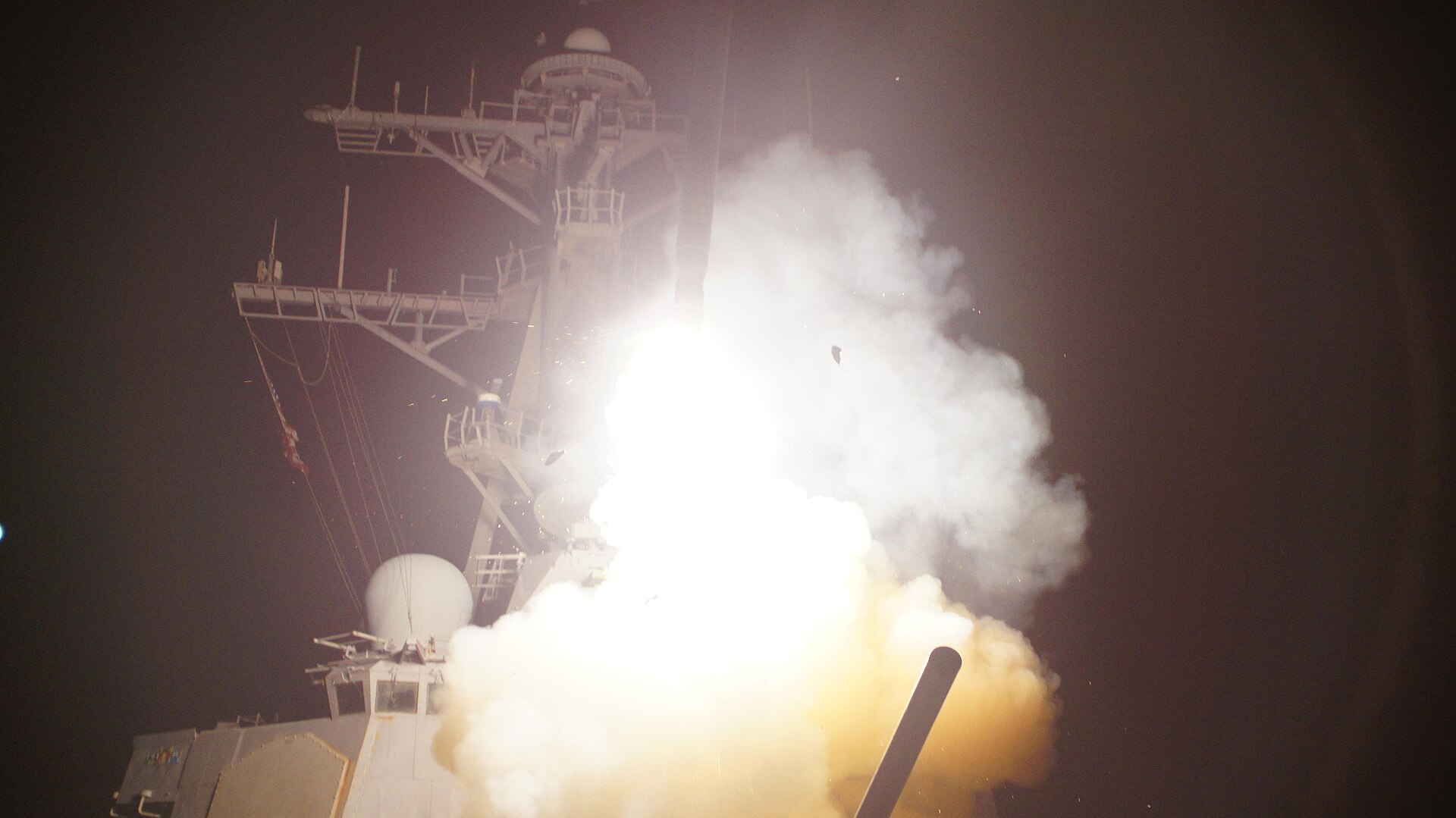
The Tomahawk cruise missiles the United States fired at Islamic State targets in Nigeria on Christmas Day 2025 had passed their expiry dates and were “recoded” for use, The Wall Street Journal has reported, citing a US official familiar with the operation. The report adds to questions raised after that strike. At the time, Nigerian officials, analysts and imagery reviewed by The Washington Post suggested that four of the 16 Tomahawks fired did not explode.
The report has not been publicly confirmed by the Pentagon, US Africa Command (AFRICOM) or Nigeria’s Defence Headquarters. Nothing published so far shows that the age of the missiles or the recoding caused the warhead failures.
Where the claim comes from
The disclosure came as part of WSJ reporting on US munitions shortages around the 17 November Senate confirmation hearing of Hung Cao, President Donald Trump’s nominee to lead the US Navy. Asked whether the Navy had the right balance of high-end and low-cost munitions, Cao said many munitions used in Operation Epic Fury, the US campaign against Iran, had been listed as “Code Echo, Code Foxtrot”, which means expired. “For some of these munitions, we recoded them and so we’re able to shoot off the expired munitions,” he said, according to a WSJ video of the hearing. He compared it to reviving stale bread.
Cao spoke about the Iran campaign and did not mention Nigeria. The Nigeria link comes only from the unnamed US official quoted by the WSJ. Nigerian outlets including TheCable and BusinessDay reported it on 18 November.
What “recoding” means
US military stock carries supply condition codes. Under Defense Logistics Agency guidance, codes E and F cover items classed as unserviceable that can still be restored or repaired. Mark Montgomery, a retired rear admiral at the Foundation for Defense of Democracies, said in the WSJ reporting that the Navy sets expiry dates because a share of missiles develops technical faults after a certain age. He said expired rounds can be recoded as fit to fire, normally after an inspection finds no loss of performance. In other words, recoding is a formal re-certification, not just a paperwork change. The WSJ did not say what inspections the Nigeria missiles went through.
The four missiles that did not explode
The 25 December 2025 strikes hit Islamic State-linked militants in Sokoto State in north-west Nigeria, in coordination with the Nigerian government. A Washington Post investigation published on 10 January found that warheads in four of the 16 Tomahawks appeared not to have detonated. Residents and police officials described where they came down:
- an onion field in Jabo village, Sokoto State
- residential buildings in Offa, Kwara State, roughly 300 miles (about 480 km) south of Jabo
- a farm field outside Offa
- a forest at Zugurma in Niger State, where police recovered the missile
The Offa and Zugurma impacts were far from the Sokoto target area. Experts quoted at the time could not say why the warheads failed. No US or Nigerian technical finding has been published since.
The weapon
The Tomahawk is a long-range, subsonic land-attack cruise missile built by RTX’s Raytheon and fired from the vertical launch cells of US surface ships and submarines. US warships have fired it at African targets before, most notably against Libya’s air defences in 2011 (pictured). No African state operates the missile. For the regional picture, see which African countries have cruise missiles.
Why it matters for Nigeria
The Christmas strike was the start of a closer operational relationship. Abuja now says US satellite intelligence is guiding strikes and has agreed rules that allow Nigerian troops to pursue militants up to 5 km into neighbouring states (our report). Unexploded US munitions landing in towns hundreds of kilometres from the target were a sensitive issue in January. A report that the missiles were already past their expiry dates is likely to bring that back, as Nigeria keeps using its own air force and drone fleet against the same groups.
What to watch
- Any comment from AFRICOM, the Pentagon or Nigeria’s Defence Headquarters
- Whether the Senate Armed Services Committee asks for a failure analysis of the Nigeria strike
- Questions in Nigeria’s National Assembly on the unexploded missiles and compensation in Offa
Sources
- The Wall Street Journal, US official quoted on recoded Tomahawks used in Nigeria (reported 17–18 November 2026); WSJ video of the Cao hearing, 17 November 2026: WSJ via Yahoo Finance
- TheCable, Claire Mom, 18 November 2026: thecable.ng
- BusinessDay, Ojochenemi Onje, 18 November 2026: businessday.ng
- The Washington Post, “Unexploded missiles, witnesses undercut Trump account of Nigeria strike”, 10 January 2026: washingtonpost.com
- The Wall Street Journal, “U.S. Strikes on Nigeria Targeted Islamic State Camps With Missile Barrage”, December 2025: wsj.com