SANDF Salary by Rank: What South African Soldiers Earn

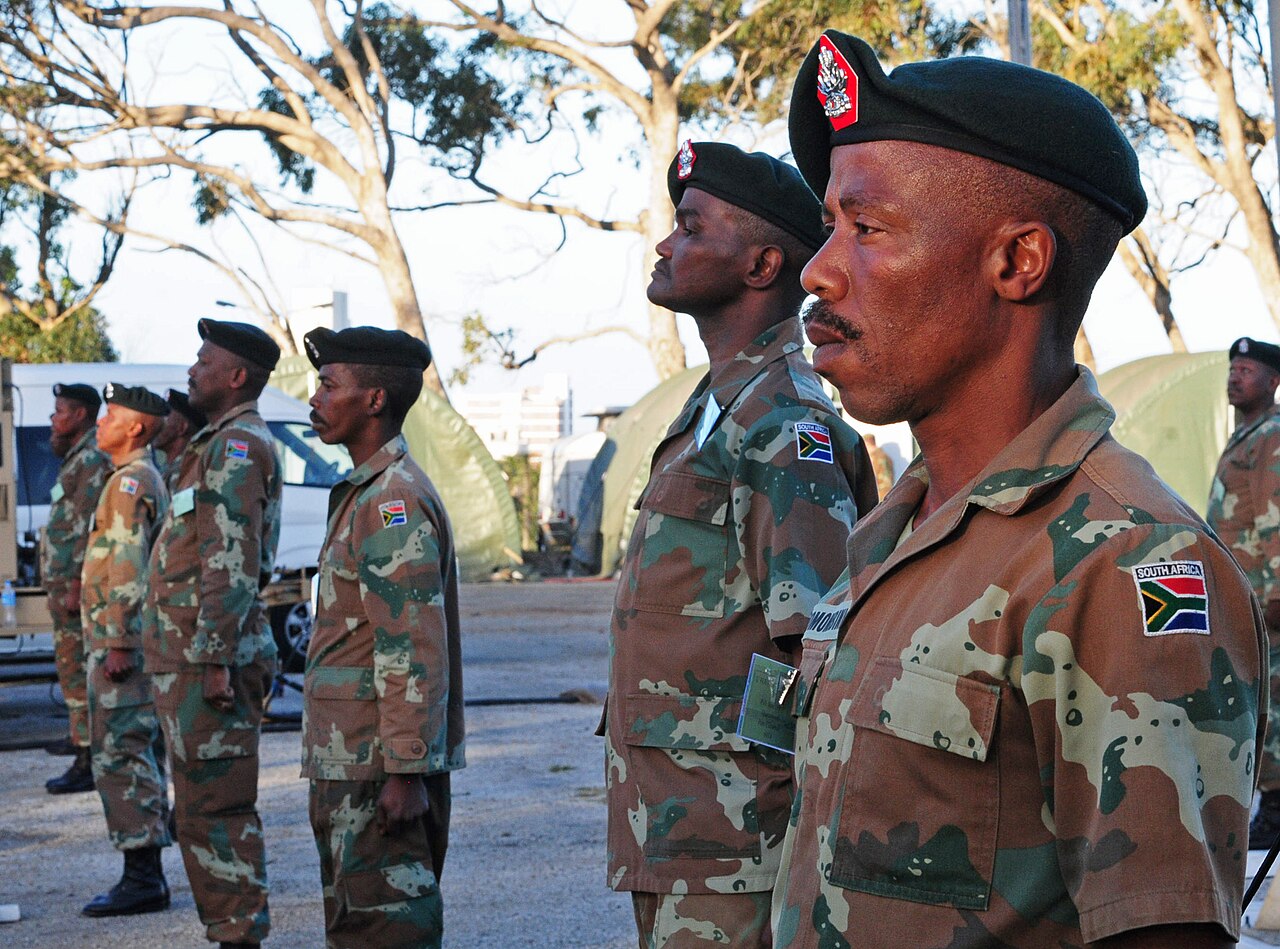


Anyone searching for SANDF salary by rank figures will find that the Department of Defence has not published a current pay scale for each rank. The most recent official numbers found are the 2016/17 salary ranges printed in a government gazette notice, which predate almost a decade of pay adjustments. This guide sets out what can be verified: how the pay system works, those published ranges, the allowances that exist, and the entry requirements for recruits. Figures from recruitment websites that cannot be traced to an official table are left out.
How SANDF Pay Is Structured
Pay for members of the South African National Defence Force is set by a determination under section 55 of the Defence Act (Act 42 of 2002), with the written approval of the Finance Minister. A parliamentary reply to a question tabled on 25 March confirms that the SANDF has its own annual pay progression of 2%, against 1.5% for the wider public service. The reply puts the cumulative cost of that progression since 2010-11 at R755,687,388.
The current grading system was backdated to 1 July 2009. It followed a decision by President Jacob Zuma in December 2009 to raise pay for members on salary levels 2 to 12, from privates to colonels, by between 2% and 65%, SAnews reported.
Within a rank there are twelve notches. A member moves up a notch after at least twelve months in the rank and a satisfactory performance rating. The scales of neighbouring ranks overlap, unlike in the public service, so a long-serving senior non-commissioned officer can out-earn a newly promoted officer. These details come from Government Gazette Notice 588 of 2017, which published a 2016 committee recommendation on pay stagnation.
SANDF Salary by Rank: What the Published Figures Show
That gazette notice is the only rank-by-rank source found. Its chart is hard to read, so the table below shows the lowest and highest annual value printed for each rank where the figures could be read. The values are 2016/17 scales and exclude allowances and the employer’s pension contribution. Lieutenants, captains and general officers are not shown because their figures could not be read reliably.
| Rank | Lowest value printed (rand a year) | Highest value printed (rand a year) |
|---|---|---|
| Private | 142,143 | 173,274 |
| Lance Corporal | 176,739 | 187,557 |
| Corporal | 191,310 | 203,013 |
| Sergeant | 207,078 | 224,142 |
| Staff Sergeant | 228,630 | 257,466 |
| Warrant Officer Class 2 | 262,620 | 307,671 |
| Warrant Officer Class 1 | 313,854 | 367,731 |
| Major | 307,671 | 375,084 |
| Lieutenant Colonel | 382,587 | 466,368 |
| Colonel (grade C7-1) | 586,914 | 715,443 |
| Colonel (grade C7-2) | 729,750 | 821,820 |
The overlap is visible in the table: the top of the Warrant Officer Class 1 range is above the starting value for a Major. These are historic figures. They are useful for the structure of SANDF salary by rank, not as a statement of what a member is paid today.
Reserve Force members on grades B1 to C7-1 have no notches and receive a fixed daily tariff for each rank, adjusted annually. The 2016/17 tariffs in the same notice were as follows.
| Reserve rank (grade) | Daily tariff (rand) |
|---|---|
| Private (B1) | 511.21 |
| Lance Corporal (B2) | 553.35 |
| Corporal (B3) | 598.98 |
| Sergeant (B4) | 661.31 |
| Staff Sergeant (B5) | 759.64 |
| Warrant Officer (B6) | 907.84 |
| Warrant Officer (B7) | 1,084.96 |
| Lieutenant (C3) | 701.79 |
| Captain (C4) | 907.84 |
| Colonel (C7-1) | 1,730.19 |
Nothing newer is public. In February 2025 the government signed a three-year public service wage deal with a 5.5% rise for 2025/26 and increases linked to inflation for the two following years, according to the minister’s statement. That statement does not say how military pay is treated. Anyone quoting an exact current monthly salary for a rank is therefore relying on unofficial sources.
Allowances and Additional Benefits
The gazette figures leave out allowances, and the sources reviewed give no published amounts for them. Housing and deprivation allowances exist: at a defence committee meeting in October 2024 members said the Auditor-General had reportedly found overpayments of both, as well as so-called ghost salaries.
Operational allowances are paid to members deployed abroad. In September 2025 the SANDF stated that all allowances due to soldiers in the SADC mission in the Democratic Republic of the Congo had been paid into their accounts, while its human resources chief investigated specific complaints, according to the statement. No amounts were given.
Specialist occupations such as engineers, pilots and doctors have their own pay dispensations. Their scales were not found in published form.
How Pay Compares Regionally
There is no common basis for comparing African soldiers’ pay, because most armies publish no rank-level tables and many pay in different structures. What can be said is that South Africa’s wage bill is large. For 2025/26 the compensation ceiling was R36.703 billion, about 64% of the R57.183 billion defence allocation, SAnews reported.
The uniformed strength stood at 59,264 on 30 September 2024. Of these, 199 were generals and admirals, and about 23,000 were in the lower combat ranks, according to the committee meeting record. Readers comparing neighbours can start with the Nigerian Army salary guide, the African military ranks comparison and the analysis of the South African defence budget.
Career Path and Promotion
New soldiers usually enter through the Military Skills Development System, a two-year programme. The first year covers basic and functional training, and the second involves deployment or utilisation. Afterwards members either move to the Reserve Force or receive an offer to join the Regular Force, BusinessTech reported.
Promotion requires at least three years in a rank, the October 2024 committee record states. Stagnation is a known problem. Using data from 31 May 2016, the gazette committee found that about 82% of members had spent under twelve years in their current rank and that around 15% were affected by salary stagnation. It proposed moving a member who completed 15 years in a rank, with a satisfactory rating, to the next salary grade without a change of rank. The sources reviewed do not say whether this was adopted.
For how South African ranks line up against other armies, which matters when reading any SANDF salary by rank table, see the
Requirements and How to Apply
The most recent call, for the 2027 intake, ran from 16 February to 27 March, Business Report reported. No later call had been found at the time of writing. The conditions listed for that intake were:
- South African citizenship, with dual citizenship not allowed.
- Age 18 to 22, or up to 26 for graduates.
- Grade 12 completed or in progress, with an Admission Point Score of at least 18 excluding Life Orientation.
- No serious criminal convictions or pending cases, no visible tattoos, and SANDF medical fitness.
- Mathematics and Physical Science for specialised musterings such as aviation engineering.
Applicants submit a CV, copies of their ID and matric certificate, and any tertiary qualifications, by hand to the nearest recruitment office or by post. The form is on the Department of Defence website. Trainees receive wages for the two years, but no stipend amount is published. A spokesperson told the press in 2019 that exact figures could not be given because of scams aimed at applicants. Nobody should pay a third party to secure a place.
Frequently Asked Questions
How much does a private in the SANDF earn?
The latest official range found is R142,143 to R173,274 a year for 2016/17, before allowances. No current table has been published. The stipend for Military Skills Development System recruits is also not published, so any specific monthly figure should be treated as unofficial.
How often do SANDF salaries rise?
Members receive an annual notch progression of 2% where eligible, set under a 2010 determination. General adjustments are decided separately. The public service agreed 5.5% for 2025/26, but the official statement does not say how the military is treated. Check the latest Department of Defence circular for the actual rate.
Are Reserve Force members paid differently?
Yes. Reserve Force members up to colonel level are paid a fixed daily tariff for their rank, with no notches. In 2016/17 the rates ran from R511.21 a day for a private to R1,730.19 for a colonel.
Who can apply to join?
Applicants must be South African citizens aged 18 to 22, or up to 26 with a degree, with Grade 12 and an Admission Point Score of at least 18 for the latest intake. They must pass the medical standards and have no serious criminal record.
Sources
- Government Gazette 40930, Notice 588: pay stagnation recommendation
- Government Gazette 40840, Notice 416: Defence Force Service Commission
- Parliamentary question NW1362 on SANDF pay progression
- Parliamentary question NW889 on the salary determination
- Defence committee meeting on compensation of employees
- Public service wage agreement statement
- SAnews: defence budget and compensation ceiling
- SAnews: SANDF salary increases announced in 2009
- Department of Defence statement on SAMIDRC allowances
- Business Report: Military Skills Development System intake
- BusinessTech: joining the army