Nigeria’s Arridex Unveils ADX-Barra 200 Autonomous Surface Vessel at AFRIDEX 2026



Nigerian Senate President Godswill Akpabio unveiled two unmanned surface vessels at AFRIDEX 2026 in Lagos on 26 October, built by Arridex Group through a joint venture with the state-owned Defence Industries Corporation of Nigeria. The company says the ADX-Barra 200 and its smaller sibling, the ADX-Barra 100, are the first autonomous surface vessels designed, built and integrated in Nigeria.
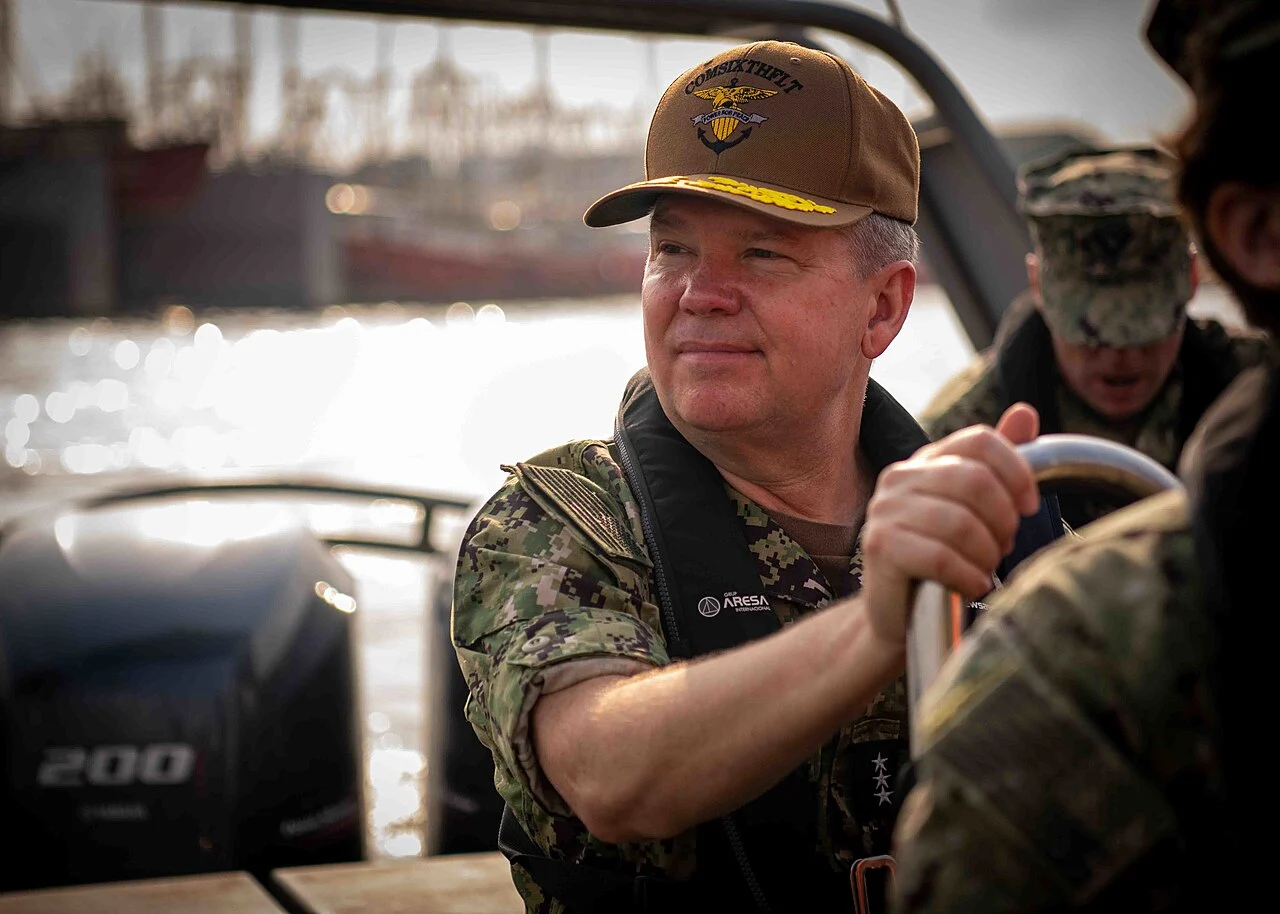
Photo: A Nigerian Navy small patrol craft in Lagos. Credit: Petty Officer 2nd Class Cameron Edy, U.S. Navy, Public domain, via Wikimedia Commons
What was unveiled
Akpabio presented the two vessels on behalf of President Bola Ahmed Tinubu during a ceremony at the Africa International Defence Exhibition (AFRIDEX), the pan-African defence show running in Lagos from 26 to 29 October, according to defenceWeb. Dr Obafemi Hamzat, Deputy Governor of Lagos State, and Dr Bello Matawalle, Minister of State for Defence, also attended, alongside DICON Director-General Major General Babatunde Ibrahim Alaya.
Arridex Group did not release technical specifications — dimensions, speed, range, sensor payload or endurance — for either vessel at the unveiling. Arridex Group CEO Kayode Adeleke called the pair Nigeria’s first indigenously developed autonomous surface vessels, and said they were designed, built and integrated in Nigeria by Arridex engineers. The company said the vessels are intended to extend maritime reach while reducing risk to personnel, with a stated focus on Gulf of Guinea security.
Who built it
The ADX-Barra series is a product of Helagon, a joint venture between Arridex Group and DICON, Nigeria’s state-owned defence manufacturer. Precious Omo-Agege, described as Helagon’s chief operating officer, also attended the unveiling. The structure mirrors a pattern DefenceMENA has tracked across Nigeria’s wider push into local defence production: state-owned DICON supplying production capacity and institutional backing, paired with a private or joint-venture partner supplying design and engineering work, as with DICON’s $2 billion joint venture with SP Offshore Nigeria on ammunition and drone production.
No customer, contract or delivery timeline was announced. Adeleke said Arridex is inviting Nigerian and other regional militaries, along with other interested parties, to request demonstrations.
Nigeria’s unmanned systems push
The ADX-Barra unveiling extends Nigeria’s unmanned-systems ambitions from the air to the sea. The Nigerian Air Force already operates a mixed fleet of Turkish Bayraktar TB2s and Chinese CH-4B and Wing Loong II drones, built up over the past decade as DefenceMENA has detailed, and an NAF infographic released on 25 October listed a further 12 Aksungur drones among aircraft the service expects to field. A domestically built unmanned surface vessel would be a new category for Nigeria’s armed forces, which currently rely on crewed patrol craft — including vessels supplied and supported by the United States Navy — for riverine and coastal security work in the Niger Delta and the wider Gulf of Guinea.
The unveiling also sits inside a broader run of local-production announcements around AFRIDEX 2026. Nigeria’s government used the exhibition’s opening to pledge locally produced tanks, armoured personnel carriers and drones within a year, and Proforce — a private Nigerian manufacturer — showcased its PF Terminator MRAP at the same event. DICON itself has said 53 companies have signed memoranda of understanding with the defence ministry to manufacture military hardware locally, part of a drive that predates AFRIDEX but has been given fresh visibility by it.
What is still unclear
Arridex’s claim to be first is specific to Nigeria and to vessels “designed, built and integrated” domestically; it does not address how the ADX-Barra compares, technically, with unmanned surface vessels already in service or in development elsewhere on the continent, or with established exporters. Without published specifications, it is not possible to assess the ADX-Barra’s intended role — reconnaissance, interdiction or something closer to a weaponised platform — or how close either variant is to being field-ready rather than a demonstrator. DefenceMENA found no independent confirmation beyond the AFRIDEX ceremony itself and the company’s own statements; defenceWeb’s report, the only account located, draws on the same ceremony and Arridex media materials.
Why it matters for Africa
Gulf of Guinea states have spent the past decade building up maritime patrol capacity, largely with donated, refurbished or foreign-built crewed vessels, to counter piracy, oil theft and illegal fishing in waters that briefly ranked among the world’s most dangerous for shipping. An operational, domestically produced unmanned surface vessel would let Nigeria’s navy or other Gulf of Guinea forces patrol longer stretches of coastline without the same crew and fuel burden as manned craft — if the ADX-Barra reaches service. It would also mark a step, alongside DICON’s ammunition and small-arms ventures, in Nigeria’s attempt to build a defence-industrial base that produces hardware rather than only assembling or maintaining imported equipment, a goal shared by several African governments but rarely yet proven at scale. For now, the ADX-Barra is a demonstrator unveiled at a trade show, not a vessel in service; whether it becomes the former will depend on specifications, trials and orders that have not yet been disclosed.
Sources