Algeria’s Senate Unanimously Approves Sending Army Unit to Niger; Lower House Votes Next




Algeria’s Council of the Nation, the upper house of parliament, voted unanimously on Sunday 25 October 2026 to approve President Abdelmadjid Tebboune’s decision to send a unit of the People’s National Army (ANP) to Niger, according to El Khabar, Al Jazeera and Al Arabiya. The lower house, the People’s National Assembly (APN), is due to vote on the same text on Sunday evening. Both chambers must approve it before the deployment can go ahead.
What the Council of the Nation approved
Senators met in an extraordinary session convened at short notice. El Khabar reported that they approved the president’s decision to send a “detachment” of the Algerian army to Niger, and that, according to parliamentary sources, the main task of the units will be to protect oil installations in Niger. Al Jazeera’s correspondent in Algiers reported the same mission. The size of the force, its location in Niger and the length of the mission had not been made public at the time of writing, and the text of the presidential decision had not been published.
The vote is the first known use of the second paragraph of Article 91 of Algeria’s 2020 constitution. It allows the president, as supreme commander of the armed forces, to send ANP units abroad only after approval by a two-thirds majority of the members of each chamber (El Khabar, TSA). El Khabar reported that the text is voted on as a whole without amendment, under the organic law that governs relations between parliament and the government. Al Jazeera noted that Algeria has not sent army units to fight abroad since the October 1973 Arab-Israeli war (Al Jazeera Net).
The Algeria–Niger protocol
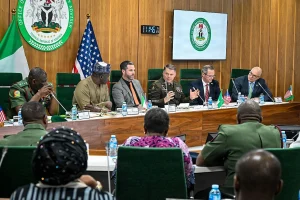
The vote follows a military cooperation protocol signed in Algiers on Wednesday 21 October by the ANP chief of staff, General Saïd Chanegriha, and Niger’s Minister of State for National Defence, General Salifou Mody, who was also received by President Tebboune. Its contents have not been published. El Khabar says it covers counter-terrorism cooperation, the exchange of expertise and responses to requests from Niamey to strengthen the operational capacity of Niger’s army. According to Al-Araby Al-Jadeed, Mody visited Algiers twice in a week, on 13 and 21 October. The same outlet’s parliamentary source linked the move to securing joint energy projects, including the Kafra oil exploration block about 85 km inside Niger and the planned Nigeria–Niger–Algeria trans-Saharan gas pipeline. Neither government has officially confirmed that link.
Previous developments
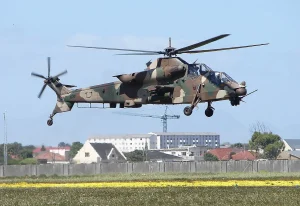
In late August Algeria flew four Su-30 fighters, an Il-76 transport and an Il-78 tanker to Air Base 101 in Niamey after a mutiny in the Nigerien capital. The Fides news agency described it as Algeria’s first overseas military deployment; we covered it in Algeria’s Niamey deployment: why analysts call it a Sahel policy shift. On 9 August Algeria had already handed Niger’s armed forces two Mi-24V and two Mi-171 helicopters, together with ammunition and spare parts (Webdo). Sunday’s vote is the first time a deployment of army units abroad has been put to parliament under Article 91.
Regional context
Niger’s junta has expelled French, US and German forces since 2023. Air Base 101 now hosts an Italian mission, Russia’s Africa Corps and the headquarters of the Alliance of Sahel States. Algeria’s relations with Mali, Niger’s partner in that alliance, remain strained. For background on Algeria’s force structure, see our analysis of Algeria’s dependence on Russian and Chinese suppliers and of its Su-30MKA fleet. Recent events in Niger include the release of Austrian and Swiss hostages to Benghazi.
What happens next
If the APN approves the text with the required two-thirds majority, the decision can be signed and the deployment can begin. DefenceMENA will update this report after the evening vote and when the Ministry of National Defence gives details of the force.