Russia Gives Uganda a Military Repair Depot at Magamaga: What Museveni Commissioned

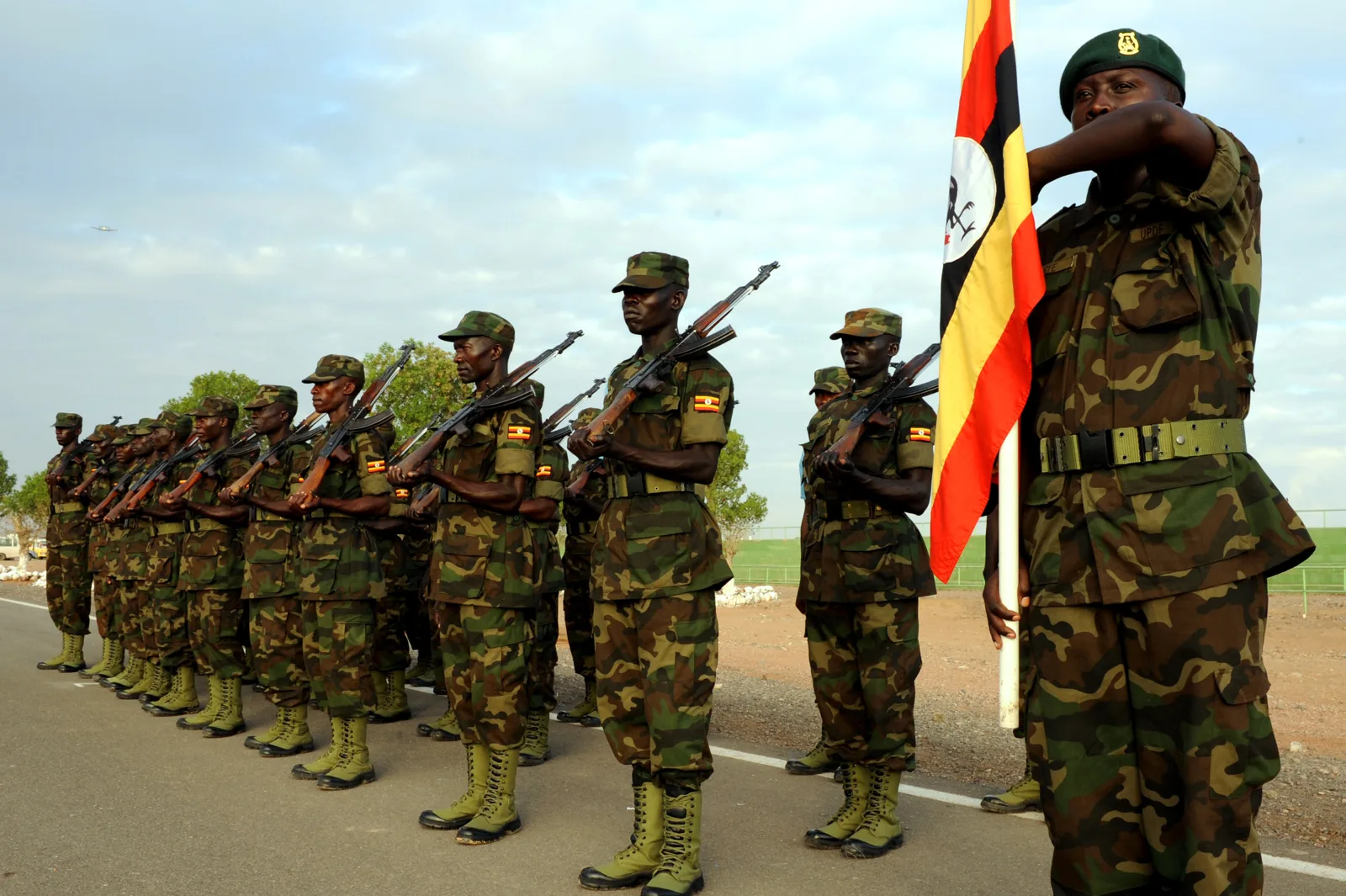


President Yoweri Museveni has commissioned a Russian-donated mechanised major repair facility for the Uganda People’s Defence Forces (UPDF) at Magamaga Cantonment in Jinja District, according to Uganda’s State House and the UPDF. It was the last stop of a two-day programme on 21 and 22 October 2026, during which he also opened Russian-supplied training, marine and command facilities at Kalama, Entebbe and Kalangalo. State House put the Magamaga facility’s value at $53 million. The UPDF described it as part of a $53 million package of donated equipment and infrastructure.
What was commissioned, site by site
Based on the State House and UPDF accounts:
- Mechanised Warfare College, Kalama (Mubende District), 21 October. A digital multimedia classroom to train crews on the BRDM-2MS armoured reconnaissance vehicle before they move on to practical training. The UPDF calls this a training simulator.
- 15 Marine Brigade Pier, Entebbe, 21 October. Surveillance radar, eight boats, a floating dock, protective barriers, marine workshops, firefighting equipment, specialised vehicles, a field ambulance and training facilities.
- 154 Marine Battalion School, Kalangalo, 22 October. The UPDF says the donations include a command post at Kalangalo under the Special Forces Command.
- Magamaga Cantonment (Jinja District), 22 October. The mechanised major repair facility, meant to let the UPDF repair and maintain military vehicles and other equipment at home.
Neither statement lists the specific machinery at Magamaga or how many vehicles it can handle. The two official accounts also describe the $53 million figure differently, so it is not clear whether it covers Magamaga alone or the whole set of donations.
What officials said
Museveni thanked Vladimir Putin “for this gift of $53 million worth of equipment” and said the installations would help the forces detect threats, protect personnel and maintain equipment. He also pressed for local production with Russian help: “These materials, I think, were made in Russia. What if we made them here with the Russians?” The UPDF reports that he told the Chief of Defence Forces, Gen Muhoozi Kainerugaba, and the Chief of Joint Staff, Lt Gen Jack Bakasumba, to study whether local production would be affordable. “The gift is a gift, but we need to do more. If the cost is affordable, we should invest and upscale,” he said.
Lt Gen Bakasumba said the Magamaga facility would allow the UPDF to carry out extensive repairs, extend the service life of its equipment and build technical skills. Defence Minister Kiryowa Kiwanuka credited Museveni’s contacts with the Russian leadership. Lt Gen Aleksandr Kshimovskii, who led the Russian delegation, said: “Russia is ready to supply the necessary equipment.”
No production agreement was announced. Museveni’s remarks are a request to study the idea, not a decision to build Russian equipment in Uganda.
Why a repair depot matters more than it sounds
Much of the UPDF’s heavy equipment is Soviet or Russian-designed, and the president noted that Uganda’s first purchases of Russian equipment date to 1967. For armies running these fleets, the main limit on readiness is often maintenance rather than the number of vehicles bought. Vehicles sit idle while they wait for overhaul abroad, spare parts or specialist technicians. A local major-repair depot is meant to cut that delay. DefenceMENA has looked at the same problem with Russian helicopters in African service and the Mi-24/Mi-35 fleets, including Uganda’s.
The marine package in Entebbe is aimed at Lake Victoria, where the UPDF’s marine units patrol a large shared waterway. The radar and boats are new equipment. Like the depot, the floating dock and workshops are about keeping that equipment working.
The wider Uganda–Russia picture
The handover is the latest step in a long military relationship. Uganda’s air arm flies Russian-built Su-30MK2 fighters, and the UPDF says Museveni received an earlier consignment of Russian military and engineering equipment in October 2025 under the same cooperation framework. Kampala also keeps working with Western partners, and its troops are still deployed in Somalia ahead of a planned 2027 withdrawal.
Elsewhere in Africa, Russia’s military presence often means troops or contractors, as with the Africa Corps in the Sahel, which DefenceMENA has examined in Niger. The Uganda programme is different: it is donated infrastructure, training aids and maintenance capacity, with no announced Russian combat role. The things to watch now are how quickly Magamaga starts overhauling vehicles and whether the local-production idea turns into an agreement.
Sources
- State House Uganda (PPU), “President Museveni Commissions Military Facilities Under Uganda-Russia Defence Cooperation”, 22 October 2026
- UPDF, “President Museveni Commissions Russian-Donated Military Repair Facility At Magamaga”, 22 October 2026
- New Vision, “Museveni commissions military facilities under Uganda-Russia defence cooperation”, 22 October 2026
- Nile Post, “Museveni Launches New Military Facilities Under Uganda-Russia Defence Partnership”, October 2026