Satellite Images Suggest Saudi Arabia Is Expanding Its al-Duwadimi Missile Plant: What the Analysis Shows



Saudi Arabia appears to be expanding its ballistic missile plant at al-Duwadimi, about 200 km west of Riyadh, with a new building that researchers believe will cast larger solid-propellant rocket motors, Reuters reported on 23 October 2026. The assessment comes from two analysts at the Foreign Policy Research Institute (FPRI), Sam Lair and Michael Duitsman, who reviewed Planet Labs satellite images taken between April 2025 and September 2026. Saudi Arabia has not commented, and nothing in the imagery shows that new missiles have been built or fielded.
What the satellite images show
According to the FPRI assessment as reported by Reuters:
- A new casting-pit building. Casting pits are deep wells in which a fuel mixture is poured into a missile motor casing and left to cure. The new building is at least twice the size of the one believed to house the plant’s existing pits.
- Blast-diverting walls. Heavy walls on either side of the building are meant to stop an accidental explosion from damaging nearby structures. The researchers said they resemble walls seen at US and Iranian missile plants, and called them “further evidence the building is for casting solid propellant motors.”
- A second new building that could store fuel ingredients or finished missile components.
- Timeline. Ground-clearing began in April 2025, with work on the suspected casting building starting in late April or early May. An image from 12 December 2025 showed two deep pits in a roofless building. By 18 September 2026 the roof was still partly missing.
The FPRI team wrote that the imagery “suggests that Saudi Arabia is expanding the infrastructure at the missile production complex, likely to produce larger missiles which could deliver larger payloads or reach longer ranges.” They estimated that the roof could be finished quickly but that installing casting equipment may take several months, so the new building could start production as early as the end of 2026.
Who else has reviewed it
Reuters asked other analysts to check the FPRI work. Sascha Bruchmann of the International Institute for Strategic Studies (IISS) agreed the expansion could be for more powerful solid-fuel missiles. Janes said the buildings “may suggest an effort to expand production capability or support the development of longer-range missiles.” Decker Eveleth of CNA, who has followed the construction in commercial imagery, also agreed with the assessment.
The Saudi embassy and the Saudi Information Ministry did not respond to Reuters. China’s embassy and defence ministry did not respond, the CIA declined to comment, and the White House did not reply.
What is assessed, not confirmed
The main points about which missiles the plant may make are analysts’ judgements, not official statements:
- Chinese technology. The FPRI researchers, IISS and CNA experts told Reuters that the make-up of Saudi Arabia’s missile force suggests al-Duwadimi relies on Chinese technology, and FPRI said the plant’s features look like those of Chinese missile plants.
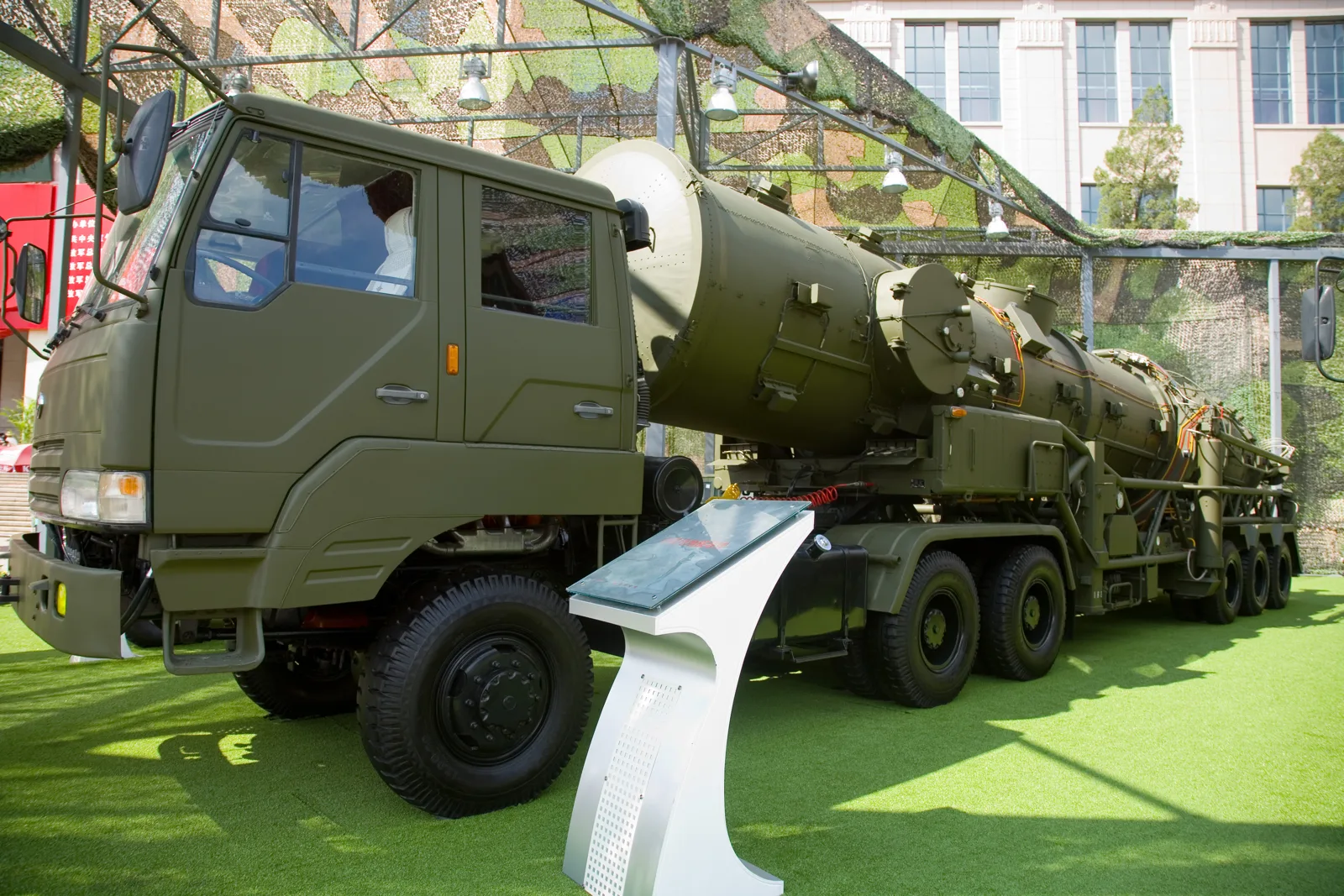
- Which missile. Lair said the kingdom may already be producing the solid-fuel DF-15 short-range missile, and that the expansion is likely for the longer-range DF-21 or a similar missile. The FPRI team had earlier identified, from social media images, what it assessed was the wreckage in Yemen of a Saudi-fired, Chinese-designed DF-15. Riyadh has never confirmed operating either type.
Satellite imagery can show buildings and earthworks, but not what is being made inside, how many motors a plant turns out, or whether finished missiles have entered service. Any claim that Saudi Arabia “now has” DF-21-class missiles goes beyond what this analysis supports.
Background: from DF-3 to a domestic plant
Saudi Arabia’s known missile history starts with China. A 1991 declassified CIA estimate says the kingdom secretly bought about 40 liquid-fuel DF-3 (CSS-2) ballistic missiles from China in 1987, and two were shown publicly for the first time at an April 2014 military parade. Liquid-fuel missiles like the DF-3 take time to fuel before launch. Solid-fuel missiles can be stored ready to fire and launched more quickly, which is why most modern militaries prefer them.
Riyadh is widely believed to have turned to Beijing because the United States has long restricted exports of longer-range missile systems. Washington has instead supplied Saudi Arabia with aircraft and air defences. DefenceMENA has covered the kingdom’s pending F-35 request and the RAF Typhoon deployment sent to help defend Saudi airspace.
Why it matters
The timing matters. Saudi Arabia is under repeated missile and drone attack from Yemen’s Houthis, including strikes on Riyadh, Abha and Dammam airports and on Aramco’s Dhahran headquarters. Bruchmann told Reuters that longer-range missiles would let Saudi Arabia hold targets in Iran at risk without sending its US-built F-15s through Iranian air defences. “Iran has a lead because its missiles and drones can strike Saudi wherever it wants. The Saudis could close that capability gap a bit,” he said.
There are costs too. Reuters notes that more capable Saudi missiles could feed a regional missile race and stiffen opposition in the US Congress to a planned US-Saudi civil nuclear agreement, which critics say lacks safeguards against weapons work. Saudi Arabia denies any plan to build a nuclear weapon. CNA’s Eveleth said similar build-ups are under way across the region, naming the UAE and Türkiye.
For now the evidence is a partly roofed building, two pits and a set of blast walls. The next signs to watch are a finished roof, visible casting equipment or motor test activity at al-Duwadimi, and any official Saudi statement about domestic missile production.
Sources
- Reuters (Jonathan Landay), “Saudi missile plant expansion may produce more powerful missiles, study says”, 23 October 2026, via The Straits Times and Al-Monitor
- Foreign Policy Research Institute assessment by Sam Lair and Michael Duitsman, as described by Reuters
- Planet Labs PBC satellite imagery of the al-Duwadimi complex, April 2025 to September 2026, as described by Reuters
- Initial alert: Clash Report on X