South Africa Ordered to End Cuba Military Training Project After Irregular Spending



South Africa’s National Assembly has been told the Department of Defence has already instructed the South African National Defence Force to wind down Project Kgala, its military training arrangement with Cuba, after the Auditor-General ruled the programme’s spending irregular. The order follows years of criticism over the cost of Cuban instructors compared with South African alternatives.
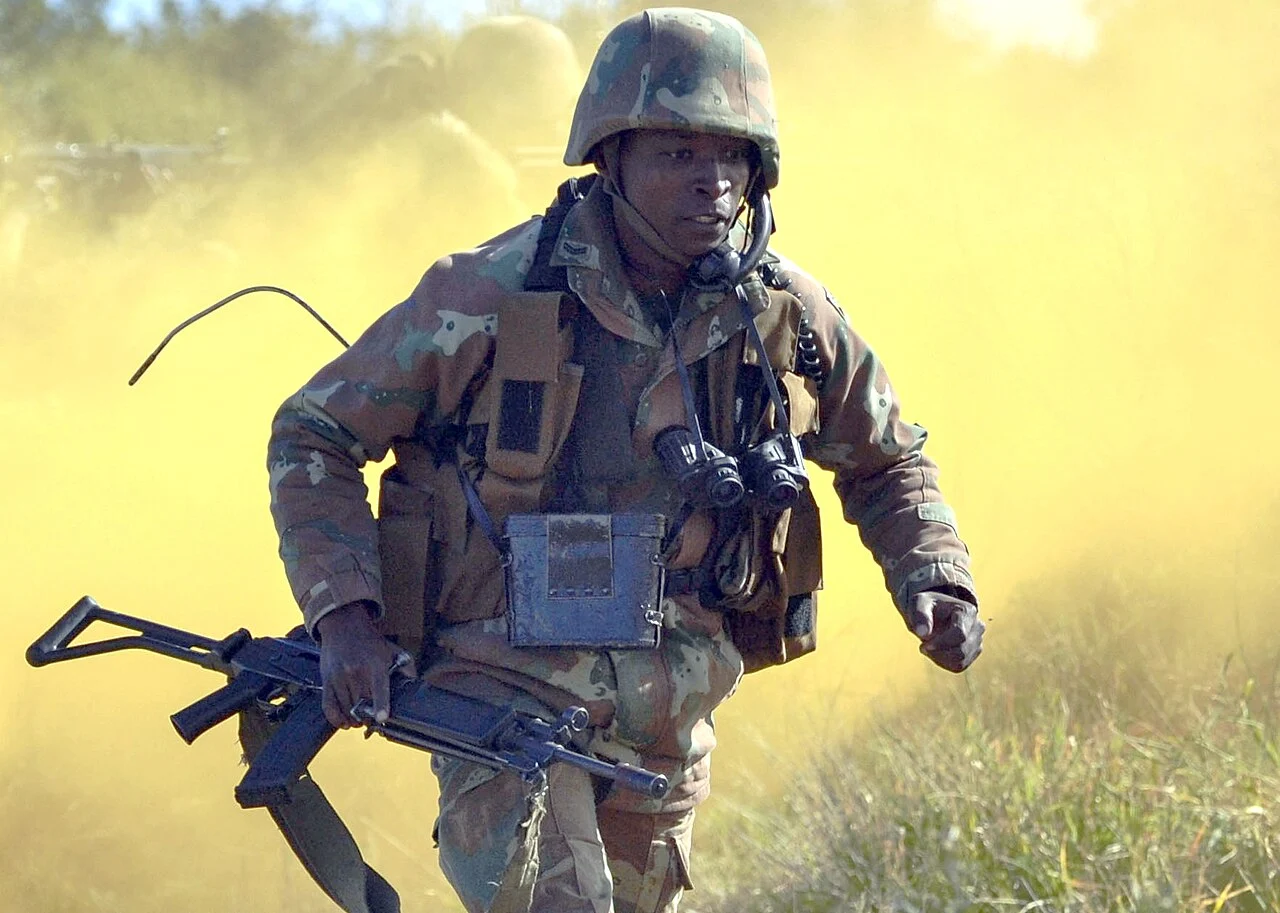
Photo: A South African National Defence Force soldier during a past joint training exercise with US forces (file photo). Credit: US Army Africa, CC BY 2.0, via Wikimedia Commons
Rear Admiral James Matshimane, the South African Navy’s Head of Policy, Strategy and Planning, told Parliament’s Portfolio Committee on Defence and Military Veterans that “an instruction has already been given that we should stop” Project Kgala, defenceWeb reported. The move follows a legal opinion from the Office of the Chief State Law Advisor that the arrangement should be terminated, and a finding by the Auditor-General that its costs qualify as irregular expenditure.
A programme renamed, not replaced
Kgala is the successor to Project Thusano, the decade-long cooperation agreement under which Cuban technicians maintained South African military equipment and Cuban instructors trained SANDF personnel, including medical students. According to defenceWeb’s reporting, the Department of Defence told lawmakers in March 2025 that Thusano had cost roughly R3.04 billion over ten years, with the Auditor-General separately disclosing R1.699 billion of that as irregular expenditure. Kgala, intended as a leaner successor, has already accumulated a further R278.6 million in irregular expenditure of its own, including R100.3 million for aircraft charters — one flight carrying more than 200 SANDF personnel to a graduation ceremony in Cuba reportedly cost close to R34 million.
The Auditor-General’s objection, as relayed to the committee, is twofold: Cuban technical services cost substantially more than equivalent South African ones, and the arrangement crowded out opportunities for local skilled workers. Of an initial cohort of 21 SANDF medical students sent through the programme, only six completed the required 18-month integration course at the University of Pretoria afterward — and Cuban medical qualifications do not automatically translate into a licence to practise in South Africa.
Political pressure for a clean exit
Democratic Alliance MP Chris Hattingh, who has pushed for Kgala’s termination since at least early 2025, told the committee that completing already-enrolled students’ qualifications “cannot become an excuse for indefinite irregular expenditure,” and called for a full reconciliation of spending and a public, costed exit plan. He argued that years of political commitment to the Cuba relationship had consumed budget the SANDF needed for equipment maintenance — a complaint that echoes DefenceMENA’s reporting on a force whose hardware is increasingly hard to keep serviceable.
Committee chairperson Dakota Legoete asked the Department of Defence to table a phased plan setting out exactly when Kgala’s remaining courses will end, to be folded into a formal remedial audit action plan. Rear Admiral Matshimane indicated that students and trainees already enrolled will be allowed to finish their current courses before the programme formally closes, rather than being withdrawn mid-training. Defence Minister Angie Motshekga and SANDF chief General Rudzani Maphwanya were named in the briefing but were not quoted directly in defenceWeb’s account.
Why it matters for Africa
Project Kgala is a small line item next to South Africa’s bigger procurement headaches, but it is a useful test case for how African defence ministries are being forced to account for decades-old cooperation deals that were negotiated with little parliamentary scrutiny. South Africa’s Auditor-General has flagged irregular expenditure across multiple SANDF programmes in recent years, and the South African Army’s own inventory shows a force still reliant on ageing, locally-built equipment even as the Department of Defence’s finances remain under pressure — Denel, the state arms maker, posted its ninth straight audit disclaimer this month even as its order book improved. A forced wind-down of Kgala, if it holds, would be one of the few cases where that oversight actually changed a cooperation agreement’s status rather than simply documenting it. For other African governments weighing foreign-instructor or foreign-maintenance arrangements — whether with Cuba, Russia, China or Western suppliers — the Kgala episode is a reminder that the audit bill for such deals often arrives years after the political decision to sign them, and that local capacity, not just unit cost, is part of what gets measured.
Sources
- defenceWeb: “AG orders Cuban/SA military co-operation project to end”
- Democratic Alliance: “Project Kgala, wasting R1.7 billion on Cuba, must be terminated”
- BusinessTech: “South Africa’s army can’t keep track of its assets and equipment”