GFS Pride Sinks in the Strait of Hormuz: What Singapore, Iran and Shipping Monitors Confirm



The Singapore-registered container ship GFS Pride has sunk in the Strait of Hormuz after being struck by what Singapore’s maritime authority called “unknown projectiles” on 13 October 2026. All 21 crew were evacuated and no injuries were reported. A sister ship, GFS Giselle, was hit the next day and reached a safe anchorage with hull damage. Iran’s Islamic Revolutionary Guard Corps (IRGC) says the Pride hit naval mines on an “unauthorised” route. Maritime security analysts say they have seen no independent evidence of a mine. Here is what each source confirms, what remains disputed, and why the incident matters for naval planners in the Gulf.
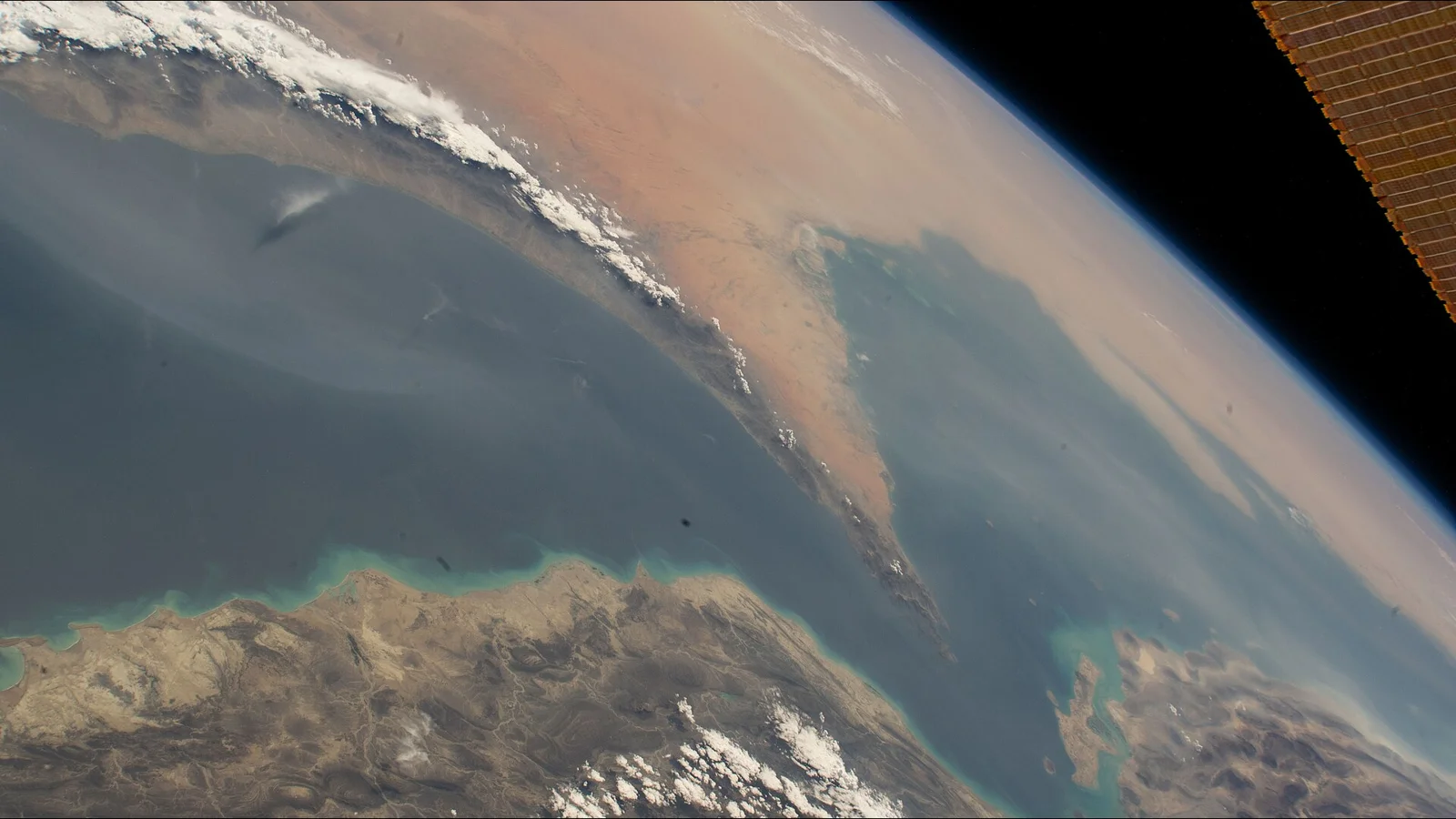
Photo: The Strait of Hormuz and the Musandam Peninsula seen from the International Space Station (NASA, public domain, via Wikimedia Commons).
What Singapore has confirmed
The Maritime and Port Authority of Singapore (MPA), the flag-state authority, said on 14 October that it had been told two Singapore-registered container vessels were “reportedly struck by unknown projectiles” while transiting the strait:
- GFS Pride (13 October, Singapore time): damage and a fire on board; the ship “has since sunk”. All 21 crew were safely evacuated with no injuries reported.
- GFS Giselle (14 October, Singapore time): hull damage; the ship reached a safe anchorage under its own propulsion. All 22 crew are safe.
No Singaporeans were on either ship. MPA called the attacks “unprovoked, unjustifiable, and a breach of international law” and said any action affecting shipping must comply with the UN Convention on the Law of the Sea. It did not say who fired the projectiles.
The Hydrographer of Pakistan, which issues navigational warnings for the area, told mariners that GFS Pride sank about 4 nautical miles north-west of Ras al-Sheikh Masud on Oman’s Musandam Peninsula, the BBC reported, and warned of floating containers. Videos verified by CNN show black smoke rising from the ship as it took on water. Later footage and Sentinel-2 satellite imagery show cargo scattered on the water and a small oil slick.
What Iran says
The IRGC said the ship hit naval mines and sank while using what it called an “unauthorised” route through the strait, according to the BBC and The National. Iranian state broadcaster Press TV gave the same account. The IRGC also claimed the ship was carrying more than 2,500 containers, including contraband. It offered no evidence for that, and no manifest has been published. The Guards told local boats and fishermen to stay away from the floating boxes.
Separately, Iran’s regular Navy said on 13 October that a tanker had caught fire after being damaged east of the Strait of Hormuz, Anadolu Agency reported. The Navy said the ship had switched off its tracking systems and tried to pass through a “restricted area”. It did not name the vessel or say what caused the damage. It said it had deployed units east of the strait, in the Gulf of Oman and in the Arabian Sea, and told ships to keep their electronic systems on and coordinate passage with Iranian forces. That statement has not been tied to a named ship. It is not clear whether it refers to either GFS vessel.
Mine or drone? What is disputed
The cause of the sinking is not confirmed. Singapore’s statement refers to “unknown projectiles”, not a mine. Maritime security firm Marisks told The National it had seen no independent evidence that a mine sank the ship and described Iran’s claims as consistent with a psychological operations campaign. Former US Navy officer Charlie Brown, a senior adviser to the advocacy group United Against Nuclear Iran, told CNN that “a drone strike is more likely”.
The difference matters for any navy that has to respond. A mine threat calls for route surveys and mine countermeasure vessels. A drone or missile threat calls for escorts with layered air defence and electronic warfare. On the available evidence, nothing shows that the southern route along the Omani coast has been mined.
Some claims circulating online should be treated with caution. The National found that footage of small boats collecting floating cargo, and offers of phones and perfume for sale, could not be verified. It also said AI-generated images were widely shared after the sinking, including claims that thousands of iPhones were found in the water.
A wider spike in attacks
- UKMTO: The UK Maritime Trade Operations centre reported that two unnamed container ships were struck by unknown projectiles in the strait between 16:40 and 17:00 GMT on Tuesday 13 October. Both had minor damage and continued their voyages, the BBC reported. UKMTO did not name them, and it is not confirmed that they were the GFS ships. CNN, citing UKMTO data, counted nine attacks in or near the strait since Monday 12 October, including a drone strike on a tanker. Australia’s ABC, citing security data, put the figure at at least 10 vessels since Sunday, the highest daily level since the war began.
- A second sinking: The Antigua and Barbuda-flagged bulk carrier Cape Dao has also sunk, according to International Maritime Organization (IMO) data cited by CNN. It was first hit by a projectile on 23 September north-east of Khasab, Oman, and one Indian crew member was killed. CNN said, citing IMO data, that GFS Pride and Cape Dao are only the second and third vessels to sink in the Middle East since the US–Israeli war with Iran began in February. The first was the Malta-flagged Safeen Prestige, attacked near Oman on 4 March.
- Toll at sea: The IMO counts at least 24 seafarers killed in 106 confirmed incidents since February, according to the BBC.
- Oil flows: Only about 4.1 million barrels of oil crossed the strait on Monday 12 October, less than a quarter of pre-war levels, according to Kpler data cited by CNN. In September, crude exports through the strait had recovered to around 80% of the pre-war average of 16 million barrels per day, according to Kpler figures cited by the BBC.
Why the southern route is the target
To keep Gulf Arab exports moving, the US military has been escorting tankers through the strait. CNN reports this includes night-time “dark” transits with transponders switched off. Iran has said it will not give up some measure of control over the waterway. It has described the US-backed route along the Omani coast, which avoids Iranian waters, as dangerous and “unauthorised”, and it has targeted ships using it, the BBC and The National reported. That explains why Iran’s Navy stresses ships “switching off tracking systems” and its demand that vessels coordinate passage with Iranian forces.
Reuters, quoting two senior Iranian officials, reported on 14 October that Tehran was changing tactics against shipping to keep oil prices high ahead of the 3 November US midterm elections. One official warned that such vessels “would be safe nowhere, even outside the Strait of Hormuz”. These are anonymous statements of intent, not an official Iranian announcement. Still, they point to a risk of attacks moving into the Gulf of Oman and the Arabian Sea. Iran’s Navy now says it operates in both.
The Musandam Peninsula, where GFS Pride went down, is Omani territory, and Oman’s coastline borders the contested route. DefenceMENA’s profile of Oman’s armed forces and their role at the Strait of Hormuz covers the naval and air assets Muscat has in the area. At the same time, Saudi Arabia is dealing with a separate Houthi missile and drone campaign against its airports and energy sites, which we track in Houthi Attacks on Saudi Airports: What Riyadh Has Confirmed.
Confirmed vs not confirmed
- Confirmed (flag state): GFS Pride was struck, caught fire and sank, and all 21 crew are safe. GFS Giselle was struck the next day and reached anchorage, and all 22 crew are safe.
- Confirmed (navigational warnings): the wreck lies about 4 nm north-west of Ras al-Sheikh Masud, Musandam, and floating containers are a hazard.
- Claimed, unverified: the IRGC’s naval-mine explanation and its contraband claim.
- Not known: what weapon hit either ship, who launched it, and the ships’ exact cargo.
What to watch next
- Any finding by the flag state, the ship manager or naval forces on what struck the two GFS ships.
- New UKMTO or Joint Maritime Information Center advisories, especially any reported attacks outside the strait in the Gulf of Oman or the Arabian Sea.
- Changes to US escort operations, and whether other navies join convoy or mine-countermeasure work on the Omani-side route.
Sources
- Maritime and Port Authority of Singapore: Two Singapore-Registered Vessels Struck in Strait of Hormuz (14 October 2026)
- BBC: Container ship hit by projectile sinks in Strait of Hormuz, Singapore says (14 October 2026)
- CNN: Two cargo ships sunk in Strait of Hormuz as Iran ramps up attacks (15 October 2026)
- The National: What we know about ship lost in Strait of Hormuz (15 October 2026)
- Anadolu Agency: Tanker catches fire east of Strait of Hormuz: Iranian Navy (13 October 2026)
- ABC News (Australia): Attacks in Strait of Hormuz reach highest daily level since US-Iran war began (15 October 2026)
Evidence note: The sinking, crew numbers and second strike come from Singapore’s flag-state authority. The cause of the sinking is disputed. Iran’s mine claim has no independent support so far, and Singapore says only “unknown projectiles”. Statements of intent from Iranian officials come from anonymous sources quoted by Reuters. Updated as of 15 October 2026, 13:15 GMT.