Morocco’s MMI to Arm Tata’s New 8×8 With Turrets From 2027



An Elbit Systems subsidiary in Morocco will start fitting turrets to India-designed 8×8 armoured vehicles from March 2027, deepening Rabat’s push to build weapons at home rather than simply buy them abroad.
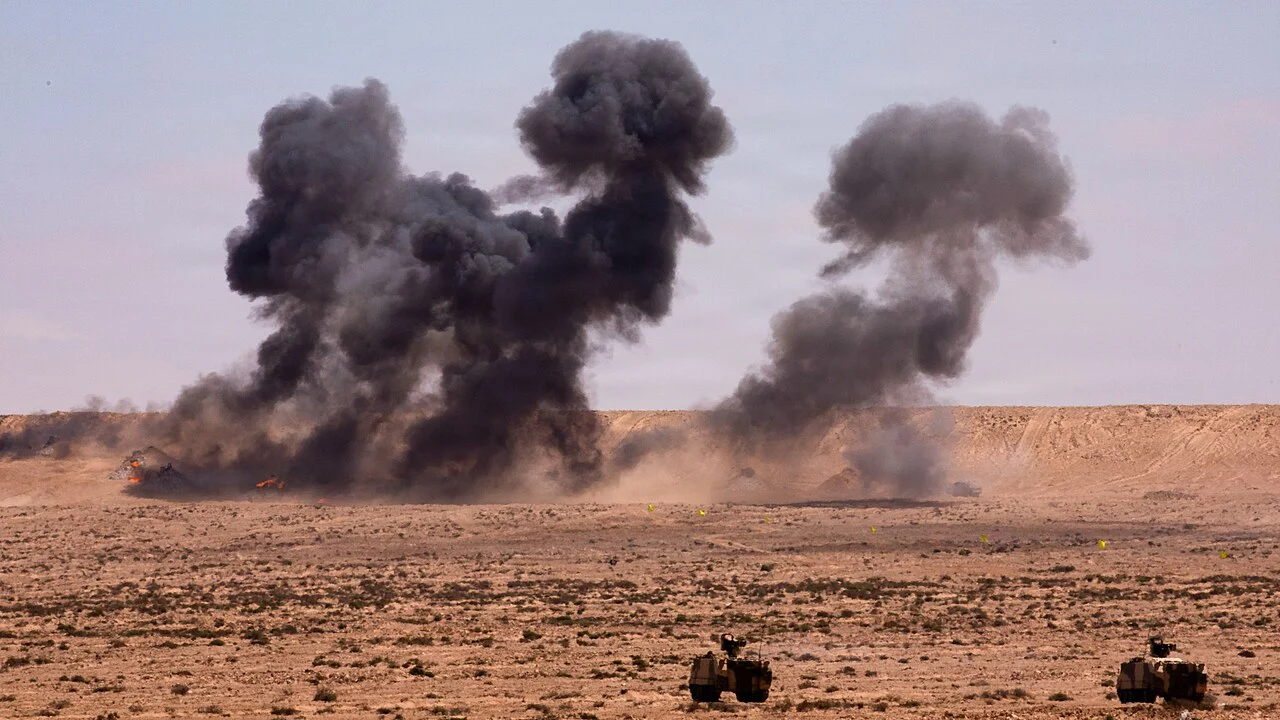
Photo: Royal Moroccan Armed Forces personnel during the African Lion 26 combined-arms exercise at Cap Draa, Tan-Tan, Morocco. Credit: U.S. Army photo by Pfc. Hazel Torres, Public domain, via Wikimedia Commons.
Moroccan Military Industry (MMI), a Casablanca-based subsidiary of Israel’s Elbit Systems, will begin delivering turrets for Morocco’s new 8×8 armoured vehicle in March 2027, the company’s general manager, Kaduri Naor, told Reuters on the sidelines of the Marrakech Air Show. The vehicle is assembled locally by India’s Tata Advanced Systems, making the turret deal the latest step in Morocco’s effort to turn a stream of foreign arms purchases into a domestic defence-manufacturing base.
Naor said MMI has reached an agreement with Morocco’s Administration de la Défense Nationale (ADN) to produce the turrets and their ammunition for the 8×8, with deliveries to the Royal Moroccan Armed Forces starting in March 2027. He gave no unit numbers or contract value. The company is also developing a lower-cost, anti-drone version of the same turret, built around a small radar that detects an incoming drone and triggers an airburst charge that scatters Moroccan-made tungsten fragments to destroy it.
A Tata vehicle, an Israeli turret
The vehicle at the centre of the deal is Tata’s Wheeled Armoured Platform (WhAP), which Morocco agreed to build locally under a contract signed in September 2024. Tata opened its first overseas production line for the vehicle at Berrechid, near Casablanca, and delivered the first finished hulls to the Royal Moroccan Army in late 2025, with local content due to rise from an initial roughly one-third of the vehicle’s components toward 50 percent as the programme matures. Indian reporting has put the planned run at around 150 vehicles over three years, though Morocco has not officially confirmed that figure.
Until now, the WhAP’s armament in Morocco has been linked mainly to Elbit’s UT30 Mk II unmanned turret, a 30mm-cannon system shown mounted on the vehicle at the Marrakech Airshow; earlier reporting had also floated heavier 105mm and 120mm gun options for some variants. MMI’s role, as described by Naor, covers turret production and ammunition rather than the baseline vehicle itself, slotting Elbit’s weapons-system expertise into a hull that India builds and Morocco assembles.
MMI’s growing footprint
MMI already operates a weapons-systems plant in the Midparc industrial zone near Casablanca and is building a second facility at Sidi Yahya, north of Rabat, to manufacture medium- and large-calibre ammunition. Naor said 99 percent of the company’s staff, including its engineers, are Moroccan, and that Morocco is being positioned as an export base, with Naor saying the company already has “a European NATO country to export to” without naming it. MMI is also working on a vehicle-mounted self-propelled mortar system.
The partnership traces back to Morocco and Israel’s 2020 resumption of diplomatic ties and a 2021 defence-cooperation pact covering air defence, artillery, drones and defence manufacturing. Since then, Israeli firms have taken a growing role in Morocco’s industrial-base ambitions alongside American, French and Turkish suppliers, a mix the kingdom has deliberately balanced rather than relying on a single partner. India’s MKU is separately building an optronics and body-armour plant in Morocco, part of the same wider localisation drive.
A cheap answer to a cheap threat
Naor framed MMI’s anti-drone turret as a direct response to the economics of the drone war playing out from Ukraine to the Sahel: “The threat is very cheap… defense systems are more expensive,” he said, describing MMI’s radar-and-fragmentation approach as “cost-effective.” Locally made ammunition for the system would also reduce Morocco’s reliance on imported counter-drone munitions at a time when cheap loitering munitions and first-person-view drones are proliferating across African conflict zones.
Why it matters for Africa
Morocco’s defence-industrial base is expanding on multiple fronts at once this year, and the MMI-Tata turret deal adds a third active localisation track to Rabat’s 8×8 vehicle programme alongside optronics and armour work from India’s MKU and drone development with Harmattan AI. For African militaries shopping for mine-protected and infantry-carrier vehicles, it signals that turret and ammunition supply — not just hull assembly — is increasingly something North African manufacturers can offer regionally, rather than something that has to be imported wholesale. It also illustrates how deeply Israeli industrial partners are now embedded inside programmes branded as “Moroccan-made,” a dynamic other African states weighing similar localisation deals are likely to watch closely. More broadly, a working, low-cost counter-drone turret built and fielded in Morocco would be a capability of direct relevance to Sahelian and other African forces facing the same cheap-drone threat Naor described, if MMI’s export ambitions extend south as well as to Europe.
Sources
- Arab News, via Reuters — “Moroccan-Israeli defense firm MMI targets turret deliveries in March 2027”
- Infodefensa — MMI turret-delivery report
- Janes — Tata begins armoured vehicle production in Morocco
- Hespress English — Morocco’s shift from buying to making weapons