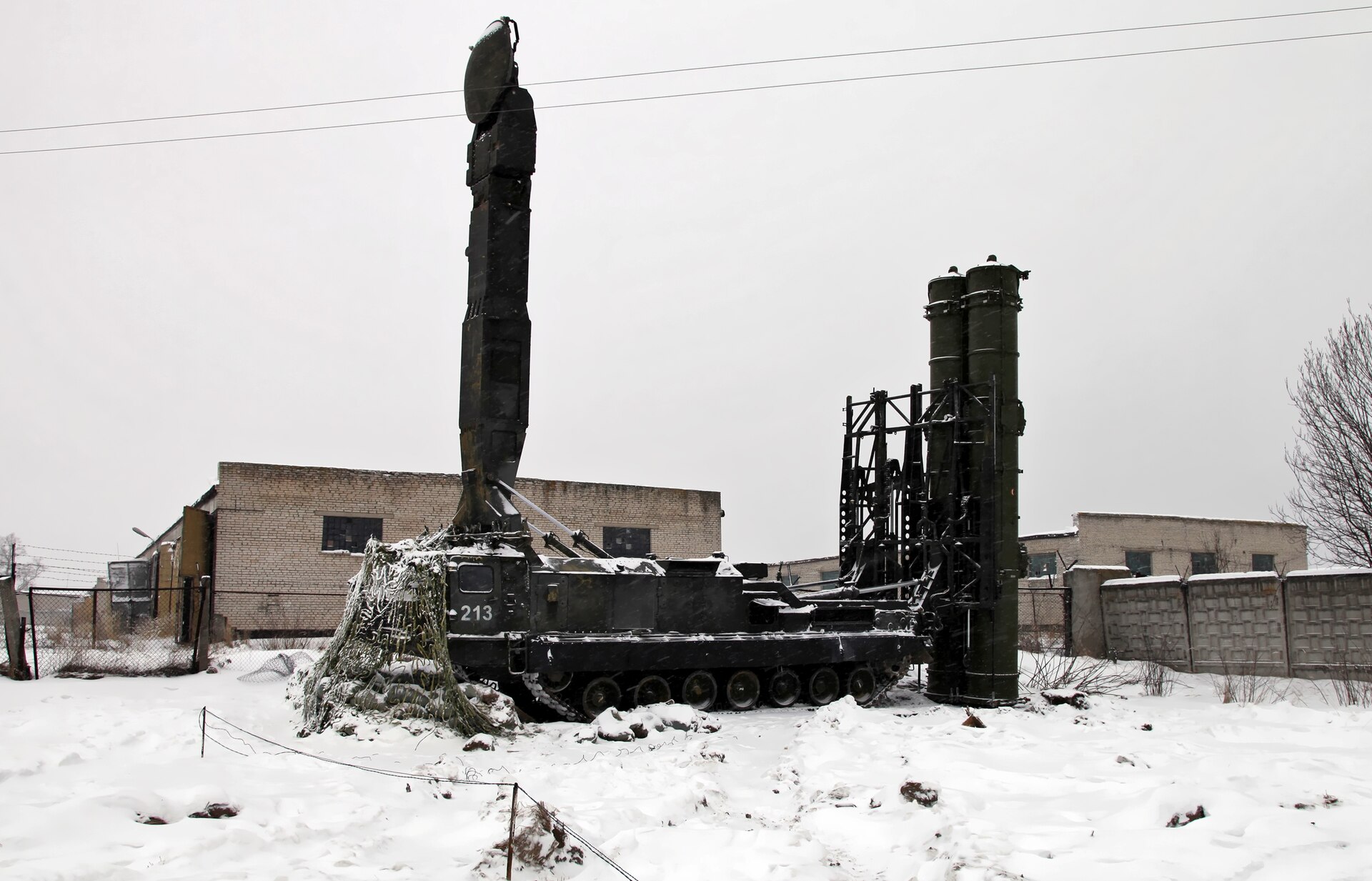
Egypt operates the S-300VM Antey-2500, a long-range Russian air and missile defence system. A Russian source told TASS in March 2015 that the contract covered three divisions with a command post and was worth more than $1 billion. Russian media later reported that deliveries were completed in 2017. Neither government published the contract.
What the contract covered
On 6 March 2015 TASS quoted an unnamed source familiar with Russian military cooperation: Egypt would receive the Antey-2500 “with three divisions, including a command post”, the deal was worth more than $1 billion, and crew training in Russia was included. Rosoboronexport declined to comment. Interfax also reported that deliveries had begun.
Other accounts differ on scale. A May 2026 analysis on Topwar says a contract for four battalions was signed in 2013, the first battalion arrived at Alexandria in March 2015, and Egypt accepted all components in 2017. It gives an expert estimate of up to $1.2 billion. These figures are not confirmed officially.
Delivery timeline
| Date | Event | Source |
|---|---|---|
| 2013 | Contract signed (reported) | Topwar |
| 2014 | Support equipment deliveries begin | TASS source |
| March 2015 | First division ready or arriving | TASS, Interfax, Topwar |
| May 2015 | Israel says Egypt is buying the system | Reuters |
| 2017 | Deliveries completed | RIA Novosti, Topwar |
In May 2015 Reuters reported Israeli officials saying Egypt was acquiring the system. In February 2018 RIA Novosti reported that Russia had delivered Antey-2500 systems to Egypt in 2017. DefenceWeb also covered the expected deliveries.
Key features
- Range and altitude: TASS describes targets engaged out to 250 km and up to 25 km altitude.
- Two missiles: according to Topwar, the 9M83M is used mainly against aircraft, out to about 200 km, while the heavier 9M82M is used against ballistic targets.
- Ballistic missile defence: the system is designed to counter ballistic missiles with ranges of up to 2,500 km, the origin of the “2500” name.
- Fully tracked: radars, launchers and the command post sit on tracked chassis, so the system is mobile but heavy.
- Battalion structure: Topwar lists a command post, an all-round surveillance radar, a sector radar, a missile guidance station, 9A83M launchers and 9A84M launcher-loaders.
Where it fits in Egypt’s air defence
The S-300VM is the long-range top layer of a network that also includes Buk, Tor and older Kvadrat systems. It needs short-range systems to protect it against drones and low-flying threats. For comparison with the S-300PMU-2 used next door, see Algeria’s S-300 and our guide to advanced air defence in Africa.
What is not known
Missile stocks, battery locations and readiness are not public. Claims on social media about Egypt replacing the system are unverified and are not used here.
Sources
- TASS – Russia to supply Antey-2500 to Egypt (6 Mar 2015)
- Interfax – Russia begins supplying Antey-2500 to Egypt
- Reuters – Israel says Egypt buying advanced Russian air defence system
- RIA Novosti – Antey-2500 delivered to Egypt in 2017
- DefenceWeb – Egypt to receive S-300VM
- Topwar – Egypt’s air defence: mobile systems (6 May 2026)
Featured image: Vitaly V. Kuzmin via Wikimedia Commons, CC BY-SA 4.0. Illustrative photo.