Last updated: 25 November 2026
The Arab Organization for Industrialization is Egypt’s principal state defence-industrial group. AOI’s own pages say it was established in 1975, that it comprises 13 factories and companies, and that a supreme committee headed by the president of Egypt oversees it. What Egypt “makes” under the AOI umbrella ranges from aircraft structures and the Fahd armoured personnel carrier to electronics, engines and a large civilian catalogue. This article follows AOI’s official factory pages. It is not a complete, current weapons inventory, and it does not treat every historical programme as still in production.
AOI is not the only manufacturer in Egypt. The Ministry of Military Production, including Military Factory 200, builds other vehicles, among them the ST-100 and ST-500 armoured vehicles. Those vehicles are not listed as Kader or AOI products on the official pages reviewed here.
What AOI is
AOI presents itself as a hybrid military-civilian industrial organisation, not a single factory. The official units list includes, among others, the Aircraft Factory, the Engines Factory, Kader Factory, the Electronics Factory, Sakr Factory for Developed Industries, the Helwan Factory, the Railway Equipment Factory (SEMAF), Arab American Vehicles (AAV), and Arab British Dynamics (ABD). Several of those affiliates also make civilian goods, from railway coaches and water-treatment plant to household appliances. A product page organised by “fields” is dominated by civilian items. That mix matters: an AOI logo on a factory does not, by itself, tell you that a current military system is in series production there.
The Arab American Vehicles page says AOI was founded in 1975 with a capital budget of USD 1.04 billion, and that AAV itself was set up in 1977 as a joint venture, today described as AOI 51 per cent and Fiat Chrysler Automobiles (FCA) 49 per cent. The same official page gives AAV’s current manpower as 584 employees and a single-shift capacity of 5,500–6,000 vehicles a year. Those manpower and capacity figures are AOI’s own, for AAV only, and should not be treated as an AOI-wide headcount.
Aircraft and unmanned airframes
The Aircraft Factory at Helwan dates, on AOI’s history page, to 1950 and became an AOI affiliate when the organisation was created in 1975. The official milestones list historical fixed-wing work (including Cairo 200/300, Alpha Jet, Tucano and Dassault aircraft parts), F-16 aircraft parts “in cooperation with General Dynamics” from 1993, a K-8E production line for which AOI says it manufactured “up to 94.5% of the airframe,” a K-8E overhaul line from 2010, and the ASN-209 unmanned air vehicle, for which the same page claims a “99.5%” airframe manufacturing rate, plus a target drone in 2015.
Those percentages are the factory’s own claims about airframe content. They are not independently audited in the sources reviewed here, and they are not the same thing as a current, public delivery total. How many K-8E trainers or ASN-209 air vehicles remain in Egyptian service is a separate inventory question; see DefenceMENA’s Egyptian drone-fleet guide for unmanned systems that can be documented from named sources. AOI’s page does not, in the sections reviewed, publish an in-service or 2026 production number for either type.
Armoured vehicles: Kader, Al Walid and Fahd
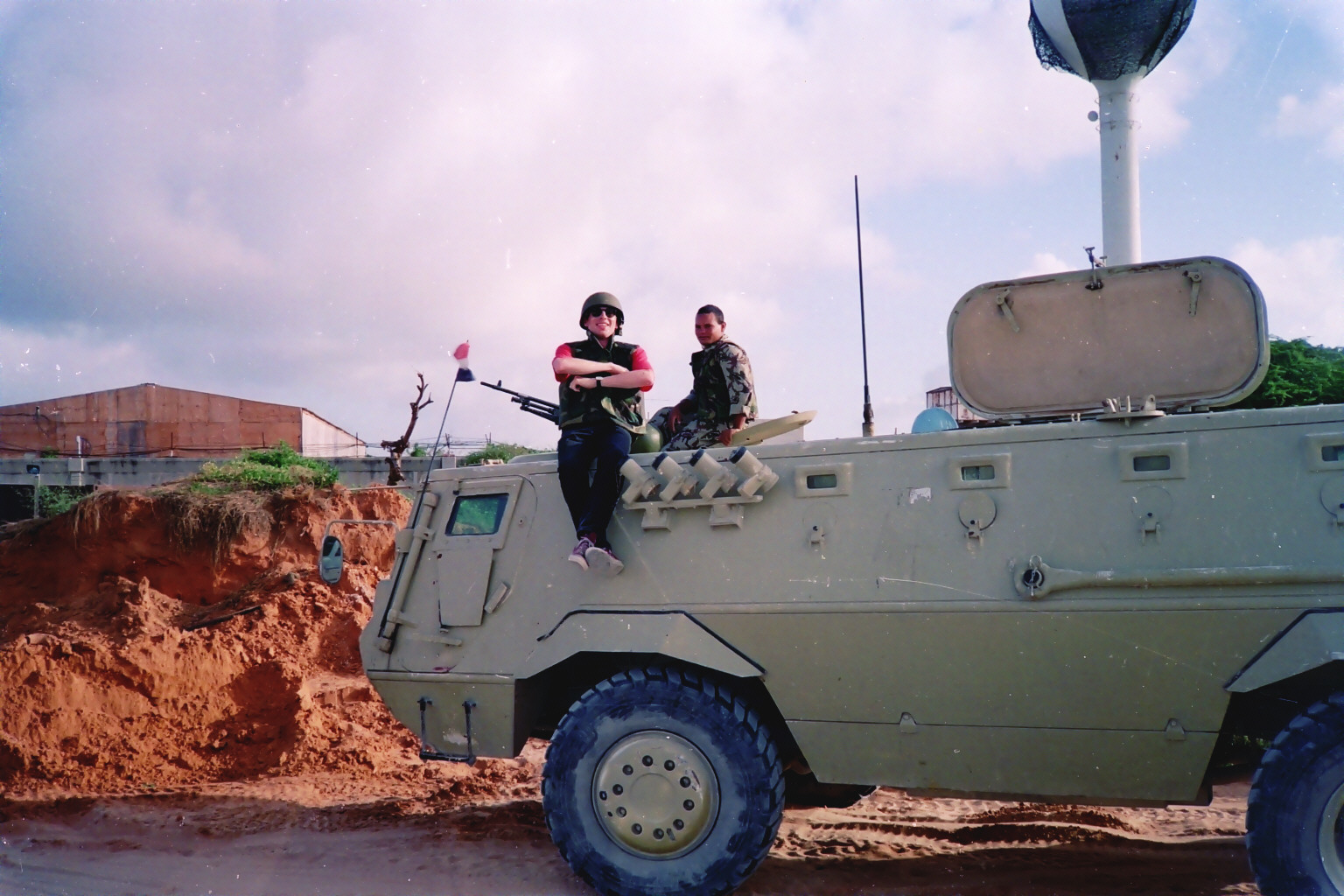
Kader Factory, originally the Heliopolis Aircraft Factory of 1949, joined AOI later and is the organisation’s listed armoured-vehicle house. The official Kader page says the factory produced the Al Walid armoured vehicle in 1967, which it calls the Middle East’s first armoured vehicle, and launched the Fahd armoured personnel carrier in 1984, described as Kader’s flagship product. Current official wording lists design and production of “all types of armored vehicles,” fire trucks, cash-in-transit vehicles and custom military and civilian bodies. The page gives a site area of 136,000 square metres. It does not give a current Fahd production rate or an official in-service total for the Egyptian Army.
The Fahd remains the AOI vehicle most often associated with Egyptian mechanised units in open inventories, alongside imported or co-produced types covered in the national inventory guide. Older Al Walid vehicles should not automatically be counted as a modern operational fleet. This article does not assign a number where AOI has not published one.
Türkiye, TUSAŞ and what has actually been signed
AOI is also the Egyptian counterpart named in recent industrial talks with Türkiye. DefenceMENA has already reported, in separate files, what has been signed between TUSAŞ and AOI at Helwan, the wider Türkiye–Egypt defence-agreement timeline, and contacts during the chairmanship of Prof. Dr. Haluk Görgün at the Presidency of Defence Industries (SSB). Those pages, not this one, are the place for contract-by-contract status: letter of intent, signed agreement, or delivery. Nothing in AOI’s general factory pages, as reviewed here, converts those talks into a published, completed licensed-production line for a named Turkish aircraft or drone at Helwan. Where a system is only contracted or reported, the contracted-versus-reported checklist should be used.
If Turkish and Egyptian factories end up sharing a programme, the relevant tests are the usual industrial ones: what is licensed, what is assembled locally, what remains imported (including engines and avionics), and who holds the export rights. Those answers belong in the programme files above once a primary document or official announcement is on the record.
What this list does not include
A full account of “what weapons Egypt makes” would also cover the Ministry of Military Production and private or joint-venture firms that sit outside AOI. The ST-100 and ST-500, shown at EDEX and later exhibitions as Factory 200 / IMUT vehicles, are one example. Sakr Factory, listed under AOI, historically has a missile and rocket association in open literature, but this article does not attribute a current missile catalogue to Sakr without an official product page that names the rounds. Electronics, engines and ABD’s work are similarly recorded as official units, not as a guessed munitions list.
Frequently Asked Questions
What is the Arab Organization for Industrialization?
It is Egypt’s main state defence-industrial organisation, established in 1975. AOI says it comprises 13 factories and companies and is overseen by a supreme committee headed by the president of Egypt. Its output includes military and civilian products.
What weapons does AOI actually make?
Official factory pages name, among other work, aircraft and airframe manufacturing at Helwan (including historical trainers, F-16 parts, the K-8E airframe and the ASN-209 UAV airframe) and armoured vehicles at Kader, notably the Fahd APC launched in 1984. AOI does not, on the pages reviewed, publish a single current inventory of every weapon in production.
Does Egypt build its own fighter jets at AOI?
AOI’s Aircraft Factory describes parts, trainers and unmanned airframes, including F-16 parts with General Dynamics from 1993 and a high local share claimed for the K-8E airframe. It does not, on that official history, describe a current indigenous fighter-jet production line.
Is AOI the same as Military Factory 200?
No. Factory 200 falls under the Ministry of Military Production and is the plant named in reporting on the ST-100 and ST-500. AOI is a separate organisation with its own factories, including Kader and the Aircraft Factory.